Loading...
Abd el-Krim vs Emiliano Zapata
Abd el-Krim leads by 5.5 pts · 2 figures compared
…
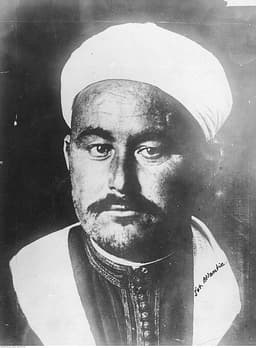
Abd el-Krim
Revolutionary · Modern
61.8Total
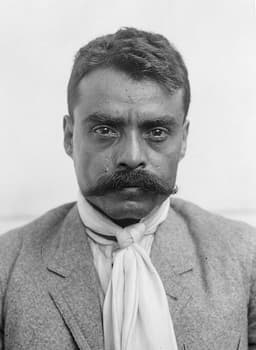
Emiliano Zapata
Revolutionary · Modern
56.3Total
Basic Information
Born
1882
1879
Died
1963
1919
Era
Modern
Modern
Nationality
Morocco
Mexico
Occupation
Revolutionary
Revolutionary
Civilization
Middle Eastern
Western
Score Comparison
Military (10%)
75.0
40.0
Political (20%)
72.0
68.0
Influence (20%)
59.0
58.0
Legacy (20%)
50.0
54.0
Leadership (15%)
72.0
54.2
Strategy (15%)
55.0
60.0
TOTAL
61.8
56.3
Abd el-Krim — Complete Timeline
1921 AD
Battle of AnnualWar
Abd el-Krim's Riffian forces decisively defeated a Spanish army at Annual in Spanish Morocco. The Spanish suffered thousands of casualties and lost vast amounts of equipment. This victory established Abd el-Krim as a major military leader and led to the proclamation of the Rif Republic.
Rif WarSpanish ColonialismBattle
Impact: regional
1923 AD
Proclamation of the Rif RepublicPolitical Action◆ Major
Abd el-Krim formally proclaimed the independent Rif Republic in northern Morocco. He established a government and administrative system, challenging Spanish and French colonial rule. The republic was not internationally recognized but functioned as a de facto state.
Rif RepublicIndependenceAnti-Colonialism
Impact: regionalconstructive
1925 AD
Rif War against FranceWar◆ Major
Abd el-Krim's forces attacked French positions in Morocco, expanding the conflict beyond Spanish territory. The French responded with a massive military campaign, using superior firepower and chemical weapons. This led to the eventual defeat of the Rif Republic.
Rif WarFrench ColonialismChemical Weapons
Impact: regional
1926 AD
Surrender and Exile to RéunionWar◆ Major
After a prolonged campaign, Abd el-Krim surrendered to French forces. He was exiled to the island of R
Rif WarExileDefeat
Impact: regionaltragic
1947 AD
Release and Move to EgyptPolitical Action
Abd el-Krim was released by the French and allowed to move to Egypt. He settled in Cairo, where he continued to advocate for North African independence and became a symbolic figure for anti-colonial movements.
ExileAnti-ColonialismSymbol
Impact: regionalconstructive
Emiliano Zapata — Complete Timeline
1911 AD
Plan of AyalaPolitical Action
Zapata issued the Plan of Ayala, denouncing Francisco I. Madero for failing to implement land reform. The plan called for the return of land to peasants and became the ideological foundation of the Zapatista movement.
Land ReformAgrarian MovementRevolution
Impact: nationalprogressive
1914 AD
Occupation of Mexico CityWar◆ Major
Zapata's forces, allied with Villa's Division of the North, occupied Mexico City. They held the capital for several weeks but failed to establish lasting control, highlighting the limits of their coalition.
Military OccupationRevolutionary AllianceCapital
Impact: national
Convention of AguascalientesPolitical Action◆ Major
Zapata attended the Convention of Aguascalientes, where revolutionary factions attempted to unify. He allied with Pancho Villa against Venustiano Carranza, but the convention failed to produce a stable government.
Revolutionary AlliancePolitical DivisionCivil War
Impact: national
1919 AD
Assassination at ChinamecaPolitical Action
Zapata was lured to the Hacienda de Chinameca by Colonel Jesus Guajardo, who pretended to defect. Guajardo's troops ambushed and killed Zapata, ending his leadership of the agrarian rebellion.
AssassinationBetrayalEnd of Leadership
Impact: nationaltragic
Expert Analysis
Abd el-Krim vs Emiliano Zapata
# The Rebel and the Emir: Two Visions of Revolution
In the autumn of 1914, Emiliano Zapata’s peasant army marched into Mexico City, their sombreros and bandoliers a stark contrast to the capital’s European architecture. They held the city for weeks, not looting or pillaging, but distributing land titles to the poor. Half a world away and six years later, another revolutionary—Abd el-Krim—watched from the Rif Mountains as his warriors annihilated a Spanish army at Annual, sending 13,000 soldiers fleeing in panic. Both men rose from rural obscurity to challenge empires. Both fought for land and dignity. Yet one died betrayed in a hacienda courtyard at forty, while the other lived to eighty-one, dying in Cairo exile with his cause unfinished. What separated the martyr from the survivor?
Origins
Emiliano Zapata was born in 1879 in Anenecuilco, a village in the state of Morelos where indigenous communities had fought for centuries against hacienda owners stealing their communal lands. He was a mestizo peasant who learned to read and write, but his real education came from watching his neighbors evicted from fields their families had worked for generations. “It is better to die on your feet than to live on your knees,” he would later say—a slogan born not from books but from the dust of stolen cornfields.
Abd el-Krim, born Muhammad ibn Abd al-Karim al-Khattabi in 1882, came from a different world. His father was a qadi, an Islamic judge, in the Berber region of the Rif. The young Abd el-Krim received both a traditional Quranic education and a Spanish one, studying at the University of al-Qarawiyyin in Fez and later working as a journalist and translator for the Spanish colonial administration. He understood the colonizers because he had lived among them. He knew their weapons, their politics, their weaknesses—and he despised them.
Their eras shaped them differently. Zapata rose in a Mexico already independent for a century, where the enemy was not a foreign flag but a domestic oligarchy. Abd el-Krim fought against two European empires actively carving up North Africa. One sought to reclaim what had been stolen; the other sought to create something that had never existed.
Rise to Power
Zapata entered the historical stage almost reluctantly. When the Mexican Revolution erupted in 1910 against the dictator Porfirio Díaz, Zapata was a local leader elected by his village. He initially supported Francisco I. Madero, the reformist who promised land for the peasants. But when Madero proved unwilling to break the hacienda system, Zapata broke with him. In November 1911, he issued the Plan of Ayala, a radical document that called for the immediate return of stolen lands and condemned Madero as a traitor to the revolution. This was not a climb to power—it was a declaration of war against all who stood in the way.
Abd el-Krim’s rise was more calculated. After the Spanish imprisoned him in 1916 for anti-colonial activities, he escaped and retreated to the Rif. His brother Mhamed joined him, and together they began organizing the fractured Berber tribes into a disciplined force. The turning point came on July 21, 1921, at Annual, where Abd el-Krim’s 3,000 fighters routed a Spanish army five times their size, capturing thousands of rifles and machine guns. It was one of the most humiliating defeats ever inflicted on a European colonial power. Within months, he controlled most of Spanish Morocco.
Leadership & Governance
Zapata governed through trust and example. He commanded the Liberation Army of the South not through rank but through personal integrity. His men called him “El Caudillo del Sur”—the Leader of the South—but he ate with them, fought with them, and refused the trappings of power. His political wisdom was simple and absolute: land was the foundation of freedom. In Morelos, he implemented agrarian reform immediately, dividing haciendas among the villages. But he never sought national power beyond his region, and his refusal to compromise with other revolutionary factions—first Madero, then Venustiano Carranza—proved his greatest weakness.
Abd el-Krim was a different breed of leader. His military score of 57.2 and strategy of 72.0 reflect a commander who understood modern warfare. He built a regular army with ranks, uniforms, and logistics, using captured Spanish weapons to devastating effect. His political score of 75.6 reveals a statesman who, in 1923, proclaimed the Rif Republic with a cabinet, a flag, and even plans for a currency. He established schools, courts, and tax collection. He was both a tribal chief and a modern nationalist, trying to bridge two worlds. “We are not rebels,” he told foreign journalists. “We are a people seeking independence.”
Triumph & Tragedy
Zapata’s greatest moment came in December 1914, when his army, allied with Pancho Villa’s Division of the North, occupied Mexico City. For weeks, the peasant revolutionaries controlled the capital, printing their own decrees and distributing land. But they could not hold it. The alliance fractured, and by 1915, Carranza’s forces were pushing them back. Zapata returned to Morelos, where he continued his guerrilla war. The tragedy came on April 10, 1919. Colonel Jesús Guajardo, pretending to defect, lured Zapata to the Hacienda de Chinameca. As Zapata crossed the threshold, the honor guard raised their rifles and fired. He was dead before he hit the ground.
Abd el-Krim’s triumph was the Battle of Annual, but his tragedy unfolded more slowly. In 1925, emboldened by his victories over Spain, he attacked French positions, expanding the war. This was a fatal miscalculation. France and Spain united against him, deploying 250,000 troops and using chemical weapons—mustard gas—against Rifian villages. After a year of brutal fighting, Abd el-Krim surrendered in 1926. He was exiled to Réunion, a remote island in the Indian Ocean, where he spent twenty-one years. In 1947, released and allowed to move to Egypt, he lived another sixteen years, a symbol of resistance but never again a leader of armies.
Character & Destiny
Zapata’s character was his destiny. His leadership score of 41.2 suggests not weakness but a different kind of command—moral rather than strategic. He trusted too easily, refused to compromise, and could not imagine a world where land reform was negotiated rather than seized. His assassination was almost inevitable in a revolution that devoured its own. “I want to die a slave to principles, not to men,” he said. He got his wish.
Abd el-Krim’s leadership score of 86.5 tells another story. He was pragmatic, disciplined, and long-sighted. When surrender became inevitable, he chose exile over annihilation, preserving himself for future advocacy. In Egypt, he became a mentor to younger anti-colonial leaders, including those who would later lead Morocco to independence in 1956. He understood that survival was sometimes more revolutionary than martyrdom.
Legacy
Zapata’s legacy of 67.6 understates his impact. He became a ghost that haunted Mexico. The Zapatista uprising of 1994 in Chiapas took his name, his image, his demand for land and dignity. His face appears on murals, banners, and tattoos across Latin America. He is the eternal rebel, the pure revolutionary who never sold out.
Abd el-Krim’s legacy score of 66.8 is similar in weight but different in nature. He is remembered as the father of Moroccan nationalism, the man who proved that colonial empires could be defeated. The Rif Republic, though crushed, became a blueprint for independence movements across Africa and Asia. He died in Cairo in 1963, still advocating for a free Maghreb.
Conclusion
Zapata and Abd el-Krim both fought for land against those who denied it. Both won battles and lost wars. But their fates diverged because of what they believed about power. Zapata saw power as something to be given away—to the villages, to the people, to the land itself. Abd el-Krim saw power as something to be built—a state, an army, a future. One died a martyr; the other died an exile. Which path was more revolutionary? Perhaps the answer depends on whether you are building a monument or a nation. In the end, both men remain, as Zapata once said, “in the struggle, not at the feast.”
Rankings
🥇
Abd el-KrimLeader
Mil: 75.0Pol: 72.0Inf: 59.0
61.8
🥈
Emiliano Zapata
Mil: 40.0Pol: 68.0Inf: 58.0
56.3
+5.5 behind
How This Comparison Works
Algorithm
Each figure is scored on 6 dimensions (0—100 scale) based on structured historical data: Military (10%), Political (20%), Influence (20%), Legacy (20%), Leadership (15%), Strategy (15%). The weighted total produces the final ranking.
Data Sources
Scores are computed from structured sub-indicators in the database. Scale factors adjust for era (Ancient ×0.85, Modern ×1.0) and civilization size (Eastern ×1.05, Other ×0.80) to account for differences in population and military scale.
Maximum 3 Figures
Comparisons are limited to 2—3 figures to ensure readability and statistical meaningfulness.
Error Margins
±5 points per dimension — Sub-scores are derived from historical records with inherent uncertainty. Two figures within 5 points on a dimension should be considered roughly equivalent in that area.
Total Score Accuracy
±3 points overall — The weighted combination of 6 dimensions produces a total score with approximately ±3 points of uncertainty. Differences of less than 3 points are not statistically significant— the figures are effectively tied.
Known Limitations
- Historical records are incomplete and uneven across civilizations
- Figures from oral-tradition societies may be underrepresented
- Occupation labels can misclassify multi-role figures
- Scores measure capability and impact, not moral character
- Quantitative scoring is a comparison tool, not absolute truth
Capability Radar
Military (10%) — Battles & Warfare
Battles
75
45
Win Rate
70
50
Expansion
60
35
Political (20%) — Governance & Reform
Reform
70
70
Diplomacy
65
40
Economy
50
35
Influence (20%) — Cultural & Global Reach
Cultural
60
65
Global
55
55
Legacy (20%) — Historical Impact
Historical
70
70
Longevity
55
65
Leadership (15%) — Power & Stability
Tenure
55
30
Stability
45
25
Strategy (15%) — Tactics & Innovation
Strategy
80
50
Tactics
85
55
Reform
65
60
Similar Comparisons
Comments & Discussion
LIBERATOR VISION6/16/2026
Zapata was the true land reformer, not Abd el-Krim. Zapata’s Plan of Ayala demanded immediate land redistribution without compromise. He actually delivered land titles to peasants in Morelos before the Zapatistas were betrayed. Abd el-Krim’s “Republic of the Rif” was a tribal coalition with limited land reform—more about expelling outsiders than empowering sharecroppers. One built a working agrarian system; the other just fought invaders. Village democracy beats emirate autocracy every time.
铁血密探6/16/2026
扎帕塔是个理想主义者,阿布德·克里姆才是现实战士。扎帕塔的四万农民军在1914年占领墨西哥城,但两周就退了——因为他们没有现代武器和组织。克里姆在1921年的安努尔战役里用缴获的西班牙步枪歼灭一万三千敌军,还建立了自己的纪律部队和税收系统。扎帕塔被背叛时只能死在庄园,克里姆却活到83岁流亡开罗,靠的是懂得谈判和躲藏。革命不是圣徒,是生存。
TACTICAL REALIST6/16/2026
Focus on Annual: Abd el-Krim achieved what no colonial rebellion had before—a single battle that crushed an entire European army. 13,000 Spanish dead or captured versus maybe 800 Rifians. Zapata fought a decade-long guerrilla war but never won a decisive set-piece victory like that. The Rif Republic also built a functioning state with courts, taxes, and a currency system. Morelos under Zapata remained fragmented and often lawless. Military success and state-building? Abd el-Krim wins by a clear
怀古书生6/16/2026
拿克里姆比扎帕塔,好比关公战秦琼。扎帕塔的根源是梅斯蒂索农民的千年土地纠纷,阿兹特克式的公社传统。克里姆则是里夫山区的柏柏尔部族,伊斯兰法院和部落联盟。扎帕塔喊“土地与自由”,克里姆要的是里夫共和国。扎帕塔1919年被背叛,克里姆1926才被法西联军围剿。前者是农奴反抗地主,后者是殖民反抗帝国。根本两个故事,硬塞一起显得热闹却失精细。
DATA SKEPTIC6/16/2026
This comparison is pseudo-profound fluff. “One died betrayed, one died in exile”—that’s a storybook line, not analysis. Abd el-Krim surrendered to the French in 1926 and was exiled for 21 years before moving to Cairo; Zapata was assassinated by Carranza’s agents. Different circumstances, different eras, different enemies. The writer ignores that Zapata’s movement was crushed within a decade while Abd el-Krim’s Republic lasted five years as an independent state. Apples and oranges with a poetic v