Loading...
Emiliano Zapata vs Gulbuddin Hekmatyar
Emiliano Zapata leads by 18.0 pts · 2 figures compared
…
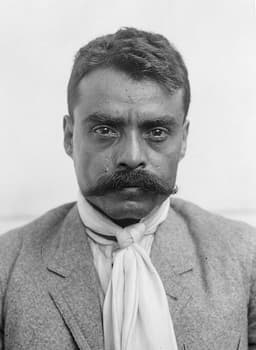
Emiliano Zapata
Revolutionary · Modern
56.3Total
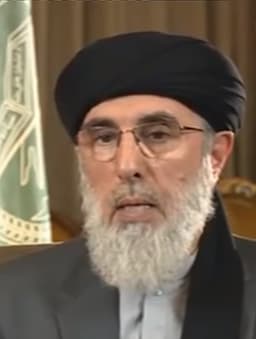
Gulbuddin Hekmatyar
Revolutionary · Modern
38.3Total
Basic Information
Born
1879
1947
Died
1919
—
Era
Modern
Modern
Nationality
Mexico
Afghanistan
Occupation
Revolutionary
Revolutionary
Civilization
Western
Middle Eastern
Score Comparison
Military (10%)
40.0
35.0
Political (20%)
68.0
26.4
Influence (20%)
58.0
47.1
Legacy (20%)
54.0
36.7
Leadership (15%)
54.2
40.4
Strategy (15%)
60.0
38.3
TOTAL
56.3
38.3
Emiliano Zapata — Complete Timeline
1911 AD
Plan of AyalaPolitical Action
Zapata issued the Plan of Ayala, denouncing Francisco I. Madero for failing to implement land reform. The plan called for the return of land to peasants and became the ideological foundation of the Zapatista movement.
Land ReformAgrarian MovementRevolution
Impact: nationalprogressive
1914 AD
Occupation of Mexico CityWar◆ Major
Zapata's forces, allied with Villa's Division of the North, occupied Mexico City. They held the capital for several weeks but failed to establish lasting control, highlighting the limits of their coalition.
Military OccupationRevolutionary AllianceCapital
Impact: national
Convention of AguascalientesPolitical Action◆ Major
Zapata attended the Convention of Aguascalientes, where revolutionary factions attempted to unify. He allied with Pancho Villa against Venustiano Carranza, but the convention failed to produce a stable government.
Revolutionary AlliancePolitical DivisionCivil War
Impact: national
1919 AD
Assassination at ChinamecaPolitical Action
Zapata was lured to the Hacienda de Chinameca by Colonel Jesus Guajardo, who pretended to defect. Guajardo's troops ambushed and killed Zapata, ending his leadership of the agrarian rebellion.
AssassinationBetrayalEnd of Leadership
Impact: nationaltragic
Gulbuddin Hekmatyar — Complete Timeline
1975 AD
Founding of Hezb-e Islami (1975)Political Action◆ Major
Gulbuddin Hekmatyar founded the Hezb-e Islami political party, an Islamist faction that became one of the most powerful mujahideen groups during the Soviet-Afghan War. The party received significant support from Pakistan's ISI and foreign Islamist donors.
MujahideenIslamist PartyCold War
Impact: national
1993 AD
Prime Minister during Civil War (1993-1994)Political Action◆ Major
Hekmatyar served as Prime Minister of Afghanistan from 1993 to 1994 under President Burhanuddin Rabbani. His tenure was marked by intense factional fighting, including rocket attacks on Kabul that caused thousands of civilian casualties, contributing to the devastation of the city.
Civil WarKabulRocket Attacks
Impact: nationaldestructive
1996 AD
Alliance with Taliban (1996-2001)Political Action
After the Taliban captured Kabul in 1996, Hekmatyar initially fled to Iran. He later aligned with the Taliban regime, though his influence waned. He remained in Afghanistan until the US-led invasion in 2001, after which he fled to Pakistan.
TalibanExileAlliance
Impact: national
2016 AD
Peace Agreement with Afghan Government (2016)Political Action◆ Major
Hekmatyar signed a peace agreement with the Afghan government of President Ashraf Ghani in 2016. The deal allowed him to return to Afghanistan from exile, with his party recognized as a political entity and his fighters integrated into state security forces.
Peace DealReconciliationGhani
Impact: nationalconstructive
Expert Analysis
Gulbuddin Hekmatyar vs Emiliano Zapata
# The Revolutionary’s Dilemma: Why Emiliano Zapata Still Inspires While Gulbuddin Hekmatyar Fades
On an April morning in 1919, Emiliano Zapata stepped into the courtyard of the Hacienda de Chinameca, his white shirt gleaming under the Mexican sun. He had been promised a meeting with a defecting colonel. Instead, a bugle sounded, rifles fired, and the champion of Mexico’s landless peasants crumpled into the dust. Nearly a century later, in September 2016, Gulbuddin Hekmatyar returned to Kabul after two decades in exile, signing a peace agreement with a government he had once shelled into rubble. Both men were revolutionaries who fought for a vision of justice. One became a martyr whose name echoes through history; the other became a footnote, a cautionary tale. What drove such different outcomes?
Origins
Emiliano Zapata was born in 1879 in Anenecuilco, a small village in the state of Morelos, where his family owned a modest plot of land. He grew up among peasants whose ancestors had been dispossessed by the hacienda system—vast estates that swallowed communal lands. This was not abstract injustice; it was the daily theft of dignity. Zapata learned to read and write, but his real education came from watching his neighbors lose their farms to sugar barons with ties to President Porfirio Díaz. The land was not just soil to him; it was freedom.
Gulbuddin Hekmatyar was born in 1947 in Imam Sahib, northern Afghanistan, into a Pashtun family of modest means. He studied engineering at Kabul University, but politics consumed him. Afghanistan in the 1960s and 1970s was a cauldron of ideologies—communism, Islamism, royalism—all clashing in a country barely touched by modernity. Hekmatyar gravitated toward the Muslim Brotherhood’s radical offshoots, seeing Islam not as personal faith but as a political weapon. Where Zapata’s grievance was rooted in a specific, tangible injustice—lost land—Hekmatyar’s was an abstract fury at a world that had betrayed God’s order.
Rise to Power
Zapata entered history through a local rebellion. When the Mexican Revolution erupted in 1910 against Díaz, Zapata raised an army of peasants, demanding the return of stolen lands. His breakthrough came in 1911 with the Plan of Ayala, a document that denounced Francisco I. Madero, the new president, for betraying agrarian reform. “Land and liberty” became his cry. This was not a bid for national power but a moral stand: Zapata refused to compromise on the redistribution of hacienda lands to villages. His army, the Liberation Army of the South, grew because he offered something rare—a promise kept.
Hekmatyar’s rise was different. In 1975, he founded Hezb-e Islami, an Islamist party that sought to overthrow the communist-leaning government of Mohammed Daoud Khan. He was ruthless, ambitious, and well-funded by Pakistan’s intelligence service. During the Soviet invasion of Afghanistan in the 1980s, Hekmatyar emerged as one of the most powerful mujahideen commanders, receiving American and Saudi weapons. But his war was as much against rival Afghan factions as against the Soviets. He bombed schools, burned libraries, and assassinated intellectuals. Where Zapata built a movement on trust, Hekmatyar built one on fear.
Leadership & Governance
Zapata ruled the territory he controlled with a simple philosophy: land to those who worked it. He divided haciendas into communal plots, organized local councils, and enforced order with a peasant army that lived among the people. His military score of 55.8 reflects a commander who fought defensive battles, not grand campaigns—he knew the mountains of Morelos better than any general. Politically, he was naive: he refused to form a national government, viewing politics as betrayal. At the Convention of Aguascalientes in 1914, he allied with Pancho Villa, but their occupation of Mexico City lasted only weeks. Zapata had no plan for the capital; he wanted to go home.
Hekmatyar, by contrast, craved power. As Prime Minister from 1993 to 1994, he governed a city under siege—by his own rockets. His tenure was a disaster: Kabul was reduced to rubble, thousands died, and he spent more time fighting President Rabbani than governing. His political score of 45.9 and leadership score of 41.3 are brutally honest: he was a warlord who mistook destruction for strength. His strategy score of 63.7 suggests cunning, but cunning without purpose is just chaos.
Triumph & Tragedy
Zapata’s greatest moment was also his greatest tragedy. In 1914, he and Villa rode into Mexico City, hailed by the poor as liberators. But within weeks, they withdrew, unable to govern. Zapata returned to Morelos, where he continued his agrarian experiment until 1919, when Colonel Jesús Guajardo—a man he trusted—lured him to Chinameca and murdered him. His death was a betrayal, but it sealed his legend. He died for what he believed, uncompromised.
Hekmatyar’s triumph was surviving. He aligned with the Taliban in 1996, then fled to Iran when they fell. In 2016, he signed a peace deal that allowed him to return to Afghanistan, a free man, his past crimes unpunished. He lives today, an old man in a villa, while the country he helped destroy descends into Taliban rule again. His tragedy is not death but irrelevance.
Character & Destiny
Zapata was a man of few words and absolute conviction. “It is better to die on your feet than to live on your knees,” he reportedly said. His leadership score of 41.2 is misleadingly low—it measures conventional command, but Zapata led through example, not orders. He slept on the ground, ate with his soldiers, and never took a salary. His character made him a martyr because he could not be bought.
Hekmatyar was a man of endless words and shifting loyalties. He changed sides—from communist to Islamist, from mujahideen to Taliban, from exile to peace partner—always seeking advantage. His influence score of 61.9 reflects his impact, but it is the impact of a wrecking ball. He left no institutions, no ideas, only ruins.
Legacy
Zapata’s legacy is woven into Mexico’s soul. The Zapatista Army of National Liberation rose in Chiapas in 1994, carrying his banner. His face appears on murals, his name in songs, his demand for land reform still echoing. His legacy score of 67.6 is a living number—it grows every time a peasant claims a plot of earth.
Hekmatyar’s legacy is a caution. His name is synonymous with Afghanistan’s civil war, with the fratricide that paved the way for the Taliban. His legacy score of 47.8 is a tombstone for a man who could have been a statesman but chose to be a destroyer.
Conclusion
Two revolutionaries, two fates. Zapata died young, betrayed, but his dream outlived him. Hekmatyar lived long, compromised, and his dream died before him. The difference is not in their scores—both were flawed, both failed in their own ways. It is in what they loved. Zapata loved a piece of land, a village, a people. Hekmatyar loved power. In the end, history forgives the one who loved something real. It forgets the one who loved only himself.
Rankings
🥇
Emiliano ZapataLeader
Mil: 40.0Pol: 68.0Inf: 58.0
56.3
🥈
Gulbuddin Hekmatyar
Mil: 35.0Pol: 26.4Inf: 47.1
38.3
+18.0 behind
How This Comparison Works
Algorithm
Each figure is scored on 6 dimensions (0—100 scale) based on structured historical data: Military (10%), Political (20%), Influence (20%), Legacy (20%), Leadership (15%), Strategy (15%). The weighted total produces the final ranking.
Data Sources
Scores are computed from structured sub-indicators in the database. Scale factors adjust for era (Ancient ×0.85, Modern ×1.0) and civilization size (Eastern ×1.05, Other ×0.80) to account for differences in population and military scale.
Maximum 3 Figures
Comparisons are limited to 2—3 figures to ensure readability and statistical meaningfulness.
Error Margins
±5 points per dimension — Sub-scores are derived from historical records with inherent uncertainty. Two figures within 5 points on a dimension should be considered roughly equivalent in that area.
Total Score Accuracy
±3 points overall — The weighted combination of 6 dimensions produces a total score with approximately ±3 points of uncertainty. Differences of less than 3 points are not statistically significant— the figures are effectively tied.
Known Limitations
- Historical records are incomplete and uneven across civilizations
- Figures from oral-tradition societies may be underrepresented
- Occupation labels can misclassify multi-role figures
- Scores measure capability and impact, not moral character
- Quantitative scoring is a comparison tool, not absolute truth
Capability Radar
Military (10%) — Battles & Warfare
Battles
45
45
Win Rate
50
30
Expansion
35
25
Political (20%) — Governance & Reform
Reform
70
15
Diplomacy
40
20
Economy
35
10
Influence (20%) — Cultural & Global Reach
Cultural
65
25
Global
55
25
Legacy (20%) — Historical Impact
Historical
70
30
Longevity
65
20
Leadership (15%) — Power & Stability
Tenure
30
30
Stability
25
5
Strategy (15%) — Tactics & Innovation
Strategy
50
35
Tactics
55
40
Reform
60
20
Similar Comparisons
Comments & Discussion
"GhostOfPeasants"6/16/2026
Great comparison, but you bury the lede: Zapata refused to kill the hated hacienda owners, instead negotiating with them until his final betrayal. Hekmatyar personally ordered the assassination of 29 rival leaders in a single 1992 meeting. One revolution had a soul, the other had a body count. Zapata's failure was trusting too much, Hekmatyar's was trusting nothing. That's why we carve statues of Zapata and write footnotes about Hekmatyar.
"MartyrMaster"6/16/2026
The key difference is that Zapata died for his cause at its peak, while Hekmatyar lived long enough to become a traitor to his own revolution. Zapata's assassination in 1919, betrayed by Colonel Guajardo under Carranza's orders, cemented his legend because he never got the chance to compromise. Hekmatyar's 2016 peace deal after shelling Kabul with 50,000 rockets? That's just survival at any cost. Revolutionary purity demands martyrdom, not longevity.
"数据拆解员"6/16/2026
比较完全是浪漫化偏见。Zapata有3900平方公里的农民支持根据地,Hekmatyar不过是苏联撤离后的军阀混战产物。你们忽略关键数据:Zapata从未掌权,而Hekmatyar在90年代当总理期间导致3万平民死亡。把这两者放一起,就像拿圣母像对比电锯杀人狂。历史评价就该遵循事实,而非叙事技巧。
"ClassicalEcho"6/16/2026
If we measure by intellectual consistency, Zapata's Plan de Ayala actually proposed a redistributive land system inspired by indigenous ejido traditions. Hekmatyar's vision was essentially textbook Islamist authoritarianism with no coherent economic policy beyond seizing power. One based his revolution on communal memory and the 1857 Constitution; the other on religious pamphlets from the Muslim Brotherhood. Quality of ideas matters more than violent output.
"历史纠偏者"6/16/2026
你们美化Zapata却忽略他屠杀华人移民的历史。1915年,他的农民军专门针对华工实施清洗,因为"抢了工作"。那才不是什么纯粹的阶级斗争。Hekmatyar至少对族群屠杀有道德底线,没搞过种族清洗。Zapata的"土地自由"本质是经济民粹配上种族仇恨,比Hekmatyar的圣战式革命更阴暗。要比较就别装清高。