Loading...
Emiliano Zapata vs Giuseppe Mazzini
Emiliano Zapata leads by 5.6 pts · 2 figures compared
…
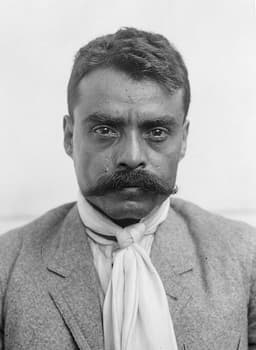
Emiliano Zapata
Revolutionary · Modern
56.3Total
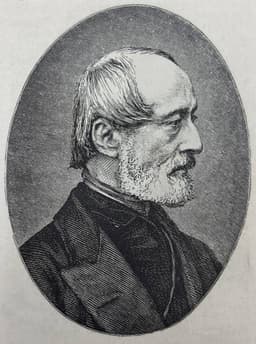
Giuseppe Mazzini
Revolutionary · Modern
50.7Total
Basic Information
Born
1879
1805
Died
1919
1872
Era
Modern
Modern
Nationality
Mexico
Italy
Occupation
Revolutionary
Revolutionary
Civilization
Western
Western
Score Comparison
Military (10%)
40.0
39.9
Political (20%)
68.0
40.8
Influence (20%)
58.0
60.0
Legacy (20%)
54.0
56.0
Leadership (15%)
54.2
40.9
Strategy (15%)
60.0
54.3
TOTAL
56.3
50.7
Emiliano Zapata — Complete Timeline
1911 AD
Plan of AyalaPolitical Action
Zapata issued the Plan of Ayala, denouncing Francisco I. Madero for failing to implement land reform. The plan called for the return of land to peasants and became the ideological foundation of the Zapatista movement.
Land ReformAgrarian MovementRevolution
Impact: nationalprogressive
1914 AD
Occupation of Mexico CityWar◆ Major
Zapata's forces, allied with Villa's Division of the North, occupied Mexico City. They held the capital for several weeks but failed to establish lasting control, highlighting the limits of their coalition.
Military OccupationRevolutionary AllianceCapital
Impact: national
Convention of AguascalientesPolitical Action◆ Major
Zapata attended the Convention of Aguascalientes, where revolutionary factions attempted to unify. He allied with Pancho Villa against Venustiano Carranza, but the convention failed to produce a stable government.
Revolutionary AlliancePolitical DivisionCivil War
Impact: national
1919 AD
Assassination at ChinamecaPolitical Action
Zapata was lured to the Hacienda de Chinameca by Colonel Jesus Guajardo, who pretended to defect. Guajardo's troops ambushed and killed Zapata, ending his leadership of the agrarian rebellion.
AssassinationBetrayalEnd of Leadership
Impact: nationaltragic
Giuseppe Mazzini — Complete Timeline
1831 AD
Founding of Young ItalyPolitical Action◆ Major
Mazzini founded the secret society Young Italy (Giovine Italia) in Marseille. The organization aimed to achieve Italian unification through popular insurrection and republican government. It recruited thousands of members and inspired uprisings in the 1830s and 1840s.
UnificationRepublicanismSecret Society
Impact: regionalconstructive
1834 AD
Mazzini's Insurrection in SavoyPolitical Action
Mazzini organized an armed invasion of Savoy from Switzerland, intending to spark a republican revolution. The attempt failed due to poor coordination and betrayal, forcing Mazzini into exile. He was sentenced to death in absentia by Piedmontese authorities.
InsurrectionFailureExile
destructive
1849 AD
Roman Republic of 1849Political Action◆ Major
Mazzini became one of the triumvirs governing the short-lived Roman Republic after the pope fled. He implemented progressive reforms including universal male suffrage and freedom of the press. The republic was crushed by French troops in July 1849, and Mazzini returned to exile.
RepublicRevolutionPapal States
Impact: regionalconstructive
1857 AD
Expedition of the SapriPolitical Action
Mazzini organized an ill-fated expedition led by Carlo Pisacane to spark a revolt in the Kingdom of the Two Sicilies. The rebels were quickly defeated and killed by local peasants and Bourbon troops. The failure discredited Mazzini's insurrectionary strategy.
InsurrectionFailureSouthern Italy
tragic
Expert Analysis
Emiliano Zapata vs Giuseppe Mazzini
### The Heart and the Hammer: Two Paths of Revolution
History rarely offers a cleaner contrast than the one between Emiliano Zapata and Giuseppe Mazzini. Both men dedicated their lives to revolution, yet their worlds could not have been more different. One was a peasant leader from the sun-scorched hills of Morelos, Mexico, who rode with a rifle across his saddle and the cry of “Tierra y Libertad” on his lips. The other was a visionary from the port city of Genoa, a man of letters and secret societies, who spent decades in exile, writing manifestos and plotting the unification of a fractured nation. Zapata died in an ambush at the age of 39, betrayed by a man he thought was an ally. Mazzini died in his bed at 67, a revered but often disappointed father of his country. Why did one become a martyr of the soil and the other the soul of a nation? The answer lies not in their shared passion for justice, but in the radically different soils in which they planted their dreams.
### Origins
Emiliano Zapata was born in 1879 in Anenecuilco, a small village in the state of Morelos. He was a *campesino*—a man of the land. His family were modest farmers, and from childhood he witnessed the brutal dispossession of indigenous communities by the hacienda system under the long dictatorship of Porfirio Díaz. Zapata’s world was local, immediate, and tangible. He learned to read and write, but his true education came from watching his neighbors lose their ancestral plots to sugar barons. His revolution was not about abstract constitutions; it was about the cornfield, the water rights, the village.
Giuseppe Mazzini, born in 1805, inhabited a different universe. Italy was a “geographical expression,” a patchwork of kingdoms, duchies, and papal states under the shadow of the Austrian Empire. Mazzini was the son of a physician and a professor. He was a brilliant student, steeped in Romantic literature and the ideals of the French Revolution. His enemy was not a single landowner, but an entire imperial order. His revolution was a dream of national rebirth—a spiritual and political awakening for a people who had not yet become a nation. Where Zapata saw a stolen field, Mazzini saw a subjugated people.
### Rise to Power
Zapata’s rise was organic. When the Mexican Revolution erupted in 1910 against Díaz, Zapata was already a respected local leader. He mobilized his villagers, seized hacienda lands, and distributed them. His authority came not from a grand theory, but from action. By 1911, he had become the undisputed leader of the Liberation Army of the South. That same year, he issued the **Plan of Ayala**, a political turning point that denounced the new president, Francisco I. Madero, as a traitor to the revolution for failing to enforce land reform. The plan was simple, radical, and unyielding: land for those who worked it.
Mazzini’s path was dramatically different. He did not lead armies; he founded movements. In 1831, at the age of 26, he created **Young Italy** (*Giovine Italia*), a secret society dedicated to a unified, republican Italy. His weapon was the pamphlet, his battlefield the imagination. He organized an armed insurrection in Savoy in 1834, but it failed miserably, and he was forced into a long exile in France, Switzerland, and England. He was a revolutionary without a country, a general without an army. Yet his influence grew, not through victories, but through the relentless propagation of an idea: that Italy was a single nation destined to be free.
### Leadership & Governance
As a leader, Zapata was a man of the land, not the state. His military score of 55.8 reflected a capable guerrilla commander, not a grand strategist. He understood the mountains of Morelos and the loyalty of his men. In 1914, he allied with Pancho Villa’s Division of the North and together they occupied Mexico City. But Zapata was uncomfortable in the capital. He preferred the rural councils of his home state. His governance was local and direct: he implemented agrarian reform in the territories he controlled, returning land to villages. He was a revolutionary of the deed, not the desk.
Mazzini, with a political score of 72.0 and a leadership score of 76.1, was the opposite. He was a master of organization and inspiration, but a poor tactician. His military score of 36.0 tells the story of repeated, disastrous uprisings. Yet when he finally tasted power during the **Roman Republic of 1849**, he proved to be an effective and progressive governor. As one of the triumvirs, he abolished the death penalty, established freedom of religion, and implemented social reforms—all while under siege by French troops. His governance was visionary, but it lasted only a few months. Mazzini was better at building a dream than defending a city.
### Triumph & Tragedy
Zapata’s greatest triumph was the occupation of Mexico City in 1914, a moment when the peasant armies of the south and the north stood in the halls of power. But it was a hollow victory. They had no blueprint for national rule, and they soon withdrew. His tragedy came five years later, in 1919, at the **Hacienda de Chinameca**. Lured by a false defector, Colonel Jesús Guajardo, Zapata walked into a courtyard where a bugle sounded a salute. Instead of an embrace, he met a volley of rifle fire. He died on the dusty ground he had fought to defend.
Mazzini’s triumph was more abstract but more enduring. He never saw a unified Italy in his lifetime—that came in 1861, under the monarchist leadership of Cavour and Garibaldi, men who rejected his republican ideals. His tragedy was that his beloved republic was born a monarchy. The **Expedition of the Sapri** in 1857, an ill-fated attempt to spark a revolt in the south, ended in slaughter. Mazzini spent his final years in relative obscurity, living under a false name in Pisa, still writing, still hoping, but never seeing his vision fully realized.
### Character & Destiny
Zapata was a man of few words and fierce convictions. He was pragmatic, suspicious of intellectuals, and deeply rooted in his community. His character was his destiny: he could not compromise on land reform, and that inflexibility made him a hero to the poor but a target to the powerful. He died because he trusted the promise of a fellow Mexican, a fatal respect for the codes of honor that governed his world.
Mazzini was a man of passionate idealism and relentless energy. He lived for the idea of Italy, and he sacrificed everything—health, family, comfort—for it. His destiny was to be the prophet, not the king. He was too pure a republican to accept the compromises of realpolitik. He died in 1872, a revered but lonely figure, having seen his dream co-opted by monarchists and moderates.
### Legacy
Zapata’s legacy is carved into the soil of Mexico. His image—the wide sombrero, the bold mustache, the crossed bandoliers—is an icon of resistance. His cry of “Tierra y Libertad” echoed through the Zapatista uprising in Chiapas in 1994. His influence score of 72.8 and legacy score of 67.6 reflect a man who became a symbol more powerful than the man himself.
Mazzini’s legacy is the Italian nation. His influence score of 72.5 matches Zapata’s, but his impact is woven into the fabric of modern European nationalism. He inspired not only Italy, but movements for self-determination across Europe and beyond. He is remembered as the “soul” of the Risorgimento—the heart that kept beating when the body was broken.
### Conclusion
Zapata and Mazzini were both revolutionaries, but they fought different wars. Zapata fought for a plot of land; Mazzini fought for a map of a nation. One was a hammer that broke the old order but could not forge a new one; the other was a heart that pumped life into a dream that others would build. Their scores—Zapata’s total 60.2 to Mazzini’s 63.7—are remarkably close, yet they measure profoundly different kinds of greatness. Zapata’s greatness was in his immediate, tangible sacrifice. Mazzini’s was in his patient, invisible endurance. Together, they remind us that revolution is not one thing. It is the peasant’s rifle and the exile’s pen, the cry for land and the whisper of a nation. Both, in their own way, changed the world forever.
Rankings
🥇
Emiliano ZapataLeader
Mil: 40.0Pol: 68.0Inf: 58.0
56.3
🥈
Giuseppe Mazzini
Mil: 39.9Pol: 40.8Inf: 60.0
50.7
+5.6 behind
How This Comparison Works
Algorithm
Each figure is scored on 6 dimensions (0—100 scale) based on structured historical data: Military (10%), Political (20%), Influence (20%), Legacy (20%), Leadership (15%), Strategy (15%). The weighted total produces the final ranking.
Data Sources
Scores are computed from structured sub-indicators in the database. Scale factors adjust for era (Ancient ×0.85, Modern ×1.0) and civilization size (Eastern ×1.05, Other ×0.80) to account for differences in population and military scale.
Maximum 3 Figures
Comparisons are limited to 2—3 figures to ensure readability and statistical meaningfulness.
Error Margins
±5 points per dimension — Sub-scores are derived from historical records with inherent uncertainty. Two figures within 5 points on a dimension should be considered roughly equivalent in that area.
Total Score Accuracy
±3 points overall — The weighted combination of 6 dimensions produces a total score with approximately ±3 points of uncertainty. Differences of less than 3 points are not statistically significant— the figures are effectively tied.
Known Limitations
- Historical records are incomplete and uneven across civilizations
- Figures from oral-tradition societies may be underrepresented
- Occupation labels can misclassify multi-role figures
- Scores measure capability and impact, not moral character
- Quantitative scoring is a comparison tool, not absolute truth
Capability Radar
Military (10%) — Battles & Warfare
Battles
45
5
Win Rate
50
5
Expansion
35
5
Political (20%) — Governance & Reform
Reform
70
60
Diplomacy
40
55
Economy
35
10
Influence (20%) — Cultural & Global Reach
Cultural
65
65
Global
55
55
Legacy (20%) — Historical Impact
Historical
70
70
Longevity
65
60
Leadership (15%) — Power & Stability
Tenure
30
20
Stability
25
10
Strategy (15%) — Tactics & Innovation
Strategy
50
10
Tactics
55
5
Reform
60
15
Similar Comparisons
Comments & Discussion
ZAPATA'S RIFLE6/16/2026
Sorry, but putting a peasant revolutionary in the same breath as a nationalist philosopher is like comparing a machete to a fountain pen. Zapata fought for land reform — dirt-under-the-nails, feed-your-family land. Mazzini wrote letters. Zapata organized villages against Díaz's machine guns. Mazzini organized secret societies over tea. One gave his life for campesinos who buried him in a blanket; the other has streets named after him. Give me the man who fought for his people, not the one who wr
庄稼汉铁拳6/16/2026
马志尼一辈子躲在小屋里写文章,萨帕塔却真枪实弹跟地主拼命。一个讲"意大利统一",一个喊"土地和自由"——哪个更实在?萨帕塔被叛徒出卖,39岁死于冷枪;马志尼安然病死在家,67岁才合眼。你选谁?我选那个敢为墨西哥农民流血的人。文人政治家只会空谈,真正的革命者死在马上。
CLASSICS GUY6/16/2026
Before we crown Zapata as the purer revolutionary, remember that Mazzini invented the playbook modern revolutions still use. Young Europe, Young Italy — these weren't just names; they were templates. Mazzini understood that nationalism had to be imagined before it could be built. Zapata was brilliant at defending cornfields; Mazzini was architecting nations. One died in a footnote of Mexican history before the PRI co-opted his image; the other's ideas literally created Italy. Let's not confuse p
历史数据控6/16/2026
算笔账:萨帕塔领导的地方运动最多动员几万农民,阿亚拉计划只在莫雷洛斯一州有效。马志尼的"青年意大利"纲领影响了加里波第、马志尼党人,最终促成一个两千万人口国家的统一。萨帕塔死前被孤立,运动很快分裂;马志尼虽流亡,他的思想在几十年后依然写入意大利宪法。你要比规模,比持久力,萨帕塔输了不止一个量级。
PEASANT POET6/16/2026
You're all missing the point. Mazzini wanted to unify Italy from above — build a nation around an idea. Zapata wanted to return land from below — rebuild a village around a cornfield. One dreamed empires; the other dreamed dinner tables. And honestly? A man who fought so his neighbors could keep their beans and tortillas is more radical than any nationalist who ever signed a treaty. Mazzini made countries. Zapata made justice. And justice doesn't need a flag.
黄土书生6/16/2026
萨帕塔是农民的诗人,阿亚拉计划不是文件,是血写了上百年的债单。马志尼写的那些信、那些宣言,读着漂亮,但你见过他亲手赶走一个地主吗