Loading...
Elizabeth I vs Yuan Shikai
Elizabeth I leads by 5.7 pts · 2 figures compared
…
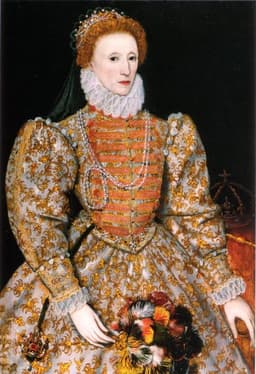
Elizabeth I
Politician · Modern
65.7Total
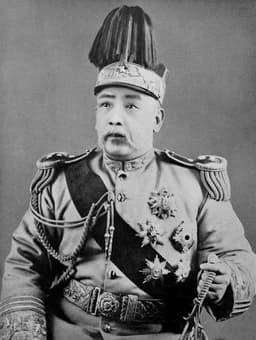
Yuan Shikai
Politician · Modern
60.0Total
Basic Information
Born
1533
1859
Died
1603
1916
Era
Modern
Modern
Nationality
England
China
Occupation
Politician
Politician
Civilization
Western
Eastern
Score Comparison
Military (10%)
45.0
45.0
Political (20%)
78.0
72.0
Influence (20%)
65.0
57.2
Legacy (20%)
68.0
54.0
Leadership (15%)
75.0
72.0
Strategy (15%)
50.0
61.2
TOTAL
65.7
60.0
Elizabeth I — Complete Timeline
1559 AD
Act of Supremacy 1559Political Action◆ Major
Elizabeth I re-established the Church of England's independence from Rome, declaring herself Supreme Governor. This act, part of the Elizabethan Religious Settlement, restored Protestantism while maintaining some Catholic traditions, creating a via media that aimed to unify the nation.
Religious SettlementProtestantismChurch of England
Impact: nationalconstructive
1587 AD
Execution of Mary, Queen of ScotsPolitical Action◆ Major
After years of imprisonment, Elizabeth I signed the death warrant for Mary, Queen of Scots, who had been implicated in the Babington Plot to assassinate Elizabeth and claim the English throne. Mary's execution removed a major Catholic rival and solidified Elizabeth's position.
ExecutionCatholic RivalPlot
Impact: nationaltragic
1588 AD
Defeat of the Spanish ArmadaWar
The English navy under Lord Howard and Sir Francis Drake defeated the Spanish Armada, a massive invasion fleet sent by Philip II. Storms and English fireships scattered the Spanish fleet, preventing the invasion and establishing England as a major naval power.
Naval BattleSpainProtestantism
Impact: globalconstructive
1600 AD
Chartering of the East India CompanyPolitical Action◆ Major
Elizabeth I granted a royal charter to the East India Company, giving it a monopoly on English trade with Asia. This company would become a powerful instrument of British imperialism, eventually controlling large parts of India and shaping global trade.
TradeColonialismCharter
Impact: globalconstructive
1601 AD
Golden SpeechPolitical Action
In her final address to Parliament, Elizabeth I delivered the 'Golden Speech,' expressing her love for her subjects and her dedication to the realm. She addressed grievances over monopolies, promising reform, and cemented her image as a beloved monarch devoted to her people.
SpeechParliamentMonarchy
Impact: nationalconstructive
Yuan Shikai — Complete Timeline
1901 AD
Command of the Beiyang ArmyReform◆ Major
Yuan Shikai took command of the Beiyang Army, the most modern military force in late Qing China. He expanded and trained the army, which became the basis for his political power and later dominated Chinese politics.
Military reformBeiyang Army
Impact: national
1912 AD
Appointed First President of the Republic of ChinaPolitical Action
Yuan Shikai became the first president of the Republic of China after negotiating the abdication of the Qing emperor. He used his control of the Beiyang Army to pressure the revolutionary government into accepting his leadership.
PresidencyRepublic of China
Impact: national
1915 AD
Declaration of the Empire of ChinaPolitical Action◆ Major
Yuan Shikai declared himself emperor of the Empire of China, attempting to restore the monarchy. This move sparked widespread opposition from provincial leaders and foreign powers, leading to the collapse of his regime.
Monarchy restorationPolitical crisis
Impact: nationaldestructive
Signing of the Twenty-One DemandsPolitical Action◆ Major
Yuan Shikai accepted most of Japan's Twenty-One Demands, which expanded Japanese influence in China. The agreement granted Japan economic rights in Manchuria and Shandong, and was seen as a national humiliation.
DiplomacyJapanese imperialism
Impact: globaltragic
1916 AD
Death and Collapse of the Beiyang GovernmentPolitical Action◆ Major
Yuan Shikai died of uremia, leaving no clear successor. His death led to the fragmentation of the Beiyang Army into warlord factions, plunging China into a period of civil war and political instability.
Warlord eraPolitical fragmentation
Impact: nationaltragic
Expert Analysis
Yuan Shikai vs Elizabeth I
# The Crown and the Scepter: Elizabeth I and Yuan Shikai
In the winter of 1601, an aging queen stood before her Parliament in London, her voice trembling not with frailty but with conviction. "Though God hath raised me high," Elizabeth I declared, "yet this I count the glory of my crown: that I have reigned with your loves." Three centuries later and half a world away, another ruler faced his own parliament in Beijing, but Yuan Shikai spoke not of love—he spoke of order, of strength, of a nation that needed a firm hand. One woman would die beloved, her realm ascendant. One man would die reviled, his nation shattered. What separated these two figures, born into such different worlds, yet both wielding absolute power in times of profound transition?
Origins
Elizabeth Tudor entered a world of peril. Born in 1533 to Anne Boleyn, she was declared illegitimate before her third birthday, her mother beheaded on charges that still spark debate. She spent her youth navigating the treacherous currents of Tudor court politics, learning that survival meant masking her thoughts, reading faces, and never showing her hand. The religious turbulence of her father Henry VIII's reign, followed by the Catholic restoration under Mary I, taught her that faith could be a weapon as sharp as any sword.
Yuan Shikai, born in 1859, came of age in a China that was bleeding. The Opium Wars had exposed the Middle Kingdom's weakness; the Taiping Rebellion had nearly torn it apart. Unlike Elizabeth, who inherited a throne, Yuan clawed his way upward from a minor military family. He failed the civil service examinations twice—the traditional path to power—and instead found his calling in the army, where Western weapons and tactics were beginning to replace the bow and spear. Where Elizabeth learned to maneuver through whispers and courtly intrigue, Yuan learned that power flowed from the barrel of a gun.
Rise to Power
Elizabeth's path to the throne was a waiting game. She survived plots, imprisonments, and the constant threat of execution. When her half-sister Mary died in 1558, Elizabeth inherited a kingdom divided by religion, bankrupt from war, and surrounded by enemies. She was twenty-five years old, and she knew that her legitimacy would be questioned as long as she lived.
Yuan Shikai's rise was more deliberate, more calculated. In 1901, he took command of the Beiyang Army, forging it into the most modern fighting force in China. When the Qing dynasty collapsed in 1912, he was the man everyone needed—the revolutionaries needed his army to secure their victory, the imperial court needed his protection to survive. He played both sides masterfully, emerging as the first president of the Republic of China. But where Elizabeth saw her crown as a sacred trust, Yuan saw his presidency as a stepping stone.
Leadership & Governance
Elizabeth governed through what historians call her "cult of Gloriana"—a carefully crafted image of the Virgin Queen married to her people. She understood that in a deeply patriarchal age, her power depended on appearing both untouchable and accessible. She surrounded herself with brilliant advisors like William Cecil and Francis Walsingham, but she never let them forget who wore the crown. Her 1559 Act of Supremacy re-established the Church of England with herself as Supreme Governor, a masterful compromise that angered both Catholics and Puritans but held the nation together.
Yuan ruled through control. His political wisdom lay in knowing that China's old order had collapsed and that something new must rise—but he could not decide what that something should be. He modernized the army, reformed education, and encouraged industry, yet he never built the institutions that might have outlasted him. When he accepted most of Japan's Twenty-One Demands in 1915, trading sovereignty for stability, he revealed the central flaw in his philosophy: he believed that power came from above, not from the consent of the governed.
Triumph & Tragedy
Elizabeth's greatest moment came in 1588, when the Spanish Armada sailed for England. She did not command the fleet—that was Lord Howard and Sir Francis Drake—but she rode to Tilbury in full armor and declared, "I know I have the body of a weak and feeble woman, but I have the heart and stomach of a king." The Armada's defeat was a miracle of weather and seamanship, but Elizabeth made it a legend. She also made the harder choice in 1587, signing the death warrant for her cousin Mary, Queen of Scots—a decision that haunted her but secured her throne.
Yuan's triumph was his rise itself: the man who held China together when it might have shattered. But his tragedy was his ambition. In 1915, he declared himself emperor of the Empire of China, a title that had been abolished with the Qing. The provinces rose in rebellion; his own generals abandoned him. He reigned for eighty-three days before being forced to abdicate, dying the next year of uremia. His death left a vacuum that no one could fill, and China descended into the chaos of the Warlord Era.
Character & Destiny
Elizabeth was cautious to the point of paralysis. She delayed decisions, played factions against each other, and refused to marry because marriage meant sharing power. Yet this caution was also her genius: she kept England out of costly continental wars, balanced the religious factions, and outlived her enemies. Her character was shaped by the knowledge that a wrong step could mean death.
Yuan was decisive to the point of recklessness. He believed that China needed a strongman, and he was willing to become one—even if it meant betraying the republic he had sworn to lead. Where Elizabeth saw power as something to be held in trust, Yuan saw it as something to be seized and held. His fatal error was not in wanting to be emperor; it was in believing that the old forms of authority could be resurrected in a world that had moved on.
Legacy
Elizabeth's England became a golden age—the age of Shakespeare and Marlowe, of Drake and Raleigh, of the East India Company chartered in 1600. The Church of England survived, the navy grew, and the foundations of empire were laid. She is remembered as Gloriana, Good Queen Bess, the Virgin Queen—a symbol of national unity and cultural flowering.
Yuan Shikai's legacy is more complicated. He is remembered as a traitor to the republic, a would-be emperor who put his ambition above his country. Yet historians also note that he kept China united when it could have fragmented earlier, that he modernized its army, and that the problems he faced—regional warlords, foreign pressure, the collapse of traditional authority—were perhaps beyond any single leader's capacity to solve.
Conclusion
Elizabeth and Yuan faced the same fundamental question: how do you rule in an age when the old certainties are crumbling? Elizabeth answered by building new institutions, by cultivating the love of her people, by understanding that power must be shared to be sustained. Yuan answered by trying to rebuild the old certainties, by reaching for the trappings of monarchy when the substance had already vanished.
One died beloved, her nation united and rising. One died despised, his nation fractured and falling. The difference was not in their ambition—both wanted power—but in their understanding of what power requires. Elizabeth knew that a crown is not a possession but a relationship. Yuan never learned that lesson, and China paid the price.
Rankings
🥇
Elizabeth ILeader
Mil: 45.0Pol: 78.0Inf: 65.0
65.7
🥈
Yuan Shikai
Mil: 45.0Pol: 72.0Inf: 57.2
60.0
+5.7 behind
How This Comparison Works
Algorithm
Each figure is scored on 6 dimensions (0—100 scale) based on structured historical data: Military (10%), Political (20%), Influence (20%), Legacy (20%), Leadership (15%), Strategy (15%). The weighted total produces the final ranking.
Data Sources
Scores are computed from structured sub-indicators in the database. Scale factors adjust for era (Ancient ×0.85, Modern ×1.0) and civilization size (Eastern ×1.05, Other ×0.80) to account for differences in population and military scale.
Maximum 3 Figures
Comparisons are limited to 2—3 figures to ensure readability and statistical meaningfulness.
Error Margins
±5 points per dimension — Sub-scores are derived from historical records with inherent uncertainty. Two figures within 5 points on a dimension should be considered roughly equivalent in that area.
Total Score Accuracy
±3 points overall — The weighted combination of 6 dimensions produces a total score with approximately ±3 points of uncertainty. Differences of less than 3 points are not statistically significant— the figures are effectively tied.
Known Limitations
- Historical records are incomplete and uneven across civilizations
- Figures from oral-tradition societies may be underrepresented
- Occupation labels can misclassify multi-role figures
- Scores measure capability and impact, not moral character
- Quantitative scoring is a comparison tool, not absolute truth
Capability Radar
Military (10%) — Battles & Warfare
Battles
45
45
Win Rate
70
55
Expansion
55
50
Political (20%) — Governance & Reform
Reform
80
55
Diplomacy
85
70
Economy
80
50
Influence (20%) — Cultural & Global Reach
Cultural
85
40
Global
80
35
Legacy (20%) — Historical Impact
Historical
85
65
Longevity
85
40
Leadership (15%) — Power & Stability
Tenure
90
60
Stability
75
30
Strategy (15%) — Tactics & Innovation
Strategy
75
65
Tactics
60
60
Reform
65
80
Similar Comparisons
Comments & Discussion
No comments yet. Be the first to share your thoughts!