Loading...
Elizabeth I vs William Pitt the Elder
William Pitt the Elder leads by 4.5 pts · 2 figures compared
…
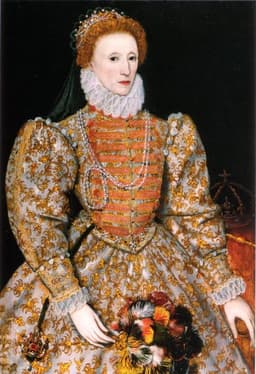
Elizabeth I
Politician · Modern
65.7Total
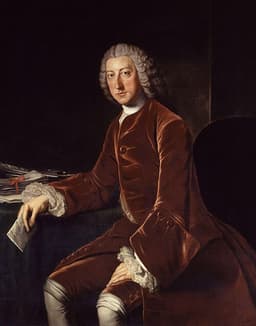
William Pitt the Elder
Politician · Modern
70.2Total
Basic Information
Born
1533
1708
Died
1603
1778
Era
Modern
Modern
Nationality
England
United Kingdom
Occupation
Politician
Politician
Civilization
Western
Western
Score Comparison
Military (10%)
45.0
67.3
Political (20%)
78.0
72.0
Influence (20%)
65.0
68.0
Legacy (20%)
68.0
68.0
Leadership (15%)
75.0
80.0
Strategy (15%)
50.0
67.2
TOTAL
65.7
70.2
Elizabeth I — Complete Timeline
1559 AD
Act of Supremacy 1559Political Action◆ Major
Elizabeth I re-established the Church of England's independence from Rome, declaring herself Supreme Governor. This act, part of the Elizabethan Religious Settlement, restored Protestantism while maintaining some Catholic traditions, creating a via media that aimed to unify the nation.
Religious SettlementProtestantismChurch of England
Impact: nationalconstructive
1587 AD
Execution of Mary, Queen of ScotsPolitical Action◆ Major
After years of imprisonment, Elizabeth I signed the death warrant for Mary, Queen of Scots, who had been implicated in the Babington Plot to assassinate Elizabeth and claim the English throne. Mary's execution removed a major Catholic rival and solidified Elizabeth's position.
ExecutionCatholic RivalPlot
Impact: nationaltragic
1588 AD
Defeat of the Spanish ArmadaWar
The English navy under Lord Howard and Sir Francis Drake defeated the Spanish Armada, a massive invasion fleet sent by Philip II. Storms and English fireships scattered the Spanish fleet, preventing the invasion and establishing England as a major naval power.
Naval BattleSpainProtestantism
Impact: globalconstructive
1600 AD
Chartering of the East India CompanyPolitical Action◆ Major
Elizabeth I granted a royal charter to the East India Company, giving it a monopoly on English trade with Asia. This company would become a powerful instrument of British imperialism, eventually controlling large parts of India and shaping global trade.
TradeColonialismCharter
Impact: globalconstructive
1601 AD
Golden SpeechPolitical Action
In her final address to Parliament, Elizabeth I delivered the 'Golden Speech,' expressing her love for her subjects and her dedication to the realm. She addressed grievances over monopolies, promising reform, and cemented her image as a beloved monarch devoted to her people.
SpeechParliamentMonarchy
Impact: nationalconstructive
William Pitt the Elder — Complete Timeline
1756 AD
Led Britain in Seven Years' WarWar
William Pitt the Elder served as Secretary of State from 1756 to 1761, directing British strategy in the Seven Years' War. His policies focused on naval supremacy and colonial campaigns, leading to victories in Canada, India, and the Caribbean.
Seven Years' WarColonial EmpireMilitary Strategy
Impact: global
1759 AD
Conquest of QuebecWar◆ Major
Under Pitt's direction, British forces under General James Wolfe captured Quebec City on September 13, 1759, after the Battle of the Plains of Abraham. This victory secured British control over Canada and marked a turning point in the Seven Years' War.
Seven Years' WarCanadaMilitary Victory
Impact: global
1766 AD
Became Prime MinisterPolitical Action
Pitt was appointed Prime Minister on July 30, 1766, forming a government. However, his health declined and he was elevated to the House of Lords as Earl of Chatham, which weakened his political base. His second ministry was less effective than his wartime leadership.
Prime MinisterGovernment18th Century
Impact: national
Opposed American TaxationPolitical Action◆ Major
Pitt argued for the repeal of the Stamp Act in 1766, asserting that Parliament had no right to tax the American colonies without representation. His speech in the Commons helped secure repeal, though he maintained Parliament's authority to legislate for the colonies.
American ColoniesTaxationParliamentary Debate
Impact: global
Expert Analysis
Elizabeth I vs William Pitt the Elder
### The Virgin Queen and the Great Commoner: Two Paths to British Greatness
On a grey November day in 1558, a 25-year-old woman stood at the gates of the Tower of London, the same fortress where her mother had been beheaded. She was about to become queen of a divided, bankrupt, and militarily weak island kingdom. A century and a half later, in the summer of 1759, a gravel-voiced orator in the House of Commons thundered for war, staking his reputation on a global conflict that would forge an empire. Elizabeth I and William Pitt the Elder never met, yet their lives form a single, remarkable story: how two very different figures, operating in vastly different eras, each pulled England from the brink of irrelevance and launched it toward global dominance. Their methods, however, could not have been more different.
**Origins**
Elizabeth was born into a storm. Her father, Henry VIII, had broken with Rome to marry her mother, Anne Boleyn. By the time Elizabeth was three, Boleyn was dead, and the princess was declared illegitimate. She grew up in a world of shifting alliances, religious terror, and constant threat of execution. She learned to speak in riddles, to smile while calculating, and to survive by never committing fully to anything. This was not a weakness; it was the only way to live.
William Pitt was born in 1708 into a different kind of storm—the genteel chaos of a prosperous political family. His grandfather was a governor of Madras; his father was a member of Parliament. Pitt had connections, money, and a classical education. He did not have to learn to survive; he had to learn to win. Where Elizabeth’s formative years taught her caution, Pitt’s taught him audacity. He entered Parliament in 1735 and immediately made enemies with his blistering speeches against the government’s timidity.
**Rise to Power**
Elizabeth’s rise was a slow, nerve-wracking crawl. She came to the throne in 1558 because her half-sister Mary died childless. Her legitimacy was questioned; her religion was suspect; her sex was considered a liability. She had no army, no treasury, and a nation torn between Catholics and Protestants. Her first great act, the Act of Supremacy in 1559, was a masterclass in ambiguity: she re-established the Church of England’s independence from Rome but called herself “Supreme Governor,” not “Head,” a word that might offend both Catholics and radical Protestants. It was a compromise that held, and it defined her reign.
Pitt’s rise was a cannonball. He was not a king’s favorite; he was a backbencher who shouted his way into power. His chance came in 1756, when Britain was losing the Seven Years’ War. The king loathed him, but the people adored him. He was made Secretary of State, effectively running the war effort from 1756 to 1761. He had no patience for Elizabeth’s careful balancing. He believed in smashing the enemy, preferably on the other side of the world.
**Leadership & Governance**
Elizabeth governed through the art of the possible. She never married, using the prospect of marriage as a diplomatic weapon for decades. She kept her councilors divided, playing them against each other. She was frugal to a fault, often refusing to fund wars until absolutely necessary. Her military score of 45 reflects a queen who rarely fought but fought well when she had to. The defeat of the Spanish Armada in 1588 was not her victory in the field—that belonged to Drake and the weather—but it was her victory in spirit. She rode to Tilbury and told her troops, “I know I have the body but of a weak and feeble woman; but I have the heart and stomach of a king.” It was a lie, of course—she was neither weak nor feeble—but it worked.
Pitt governed through sheer force of will. He was not a military commander—his strategy score of 67 is modest—but he was a genius at logistics and morale. He found generals like Wolfe and Amherst, and he gave them the resources and the freedom to win. His greatest triumph was 1759, the “Year of Victories,” when Quebec fell, and the French empire in North America crumbled. He understood that war was a global chessboard, not a single battlefield. He also understood that victory required money, and he was willing to borrow it. His political score of 80 reflects a man who could move Parliament, but not always his own health.
**Triumph & Tragedy**
Elizabeth’s greatest moment was the Armada’s defeat in 1588. Her most devastating failure was the execution of Mary, Queen of Scots in 1587. For years, Elizabeth had resisted signing the death warrant, knowing it would set a terrible precedent: a queen beheading another queen. But Mary was a magnet for Catholic plots, and finally, Elizabeth gave in. She signed the warrant, then claimed she never meant for it to be carried out. It was a pathetic, human moment—a brilliant woman lying to herself about her own decision. Tragedy was built into her reign: she had no heir, and the Tudor line died with her.
Pitt’s triumph was the conquest of Canada. His tragedy was the American colonies. In 1766, as Prime Minister, he argued passionately for the repeal of the Stamp Act, insisting Parliament had no right to tax the colonies without their consent. He was ahead of his time, but he was also too sick to lead effectively. He was elevated to the House of Lords as Earl of Chatham, which silenced his voice in the Commons. He died in 1778, watching the American Revolution unfold—a war he had tried to prevent.
**Character & Destiny**
Elizabeth’s character was a fortress built from trauma. She was brilliant, vain, and deeply lonely. She never trusted anyone completely, and she was right not to. Her caution saved England from civil war but also kept it small. She chartered the East India Company in 1600, planting a seed for empire, but she never saw it grow. Her destiny was to survive, and she did it better than anyone.
Pitt’s character was a battering ram. He was arrogant, ill-tempered, and often incapacitated by gout and depression. But he had a vision of Britain as a global power, and he drove that vision through a reluctant king and a skeptical Parliament. His destiny was to win, and he did that too—but at the cost of his health and his peace of mind.
**Legacy**
Elizabeth left a myth: the Golden Age, Gloriana, the Virgin Queen. Her legacy score of 75 is high because she became a symbol of English identity—Protestant, independent, and defiant. But the myth hides the messiness: the religious tensions, the Irish wars, the poverty. She was a great queen because she knew how to manage decline as much as growth.
Pitt left an empire. His legacy score of 75 matches Elizabeth’s, but for different reasons. He is remembered as the “Great Commoner,” the man who made Britain a superpower. His son, William Pitt the Younger, would become Prime Minister and finish the job. The British Empire that dominated the 19th century was built on the foundations Pitt laid in the 1750s.
**Conclusion**
Elizabeth I and William Pitt the Elder are bookends of British greatness. One ruled by holding back; the other ruled by pushing forward. One was a woman in a man’s world, forced to be cunning; the other was a man in a world of men, free to be bold. Both understood that power is not about being liked—it is about being necessary. Elizabeth was necessary to keep England alive. Pitt was necessary to make it great. In the end, they both succeeded, and their successes still echo in the language we speak and the world we inhabit.
Rankings
🥇
William Pitt the ElderLeader
Mil: 67.3Pol: 72.0Inf: 68.0
70.2
🥈
Elizabeth I
Mil: 45.0Pol: 78.0Inf: 65.0
65.7
+4.5 behind
How This Comparison Works
Algorithm
Each figure is scored on 6 dimensions (0—100 scale) based on structured historical data: Military (10%), Political (20%), Influence (20%), Legacy (20%), Leadership (15%), Strategy (15%). The weighted total produces the final ranking.
Data Sources
Scores are computed from structured sub-indicators in the database. Scale factors adjust for era (Ancient ×0.85, Modern ×1.0) and civilization size (Eastern ×1.05, Other ×0.80) to account for differences in population and military scale.
Maximum 3 Figures
Comparisons are limited to 2—3 figures to ensure readability and statistical meaningfulness.
Error Margins
±5 points per dimension — Sub-scores are derived from historical records with inherent uncertainty. Two figures within 5 points on a dimension should be considered roughly equivalent in that area.
Total Score Accuracy
±3 points overall — The weighted combination of 6 dimensions produces a total score with approximately ±3 points of uncertainty. Differences of less than 3 points are not statistically significant— the figures are effectively tied.
Known Limitations
- Historical records are incomplete and uneven across civilizations
- Figures from oral-tradition societies may be underrepresented
- Occupation labels can misclassify multi-role figures
- Scores measure capability and impact, not moral character
- Quantitative scoring is a comparison tool, not absolute truth
Capability Radar
Military (10%) — Battles & Warfare
Battles
45
60
Win Rate
70
75
Expansion
55
80
Political (20%) — Governance & Reform
Reform
80
75
Diplomacy
85
80
Economy
80
70
Influence (20%) — Cultural & Global Reach
Cultural
85
60
Global
80
75
Legacy (20%) — Historical Impact
Historical
85
80
Longevity
85
70
Leadership (15%) — Power & Stability
Tenure
90
70
Stability
75
65
Strategy (15%) — Tactics & Innovation
Strategy
75
85
Tactics
60
65
Reform
65
70
Similar Comparisons
Comments & Discussion
TowerFox6/16/2026
Elizabeth I wasn't some strategic mastermind—she was lucky. Her victory over the Armada in 1588 was due more to Spanish incompetence and weather than her leadership. Compare her stingy naval funding to Pitt's aggressive investment in global military infrastructure. Pitt understood you need to spend money to make power. Elizabeth hoarded it. She died leaving England still a second-tier power; Pitt's policies made it a superpower. Her cult of personality obscures just how passive her reign actuall
PittBombs6/16/2026
As a military historian, I see Pitt the Elder as vastly superior. He grasped global strategy in a way Elizabeth never could. His "year of miracles" in 1759—Quebec, Minden, Quiberon Bay—wasn't luck; it was a coordinated campaign that took the Seven Years' War from European squabble to world war. Elizabeth's reign had no such vision. She micromanaged, delayed, and underfunded. Pitt understood that naval power plus colonial ambition equals empire. She just played defense.
SkepticSteve6/16/2026
You're all fooling yourselves. The comparison between a 16th-century monarch and an 18th-century minister is nonsense. Different systems, different resources, different worlds. Elizabeth inherited a broken country and kept it independent against Europe's superpower. Pitt inherited a thriving commercial empire and expanded it. Apples to oranges. The analysis tries to force a narrative of "two paths to greatness" when really it's just two people doing their jobs in wildly different contexts. Conte
红玫瑰与铁砧6/16/2026
伊丽莎白的伟大并非来自什么宏大的战略规划,而是一种近乎本能的生存智慧。她的宗教妥协方案看似不温不火,却让英格兰避免了法国宗教战争那样的血海深仇。反观皮特,他的帝国扩张虽然辉煌,却种下了美国独立战争的种子。伊丽莎白知道什么时候收手,皮特只知道冲。伟大的君主懂得适可而止,而好战者往往埋葬自己的荣耀。
沉默的刺客6/16/2026
我读伊丽莎白的外交手腕,仿佛在看一场精妙的棋局。1559年,她派五千英军支援苏格兰的新教叛军,却假装这只是防御性行动。皮特呢?1758年,他直接命令舰队突袭路易斯堡,毫不掩饰帝国的野心。一个用暗流涌动赢天下,一个用雷霆之怒抢天下。但问题是:谁的手段更持久?伊丽莎白的谨慎让英格兰活了近百年安稳,皮特的激进只让他自己活成了传奇。