Loading...
Elizabeth I vs Peter the Great
Peter the Great leads by 7.5 pts · 2 figures compared
…
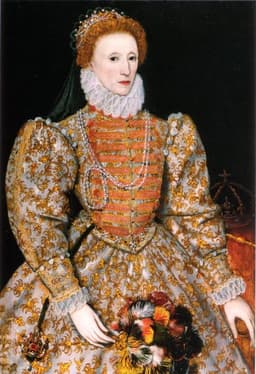
Elizabeth I
Politician · Modern
65.7Total
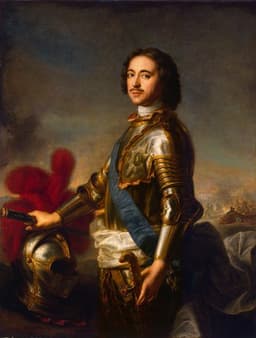
Peter the Great
Emperor · Modern
73.2Total
Basic Information
Born
1533
1672
Died
1603
1725
Era
Modern
Modern
Nationality
England
Russia
Occupation
Politician
Emperor
Civilization
Western
Western
Score Comparison
Military (10%)
45.0
75.0
Political (20%)
78.0
90.0
Influence (20%)
65.0
68.0
Legacy (20%)
68.0
65.0
Leadership (15%)
75.0
78.0
Strategy (15%)
50.0
72.0
TOTAL
65.7
73.2
Elizabeth I — Complete Timeline
1559 AD
Act of Supremacy 1559Political Action◆ Major
Elizabeth I re-established the Church of England's independence from Rome, declaring herself Supreme Governor. This act, part of the Elizabethan Religious Settlement, restored Protestantism while maintaining some Catholic traditions, creating a via media that aimed to unify the nation.
Religious SettlementProtestantismChurch of England
Impact: nationalconstructive
1587 AD
Execution of Mary, Queen of ScotsPolitical Action◆ Major
After years of imprisonment, Elizabeth I signed the death warrant for Mary, Queen of Scots, who had been implicated in the Babington Plot to assassinate Elizabeth and claim the English throne. Mary's execution removed a major Catholic rival and solidified Elizabeth's position.
ExecutionCatholic RivalPlot
Impact: nationaltragic
1588 AD
Defeat of the Spanish ArmadaWar
The English navy under Lord Howard and Sir Francis Drake defeated the Spanish Armada, a massive invasion fleet sent by Philip II. Storms and English fireships scattered the Spanish fleet, preventing the invasion and establishing England as a major naval power.
Naval BattleSpainProtestantism
Impact: globalconstructive
1600 AD
Chartering of the East India CompanyPolitical Action◆ Major
Elizabeth I granted a royal charter to the East India Company, giving it a monopoly on English trade with Asia. This company would become a powerful instrument of British imperialism, eventually controlling large parts of India and shaping global trade.
TradeColonialismCharter
Impact: globalconstructive
1601 AD
Golden SpeechPolitical Action
In her final address to Parliament, Elizabeth I delivered the 'Golden Speech,' expressing her love for her subjects and her dedication to the realm. She addressed grievances over monopolies, promising reform, and cemented her image as a beloved monarch devoted to her people.
SpeechParliamentMonarchy
Impact: nationalconstructive
Peter the Great — Complete Timeline
1697 AD
Grand EmbassyPolitical Action◆ Major
Peter the Great traveled incognito to Western Europe as part of a diplomatic mission. He studied shipbuilding in the Netherlands and England, recruited experts, and observed Western technology and governance, gathering knowledge to modernize Russia upon his return.
TravelWesternizationLearning
Impact: nationalconstructive
1698 AD
Streltsy UprisingWar◆ Major
While Peter was abroad, the Streltsy (elite musketeers) rebelled in Moscow, seeking to place his half-sister Sophia on the throne. Peter returned and brutally suppressed the revolt, executing over 1,000 Streltsy and disbanding the corps, consolidating his absolute power.
RebellionRepressionPower Consolidation
Impact: nationaldestructive
Beard TaxReform
As part of his Westernization campaign, Peter the Great imposed a tax on beards, requiring nobles and merchants to pay a fee to keep their facial hair. Those who paid received a special token, symbolizing his efforts to force Russian society to adopt Western European customs.
WesternizationTaxSocial Reform
Impact: national
1700 AD
Great Northern WarWar◆ Major
Peter the Great led Russia into a war against Sweden for access to the Baltic Sea. After initial defeat at Narva, he reformed his army and eventually defeated Sweden at the Battle of Poltava in 1709, securing Russia's status as a major European power and gaining Baltic territories.
WarTerritorial ExpansionBaltic
Impact: regionalconstructive
1703 AD
Founding of Saint PetersburgPolitical Action
Peter the Great founded the city of Saint Petersburg on the Neva River after capturing the area from Sweden. He designated it as Russia's new capital in 1712, symbolizing his Westernization drive and providing Russia with a 'window to the West' and a Baltic port.
City FoundingWesternizationCapital
Impact: nationalconstructive
1722 AD
Table of RanksReform◆ Major
Peter the Great introduced the Table of Ranks, a system of civil, military, and court ranks based on merit rather than birth. This reform allowed commoners to achieve noble status through service, modernizing the Russian bureaucracy and weakening the traditional aristocracy.
BureaucracyMeritocracySocial Reform
Impact: nationalprogressive
Expert Analysis
Peter the Great vs Elizabeth I
### The Virgin Queen and the Iron Tsar: Two Paths to Power
In the winter of 1698, as Peter the Great returned from his secret tour of Europe, he did not merely bring back shipbuilding plans and foreign engineers. He brought back a razor. At a grand banquet in Moscow, the six-foot-seven tsar personally hacked off the beards of his astonished nobles, laughing as centuries of Orthodox tradition fell to the floor. A few decades earlier and a thousand miles to the west, Elizabeth Tudor faced a different kind of reckoning. She had inherited a kingdom torn between Catholic and Protestant, a treasury nearly empty, and a continent that saw a woman on the throne as an invitation to chaos. One ruler forced change upon a reluctant nation with an iron fist; the other coaxed a fractious people into greatness with velvet gloves. Why did these two modernizers, both brilliant and ruthless in their own ways, pursue such radically different paths—and what do their contrasting fates reveal about the nature of power itself?
### Origins
Elizabeth was born into a world of deadly uncertainty. Her mother, Anne Boleyn, was executed when Elizabeth was not yet three years old. She spent her childhood oscillating between favor and disgrace, learning that survival depended on silence and calculation. Her tutor Roger Ascham gave her a classical education, but her real schooling came from watching her father Henry VIII’s court, where a misplaced word could mean the Tower of London. She learned to speak in riddles, to commit to nothing, and to let time solve problems that force could not.
Peter, by contrast, was born a giant in a backward land. His father Tsar Alexis died when Peter was four, and the Kremlin became a nest of conspiracy. He watched the Streltsy, the royal guards, murder his uncles before his eyes. While Elizabeth learned to hide her emotions, Peter learned to wield terror as a tool. He built mock fortresses with his boy soldiers, drilled them in Western tactics, and developed a visceral hatred for the old Muscovite ways that had nearly destroyed his family. Where Elizabeth’s childhood taught her patience, Peter’s taught him that the world was a battlefield and hesitation meant death.
### Rise to Power
Elizabeth rose through inaction. When her Catholic sister Mary I imprisoned her in the Tower of London in 1554, Elizabeth did not plot rebellion. She wrote letters, professed loyalty, and waited. She understood that Mary’s unpopular marriage to Philip II of Spain would do more damage to the Catholic cause than any Protestant uprising. When Mary died in 1558, Elizabeth inherited a throne she had done almost nothing to seize.
Peter seized power with blood. In 1689, he overthrew his half-sister Sophia, who had ruled as regent while he played at war. But the real turning point came in 1698, when the Streltsy rebelled in his absence. Peter returned in a fury, personally interrogating and torturing the conspirators. Over a thousand were executed, their bodies left to rot on the Kremlin walls as a warning. Elizabeth’s path to power was paved with restraint; Peter’s was paved with corpses.
### Leadership & Governance
As queen, Elizabeth perfected the art of strategic ambiguity. She never married, using the prospect of alliance with France or Spain as a diplomatic weapon for forty years. She appointed capable ministers like William Cecil and Francis Walsingham, but she also undercut them when they grew too powerful. Her Act of Supremacy in 1559 was a masterpiece of compromise: she declared herself Supreme Governor of the Church of England, not its head, a subtle distinction that allowed moderate Catholics to accept it. She funded privateers like Francis Drake to raid Spanish treasure ships while officially disavowing their actions. Her military score of 45 reflects a queen who avoided war when possible and delegated command when she could not.
Peter governed through direct, brutal intervention. He personally drafted over a hundred decrees reforming everything from the calendar to the alphabet. The Table of Ranks of 1722 swept away centuries of aristocratic privilege, replacing it with a meritocracy where any commoner could rise to noble status through service. He founded Saint Petersburg in 1703 on a swamp, forcing thousands of serfs to die building his “window to the West.” The Beard Tax of 1698 was not about facial hair; it was about breaking the symbolic hold of the old Orthodox culture. Where Elizabeth ruled through indirection, Peter ruled through imposition. His military score of 75 reflects a leader who commanded armies himself and learned from his defeats, especially the catastrophic loss at Narva in 1700, which he turned into the foundation of a modernized army that eventually crushed Sweden.
### Triumph & Tragedy
Elizabeth’s greatest moment came in 1588. The Spanish Armada, the largest fleet ever assembled, sailed to invade England. The queen rode to Tilbury in armor, delivering a speech that has echoed through centuries: “I know I have the body of a weak and feeble woman, but I have the heart and stomach of a king.” The English fireships and storms scattered the Armada, and Elizabeth’s legend was sealed. Yet her triumph was shadowed by tragedy. The execution of Mary, Queen of Scots in 1587, after years of agonizing hesitation, haunted her. She called it a “necessity” but never forgave herself for signing the death warrant of a fellow queen.
Peter’s greatest triumph was the Great Northern War, which ended in 1721 with Russia gaining its coveted Baltic coastline. He declared himself Emperor of All Russia, and Europe had no choice but to recognize his achievement. But his tragedy was personal: his son Alexei, heir to the throne, opposed his reforms and fled abroad. Peter lured him back with promises of forgiveness, then tortured him to death in the Peter and Paul Fortress. The tsar who had modernized Russia destroyed his own dynasty in the process.
### Character & Destiny
Elizabeth’s character was shaped by the constant threat of annihilation. She was frugal to the point of parsimony, indecisive to the point of paralysis, and yet somehow inspired fierce loyalty. She understood that in a world that feared female rule, her greatest weapon was her own perceived weakness. She once told Parliament, “Though God hath raised me high, yet this I count the glory of my crown: that I have reigned with your loves.”
Peter’s character was forged in the crucible of humiliation. The boy who watched his relatives die grew into a man who could not tolerate opposition. He was crude, impulsive, and terrifyingly energetic. He worked as a common ship carpenter in the Netherlands, learning his craft with his own hands, but he could also fly into rages that left men dead. Where Elizabeth saw power as a delicate web of relationships to be maintained, Peter saw power as a hammer to be swung.
### Legacy
Elizabeth left behind a cult of personality that has never faded. The “Golden Age” of Shakespeare, Marlowe, and Drake is forever associated with her name. She established a moderate Protestantism that gave England a stable religious settlement for centuries. The East India Company, chartered in 1600, would grow into the instrument of British empire. But her legacy is also one of missed opportunities: she left no heir, and the union with Scotland under James I was a fragile compromise.
Peter left behind a transformed Russia. Saint Petersburg became the symbol of his ambition, a city of palaces and canals that looked west. The Table of Ranks and military reforms created a professional state that could compete with Europe. But his legacy was also one of division: the gap between the Westernized elite and the Orthodox masses that he created would haunt Russia for centuries. His own dynasty, the Romanovs, would not survive another two hundred years.
### Conclusion
Standing at the opposite ends of the sixteenth and seventeenth centuries, Elizabeth and Peter faced the same fundamental challenge: how to drag a reluctant kingdom into modernity. Elizabeth chose the path of the willow, bending with the wind so that she would not break. Peter chose the path of the oak, standing firm and shattering everything in his path. The willow survived, but the oak reshaped the forest. Perhaps the deepest lesson is not about which approach was better, but about how the circumstances of birth and the crucibles of youth forge leaders who are perfectly suited to their times—and tragically unsuited to any other. Elizabeth could not have dragged Russia into the modern world; Peter could not have coaxed England into a golden age. Each was, in the end, the exact ruler their nation needed, and the exact ruler who would never be needed again.
Rankings
🥇
Peter the GreatLeader
Mil: 75.0Pol: 90.0Inf: 68.0
73.2
🥈
Elizabeth I
Mil: 45.0Pol: 78.0Inf: 65.0
65.7
+7.5 behind
How This Comparison Works
Algorithm
Each figure is scored on 6 dimensions (0—100 scale) based on structured historical data: Military (10%), Political (20%), Influence (20%), Legacy (20%), Leadership (15%), Strategy (15%). The weighted total produces the final ranking.
Data Sources
Scores are computed from structured sub-indicators in the database. Scale factors adjust for era (Ancient ×0.85, Modern ×1.0) and civilization size (Eastern ×1.05, Other ×0.80) to account for differences in population and military scale.
Maximum 3 Figures
Comparisons are limited to 2—3 figures to ensure readability and statistical meaningfulness.
Error Margins
±5 points per dimension — Sub-scores are derived from historical records with inherent uncertainty. Two figures within 5 points on a dimension should be considered roughly equivalent in that area.
Total Score Accuracy
±3 points overall — The weighted combination of 6 dimensions produces a total score with approximately ±3 points of uncertainty. Differences of less than 3 points are not statistically significant— the figures are effectively tied.
Known Limitations
- Historical records are incomplete and uneven across civilizations
- Figures from oral-tradition societies may be underrepresented
- Occupation labels can misclassify multi-role figures
- Scores measure capability and impact, not moral character
- Quantitative scoring is a comparison tool, not absolute truth
Capability Radar
Military (10%) — Battles & Warfare
Battles
45
85
Win Rate
70
80
Expansion
55
90
Political (20%) — Governance & Reform
Reform
80
95
Diplomacy
85
80
Economy
80
85
Influence (20%) — Cultural & Global Reach
Cultural
85
85
Global
80
85
Legacy (20%) — Historical Impact
Historical
85
90
Longevity
85
85
Leadership (15%) — Power & Stability
Tenure
90
90
Stability
75
70
Strategy (15%) — Tactics & Innovation
Strategy
75
85
Tactics
60
75
Reform
65
95
Similar Comparisons
Comments & Discussion
MoscowRazorman6/16/2026
Peter was the real modernizer here. Elizabeth inherited a functioning Tudor state machinery; Peter had to drag Russia out of medieval mud by its beard stubble. The Great Northern War against Sweden forced innovation in ways that Elizabeth's careful court politics never could. She built a golden age; he built a navy from scratch with his own hands.
战场学者6/16/2026
别被历史课本骗了。伊丽莎白的都铎王朝早就在亨利八世手里完成了宗教改革,她不过是踩在父亲肩膀上摘桃子。彼得大帝面对的是个连出海口都没有的内陆国家,硬生生用三十年战争把俄罗斯锻造成欧洲列强。论改造国家的难度系数,伊丽莎白最多算副本,彼得打的才是地狱模式。
StreltsyCritic6/16/2026
The Virgin Queen outlasted them all without killing her own son. Peter's paranoia got his heir Alexei tortured to death in a dungeon. Meanwhile Elizabeth kept a dozen imperial suitors dancing for decades and executed only one royal rival—Mary Stuart, who had it coming. There's efficiency, and then there's brutality dressed up as reform.
帝国计量员6/16/2026
军事扩张上彼得完胜,但别忘了经济账。伊丽莎白时代英国国债从25万英镑降到几乎清零,还养出了东印度公司这种怪物。彼得呢?把农奴税从每户1卢布涨到7卢布,战争一结束立马人亡政息。所谓现代化是用几代俄罗斯农民的命换的,这成本放到都铎王朝早引发六次叛乱了。