Loading...
Elizabeth I vs Joseph Stalin
Joseph Stalin leads by 3.1 pts · 2 figures compared
…
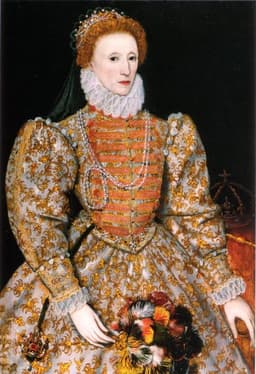
Elizabeth I
Politician · Modern
65.7Total
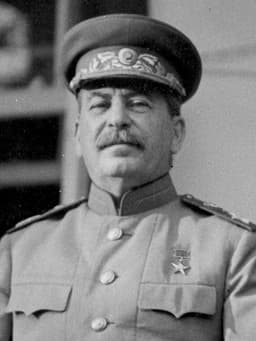
Joseph Stalin
Politician · Modern
68.8Total
Basic Information
Born
1533
1878
Died
1603
1953
Era
Modern
Modern
Nationality
England
Russia
Occupation
Politician
Politician
Civilization
Western
Western
Score Comparison
Military (10%)
45.0
75.0
Political (20%)
78.0
70.0
Influence (20%)
65.0
72.0
Legacy (20%)
68.0
55.0
Leadership (15%)
75.0
80.0
Strategy (15%)
50.0
70.0
TOTAL
65.7
68.8
Elizabeth I — Complete Timeline
1559 AD
Act of Supremacy 1559Political Action◆ Major
Elizabeth I re-established the Church of England's independence from Rome, declaring herself Supreme Governor. This act, part of the Elizabethan Religious Settlement, restored Protestantism while maintaining some Catholic traditions, creating a via media that aimed to unify the nation.
Religious SettlementProtestantismChurch of England
Impact: nationalconstructive
1587 AD
Execution of Mary, Queen of ScotsPolitical Action◆ Major
After years of imprisonment, Elizabeth I signed the death warrant for Mary, Queen of Scots, who had been implicated in the Babington Plot to assassinate Elizabeth and claim the English throne. Mary's execution removed a major Catholic rival and solidified Elizabeth's position.
ExecutionCatholic RivalPlot
Impact: nationaltragic
1588 AD
Defeat of the Spanish ArmadaWar
The English navy under Lord Howard and Sir Francis Drake defeated the Spanish Armada, a massive invasion fleet sent by Philip II. Storms and English fireships scattered the Spanish fleet, preventing the invasion and establishing England as a major naval power.
Naval BattleSpainProtestantism
Impact: globalconstructive
1600 AD
Chartering of the East India CompanyPolitical Action◆ Major
Elizabeth I granted a royal charter to the East India Company, giving it a monopoly on English trade with Asia. This company would become a powerful instrument of British imperialism, eventually controlling large parts of India and shaping global trade.
TradeColonialismCharter
Impact: globalconstructive
1601 AD
Golden SpeechPolitical Action
In her final address to Parliament, Elizabeth I delivered the 'Golden Speech,' expressing her love for her subjects and her dedication to the realm. She addressed grievances over monopolies, promising reform, and cemented her image as a beloved monarch devoted to her people.
SpeechParliamentMonarchy
Impact: nationalconstructive
Joseph Stalin — Complete Timeline
1928 AD
Launched the First Five-Year PlanReform
Stalin initiated a series of centralized economic plans aimed at rapid industrialization and collectivization of agriculture. The First Five-Year Plan set ambitious targets for heavy industry, leading to significant growth but also severe shortages and human cost.
Impact: global
1929 AD
Implemented forced collectivization of agricultureReform
Stalin ordered the consolidation of individual peasant farms into collective farms (kolkhozy). This was met with resistance, leading to the liquidation of kulaks (wealthy peasants) as a class. The policy caused a catastrophic famine, particularly in Ukraine (Holodomor), resulting in millions of deaths.
Impact: nationaldestructive
1937 AD
Conducted the Great Purge (Great Terror)Political Action
Stalin orchestrated a campaign of political repression against alleged enemies of the state. Millions were arrested, executed, or sent to the Gulag labor camps. The purges targeted the Communist Party, military leadership, intellectuals, and ordinary citizens, consolidating Stalin's absolute power.
Impact: nationaldestructive
1945 AD
Led the Soviet Union to victory in World War IIWar
Stalin served as Supreme Commander of the Soviet armed forces. The Soviet Union bore the brunt of the war against Nazi Germany, suffering immense casualties. The Red Army's victory at Stalingrad and the capture of Berlin were key turning points. The war ended with Soviet domination of Eastern Europe.
Impact: global
Established the Eastern Bloc and the Iron CurtainPolitical Action◆ Major
After WWII, Stalin imposed communist governments in Eastern European countries occupied by the Red Army, creating a buffer zone against the West. This division of Europe into Soviet and Western spheres of influence marked the beginning of the Cold War.
Impact: globaldestructive
Expert Analysis
Elizabeth I vs Joseph Stalin
### The Virgin Queen and the Man of Steel
Imagine two portraits. One, a pale woman with red hair and a face like frozen porcelain, sits on a throne of gilded oak. Her fingers are heavy with rings, but her eyes are sharp, calculating, never resting. The other is a short, stocky man in a plain military tunic, his face pitted from smallpox, a thick mustache hiding a mouth that seldom smiled. He stands not on a throne, but at a desk piled with reports. One ruled by persuasion and the slow, grinding machinery of Parliament; the other by fear and the swift, silent knock on the door at midnight. Elizabeth I and Joseph Stalin—two titans of the modern age, separated by three centuries of history, yet both defined by the terrifying weight of absolute power. How did such different rulers emerge from the same broad category of "modern leader"? The answer lies not in their goals, but in their origins, their methods, and the very souls they brought to the throne.
### Origins
Elizabeth was born into the storm of the Tudor succession. Her mother, Anne Boleyn, was executed when Elizabeth was just two years old. She was declared illegitimate, a pawn in a dangerous game of thrones. Her education was her armor; she was tutored in Latin, Greek, philosophy, and rhetoric, learning the arts of survival and statecraft from the shadows. She grew up watching her father, Henry VIII, and her half-siblings, Edward and Mary, wield power with a mix of brutality and divine right. The constant threat of execution, imprisonment, or exile taught her one thing: trust no one, show nothing.
Stalin, born Ioseb Jughashvili in the Georgian town of Gori, knew a different kind of storm. His father was a violent, alcoholic cobbler; his mother a devout, stern woman who wanted him to become a priest. He was beaten at home and bullied at school, his left arm permanently weakened by an early injury. The Orthodox seminary he attended was a hotbed of revolutionary thought, and the young Stalin found his scripture not in the Bible, but in the works of Marx and Lenin. While Elizabeth learned to navigate the treacherous currents of court, Stalin learned to navigate the underground world of bank robberies, exiles, and secret police. For Elizabeth, power was a birthright stolen and reclaimed; for Stalin, it was a prize to be seized from the rubble of an empire.
### Rise to Power
Elizabeth’s path was a slow, cautious ascent. She became queen in 1558 at the age of twenty-five, inheriting a bankrupt, war-torn, and religiously divided kingdom. Her first great act was the **Act of Supremacy in 1559**, which re-established the Church of England’s independence from Rome. But she did so with a masterful compromise—the Elizabethan Religious Settlement—that sought to include both Catholics and Protestants under a broad, moderate church. She was a politician who moved by inches, not leaps.
Stalin’s rise was a bloodier affair. He was not the natural heir to Lenin. He was a grey, efficient bureaucrat, the "grey blur" who quietly placed his allies in key positions. After Lenin’s death in 1924, Stalin outmaneuvered his rivals—Trotsky, Kamenev, Zinoviev—not with grand speeches, but with control over the party apparatus. By 1928, he had enough power to launch the **First Five-Year Plan**, a dizzying, brutal push to industrialize a backward nation. Where Elizabeth built consensus, Stalin built a machine.
### Leadership & Governance
Elizabeth’s leadership was a masterclass in political theater. She was the "Virgin Queen," a symbolic marriage to her nation. She used her image as a woman in a man’s world to disarm, delay, and manipulate. She rarely spoke in absolutes, preferring to let her councilors argue until she saw the safest path. Her greatest military triumph, the **Defeat of the Spanish Armada in 1588**, was not a personal command but a strategic victory of logistics and weather. She rode to Tilbury to rally her troops, but the real work was done by Lord Howard and Sir Francis Drake. Her genius was political, not martial.
Stalin’s governance was a factory of terror. He ruled through the **Great Purge of 1937**, where millions were arrested, executed, or sent to the Gulag. He centralized every aspect of life, from farming (**forced collectivization in 1929**) to art. Yet he also led the Soviet Union to victory in the most catastrophic war in human history. As Supreme Commander in **1945**, he was ruthless, demanding—but he also learned from his early defeats, trusting generals like Zhukov. His political score of 72.0 reflects a man who could build an empire, but only by burning everything else to the ground.
### Triumph & Tragedy
Elizabeth’s greatest triumph was survival. She outlived her enemies, stabilized her kingdom, and saw the flourishing of Shakespeare and the English Renaissance. Her greatest tragedy was the **Execution of Mary, Queen of Scots in 1587**—a decision she agonized over for years, signing the death warrant only when Mary’s plots left no other choice. It was a necessary brutality that haunted her.
Stalin’s triumph was the defeat of Nazi Germany, a victory that cost the Soviet Union 27 million lives. His tragedy was the price of that victory—the famine, the purges, the terror that hollowed out his own people. He built a superpower on a foundation of bones.
### Character & Destiny
Elizabeth was a woman of immense intelligence and profound emotional restraint. She never married, using her singleness as a diplomatic weapon. Her "Golden Speech" in **1601** revealed a queen who genuinely loved her people, but also one who understood that love was a form of control. Her destiny was to be the last of the Tudors, a dynasty that ended with her.
Stalin was paranoid, vindictive, and deeply insecure. He distrusted everyone, even his closest allies. His character was forged in the crucible of revolutionary violence, and he saw the world as a zero-sum game. His destiny was to create a system that would outlive him, but only by crushing the humanity of those who built it.
### Legacy
Elizabeth left a nation. Her reign (1558–1603) is remembered as a golden age of exploration, literature, and naval power. She gave England a sense of itself as a Protestant, independent nation. Her legacy score of 75.0 is high because she built something that endured.
Stalin left a superpower. He industrialized the Soviet Union, defeated Hitler, and created the Eastern Bloc, the Iron Curtain that divided Europe for half a century. But his legacy is a poisoned chalice. His score of 55.0 reflects a man whose achievements are forever stained by the millions he sacrificed. He is remembered as a ruthless tyrant who saved his country and destroyed it at the same time.
### Conclusion
What separates Elizabeth from Stalin is not the scale of their power, but the nature of their humanity. Elizabeth wielded power as a craft, a game of chess played with words and patience. Stalin wielded power as a hammer, smashing everything that did not fit his vision. One ruled through love and fear in equal measure; the other ruled through fear alone. In the end, Elizabeth’s England became a cradle of democracy and liberty. Stalin’s Soviet Union became a graveyard of dreams. The difference was not in their goals—both wanted a strong, unified nation—but in their souls. And that is the most terrifying lesson of all.
Rankings
🥇
Joseph StalinLeader
Mil: 75.0Pol: 70.0Inf: 72.0
68.8
🥈
Elizabeth I
Mil: 45.0Pol: 78.0Inf: 65.0
65.7
+3.1 behind
How This Comparison Works
Algorithm
Each figure is scored on 6 dimensions (0—100 scale) based on structured historical data: Military (10%), Political (20%), Influence (20%), Legacy (20%), Leadership (15%), Strategy (15%). The weighted total produces the final ranking.
Data Sources
Scores are computed from structured sub-indicators in the database. Scale factors adjust for era (Ancient ×0.85, Modern ×1.0) and civilization size (Eastern ×1.05, Other ×0.80) to account for differences in population and military scale.
Maximum 3 Figures
Comparisons are limited to 2—3 figures to ensure readability and statistical meaningfulness.
Error Margins
±5 points per dimension — Sub-scores are derived from historical records with inherent uncertainty. Two figures within 5 points on a dimension should be considered roughly equivalent in that area.
Total Score Accuracy
±3 points overall — The weighted combination of 6 dimensions produces a total score with approximately ±3 points of uncertainty. Differences of less than 3 points are not statistically significant— the figures are effectively tied.
Known Limitations
- Historical records are incomplete and uneven across civilizations
- Figures from oral-tradition societies may be underrepresented
- Occupation labels can misclassify multi-role figures
- Scores measure capability and impact, not moral character
- Quantitative scoring is a comparison tool, not absolute truth
Capability Radar
Military (10%) — Battles & Warfare
Battles
45
85
Win Rate
70
80
Expansion
55
85
Political (20%) — Governance & Reform
Reform
80
90
Diplomacy
85
70
Economy
80
85
Influence (20%) — Cultural & Global Reach
Cultural
85
70
Global
80
95
Legacy (20%) — Historical Impact
Historical
85
95
Longevity
85
80
Leadership (15%) — Power & Stability
Tenure
90
95
Stability
75
60
Strategy (15%) — Tactics & Innovation
Strategy
75
85
Tactics
60
60
Reform
65
90
Similar Comparisons
Comments & Discussion
TERMINAL QUEEN6/16/2026
Pure nostalgia bait. Elizabeth is romanticized as some brilliant strategist when really she inherited a functioning state and spent 45 years doing nothing but playing factions off each other. Stalin took a feudal peasant economy and industrialized it in a decade. The Virgin Queen gave us Shakespeare and privateers. Stalin gave us the defeat of Nazi Germany. Let's not pretend these are comparable figures when one built a superpower and the other was basically a lucky pawn in European geopolitics.
数据铁锤6/16/2026
史实错误警告!Elizabeth的所谓黄金时代全靠海盗掠夺西班牙黄金维持,国库基本常年破产。Stalin至少把苏联从农业国变成了工业国。拿一个靠私掠船抢劫维持表面繁荣的女王和一个打垮纳粹的领袖相比,完全是在侮辱历史分析。建议先查查英国1588年后的财政赤字再说话。
CLASSICS FANBOY6/16/2026
You're comparing apples to ballistic missiles. Elizabeth mastered the quintessentially Renaissance art of control through ambiguity - her speeches, her progresses, her calculated celibacy. Stalin just used purges. The difference is sophistication vs brute force. Elizabeth negotiated with Parliament for 30 years without ever surrendering real authority. Stalin murdered his way through. Both effective? Sure. But Elizabeth's methods required intellectual subtlety that Stalin, the seminary dropout,
赤色档案6/16/2026
搞笑,一边是剥削爱尔兰农民把全国1/3土地赏给贵族的封建女王,一边是领导工农推翻旧制度的革命领袖。Elizabeth的黄金时代?不就是圈地运动和殖民掠夺的高峰期吗?Stalin搞五年计划虽然残酷,但目标是为人民谋福利。把帝国女王和社会主义领袖放在一起对比,本身就是立场问题。历史不是选择题,但非要选,我站斯大林。
SCEPTICAL STATS6/16/2026
Let's kill the romanticism with data. Elizabeth ruled ~4 million subjects with a budget under £400k annually. Stalin controlled 170 million people with a wartime economy surpassing that of most European nations combined. The scale difference is literally 40x population and infinitely more complex governance. Comparing their "effectiveness" without adjusting for scope is like comparing a canoe captain to the admiral of a nuclear fleet. Different leagues entirely.