Loading...
Ehud Barak vs Louis Botha
Louis Botha leads by 1.2 pts · 2 figures compared
…
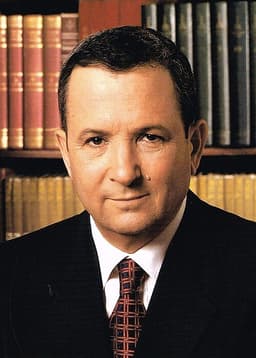
Ehud Barak
General · Modern
59.9Total
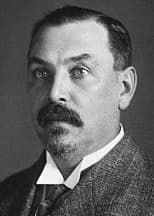
Louis Botha
General · Modern
61.1Total
Basic Information
Born
1942
1862
Died
—
1919
Era
Modern
Modern
Nationality
Israel
South Africa
Occupation
General
General
Civilization
Middle Eastern
Other
Score Comparison
Military (10%)
63.3
61.7
Political (20%)
72.0
70.0
Influence (20%)
55.0
56.7
Legacy (20%)
52.0
50.0
Leadership (15%)
66.0
79.8
Strategy (15%)
61.2
58.0
TOTAL
59.9
61.1
Ehud Barak — Complete Timeline
1973 AD
Awarded Medal of Distinguished ServiceOther
Barak received the Medal of Distinguished Service, Israel's highest military decoration, for his actions during the Yom Kippur War. He led a commando raid deep into Egyptian territory, destroying radar installations. This was part of a broader operation to open a supply route.
Military DecorationYom Kippur War
Impact: nationalconstructive
1976 AD
Led Operation Thunderbolt (Entebbe Raid)War◆ Major
As Chief of Staff, Barak planned and oversaw the Entebbe raid, a rescue of hostages hijacked by Palestinian and German militants in Uganda. Israeli commandos rescued 102 hostages. The operation was a major military success and boosted Israeli morale and international standing.
EntebbeHostage RescueCounterterrorism
Impact: globalconstructive
1991 AD
Appointed Chief of Staff of the IDFPolitical Action◆ Major
Barak was appointed the 14th Chief of Staff of the Israel Defense Forces. He served until 1995, overseeing military operations during the First Intifada and the Oslo Accords period. His tenure included the 1993 Operation Accountability in Lebanon.
Military CommandIDF
Impact: national
1999 AD
Elected Prime Minister of IsraelPolitical Action◆ Major
Barak was elected Prime Minister of Israel, defeating incumbent Benjamin Netanyahu. He campaigned on a platform of peace negotiations and domestic reform. His government pursued the Camp David Summit with Palestinians and withdrew from southern Lebanon.
ElectionPeace Process
Impact: regionalconstructive
2000 AD
Camp David Summit with ArafatPolitical Action
Barak participated in the Camp David Summit with Palestinian leader Yasser Arafat and U.S. President Bill Clinton. The summit aimed to reach a final status agreement but failed. Barak offered territorial concessions that were rejected. The failure contributed to the Second Intifada.
Peace NegotiationsCamp DavidIsraeli-Palestinian Conflict
Impact: global
Withdrew from Southern LebanonPolitical Action◆ Major
Barak ordered the unilateral withdrawal of Israeli forces from the security zone in southern Lebanon, ending 18 years of occupation. The withdrawal was completed in May 2000. Hezbollah claimed victory, and the move was criticized by some as a retreat under fire.
WithdrawalLebanonHezbollah
Impact: regional
Louis Botha — Complete Timeline
1899 AD
Battle of ColensoWar◆ Major
Botha commanded Boer forces at the Battle of Colenso during the Second Boer War. His troops repelled a British attack under General Buller, inflicting heavy casualties and boosting Boer morale.
Second Boer WarBattleVictory
Impact: regional
1900 AD
Boer War Guerrilla CommanderWar◆ Major
After the British captured Pretoria, Botha led Boer guerrilla forces in the Transvaal. He conducted hit-and-run attacks against British columns, prolonging the war and becoming a symbol of Afrikaner resistance.
Second Boer WarGuerrillaResistance
Impact: regional
1902 AD
Signed the Treaty of VereenigingPolitical Action
Botha, as a leading Boer general, signed the Treaty of Vereeniging which ended the Second Boer War. The treaty granted the Boer republics self-government under British sovereignty and promised eventual self-rule.
TreatyPeaceSecond Boer War
Impact: regional
1910 AD
First Prime Minister of the Union of South AfricaPolitical Action
Botha became the first Prime Minister of the newly formed Union of South Africa. He led a coalition government that sought to reconcile Afrikaners and English-speaking whites, while implementing segregationist policies.
Prime MinisterUnion of South AfricaFounding
Impact: nationalconstructive
1914 AD
Suppressed the 1914 RebellionWar◆ Major
Botha personally led government forces to suppress the Maritz Rebellion, an Afrikaner uprising against South Africa's entry into World War I. He defeated the rebels, asserting state authority and maintaining support for the British Empire.
RebellionWorld War ISuppression
Impact: national
1915 AD
Conquered German South West AfricaWar◆ Major
Botha commanded South African forces in the invasion and conquest of German South West Africa. The campaign succeeded, and the territory was later administered by South Africa under a League of Nations mandate.
World War IConquestGerman South West Africa
Impact: regional
Expert Analysis
Louis Botha vs Ehud Barak
# The General as Statesman: Ehud Barak and Louis Botha
In the summer of 2000, Ehud Barak sat across from Yasser Arafat at Camp David, gambling his political future on a peace deal that would ultimately shatter. Half a world away and nearly a century earlier, Louis Botha stood in a tent in Vereeniging, signing a treaty that ended a brutal war and launched a nation. Both men were generals who became prime ministers. Both had led their people through fire. But one built a country from the ashes of defeat, while the other saw his finest hopes collapse into the second intifada. What made the difference?
Origins
Ehud Barak was born in 1942 on Kibbutz Mishmar HaSharon, a child of socialist Zionism. His parents were Holocaust survivors from Eastern Europe, and the kibbutz ethos of collective sacrifice and military readiness shaped him from infancy. He was small, intense, and driven—a boy who learned piano and mathematics but whose true classroom was the army. Israel in the 1950s was a young state surrounded by enemies, and Barak absorbed the lesson that survival required relentless preparation.
Louis Botha was born in 1862 near Greytown, Natal, into a Boer farming family. His ancestors had trekked into the African interior to escape British rule, and the frontier life of the Orange Free State taught him horsemanship, marksmanship, and a deep suspicion of imperial power. The Boers were a people of the Bible and the rifle, and Botha grew up believing that God and the Mauser were the twin pillars of freedom. Unlike Barak, he was not forged in a state but in a struggle against one.
Rise to Power
Barak’s path was that of the military prodigy. He joined the Israeli Defense Forces in 1959 and rose through an elite unit, Sayeret Matkal, specializing in covert operations behind enemy lines. In 1973, during the Yom Kippur War, he led a commando raid disguised as an Arab woman, earning the Medal of Distinguished Service—Israel’s highest decoration. By 1991, he was Chief of Staff, the architect of the Entebbe raid and a figure of near-mythic competence. His political rise was swift: he joined the Labor Party, served as Interior Minister and Foreign Minister, and in 1999 defeated Benjamin Netanyahu to become prime minister. He was the warrior as technocrat, a man who believed that problems could be solved with enough precision.
Botha’s rise was different—born of war itself. He was a farmer and a politician in the Transvaal parliament when the Second Boer War erupted in 1899. He had no formal military training, but he had instinct. At the Battle of Colenso in December 1899, his Boer forces repelled a British attack with devastating accuracy, killing hundreds while suffering few casualties. When the British captured Pretoria in 1900, Botha became a guerrilla commander, leading hit-and-run attacks across the veld. He was not a planner of raids but a leader of men—a figure who inspired loyalty through shared hardship. When peace came in 1902, he was the natural choice to negotiate, and when the Union of South Africa was formed in 1910, he became its first prime minister.
Leadership & Governance
Barak governed as a general: methodical, ambitious, and ultimately isolated. His 1999 election platform promised peace and security—a generational breakthrough. He withdrew Israeli forces from southern Lebanon in 2000, ending an 18-year occupation, and then staked everything on the Camp David Summit. The negotiations with Arafat failed, and Barak’s own coalition collapsed. He was a brilliant tactician who could not build political consensus. His military mind saw the summit as a problem to be solved, not a relationship to be nurtured.
Botha governed as a reconciler—a man who understood that survival required compromise. He formed a coalition government with the British, seeking to unite Boer and English-speaking South Africans. He suppressed the Maritz Rebellion of 1914, a Boer uprising against the Union, by leading government forces personally—a general who would fight his own people to preserve the peace. He then conquered German South West Africa in 1915, expanding the Union’s territory. His strategy score is lower than Barak’s, but his political wisdom was deeper. He knew that the Boer War had ended in defeat, and that the only way forward was to build a nation where both sides could live.
Triumph & Tragedy
Barak’s greatest triumph was the Entebbe raid in 1976, a hostage rescue that stunned the world and proved Israel’s reach. His greatest tragedy was Camp David—a peace that almost was, and then was not. He left office in 2001, defeated by Ariel Sharon, and never held power again.
Botha’s triumph was the Union itself—a nation born from a war that had nearly destroyed his people. His tragedy was that the Union was built on foundations of racial exclusion that would eventually tear South Africa apart. He died in 1919, before the full consequences emerged.
Character & Destiny
Barak was a man of intellect and arrogance. He believed he could outthink history. Botha was a man of pragmatism and endurance. He knew that history could not be outthought—only endured and shaped. Barak’s personality drove him to take enormous risks; Botha’s drove him to build coalitions. One fell alone; the other died surrounded by a nation he had helped create.
Legacy
Barak is remembered as a brilliant soldier and a failed peacemaker—a figure of what might have been. Botha is remembered as a founder—a flawed one, but a founder nonetheless. Their total scores are close—68.9 for Barak, 73.4 for Botha—but the difference is not in numbers. It is in what they built. Barak tried to solve a conflict. Botha tried to build a country. One succeeded, and one did not.
Conclusion
The general who becomes a statesman must learn that war and peace are different arts. Barak mastered the first but not the second. Botha mastered both, because he understood that peace is not a problem to be solved but a relationship to be sustained. In the end, the difference between them is not talent but wisdom—the wisdom to know that the battle ends, but the nation must endure.
Rankings
🥇
Louis BothaLeader
Mil: 61.7Pol: 70.0Inf: 56.7
61.1
🥈
Ehud Barak
Mil: 63.3Pol: 72.0Inf: 55.0
59.9
+1.2 behind
How This Comparison Works
Algorithm
Each figure is scored on 6 dimensions (0—100 scale) based on structured historical data: Military (10%), Political (20%), Influence (20%), Legacy (20%), Leadership (15%), Strategy (15%). The weighted total produces the final ranking.
Data Sources
Scores are computed from structured sub-indicators in the database. Scale factors adjust for era (Ancient ×0.85, Modern ×1.0) and civilization size (Eastern ×1.05, Other ×0.80) to account for differences in population and military scale.
Maximum 3 Figures
Comparisons are limited to 2—3 figures to ensure readability and statistical meaningfulness.
Error Margins
±5 points per dimension — Sub-scores are derived from historical records with inherent uncertainty. Two figures within 5 points on a dimension should be considered roughly equivalent in that area.
Total Score Accuracy
±3 points overall — The weighted combination of 6 dimensions produces a total score with approximately ±3 points of uncertainty. Differences of less than 3 points are not statistically significant— the figures are effectively tied.
Known Limitations
- Historical records are incomplete and uneven across civilizations
- Figures from oral-tradition societies may be underrepresented
- Occupation labels can misclassify multi-role figures
- Scores measure capability and impact, not moral character
- Quantitative scoring is a comparison tool, not absolute truth
Capability Radar
Military (10%) — Battles & Warfare
Battles
65
65
Win Rate
70
70
Expansion
55
60
Political (20%) — Governance & Reform
Reform
50
65
Diplomacy
60
70
Economy
45
55
Influence (20%) — Cultural & Global Reach
Cultural
50
45
Global
55
50
Legacy (20%) — Historical Impact
Historical
55
55
Longevity
45
40
Leadership (15%) — Power & Stability
Tenure
55
60
Stability
40
50
Strategy (15%) — Tactics & Innovation
Strategy
70
72
Tactics
75
68
Reform
60
55
Similar Comparisons
Comments & Discussion
SWARTHISTORYNERD6/16/2026
Botha had something Barak lacked: a clear enemy and a clean exit. The Boers fought the British empire, got a raw deal, then carved out a nation. Barak fought the Palestinians, got a Nobel handshake, then tried to be a peacemaker while still dropping bombs. Moral: war heroes make lousy diplomats when the war never really ends.
BULLSHITDETECTOR6/16/2026
Comparing Botha and Barak is like comparing apples and hand grenades—Botha actually won his war (sort of) and then ran a country; Barak got a medal for killing terrorists in Beirut and tanked Camp David. Botha's post-war diplomacy built South Africa; Barak's "generalship" gave us the Second Intifada. Stop romanticizing failed politicians with military careers.
历史真相侠6/16/2026
别扯什么"将军治国"的浪漫故事了。波塔在费雷尼欣投降书上签字时,布尔人已经弹尽粮绝,那是战略性投降换来的政治资本。巴拉克在戴维营谈判时手上筹码多得多,却把以色列的安全底线卖了个精光。一个是战败中务实保种,一个是胜利中浪漫自毁,根本不是一个量级。
TACTICALNOMAD6/16/2026
The key difference is what they did with defeat. Botha, after losing the Anglo-Boer War, pivoted to nation-building, uniting Boer and Brit in the Union of South Africa. Barak, from a position of strength, tried to force peace and got a bloody uprising. Botha understood when to stop fighting; Barak never figured out when to start.
纸上谈兵6/16/2026
从军事角度看,波塔是游击战大师,布尔战争后期通过机动战术拖垮了英军补给线,最终以战促和。巴拉克虽然领导了"恩德培行动"的策划,但那是特种作战,不是战略指挥。把两人相提并论是对波塔的侮辱——一个是在战场上真正流过血的人,另一个是沙盘推演出来的明星。