Loading...
Edward IV of England vs Emperor Seiwa
Edward IV of England leads by 6.5 pts · 2 figures compared
…
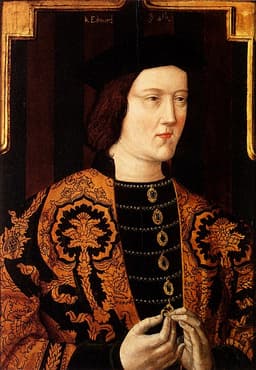
Edward IV of England
Emperor · Medieval
55.7Total
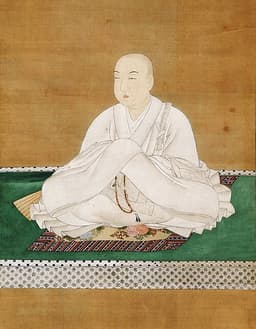
Emperor Seiwa
Emperor · Medieval
49.2Total
Basic Information
Born
1442
850
Died
1483
881
Era
Medieval
Medieval
Nationality
England
Japan
Occupation
Emperor
Emperor
Civilization
Western
Eastern
Score Comparison
Military (10%)
61.7
54.6
Political (20%)
45.0
27.9
Influence (20%)
60.0
54.9
Legacy (20%)
56.0
52.0
Leadership (15%)
53.2
51.9
Strategy (15%)
58.0
50.0
TOTAL
55.7
49.2
Edward IV of England — Complete Timeline
1461 AD
Battle of TowtonWar
Edward IV led the Yorkist army to a decisive victory over the Lancastrian forces at Towton in Yorkshire. This battle, the largest and bloodiest of the Wars of the Roses, secured Edward's claim to the throne and led to his coronation as king.
Wars of the RosesBattleVictory
Impact: national
Coronation of Edward IVPolitical Action◆ Major
Edward IV was crowned king of England at Westminster Abbey, formally establishing the Yorkist dynasty. His coronation followed the deposition of Henry VI and marked the beginning of a period of Yorkist rule.
CoronationDynastyYorkist
Impact: nationalconstructive
1464 AD
Marriage to Elizabeth WoodvillePolitical Action◆ Major
Edward IV secretly married Elizabeth Woodville, a Lancastrian widow, without consulting his council. This marriage elevated the Woodville family and alienated key allies like the Earl of Warwick, contributing to later political instability.
MarriagePoliticsWoodville
Impact: national
1471 AD
Battle of BarnetWar◆ Major
Edward IV defeated the Earl of Warwick at Barnet, killing Warwick and reclaiming the throne after a brief exile. This victory restored Yorkist control and ended the Lancastrian resurgence led by Warwick and Queen Margaret.
Wars of the RosesBattleRestoration
Impact: national
1475 AD
Treaty of PicquignyPolitical Action
Edward IV signed the Treaty of Picquigny with Louis XI of France, ending a brief invasion of France. The treaty secured a pension for Edward and a truce, but was seen as a diplomatic retreat from military ambitions.
DiplomacyFranceTruce
Impact: regional
Emperor Seiwa — Complete Timeline
858 AD
Reign During Fujiwara RegencyPolitical Action◆ Major
Emperor Seiwa ascended the throne at age 9, with his maternal grandfather Fujiwara no Yoshifusa serving as regent. Yoshifusa became the first person not of imperial blood to hold the title of regent (sessho), solidifying Fujiwara control over the throne.
FujiwaraRegencyYoshifusa
Impact: national
876 AD
Abdication and Buddhist RetirementPolitical Action
Emperor Seiwa abdicated at age 26 to become a Buddhist monk. He took the name Nyudo Saki no Mikado. His early abdication was influenced by the Fujiwara regents and set a pattern for emperors to retire and take Buddhist vows.
AbdicationBuddhismMonk
Impact: national
880 AD
Ancestor of the Seiwa GenjiPolitical Action◆ Major
Emperor Seiwa's grandson, Minamoto no Tsunemoto, was granted the surname Minamoto and founded the Seiwa Genji lineage. This samurai clan became one of the most powerful in Japanese history, producing shoguns and shaping medieval Japan.
Seiwa GenjiMinamotoSamurai
Impact: national
Expert Analysis
Origins
Edward IV of England was born on April 28, 1442, in Rouen, Normandy, to Richard of York, a powerful nobleman, and Cecily Neville. His father was a leading contender for the English throne, claiming descent from King Edward III through both lines. Edward grew up amid the escalating conflict between the houses of York and Lancaster, receiving military training and education befitting a noble. His early experiences included participating in battles like the First Battle of St Albans in 1455, where he was only 13.
Emperor Seiwa, born on June 10, 850, in Heian-kyo (modern Kyoto), was the 56th emperor of Japan. His father was Emperor Montoku, and his mother was Fujiwara no Akirakeiko, a daughter of the powerful Fujiwara clan. Seiwa's early life was dominated by the Fujiwara regents, who controlled the imperial court. He was raised in the palace, receiving a traditional education in Chinese classics and court rituals, but had little exposure to military affairs or governance.
Rise to Power
Edward IV's rise began with his father's death at the Battle of Wakefield in 1460. At age 18, Edward assumed leadership of the Yorkist cause. He won a crucial victory at the Battle of Mortimer's Cross in February 1461, defeating Lancastrian forces. Following the Second Battle of St Albans, where the Lancastrians recaptured King Henry VI, Edward entered London and was proclaimed king. The decisive Battle of Towton on March 29, 1461, cemented his power, as his army of about 50,000 men defeated the Lancastrians in a bloody snowstorm, with casualties estimated at 28,000. Edward was crowned at Westminster Abbey in June 1461.
Emperor Seiwa ascended the throne at age 9 in 858, following the death of his father, Emperor Montoku. His maternal grandfather, Fujiwara no Yoshifusa, became regent (sessho) for the young emperor, marking the first time a non-royal held this position. Yoshifusa effectively controlled the government, sidelining other noble families. Seiwa's reign was nominal; real power rested with the Fujiwara regents. In 866, Yoshifusa was officially appointed as regent for the adult emperor, solidifying the Fujiwara's dominance.
Leadership & Governance
Edward IV's leadership style was hands-on and pragmatic. He personally led armies, as seen at Towton and Barnet. As king, he focused on restoring royal authority after the civil wars. He reformed the royal finances by exploiting crown lands and customs revenues, reducing dependence on Parliament. Edward also promoted trade, signing treaties with Burgundy and the Hanseatic League. However, his marriage to Elizabeth Woodville in 1464 alienated the Earl of Warwick, leading to a rebellion. Edward's governance was effective but marred by factionalism; he scored 53.2 in leadership and 45.0 in political acumen.
Emperor Seiwa had no real governing role. His reign was dominated by the Fujiwara regents, who implemented policies to centralize power in their clan. The emperor performed ceremonial duties but had no say in administration. Seiwa's abdication at age 26 to become a Buddhist monk reflected his lack of influence. His political score of 27.9 highlights his powerlessness.
Triumph & Tragedy
Edward IV's greatest triumph was winning the Wars of the Roses and establishing the Yorkist dynasty. His military victories, especially Towton (score 61.7 in military), demonstrated his strategic skill. He also secured peace with France through the Treaty of Picquigny in 1475, gaining a pension of 75,000 crowns. However, his early death at age 40 in 1483 left his young son Edward V vulnerable, leading to the usurpation by Richard III and the eventual end of the Yorkist line.
Emperor Seiwa's greatest triumph was being the ancestor of the Seiwa Genji, a samurai clan that shaped Japanese history. His grandson, Minamoto no Tsunemoto, founded the lineage. The Genji later produced shoguns like Minamoto no Yoritomo. Seiwa's tragedy was his lack of agency; he was a puppet emperor, abdicated early, and died at age 30 in 881. His legacy is indirect, mediated through his descendants.
Character & Destiny
Edward IV was charismatic, decisive, and ruthless when needed. He was known for his tall stature and handsome appearance, which helped him win popular support. However, his decision to marry for love rather than political advantage showed a romantic streak that caused turmoil. His character combined military boldness with a love of luxury, leading to a relatively stable reign but a succession crisis.
Emperor Seiwa was a figurehead, likely passive and resigned to his role. Historical records describe him as gentle and scholarly, but his destiny was shaped by the Fujiwara regents. His abdication suggests a lack of ambition or desire for a contemplative life. His character had little impact on his rule.
Legacy
Edward IV's legacy includes the brief Yorkist dynasty and his role in the Wars of the Roses. He restored royal authority and finances, laying groundwork for the Tudor monarchy. His military tactics influenced later English commanders. However, his dynasty collapsed within decades. His total score is 55.7.
Emperor Seiwa's legacy is immense through the Seiwa Genji. The clan dominated Japanese military history for centuries, leading to the Kamakura shogunate. His name is remembered primarily as a genealogical reference. His total score is 49.2.
Conclusion
Edward IV had a greater direct impact on England through his military victories and governance, while Seiwa's influence was indirect but long-lasting through his descendants. Edward's score of 55.7 surpasses Seiwa's 49.2 by 6.5 points. Edward's leadership, though flawed, shaped events decisively; Seiwa was a passive conduit. Therefore, Edward IV had greater historical impact as an active monarch versus Seiwa's symbolic role.
Rankings
🥇
Edward IV of EnglandLeader
Mil: 61.7Pol: 45.0Inf: 60.0
55.7
🥈
Emperor Seiwa
Mil: 54.6Pol: 27.9Inf: 54.9
49.2
+6.5 behind
How This Comparison Works
Algorithm
Each figure is scored on 6 dimensions (0—100 scale) based on structured historical data: Military (10%), Political (20%), Influence (20%), Legacy (20%), Leadership (15%), Strategy (15%). The weighted total produces the final ranking.
Data Sources
Scores are computed from structured sub-indicators in the database. Scale factors adjust for era (Ancient ×0.85, Modern ×1.0) and civilization size (Eastern ×1.05, Other ×0.80) to account for differences in population and military scale.
Maximum 3 Figures
Comparisons are limited to 2—3 figures to ensure readability and statistical meaningfulness.
Error Margins
±5 points per dimension — Sub-scores are derived from historical records with inherent uncertainty. Two figures within 5 points on a dimension should be considered roughly equivalent in that area.
Total Score Accuracy
±3 points overall — The weighted combination of 6 dimensions produces a total score with approximately ±3 points of uncertainty. Differences of less than 3 points are not statistically significant— the figures are effectively tied.
Known Limitations
- Historical records are incomplete and uneven across civilizations
- Figures from oral-tradition societies may be underrepresented
- Occupation labels can misclassify multi-role figures
- Scores measure capability and impact, not moral character
- Quantitative scoring is a comparison tool, not absolute truth
Capability Radar
Military (10%) — Battles & Warfare
Battles
70
45
Win Rate
75
47
Expansion
60
53
Political (20%) — Governance & Reform
Reform
60
20
Diplomacy
70
25
Economy
65
20
Influence (20%) — Cultural & Global Reach
Cultural
55
40
Global
45
30
Legacy (20%) — Historical Impact
Historical
65
60
Longevity
55
70
Leadership (15%) — Power & Stability
Tenure
65
30
Stability
55
35
Strategy (15%) — Tactics & Innovation
Strategy
70
53
Tactics
75
58
Reform
50
57
Similar Comparisons
Comments & Discussion
No comments yet. Be the first to share your thoughts!