Loading...
Emperor Seiwa vs Napoleon Bonaparte
Napoleon Bonaparte leads by 21.7 pts · 2 figures compared
…
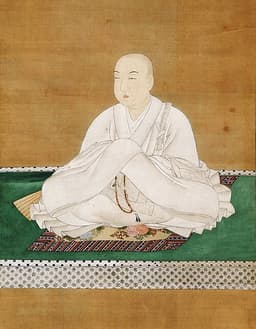
Emperor Seiwa
Emperor · Medieval
49.2Total

Napoleon Bonaparte
General · Modern
70.9Total
Basic Information
Born
850
1769
Died
881
1821
Era
Medieval
Modern
Nationality
Japan
France
Occupation
Emperor
General
Civilization
Eastern
Western
Score Comparison
Military (10%)
54.6
94.0
Political (20%)
27.9
72.0
Influence (20%)
54.9
40.0
Legacy (20%)
52.0
80.0
Leadership (15%)
51.9
78.0
Strategy (15%)
50.0
90.0
TOTAL
49.2
70.9
Emperor Seiwa — Complete Timeline
858 AD
Reign During Fujiwara RegencyPolitical Action◆ Major
Emperor Seiwa ascended the throne at age 9, with his maternal grandfather Fujiwara no Yoshifusa serving as regent. Yoshifusa became the first person not of imperial blood to hold the title of regent (sessho), solidifying Fujiwara control over the throne.
FujiwaraRegencyYoshifusa
Impact: national
876 AD
Abdication and Buddhist RetirementPolitical Action
Emperor Seiwa abdicated at age 26 to become a Buddhist monk. He took the name Nyudo Saki no Mikado. His early abdication was influenced by the Fujiwara regents and set a pattern for emperors to retire and take Buddhist vows.
AbdicationBuddhismMonk
Impact: national
880 AD
Ancestor of the Seiwa GenjiPolitical Action◆ Major
Emperor Seiwa's grandson, Minamoto no Tsunemoto, was granted the surname Minamoto and founded the Seiwa Genji lineage. This samurai clan became one of the most powerful in Japanese history, producing shoguns and shaping medieval Japan.
Seiwa GenjiMinamotoSamurai
Impact: national
Napoleon Bonaparte — Complete Timeline
1799 AD
Coup of 18 BrumaireOther◆ Major
Napoleon Bonaparte, with support from his brother Lucien and key political figures, overthrew the Directory in a bloodless coup. He established the Consulate with himself as First Consul, effectively becoming the ruler of France. This event ended the French Revolution's most unstable period.
French RevolutionCoupRise to Power
Impact: regional
1804 AD
Promulgation of the Napoleonic CodeOther◆ Major
Napoleon enacted the Civil Code of the French, known as the Napoleonic Code, a comprehensive set of laws that replaced the fragmented feudal legal systems. The code established legal equality, protected property rights, and secularized law. It became the basis for legal systems in many European and world countries.
Legal ReformNapoleonic CodeCivil Law
Impact: globalconstructive
1805 AD
Battle of AusterlitzWar◆ Major
Napoleon's Grande Arm
Napoleonic WarsBattleDecisive Victory
Impact: global
1812 AD
Invasion of RussiaWar◆ Major
Napoleon led the Grande Arm
Napoleonic WarsInvasionDisaster
Impact: globaldestructive
1815 AD
Battle of WaterlooWar◆ Major
Napoleon's French army was defeated by the combined forces of the Duke of Wellington's Anglo-Allied army and Gebhard Leberecht von Bl
Napoleonic WarsBattleFinal Defeat
Impact: globaldestructive
Expert Analysis
Origins
Emperor Seiwa (850-881) was born as the fourth son of Emperor Montoku. His mother, Fujiwara no Akirakeiko, was a daughter of the powerful Fujiwara no Yoshifusa. Seiwa ascended the throne at age 9, a child emperor in a period when the Fujiwara clan dominated the imperial court. His early life was shaped by the regency system, with his grandfather Yoshifusa serving as regent, a position that would become hereditary. Seiwa's education focused on Confucian classics and Buddhist scriptures, preparing him for a ceremonial role rather than actual rule. He fathered several children, including Prince Sadasumi, whose son Minamoto no Tsunemoto would found the Seiwa Genji lineage.
Napoleon Bonaparte (1769-1821) was born on the island of Corsica to a minor noble family. His father Carlo Buonaparte was a lawyer who initially supported Corsican independence but later aligned with the French. Napoleon attended military schools in Brienne and Paris, graduating as a second lieutenant in artillery. His early years were marked by Corsican nationalist sympathies, but he gradually embraced French identity. The French Revolution opened opportunities for advancement; by 1793, he distinguished himself at the Siege of Toulon, earning promotion to brigadier general at age 24.
Rise to Power
Emperor Seiwa's rise was passive: he became emperor at age 9 due to the death of his father and the influence of his grandfather, Fujiwara no Yoshifusa. His reign (858-876) was dominated by the Fujiwara regency. Yoshifusa became the first person not of imperial blood to serve as regent, setting a precedent. Seiwa's role was ceremonial; real power rested with the Fujiwara. In 876, Seiwa abdicated at age 26 to become a Buddhist monk, a decision influenced by Fujiwara dominance and personal piety.
Napoleon's rise was active and dramatic. He gained fame through the Italian campaign (1796-1797), defeating Austrian forces and establishing the Cisalpine Republic. His Egyptian expedition (1798-1799) was less successful but enhanced his reputation. On November 9, 1799 (18 Brumaire), Napoleon staged a coup d'état, overthrowing the Directory and establishing the Consulate with himself as First Consul. By 1804, he crowned himself Emperor of the French, consolidating power through military victories and political maneuvering.
Leadership & Governance
Emperor Seiwa's leadership was minimal. As a figurehead, he presided over court ceremonies and religious rituals. The Fujiwara regents, especially Yoshifusa and his son Mototsune, made all political decisions. Seiwa did not initiate reforms or policies. His abdication and retirement to a Buddhist monastery reflected a passive acceptance of his limited role. His governance score of 42.5 reflects this lack of agency.
Napoleon was a hands-on leader who centralized the French state. He enacted the Napoleonic Code in 1804, which standardized laws across France and influenced legal systems worldwide. He reformed education, establishing lycées, and created the Banque de France. His leadership style was autocratic but efficient; he appointed capable officials based on merit. However, his governance was marred by censorship, suppression of dissent, and the restoration of slavery in French colonies. His political score of 72.0 reflects his effectiveness and flaws.
Triumph & Tragedy
Emperor Seiwa's greatest success was his lineage: his grandson founded the Seiwa Genji, which became the most powerful samurai clan in Japanese history, producing shoguns like Minamoto no Yoritomo. This influence score of 74.9 reflects his posthumous impact. His tragedy was his lack of personal power; he was a pawn of the Fujiwara. His early abdication and obscure life contrast with his enduring legacy.
Napoleon's triumphs include the Battle of Austerlitz (1805), where he defeated a larger Austro-Russian army, and the Napoleonic Code, which reshaped legal systems. His military score of 94.0 and strategy of 90.0 reflect his genius. His tragedies include the disastrous invasion of Russia (1812), where he lost over 400,000 men, and the final defeat at Waterloo (1815). He died in exile on Saint Helena, his empire dismantled. His legacy score of 80.0 acknowledges his mixed impact.
Character & Destiny
Emperor Seiwa was described as gentle and devout, choosing a monastic life over political struggle. His character was shaped by the constraints of his position. He accepted his fate as a figurehead, which allowed the Fujiwara to consolidate power but also preserved the imperial line. His leadership score of 40.7 reflects his passivity.
Napoleon was ambitious, charismatic, and ruthless. His overconfidence led to strategic errors, such as the invasion of Russia and the Peninsular War. His personality drove him to conquer, but also to isolation and downfall. Historians note his ability to inspire loyalty and his micromanagement. His leadership score of 78.0 balances his strengths and flaws.
Legacy
Emperor Seiwa's legacy is indirect but profound. The Seiwa Genji shaped Japanese military history for centuries. The clan's descendants included shoguns who ruled Japan in the Kamakura and Muromachi periods. The imperial line continued, but the real power shifted to the samurai. His legacy score of 65.1 reflects this long-term influence.
Napoleon's legacy is direct and global. The Napoleonic Code influenced civil law in Europe, the Americas, and beyond. He redrew the map of Europe, ending the Holy Roman Empire and spreading nationalism. His military tactics are studied in war colleges. However, his legacy includes the devastation of wars that killed millions. His total score of 70.9 is higher than Seiwa's 56.6.
Conclusion
Napoleon Bonaparte had a greater impact on world history than Emperor Seiwa. Napoleon scored 70.9 overall compared to Seiwa's 56.6, a gap of 14.3 points. Napoleon's military and political achievements reshaped Europe and influenced global legal systems. Seiwa's influence, while significant for Japanese history, was indirect and limited to his lineage. Napoleon's active agency versus Seiwa's passive role underscores the difference. In the contest of historical impact, Napoleon stands as a transformative figure, while Seiwa remains a footnote in the rise of the samurai.
Rankings
🥇
Napoleon BonaparteLeader
Mil: 94.0Pol: 72.0Inf: 40.0
70.9
🥈
Emperor Seiwa
Mil: 54.6Pol: 27.9Inf: 54.9
49.2
+21.7 behind
How This Comparison Works
Algorithm
Each figure is scored on 6 dimensions (0—100 scale) based on structured historical data: Military (10%), Political (20%), Influence (20%), Legacy (20%), Leadership (15%), Strategy (15%). The weighted total produces the final ranking.
Data Sources
Scores are computed from structured sub-indicators in the database. Scale factors adjust for era (Ancient ×0.85, Modern ×1.0) and civilization size (Eastern ×1.05, Other ×0.80) to account for differences in population and military scale.
Maximum 3 Figures
Comparisons are limited to 2—3 figures to ensure readability and statistical meaningfulness.
Error Margins
±5 points per dimension — Sub-scores are derived from historical records with inherent uncertainty. Two figures within 5 points on a dimension should be considered roughly equivalent in that area.
Total Score Accuracy
±3 points overall — The weighted combination of 6 dimensions produces a total score with approximately ±3 points of uncertainty. Differences of less than 3 points are not statistically significant— the figures are effectively tied.
Known Limitations
- Historical records are incomplete and uneven across civilizations
- Figures from oral-tradition societies may be underrepresented
- Occupation labels can misclassify multi-role figures
- Scores measure capability and impact, not moral character
- Quantitative scoring is a comparison tool, not absolute truth
Capability Radar
Military (10%) — Battles & Warfare
Battles
45
95
Win Rate
47
90
Expansion
53
95
Political (20%) — Governance & Reform
Reform
20
95
Diplomacy
25
80
Economy
20
85
Influence (20%) — Cultural & Global Reach
Cultural
40
85
Global
30
90
Legacy (20%) — Historical Impact
Historical
60
95
Longevity
70
90
Leadership (15%) — Power & Stability
Tenure
30
85
Stability
35
70
Strategy (15%) — Tactics & Innovation
Strategy
53
95
Tactics
58
98
Reform
57
92
Similar Comparisons
Comments & Discussion
No comments yet. Be the first to share your thoughts!