Loading...
Abu Jafar al-Mansur vs Edward IV of England
Abu Jafar al-Mansur leads by 9.8 pts · 2 figures compared
…
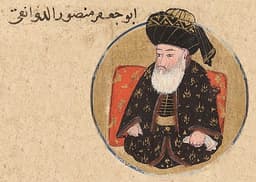
Abu Jafar al-Mansur
Emperor · Medieval
65.5Total
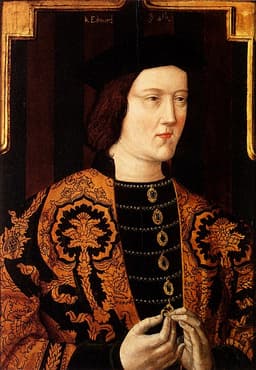
Edward IV of England
Emperor · Medieval
55.7Total
Basic Information
Born
714
1442
Died
775
1483
Era
Medieval
Medieval
Nationality
Abbasid Caliphate
England
Occupation
Emperor
Emperor
Civilization
Middle Eastern
Western
Score Comparison
Military (10%)
65.0
61.7
Political (20%)
75.0
45.0
Influence (20%)
40.0
60.0
Legacy (20%)
80.0
56.0
Leadership (15%)
82.0
53.2
Strategy (15%)
55.0
58.0
TOTAL
65.5
55.7
Abu Jafar al-Mansur — Complete Timeline
754 AD
Consolidated Abbasid Power After the RevolutionPolitical Action◆ Major
Al-Mansur eliminated rivals including his uncle Abd Allah ibn Ali and the Barmakids, securing Abbasid control. He established a centralized bureaucracy and suppressed rebellions, including the Rawandiyya uprising.
Impact: global
762 AD
Founded the City of BaghdadPolitical Action
Abu Jafar al-Mansur founded the city of Baghdad as the new capital of the Abbasid Caliphate. The Round City was designed as a center of administration and culture, becoming one of the largest cities in the world.
Impact: globalconstructive
770 AD
Patronized Translation of Greek WorksCultural◆ Major
Al-Mansur supported the translation of Greek philosophical and scientific texts into Arabic. This initiative laid the foundation for the Abbasid translation movement, which preserved and expanded classical knowledge.
Impact: globalconstructive
Edward IV of England — Complete Timeline
1461 AD
Battle of TowtonWar
Edward IV led the Yorkist army to a decisive victory over the Lancastrian forces at Towton in Yorkshire. This battle, the largest and bloodiest of the Wars of the Roses, secured Edward's claim to the throne and led to his coronation as king.
Wars of the RosesBattleVictory
Impact: national
Coronation of Edward IVPolitical Action◆ Major
Edward IV was crowned king of England at Westminster Abbey, formally establishing the Yorkist dynasty. His coronation followed the deposition of Henry VI and marked the beginning of a period of Yorkist rule.
CoronationDynastyYorkist
Impact: nationalconstructive
1464 AD
Marriage to Elizabeth WoodvillePolitical Action◆ Major
Edward IV secretly married Elizabeth Woodville, a Lancastrian widow, without consulting his council. This marriage elevated the Woodville family and alienated key allies like the Earl of Warwick, contributing to later political instability.
MarriagePoliticsWoodville
Impact: national
1471 AD
Battle of BarnetWar◆ Major
Edward IV defeated the Earl of Warwick at Barnet, killing Warwick and reclaiming the throne after a brief exile. This victory restored Yorkist control and ended the Lancastrian resurgence led by Warwick and Queen Margaret.
Wars of the RosesBattleRestoration
Impact: national
1475 AD
Treaty of PicquignyPolitical Action
Edward IV signed the Treaty of Picquigny with Louis XI of France, ending a brief invasion of France. The treaty secured a pension for Edward and a truce, but was seen as a diplomatic retreat from military ambitions.
DiplomacyFranceTruce
Impact: regional
Expert Analysis
Origins
Abu Jafar al-Mansur was born around 714 AD in Humeima, Jordan, into the Abbasid family, a branch of the Hashimite clan. His father, Muhammad ibn Ali, was a prominent leader of the Abbasid movement against the Umayyads. Al-Mansur received education in Islamic jurisprudence, administration, and military strategy. His early life was shaped by the clandestine activities of the Abbasid cause, and he participated in the revolution that overthrew the Umayyad Caliphate in 750.
Edward IV was born on April 28, 1442, in Rouen, Normandy, to Richard, Duke of York, and Cecily Neville. His father was a leading magnate who claimed the English throne, sparking the Wars of the Roses. Edward grew up amid the conflict, gaining military experience early. He was tall, charismatic, and adept at chivalric pursuits. His education focused on martial skills and governance, preparing him for a life of political and military struggle.
Rise to Power
Al-Mansur rose to power after the Abbasid Revolution, which culminated in the defeat of the Umayyads at the Battle of the Zab in 750. His brother, as-Saffah, became the first Abbasid caliph, but al-Mansur served as a key advisor and commander. Upon as-Saffah's death in 754, al-Mansur ascended the throne, immediately facing rebellions from rivals, including his uncle Abd Allah ibn Ali. He crushed these challenges, consolidating his authority by 756. His political score of 75.0 reflects his ability to eliminate threats and centralize power.
Edward IV's rise began with his father's death at the Battle of Wakefield in 1460. Edward, then 18, took command of the Yorkist army. He won a major victory at Mortimer's Cross in 1461, then decisively defeated the Lancastrians at the Battle of Towton on March 29, 1461, the bloodiest battle on English soil. This victory earned him the throne, and he was crowned in June 1461. His military score of 61.7 is boosted by these early successes.
Leadership & Governance
Al-Mansur's leadership was autocratic and centralized. He founded the city of Baghdad in 762 as a new capital, designed as a circular city symbolizing the center of the Islamic world. He established a sophisticated bureaucracy, with viziers and departments (diwans) managing taxation, military, and correspondence. He patronized the translation of Greek scientific and philosophical works, fostering the Abbasid Golden Age. However, his rule was marked by ruthlessness: he eliminated the Barmakid family, once his key supporters, when they grew too powerful. His leadership score of 82.0 reflects his effective but brutal governance.
Edward IV's leadership was more conciliatory but pragmatic. He sought to heal the divisions of the Wars of the Roses by integrating former Lancastrians into his government. He promoted trade, issued coinage reforms, and built a network of loyal supporters. However, his secret marriage to Elizabeth Woodville in 1464 alienated key allies, including the Earl of Warwick, leading to a rebellion that temporarily deposed him in 1470. His political score of 45.0 is lowered by such missteps. He regained the throne in 1471 after victories at Barnet and Tewkesbury.
Triumph & Tragedy
Al-Mansur's greatest triumph was the founding of Baghdad, which became a global center of learning and commerce. He also secured the Abbasid dynasty, ruling for 21 years. His patronage of translation preserved Greek knowledge and spurred Islamic science. His greatest failure was the persecution of the Barmakids, which damaged his reputation for loyalty. Additionally, his harsh methods created resentment among some factions.
Edward IV's triumphs include his stunning military victories, especially Towton and Barnet, which secured his throne. He also stabilized England after years of civil war, fostering economic recovery. His tragedy was the instability caused by his marriage and the temporary loss of his crown. His reliance on the Woodville family led to factionalism that later fueled the Wars of the Roses under his son, Edward V.
Character & Destiny
Al-Mansur was calculating, patient, and ruthless. He trusted few and was willing to eliminate even close allies to maintain power. His character shaped a centralized, stable caliphate but at the cost of personal relationships. He died in 775 while on pilgrimage to Mecca, having established a dynasty that lasted for centuries.
Edward IV was charismatic, brave, and indulgent. He enjoyed luxury and women, which sometimes clouded his judgment. His character led to both loyalty from supporters and betrayal from former allies. He died suddenly in 1483 at age 40, possibly from pneumonia, leaving a disputed succession that led to the rise of Richard III.
Legacy
Al-Mansur's legacy is immense: Baghdad became a symbol of Islamic civilization. His support for translation shaped the intellectual landscape of the medieval world, influencing Europe via Spain. The Abbasid Caliphate under his successors continued for centuries. His total score of 65.5 reflects his enduring impact on governance, culture, and science.
Edward IV's legacy is more limited. He restored order to England but his dynasty collapsed within decades. The Yorkist claim was extinguished after the Battle of Bosworth in 1485. However, his reign contributed to the eventual end of medieval feudalism and the rise of the Tudor monarchy. His total score of 55.7 reflects his shorter-term influence.
Conclusion
While both were effective rulers in their contexts, Abu Jafar al-Mansur had greater historical impact. His founding of Baghdad and patronage of learning initiated a cultural golden age that influenced global history for centuries. Edward IV, despite military brilliance, failed to secure a lasting dynasty. Al-Mansur's political score of 75.0 and legacy score of 80.0 dwarf Edward's 45.0 and 56.0. The 9.8-point gap in total scores underscores al-Mansur's superior significance in shaping the course of civilization.
Rankings
🥇
Abu Jafar al-MansurLeader
Mil: 65.0Pol: 75.0Inf: 40.0
65.5
🥈
Edward IV of England
Mil: 61.7Pol: 45.0Inf: 60.0
55.7
+9.8 behind
How This Comparison Works
Algorithm
Each figure is scored on 6 dimensions (0—100 scale) based on structured historical data: Military (10%), Political (20%), Influence (20%), Legacy (20%), Leadership (15%), Strategy (15%). The weighted total produces the final ranking.
Data Sources
Scores are computed from structured sub-indicators in the database. Scale factors adjust for era (Ancient ×0.85, Modern ×1.0) and civilization size (Eastern ×1.05, Other ×0.80) to account for differences in population and military scale.
Maximum 3 Figures
Comparisons are limited to 2—3 figures to ensure readability and statistical meaningfulness.
Error Margins
±5 points per dimension — Sub-scores are derived from historical records with inherent uncertainty. Two figures within 5 points on a dimension should be considered roughly equivalent in that area.
Total Score Accuracy
±3 points overall — The weighted combination of 6 dimensions produces a total score with approximately ±3 points of uncertainty. Differences of less than 3 points are not statistically significant— the figures are effectively tied.
Known Limitations
- Historical records are incomplete and uneven across civilizations
- Figures from oral-tradition societies may be underrepresented
- Occupation labels can misclassify multi-role figures
- Scores measure capability and impact, not moral character
- Quantitative scoring is a comparison tool, not absolute truth
Capability Radar
Military (10%) — Battles & Warfare
Battles
60
70
Win Rate
65
75
Expansion
70
60
Political (20%) — Governance & Reform
Reform
90
60
Diplomacy
80
70
Economy
85
65
Influence (20%) — Cultural & Global Reach
Cultural
85
55
Global
80
45
Legacy (20%) — Historical Impact
Historical
90
65
Longevity
85
55
Leadership (15%) — Power & Stability
Tenure
85
65
Stability
75
55
Strategy (15%) — Tactics & Innovation
Strategy
70
70
Tactics
55
75
Reform
75
50
Similar Comparisons
Comments & Discussion
No comments yet. Be the first to share your thoughts!