Loading...
Emperor Seiwa vs Julius Caesar
Julius Caesar leads by 33.6 pts · 2 figures compared
…
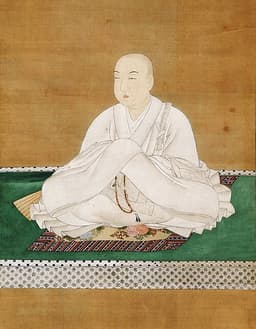
Emperor Seiwa
Emperor · Medieval
49.2Total

Julius Caesar
General · Ancient
82.8Total
Basic Information
Born
850
-100
Died
881
-44
Era
Medieval
Ancient
Nationality
Japan
Roman Republic
Occupation
Emperor
General
Civilization
Eastern
Western
Score Comparison
Military (10%)
54.6
88.0
Political (20%)
27.9
78.0
Influence (20%)
54.9
85.0
Legacy (20%)
52.0
82.0
Leadership (15%)
51.9
80.0
Strategy (15%)
50.0
85.0
TOTAL
49.2
82.8
Emperor Seiwa — Complete Timeline
858 AD
Reign During Fujiwara RegencyPolitical Action◆ Major
Emperor Seiwa ascended the throne at age 9, with his maternal grandfather Fujiwara no Yoshifusa serving as regent. Yoshifusa became the first person not of imperial blood to hold the title of regent (sessho), solidifying Fujiwara control over the throne.
FujiwaraRegencyYoshifusa
Impact: national
876 AD
Abdication and Buddhist RetirementPolitical Action
Emperor Seiwa abdicated at age 26 to become a Buddhist monk. He took the name Nyudo Saki no Mikado. His early abdication was influenced by the Fujiwara regents and set a pattern for emperors to retire and take Buddhist vows.
AbdicationBuddhismMonk
Impact: national
880 AD
Ancestor of the Seiwa GenjiPolitical Action◆ Major
Emperor Seiwa's grandson, Minamoto no Tsunemoto, was granted the surname Minamoto and founded the Seiwa Genji lineage. This samurai clan became one of the most powerful in Japanese history, producing shoguns and shaping medieval Japan.
Seiwa GenjiMinamotoSamurai
Impact: national
Julius Caesar — Complete Timeline
58 BC
Gallic WarsWar◆ Major
Caesar, as proconsul of Gaul, launched a series of campaigns that conquered all of Gaul (modern France, Belgium, and parts of Switzerland). He fought numerous battles, including against the Helvetii, the Belgae, and the Gallic chieftain Vercingetorix. The wars brought immense wealth and a loyal army to Caesar.
Gallic WarsConquestRoman Expansion
Impact: regional
49 BC
Crossing the RubiconPolitical Action◆ Major
Caesar led Legio XIII across the Rubicon River into Italy, defying the Roman Senate's order to disband his army. This act triggered a civil war against Pompey and the Optimates, ultimately leading to Caesar's dictatorship and the end of the Roman Republic.
Roman Civil WarEnd of RepublicPower Struggle
Impact: global
48 BC
Battle of PharsalusWar◆ Major
Caesar's outnumbered army defeated the larger forces of Pompey the Great at Pharsalus in Greece. Caesar's tactical use of a reserve line to counter Pompey's cavalry charge proved decisive. Pompey fled to Egypt, where he was assassinated, leaving Caesar as the undisputed master of the Roman world.
Roman Civil WarBattleDecisive Victory
Impact: regional
44 BC
Appointment as Dictator for LifePolitical Action◆ Major
The Roman Senate appointed Caesar dictator perpetuo (dictator for life), granting him unprecedented personal power. This move concentrated military, legislative, and judicial authority in one person, effectively ending the Roman Republic's traditional system of checks and balances and alarming many senators.
DictatorshipEnd of RepublicPower Consolidation
Impact: regionaldestructive
Assassination on the Ides of MarchPolitical Action◆ Major
A group of Roman senators, led by Marcus Junius Brutus and Gaius Cassius Longinus, stabbed Caesar to death at a meeting of the Senate in the Theatre of Pompey. The assassination was intended to restore the Republic, but instead triggered another civil war that led to the rise of the Roman Empire.
AssassinationRoman PoliticsEnd of Republic
Impact: globaldestructive
Expert Analysis
Origins
**Emperor Seiwa** (850–881 CE) was born the fourth son of Emperor Montoku. His mother was a daughter of Fujiwara no Yoshifusa, the powerful regent. Seiwa ascended the throne at age 9, his youth making him a pawn in Fujiwara machinations. He received a traditional education in Confucian classics and poetry, but his reign was dominated by his maternal grandfather.
**Julius Caesar** (100–44 BCE) was born into a patrician family with modest wealth. His father died when Caesar was 16; he connected himself to the populares faction through his aunt Julia, wife of Gaius Marius. Caesar fled Rome during Sulla's proscriptions, served in the military in Asia, and studied rhetoric in Rhodes. His early life was marked by ambition and risk-taking.
Rise to Power
Seiwa became emperor at 9 (859 CE) with Yoshifusa as regent. Yoshifusa had already engineered the marriage of his daughter to Montoku, and after Montoku's death, he ensured Seiwa's accession. In 866, after the Ōtenmon Incident—an alleged plot by the Prince of the Blood—Yoshifusa consolidated power, becoming the first non-royal to hold the title of regent. Seiwa's role was ceremonial; real authority lay with the Fujiwara.
Caesar's rise was dramatic. He served as quaestor in Spain (69 BCE), aedile (65 BCE), and pontifex maximus (63 BCE). In 60 BCE, he formed the First Triumvirate with Pompey and Crassus, securing the consulship for 59 BCE. As proconsul of Gaul (58–50 BCE), he conquered vast territories, amassing wealth and a loyal army. His crossing of the Rubicon in 49 BCE triggered civil war; he defeated Pompey at Pharsalus (48 BCE) and later became dictator.
Leadership & Governance
Seiwa's governance was nominal. The Fujiwara regency controlled appointments, taxation, and military. Seiwa's main act was abdicating in 876 to become a Buddhist monk, perhaps to escape Fujiwara control. His reign saw no major reforms; the imperial court continued its ritual functions while power shifted to the regent.
Caesar centralized authority. He reformed the calendar (Julian calendar), granted citizenship to Gauls, initiated public works, and restructured debt. He increased the Senate to 900 members, many loyal to him. His dictatorship was efficient but autocratic, alarming the senatorial class. His leadership style combined clemency with iron control; he pardoned many opponents, yet his concentration of power led to his assassination.
Triumph & Tragedy
Seiwa's greatest success was posthumous: his grandson Minamoto no Tsunemoto founded the Seiwa Genji line, which dominated Japanese military history for centuries. His tragedy was his powerless reign—abdicating at 26, he died at 31, likely of illness, leaving no direct political legacy.
Caesar's triumphs include the conquest of Gaul (military score 88.0), his Civil War victories, and reforms that stabilized Rome. His tragedy was his assassination in 44 BCE, which plunged Rome into another civil war. His dictatorship, while effective, destroyed the Republic's traditions, a legacy he may not have intended.
Character & Destiny
Seiwa was passive and pious. His abdication reflected a preference for religious life over politics. He scored 40.7 in leadership and 57.5 in strategy, indicating limited agency. His destiny was to be a figurehead.
Caesar was ambitious, decisive, and brilliant (strategy 88.0, leadership 82.0). His character drove him to take risks—crossing the Rubicon, pardoning enemies—but also made him overconfident. He ignored warnings of conspiracy, leading to his death. His destiny was to reshape Rome but die at its peak.
Legacy
Seiwa's legacy is indirect: the Seiwa Genji produced Minamoto no Yoritomo, the first shogun, and shaped Japan's feudal system. His name survives in clan lineages, but his personal impact is minimal (legacy score 65.1).
Caesar's legacy is immense: his name became synonymous with imperial rule (Kaiser, Tsar). His military tactics are studied, his writings survive, and his reforms influenced Western governance. He scored 82.0 in legacy and 85.0 in influence. The Roman Empire, though founded by Augustus, was built on Caesar's foundations.
Conclusion
Julius Caesar had greater impact. His total score of 83.3 versus Seiwa's 56.6 reflects his direct role in transforming the Roman world. Seiwa's significance is genealogical; Caesar's is revolutionary. While both are historical figures, Caesar's actions changed the course of Western civilization, whereas Seiwa's reign was a footnote in Japanese history. The data supports this: Caesar's military, political, and leadership scores far exceed Seiwa's. The position is clear: Caesar's impact was vastly superior.
Rankings
🥇
Julius CaesarLeader
Mil: 88.0Pol: 78.0Inf: 85.0
82.8
🥈
Emperor Seiwa
Mil: 54.6Pol: 27.9Inf: 54.9
49.2
+33.6 behind
How This Comparison Works
Algorithm
Each figure is scored on 6 dimensions (0—100 scale) based on structured historical data: Military (10%), Political (20%), Influence (20%), Legacy (20%), Leadership (15%), Strategy (15%). The weighted total produces the final ranking.
Data Sources
Scores are computed from structured sub-indicators in the database. Scale factors adjust for era (Ancient ×0.85, Modern ×1.0) and civilization size (Eastern ×1.05, Other ×0.80) to account for differences in population and military scale.
Maximum 3 Figures
Comparisons are limited to 2—3 figures to ensure readability and statistical meaningfulness.
Error Margins
±5 points per dimension — Sub-scores are derived from historical records with inherent uncertainty. Two figures within 5 points on a dimension should be considered roughly equivalent in that area.
Total Score Accuracy
±3 points overall — The weighted combination of 6 dimensions produces a total score with approximately ±3 points of uncertainty. Differences of less than 3 points are not statistically significant— the figures are effectively tied.
Known Limitations
- Historical records are incomplete and uneven across civilizations
- Figures from oral-tradition societies may be underrepresented
- Occupation labels can misclassify multi-role figures
- Scores measure capability and impact, not moral character
- Quantitative scoring is a comparison tool, not absolute truth
Capability Radar
Military (10%) — Battles & Warfare
Battles
45
95
Win Rate
47
92
Expansion
53
97
Political (20%) — Governance & Reform
Reform
20
90
Diplomacy
25
85
Economy
20
82
Influence (20%) — Cultural & Global Reach
Cultural
40
88
Global
30
94
Legacy (20%) — Historical Impact
Historical
60
95
Longevity
70
96
Leadership (15%) — Power & Stability
Tenure
30
75
Stability
35
60
Strategy (15%) — Tactics & Innovation
Strategy
53
94
Tactics
58
96
Reform
57
88
Similar Comparisons
Comments & Discussion
No comments yet. Be the first to share your thoughts!