Loading...
Edward IV of England vs Sebuk Tigin
Sebuk Tigin leads by 0.3 pts · 2 figures compared
…
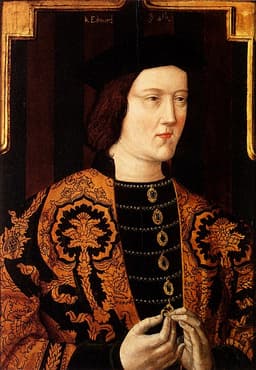
Edward IV of England
Emperor · Medieval
55.7Total
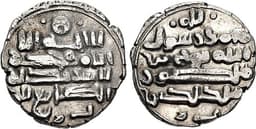
Sebuk Tigin
Emperor · Medieval
56.0Total
Basic Information
Born
1442
942
Died
1483
997
Era
Medieval
Medieval
Nationality
England
Ghaznavid Empire
Occupation
Emperor
Emperor
Civilization
Western
Middle Eastern
Score Comparison
Military (10%)
61.7
72.5
Political (20%)
45.0
68.0
Influence (20%)
60.0
58.0
Legacy (20%)
56.0
49.2
Leadership (15%)
53.2
40.0
Strategy (15%)
58.0
57.5
TOTAL
55.7
56.0
Edward IV of England — Complete Timeline
1461 AD
Battle of TowtonWar
Edward IV led the Yorkist army to a decisive victory over the Lancastrian forces at Towton in Yorkshire. This battle, the largest and bloodiest of the Wars of the Roses, secured Edward's claim to the throne and led to his coronation as king.
Wars of the RosesBattleVictory
Impact: national
Coronation of Edward IVPolitical Action◆ Major
Edward IV was crowned king of England at Westminster Abbey, formally establishing the Yorkist dynasty. His coronation followed the deposition of Henry VI and marked the beginning of a period of Yorkist rule.
CoronationDynastyYorkist
Impact: nationalconstructive
1464 AD
Marriage to Elizabeth WoodvillePolitical Action◆ Major
Edward IV secretly married Elizabeth Woodville, a Lancastrian widow, without consulting his council. This marriage elevated the Woodville family and alienated key allies like the Earl of Warwick, contributing to later political instability.
MarriagePoliticsWoodville
Impact: national
1471 AD
Battle of BarnetWar◆ Major
Edward IV defeated the Earl of Warwick at Barnet, killing Warwick and reclaiming the throne after a brief exile. This victory restored Yorkist control and ended the Lancastrian resurgence led by Warwick and Queen Margaret.
Wars of the RosesBattleRestoration
Impact: national
1475 AD
Treaty of PicquignyPolitical Action
Edward IV signed the Treaty of Picquigny with Louis XI of France, ending a brief invasion of France. The treaty secured a pension for Edward and a truce, but was seen as a diplomatic retreat from military ambitions.
DiplomacyFranceTruce
Impact: regional
Sebuk Tigin — Complete Timeline
977 AD
Consolidation of the Ghaznavid StatePolitical Action◆ Major
Sebuk Tigin succeeded his father-in-law Alp Tigin as ruler of Ghazni and consolidated the Ghaznavid state. He defeated rival Turkic commanders, secured the borders against the Samanids and Karakhanids, and established a stable succession.
ConsolidationGhaznavidSuccession
Impact: regionalconstructive
986 AD
Expansion into IndiaWar◆ Major
Sebuk Tigin launched the first Ghaznavid campaigns into the Indian subcontinent, defeating the Hindu Shahi kingdom of Kabul. He annexed the region of Peshawar and established Ghaznavid control over the Khyber Pass, opening the way for future invasions.
Indian CampaignHindu ShahiExpansion
Impact: regional
994 AD
Defeat of the Samanids at the Battle of BalkhWar
Sebuk Tigin allied with the Samanid ruler Nuh II to defeat the rebel Fa'iq at Balkh. This victory secured Ghaznavid influence over Khorasan and marked the beginning of Ghaznavid expansion into Central Asia.
BattleSamanidKhorasan
Impact: regional
Expert Analysis
Origins
Edward IV of England was born in 1442 in Rouen, France, the eldest son of Richard, Duke of York, and Cecily Neville. His father was a powerful nobleman with a claim to the English throne, which led to the Wars of the Roses. Edward was raised in a turbulent political environment, receiving military training and education befitting his station. His early experiences in battle, such as at the Battle of Mortimer's Cross in 1461, shaped his aggressive military style.
Sebuk Tigin, born around 942 in Central Asia, was of Turkic slave origin. He was purchased by Alp Tigin, a Samanid general who later founded an independent state in Ghazni. Sebuk Tigin rose through the ranks as a military commander, eventually marrying Alp Tigin's daughter. His background as a slave-soldier (ghulam) instilled discipline and loyalty, but also ambition. He succeeded Alp Tigin in 977 after a power struggle.
Rise to Power
Edward IV's rise was swift and violent. In 1460, his father Richard claimed the throne but was killed at Wakefield. Edward, then 18, took command of the Yorkist army. He won a decisive victory at Towton in March 1461, the bloodiest battle on English soil, with casualties estimated at 28,000. This battle secured his coronation in June 1461. Edward's early reign was marked by continued Lancastrian resistance, but he defeated them at Hexham in 1464.
Sebuk Tigin's rise was more gradual. After Alp Tigin's death in 963, Ghazni faced instability. Sebuk Tigin, as a leading general, eventually took power in 977 after defeating rivals. He consolidated control over Ghazni and the surrounding regions, then turned eastward. In 986-987, he launched campaigns into India, defeating the Hindu Shahi king Jayapala. This victory opened the door for Muslim expansion into the subcontinent, and Sebuk Tigin extracted tribute and territory.
Leadership & Governance
Edward IV was a hands-on military leader but often delegated civil administration. He relied on a council that included his Woodville in-laws, causing friction with the nobility. His marriage to Elizabeth Woodville in 1464 was a political misstep, alienating his chief supporter, the Earl of Warwick, who later rebelled. Edward's governance was pragmatic: he promoted trade and commerce, but his financial management was poor, and he relied on French pensions. He scored 53.2 in leadership.
Sebuk Tigin was a more systematic ruler. He organized the Ghaznavid state, establishing a stable administration with a strong military core. He appointed competent governors and maintained good relations with the Samanids, his nominal overlords. His political score of 68.0 reflects his ability to navigate complex tribal and imperial politics. He also promoted Islamic culture and learning, founding libraries and patronizing scholars.
Triumph & Tragedy
Edward IV's greatest triumph was winning the throne twice: first in 1461, and again in 1471 after a brief exile. His victory at Barnet in 1471, where he killed Warwick, and at Tewkesbury, where he destroyed the remaining Lancastrian forces, secured his rule until his death. However, his greatest failure was his untimely death at age 40 in 1483, leaving a power vacuum that led to the rise of Richard III and the end of the Yorkist dynasty. His legacy score is 56.0.
Sebuk Tigin's triumph was establishing the Ghaznavid Empire as a major power, conquering territories in modern-day Afghanistan and Pakistan. His victory over Jayapala at Laghman in 988 forced the Hindu Shahi to pay tribute. His failure, however, was that his conquests were limited; he did not annex vast parts of India, and his empire remained centered on Ghazni. His influence score is 58.0, reflecting his role as a precursor to Mahmud of Ghazni's more famous raids.
Character & Destiny
Edward IV was charismatic, tall, and handsome, but also lazy and pleasure-seeking. He preferred hunting and women to administrative duties. His character led to the Woodville marriage, which caused political instability. He was decisive in battle but indecisive in peace, often avoiding tough decisions. His early death was partly due to illness exacerbated by an indulgent lifestyle. Historians note that his reign stabilized England after the Wars of the Roses, but his personal flaws undid much of his work.
Sebuk Tigin was disciplined, strategic, and patient. As a former slave, he valued loyalty and merit. He was a capable administrator and a skilled diplomat, balancing relations with the Samanids and the rising Qarakhanids. His character was shaped by his military background; he was cautious but ambitious. His destiny was to found a dynasty that would last until 1186, but his own reign was a prelude to his son Mahmud's greater exploits.
Legacy
Edward IV's legacy is mixed. He is remembered as a successful military commander who restored order, but his reign was short and his dynasty collapsed. He introduced some administrative reforms, such as using the royal household for governance, but these were not lasting. His greatest legacy is perhaps the Yorkist claim to the throne, which continued through his daughter Elizabeth of York, who married Henry VII and founded the Tudor dynasty.
Sebuk Tigin's legacy is more substantial. He laid the foundation for the Ghaznavid Empire, which became a major Islamic power. His son Mahmud of Ghazni expanded the empire into India, raiding temples and spreading Islam. Sebuk Tigin's military and administrative systems were copied by later Turkic dynasties. He is considered the founder of the Ghaznavid state, and his campaigns opened India to Muslim conquest.
Conclusion
While Edward IV scored 55.7 overall and Sebuk Tigin 56.0, the gap is narrow but meaningful. Sebuk Tigin's impact was more enduring: his dynasty lasted over two centuries, his conquests changed the religious and political landscape of South Asia, and his administrative model influenced subsequent empires. Edward IV's victories were significant for England, but his dynasty ended within two years of his death. Sebuk Tigin's legacy in military and political terms—scoring 72.5 in military and 68.0 in political—outweighs Edward's 61.7 and 45.0. Therefore, Sebuk Tigin had greater long-term impact.
Rankings
🥇
Sebuk TiginLeader
Mil: 72.5Pol: 68.0Inf: 58.0
56.0
🥈
Edward IV of England
Mil: 61.7Pol: 45.0Inf: 60.0
55.7
+0.3 behind
How This Comparison Works
Algorithm
Each figure is scored on 6 dimensions (0—100 scale) based on structured historical data: Military (10%), Political (20%), Influence (20%), Legacy (20%), Leadership (15%), Strategy (15%). The weighted total produces the final ranking.
Data Sources
Scores are computed from structured sub-indicators in the database. Scale factors adjust for era (Ancient ×0.85, Modern ×1.0) and civilization size (Eastern ×1.05, Other ×0.80) to account for differences in population and military scale.
Maximum 3 Figures
Comparisons are limited to 2—3 figures to ensure readability and statistical meaningfulness.
Error Margins
±5 points per dimension — Sub-scores are derived from historical records with inherent uncertainty. Two figures within 5 points on a dimension should be considered roughly equivalent in that area.
Total Score Accuracy
±3 points overall — The weighted combination of 6 dimensions produces a total score with approximately ±3 points of uncertainty. Differences of less than 3 points are not statistically significant— the figures are effectively tied.
Known Limitations
- Historical records are incomplete and uneven across civilizations
- Figures from oral-tradition societies may be underrepresented
- Occupation labels can misclassify multi-role figures
- Scores measure capability and impact, not moral character
- Quantitative scoring is a comparison tool, not absolute truth
Capability Radar
Military (10%) — Battles & Warfare
Battles
70
55
Win Rate
75
60
Expansion
60
65
Political (20%) — Governance & Reform
Reform
60
45
Diplomacy
70
50
Economy
65
55
Influence (20%) — Cultural & Global Reach
Cultural
55
40
Global
45
40
Legacy (20%) — Historical Impact
Historical
65
50
Longevity
55
45
Leadership (15%) — Power & Stability
Tenure
65
60
Stability
55
55
Strategy (15%) — Tactics & Innovation
Strategy
70
55
Tactics
75
50
Reform
50
40
Similar Comparisons
Comments & Discussion
No comments yet. Be the first to share your thoughts!