Loading...
Edgar the Peaceful vs Peter the Great
Peter the Great leads by 19.7 pts · 2 figures compared
…
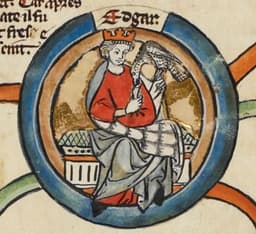
Edgar the Peaceful
Emperor · Medieval
53.5Total
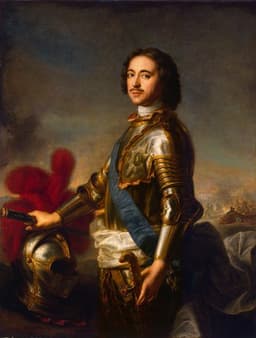
Peter the Great
Emperor · Modern
73.2Total
Basic Information
Born
943
1672
Died
975
1725
Era
Medieval
Modern
Nationality
England
Russia
Occupation
Emperor
Emperor
Civilization
Western
Western
Score Comparison
Military (10%)
21.2
75.0
Political (20%)
65.0
90.0
Influence (20%)
56.4
68.0
Legacy (20%)
49.2
65.0
Leadership (15%)
78.0
78.0
Strategy (15%)
35.7
72.0
TOTAL
53.5
73.2
Edgar the Peaceful — Complete Timeline
959 AD
Coronation as King of EnglandPolitical Action◆ Major
Edgar succeeded his brother Eadwig as King of England. His reign was marked by stability and the consolidation of monastic reform under Dunstan.
Impact: nationalconstructive
970 AD
Naval defense reformsReform
Edgar organized a standing navy and divided England into naval districts to defend against Viking raids. This created a period of peace and security along the coasts.
Impact: nationalconstructive
Council of WinchesterCultural◆ Major
Edgar convened the Council of Winchester, which established the Regularis Concordia, a code for monastic life. This standardized Benedictine practices across England.
Impact: nationalconstructive
Peter the Great — Complete Timeline
1697 AD
Grand EmbassyPolitical Action◆ Major
Peter the Great traveled incognito to Western Europe as part of a diplomatic mission. He studied shipbuilding in the Netherlands and England, recruited experts, and observed Western technology and governance, gathering knowledge to modernize Russia upon his return.
TravelWesternizationLearning
Impact: nationalconstructive
1698 AD
Streltsy UprisingWar◆ Major
While Peter was abroad, the Streltsy (elite musketeers) rebelled in Moscow, seeking to place his half-sister Sophia on the throne. Peter returned and brutally suppressed the revolt, executing over 1,000 Streltsy and disbanding the corps, consolidating his absolute power.
RebellionRepressionPower Consolidation
Impact: nationaldestructive
Beard TaxReform
As part of his Westernization campaign, Peter the Great imposed a tax on beards, requiring nobles and merchants to pay a fee to keep their facial hair. Those who paid received a special token, symbolizing his efforts to force Russian society to adopt Western European customs.
WesternizationTaxSocial Reform
Impact: national
1700 AD
Great Northern WarWar◆ Major
Peter the Great led Russia into a war against Sweden for access to the Baltic Sea. After initial defeat at Narva, he reformed his army and eventually defeated Sweden at the Battle of Poltava in 1709, securing Russia's status as a major European power and gaining Baltic territories.
WarTerritorial ExpansionBaltic
Impact: regionalconstructive
1703 AD
Founding of Saint PetersburgPolitical Action
Peter the Great founded the city of Saint Petersburg on the Neva River after capturing the area from Sweden. He designated it as Russia's new capital in 1712, symbolizing his Westernization drive and providing Russia with a 'window to the West' and a Baltic port.
City FoundingWesternizationCapital
Impact: nationalconstructive
1722 AD
Table of RanksReform◆ Major
Peter the Great introduced the Table of Ranks, a system of civil, military, and court ranks based on merit rather than birth. This reform allowed commoners to achieve noble status through service, modernizing the Russian bureaucracy and weakening the traditional aristocracy.
BureaucracyMeritocracySocial Reform
Impact: nationalprogressive
Expert Analysis
Peter the Great vs Edgar the Peaceful
# The Peaceful and the Terrible: Why Two Reformers Walked Different Paths
On a summer morning in 1698, Tsar Peter I of Russia returned to Moscow to find his capital in flames. The Streltsy, the elite musketeers who had once protected the Kremlin, had risen in rebellion, hoping to place his half-sister Sophia on the throne. Peter’s response was swift and merciless: hundreds were executed, their bodies left to rot along the city walls as a warning. Some three centuries earlier, another ruler faced a very different challenge. King Edgar of England, crowned at Bath in 959, found his realm not in rebellion but in quiet decay—monasteries neglected, Viking raids a constant threat, and the crown’s authority frayed at the edges. One man answered with terror, the other with order. Both sought to remake their kingdoms, but their methods could not have been more different. Why did Peter earn the epithet "Great" while Edgar became known as "the Peaceful"? The answer lies not just in what they did, but in the worlds that shaped them.
Origins
Peter Alekseyevich Romanov was born in 1672 into a Russia still medieval in spirit, a sprawling empire cut off from the intellectual currents of Western Europe. His father, Tsar Alexis, had died when Peter was four, leaving the boy to witness the violent intrigues of the Kremlin—the Streltsy’s power plays, his half-sister Sophia’s regency, and the constant threat of assassination. Peter grew up not in the palace but in the German Quarter of Moscow, where foreign merchants and engineers taught him about shipbuilding, astronomy, and the mechanical arts. He was a giant of a man, nearly two meters tall, with a restless energy that would never leave him.
Edgar, by contrast, was born in 943 into a Wessex that had already begun to heal from the Danish invasions. His grandfather, Alfred the Great, had laid the foundations of a unified English kingdom, and his uncle, King Athelstan, had won the Battle of Brunanburh. Edgar inherited not chaos but a project—the consolidation of monastic reform, the standardization of law, and the defense of a coastline. Where Peter learned to distrust his own nobility, Edgar was raised by the great monastic reformer Dunstan, who taught him that power came through piety and partnership with the Church.
Rise to Power
Peter’s path to the throne was a violent scramble. In 1682, at age ten, he was crowned alongside his feeble-minded half-brother Ivan V, with Sophia as regent. For seven years, he watched from the sidelines as she ruled, learning the mechanics of power by observing its abuse. In 1689, he staged a coup, forcing Sophia into a convent and taking control. But he was not yet ready to rule. Instead, he turned his attention to war games and shipbuilding, building a "toy fleet" on Lake Pleshcheyevo that would become the nucleus of the Russian navy.
Edgar’s rise was quieter but no less decisive. He became king in 959 at age sixteen, succeeding his brother Eadwig, whose reign had been marked by conflict with the Church. Edgar immediately recalled Dunstan from exile, making him Archbishop of Canterbury. There was no bloodshed, no coup—just a young king choosing the path of stability over ambition. By 970, he convened the Council of Winchester, which produced the Regularis Concordia, a code that standardized monastic life across England. This was power exercised not through force but through consensus.
Leadership & Governance
Peter the Great governed as a force of nature. He personally led his army into the Great Northern War against Sweden in 1700, suffering a catastrophic defeat at Narva that taught him the hard lesson of military modernization. He rebuilt his army from scratch, adopting Western tactics, uniforms, and weaponry. In 1703, he founded St. Petersburg on captured Swedish territory, a city built by forced labor on a swamp—a monument to his will. His reforms were sweeping and brutal: the Beard Tax of 1698 forced nobles to shave or pay; the Table of Ranks of 1722 replaced hereditary nobility with merit-based advancement. Peter did not ask for loyalty—he demanded it, and punished dissent with the knout and the scaffold.
Edgar ruled through the quiet logic of order. His naval defense reforms divided England into districts, each required to provide ships for a standing fleet that patrolled the coasts against Viking raids. This was not a war of conquest but of prevention—a system that worked so well that no major Viking attack occurred during his reign. Edgar did not impose reform through terror but through the Church, using the Regularis Concordia to create a unified monastic culture that became the backbone of English learning and administration. He was crowned not once but twice—first at Bath, then later at Chester, where he was rowed on the River Dee by eight tributary kings, a symbolic display of overlordship without bloodshed.
Triumph & Tragedy
Peter’s greatest triumph was the victory at Poltava in 1709, where he crushed the Swedish army of Charles XII, securing Russia’s access to the Baltic Sea. It was a turning point that announced Russia as a European power. His tragedy was personal: he tortured and executed his own son, Alexei, for opposing his reforms, destroying his dynasty’s future in the name of his vision. The tsar who built St. Petersburg also built a prison for his own blood.
Edgar’s triumph was the peace itself—sixteen years of stability in an age of violence, a period that allowed English monasticism to flourish and the economy to recover. His tragedy was that he died young, in 975 at age thirty-two, leaving his teenage son Edward to inherit a fragile peace. Within three years, Edward would be murdered, and the Viking raids would return. Edgar’s quiet achievement proved too fragile to survive him.
Character & Destiny
Peter was driven by a fury against backwardness—his own nation’s, and perhaps his own. He was a man who learned to build ships with his own hands, who worked as a common carpenter in Dutch shipyards during the Grand Embassy of 1697, who despised the rituals and robes of the court. His cruelty was the dark side of his impatience: he could not wait for Russia to change slowly, so he forced it to change violently. "I am a pupil who seeks teachers," he once said, but he was also a master who demanded obedience.
Edgar was a different kind of ruler—patient, pious, and strategic. He understood that reform required allies, not enemies. His epithet "the Peaceful" was not an accident but an achievement, earned through years of careful negotiation with bishops, nobles, and Viking chieftains. He was, in the words of the chronicler, "a king who loved peace and feared God"—a man who ruled through presence rather than force.
Legacy
Peter the Great left a transformed Russia: a navy, a capital on the Baltic, a bureaucracy based on merit, and a military that could rival any in Europe. But he also left a tradition of autocratic violence, a state that modernized through coercion, and a dynasty that would crumble within two centuries. His legacy is the paradox of Russian power: brilliant and brutal, visionary and tyrannical.
Edgar left a quieter legacy: the Regularis Concordia, which shaped English monasticism for generations; the naval system that would eventually become the Royal Navy; and a model of kingship that emphasized law, order, and partnership with the Church. He is remembered not as a conqueror but as a consolidator—the king who gave England a moment of peace in a violent century.
Conclusion
In the end, Peter and Edgar represent two answers to the same question: how does a ruler transform a kingdom? Peter’s answer was fire and iron, the will of one man imposed on millions. Edgar’s answer was patience and partnership, the slow work of building institutions that outlast the ruler. One built a city on a swamp; the other built a peace that lasted a generation. Both succeeded, and both failed—because the cost of transformation is always paid by someone, whether in blood or in time. The Peaceful and the Terrible: two kings, two worlds, and a reminder that there are many ways to shape history, and none of them come without a price.
Rankings
🥇
Peter the GreatLeader
Mil: 75.0Pol: 90.0Inf: 68.0
73.2
🥈
Edgar the Peaceful
Mil: 21.2Pol: 65.0Inf: 56.4
53.5
+19.7 behind
How This Comparison Works
Algorithm
Each figure is scored on 6 dimensions (0—100 scale) based on structured historical data: Military (10%), Political (20%), Influence (20%), Legacy (20%), Leadership (15%), Strategy (15%). The weighted total produces the final ranking.
Data Sources
Scores are computed from structured sub-indicators in the database. Scale factors adjust for era (Ancient ×0.85, Modern ×1.0) and civilization size (Eastern ×1.05, Other ×0.80) to account for differences in population and military scale.
Maximum 3 Figures
Comparisons are limited to 2—3 figures to ensure readability and statistical meaningfulness.
Error Margins
±5 points per dimension — Sub-scores are derived from historical records with inherent uncertainty. Two figures within 5 points on a dimension should be considered roughly equivalent in that area.
Total Score Accuracy
±3 points overall — The weighted combination of 6 dimensions produces a total score with approximately ±3 points of uncertainty. Differences of less than 3 points are not statistically significant— the figures are effectively tied.
Known Limitations
- Historical records are incomplete and uneven across civilizations
- Figures from oral-tradition societies may be underrepresented
- Occupation labels can misclassify multi-role figures
- Scores measure capability and impact, not moral character
- Quantitative scoring is a comparison tool, not absolute truth
Capability Radar
Military (10%) — Battles & Warfare
Battles
10
85
Win Rate
10
80
Expansion
10
90
Political (20%) — Governance & Reform
Reform
70
95
Diplomacy
70
80
Economy
65
85
Influence (20%) — Cultural & Global Reach
Cultural
40
85
Global
20
85
Legacy (20%) — Historical Impact
Historical
45
90
Longevity
40
85
Leadership (15%) — Power & Stability
Tenure
65
90
Stability
75
70
Strategy (15%) — Tactics & Innovation
Strategy
15
85
Tactics
10
75
Reform
20
95
Similar Comparisons
Comments & Discussion
The Iron Nerd6/16/2026
Calling Peter "Great" and Edgar "Peaceful" glosses over a dirty truth: Peter was a brutal modernizer whose body count equals his reforms. The Streltsy massacre wasn't defense—it was a signal that dissent meant death. Edgar's quiet monastic rebuilding actually worked long-term. Peter's Westernization was a forced march; Edgar's was slow cultivation. History loves blood more than stability. 大漠孤骑|zh|拿彼得大帝跟爱德加和平王比,根本是关公战秦琼。彼得那套火枪与绞刑的现代化,跟英格兰的郡县制修道改革完全是两码事。彼得砸碎了旧俄罗斯,爱德加缝补了破碎不列颠。一个是火药味里杀出重围,一个是墨水瓶里修修补