Loading...
Edgar the Peaceful vs Mao Zedong
Mao Zedong leads by 25.9 pts · 2 figures compared
…
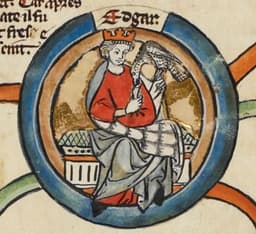
Edgar the Peaceful
Emperor · Medieval
53.5Total
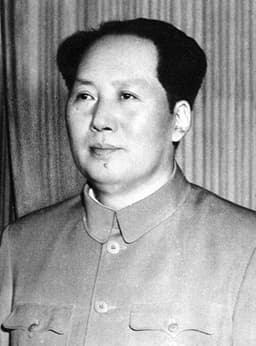
Mao Zedong
Politician · Modern
79.4Total
Basic Information
Born
943
1893
Died
975
1976
Era
Medieval
Modern
Nationality
England
China
Occupation
Emperor
Politician
Civilization
Western
Eastern
Score Comparison
Military (10%)
21.2
75.0
Political (20%)
65.0
88.0
Influence (20%)
56.4
85.0
Legacy (20%)
49.2
70.0
Leadership (15%)
78.0
85.0
Strategy (15%)
35.7
72.0
TOTAL
53.5
79.4
Edgar the Peaceful — Complete Timeline
959 AD
Coronation as King of EnglandPolitical Action◆ Major
Edgar succeeded his brother Eadwig as King of England. His reign was marked by stability and the consolidation of monastic reform under Dunstan.
Impact: nationalconstructive
970 AD
Naval defense reformsReform
Edgar organized a standing navy and divided England into naval districts to defend against Viking raids. This created a period of peace and security along the coasts.
Impact: nationalconstructive
Council of WinchesterCultural◆ Major
Edgar convened the Council of Winchester, which established the Regularis Concordia, a code for monastic life. This standardized Benedictine practices across England.
Impact: nationalconstructive
Mao Zedong — Complete Timeline
1934 AD
Long MarchWar
Mao Zedong led the Chinese Red Army on a strategic retreat from Nationalist forces, covering approximately 6,000 miles over 370 days. The march solidified Mao's leadership within the Chinese Communist Party and became a foundational myth of the Communist revolution.
Chinese Civil WarCommunist RevolutionRetreat
Impact: national
1949 AD
Proclamation of the People's Republic of ChinaPolitical Action
Mao Zedong declared the founding of the People's Republic of China from Tiananmen Gate in Beijing. This ended the Chinese Civil War and established Communist rule over mainland China, with Mao as Chairman of the Central People's Government.
Founding of PRCCommunist VictoryRevolution
Impact: global
1958 AD
Great Leap ForwardReform◆ Major
Mao launched a campaign to rapidly industrialize China and collectivize agriculture. The policy led to widespread mismanagement, resulting in a famine that caused an estimated 15-45 million deaths between 1959 and 1961.
FamineIndustrializationCollectivization
Impact: nationaldestructive
1960 AD
Sino-Soviet SplitPolitical Action◆ Major
Mao's ideological differences with Soviet leader Nikita Khrushchev led to a breakdown in relations between China and the Soviet Union. The split ended the Sino-Soviet alliance and reshaped global Cold War dynamics, with China pursuing an independent path.
Cold WarIdeological ConflictAlliance Breakdown
Impact: global
1966 AD
Cultural RevolutionPolitical Action
Mao initiated a sociopolitical movement to purge capitalist and traditional elements from Chinese society. The Red Guard youth groups attacked intellectuals and officials, leading to widespread violence, destruction of cultural artifacts, and an estimated 1-2 million deaths.
Political PurgeSocial UpheavalRed Guard
Impact: nationaldestructive
1971 AD
Ping-Pong DiplomacyCultural◆ Major
Mao approved an invitation for the U.S. table tennis team to visit China, initiating a thaw in Sino-American relations. This cultural exchange paved the way for President Nixon's visit to China in 1972 and the eventual normalization of diplomatic ties.
DiplomacyU.S.-China RelationsCultural Exchange
Impact: globalconstructive
Expert Analysis
Mao Zedong vs Edgar the Peaceful
# The Peaceful King and the Revolutionary Giant
On a crisp autumn morning in 973, a thirty-year-old king sailed his fleet along the River Dee in northern Wales, where eight subordinate kings rowed his barge as a sign of fealty. A millennium later, on October 1, 1949, a fifty-six-year-old revolutionary stood atop Tiananmen Gate in Beijing, declaring to a million gathered souls that the Chinese people had stood up. Edgar the Peaceful and Mao Zedong: one a medieval monarch who consolidated a kingdom through monastic reform, the other a modern titan who shattered an ancient civilization to rebuild it in his image. What drove two such different men to leave such different marks on history?
Origins
Edgar was born in 943 into the turbulent House of Wessex, a dynasty that had barely survived Viking invasions. His father, King Edmund, was murdered when Edgar was three; his older brother Eadwig ruled chaotically before dying young. Edgar inherited a kingdom fractured by regional loyalties and ecclesiastical corruption. The tenth century was an age of faith and feudalism, where power flowed through monasteries and noble bloodlines.
Mao Zedong entered the world in 1893, as the Qing Dynasty crumbled under foreign humiliation and internal decay. Born to a prosperous peasant family in Shaoshan, he witnessed firsthand the brutal inequality of rural China. His era was one of imperialism, revolution, and industrial transformation—a time when ideologies could arm millions and reshape continents. Where Edgar inherited stability, Mao inherited chaos; where Edgar sought to preserve, Mao sought to destroy and rebuild.
Rise to Power
Edgar's path was straightforward: he was the rightful heir, crowned in 959 at age sixteen after Eadwig's death. His power came through inheritance and the support of Archbishop Dunstan, the era's most formidable churchman. Edgar did not fight for his throne; he consolidated it through law and liturgy.
Mao's rise was anything but smooth. He joined the Chinese Communist Party in its infancy, survived purges, and emerged as a leader during the Long March of 1934—a desperate 6,000-mile retreat that became his founding myth. Unlike Edgar, who ascended by birthright, Mao clawed his way up through guerrilla warfare, ideological battles, and sheer force of will. His turning point came in 1949, when his Red Army defeated the Nationalists and he proclaimed the People's Republic.
Leadership & Governance
Edgar ruled through consensus and codification. His Council of Winchester in 970 established the Regularis Concordia, a uniform code for monastic life that standardized worship and education across England. He divided the kingdom into naval districts, creating a standing fleet that deterred Viking raids without constant warfare. His military score of 30 reflects a king who kept peace not through conquest but through preparation—the quiet strength of a ruler who understood that a well-organized navy prevents battles.
Mao governed through perpetual revolution. His Great Leap Forward of 1958 aimed to industrialize China overnight, forcing peasants into communes and backyard steel furnaces. The result was catastrophic famine, with estimates of 15 to 45 million deaths. Yet Mao's political genius lay in his ability to blame others and pivot: when the Leap failed, he launched the Cultural Revolution in 1966, mobilizing millions of young Red Guards to destroy the very bureaucracy he had built. His military score of 65 reflects a commander who won a civil war, but his governance revealed a terrifying willingness to sacrifice generations for ideology.
Triumph & Tragedy
Edgar's greatest triumph was the very absence of drama: a reign of sixteen years with no major wars, no usurpations, no famines. He was called "the Peaceful" because his kingdom was at peace. His tragedy was dying young at thirty-two, leaving his teenage son Edward to be murdered by his stepmother's faction—a violence that Edgar's calm rule had only postponed.
Mao's triumphs were world-shaking. He unified China, ended a century of foreign domination, and forced the world to reckon with a billion people. His Ping-Pong Diplomacy of 1971 opened relations with the United States, a masterstroke of strategic flexibility. Yet his tragedies matched his scale: the Great Leap Forward's famine, the Cultural Revolution's destruction of heritage and lives, the systematic purges that consumed even his own allies. Where Edgar's failures were small and quiet, Mao's were vast and deafening.
Character & Destiny
Edgar was a product of his age: devout, cautious, institutional. He believed in order—monastic order, naval order, legal order. His personality shaped a reign of consolidation because he had no appetite for destruction. He was, in modern terms, a manager, not a visionary.
Mao was the opposite: a poet-warrior who believed that "political power grows out of the barrel of a gun." He read history as a struggle between classes and saw himself as the agent of inevitable revolution. His personality demanded constant motion, constant upheaval. He could not sit still; peace felt like betrayal. This restlessness created both his greatest achievements and his worst catastrophes.
Legacy
Edgar's legacy is quiet but lasting: the Regularis Concordia shaped English monasticism for centuries, and his naval reforms laid groundwork for England's maritime future. He is remembered, if at all, as a footnote—a peaceful king in a violent age. His total score of 63.1 reflects a solid but unremarkable reign.
Mao's legacy is immense and contested. He is the father of modern China, his face still on Tiananmen Gate, his writings still studied. Yet the scars of his policies remain: millions dead, a generation traumatized, a culture shattered. His total score of 76.4 reflects a figure too large to ignore, too complex to judge simply.
Conclusion
Edgar and Mao represent two poles of historical leadership: the consolidator and the revolutionary. Edgar built walls; Mao tore them down. Edgar governed through tradition; Mao through transformation. One died young, his work unfinished but peaceful; the other died old, his work finished but scarred. Perhaps the deepest difference lies in what they believed power was for. For Edgar, power was a trust to be preserved; for Mao, it was a tool to be wielded. Both were products of their times—but their times could not have been more different. And in that difference lies the enduring riddle of history: whether peace or revolution serves humanity better, and whether the quiet king or the roaring giant leaves the deeper mark.
Rankings
🥇
Mao ZedongLeader
Mil: 75.0Pol: 88.0Inf: 85.0
79.4
🥈
Edgar the Peaceful
Mil: 21.2Pol: 65.0Inf: 56.4
53.5
+25.9 behind
How This Comparison Works
Algorithm
Each figure is scored on 6 dimensions (0—100 scale) based on structured historical data: Military (10%), Political (20%), Influence (20%), Legacy (20%), Leadership (15%), Strategy (15%). The weighted total produces the final ranking.
Data Sources
Scores are computed from structured sub-indicators in the database. Scale factors adjust for era (Ancient ×0.85, Modern ×1.0) and civilization size (Eastern ×1.05, Other ×0.80) to account for differences in population and military scale.
Maximum 3 Figures
Comparisons are limited to 2—3 figures to ensure readability and statistical meaningfulness.
Error Margins
±5 points per dimension — Sub-scores are derived from historical records with inherent uncertainty. Two figures within 5 points on a dimension should be considered roughly equivalent in that area.
Total Score Accuracy
±3 points overall — The weighted combination of 6 dimensions produces a total score with approximately ±3 points of uncertainty. Differences of less than 3 points are not statistically significant— the figures are effectively tied.
Known Limitations
- Historical records are incomplete and uneven across civilizations
- Figures from oral-tradition societies may be underrepresented
- Occupation labels can misclassify multi-role figures
- Scores measure capability and impact, not moral character
- Quantitative scoring is a comparison tool, not absolute truth
Capability Radar
Military (10%) — Battles & Warfare
Battles
10
85
Win Rate
10
80
Expansion
10
85
Political (20%) — Governance & Reform
Reform
70
95
Diplomacy
70
80
Economy
65
70
Influence (20%) — Cultural & Global Reach
Cultural
40
90
Global
20
90
Legacy (20%) — Historical Impact
Historical
45
95
Longevity
40
85
Leadership (15%) — Power & Stability
Tenure
65
95
Stability
75
60
Strategy (15%) — Tactics & Innovation
Strategy
15
85
Tactics
10
75
Reform
20
90
Similar Comparisons
Comments & Discussion
数据狂魔6/16/2026
军事胜利不靠动员群众叫什么军事?埃德加打个威尔士还得靠八王拜码头,毛主席靠人民战争写下的战役履历——长征、三大战役、抗美援朝——哪个不是世界级?一个是村长兼宗教大叔,另一个是让地球颤抖的战略家。别拿中世纪部落喜剧当正史。
数典忘祖6/16/2026
拿英国一地小王和砸碎千年旧秩序的人比?埃德加那点“和平”不过是教会修院里的蝇头小利。毛主席让四万万农民站起来,这才是真和平。非要比,一个是修修补补的泥瓦匠,一个是拆了烂屋盖新楼的革命家。
RedBannerCritic6/16/2026
Let’s be honest: Edgar’s “peaceful” rule depended on monastic cronyism and a carefully staged boat ride. Mao’s revolution didn’t just consolidate power—it broke the chains of landlord exploitation. The Wessex king bought unity with incense and bribes; Mao bought China’s future with blood and land reform. Choose your side.
Historian6956/16/2026
Edgar’s coronation at Bath in 973 was carefully staged to mirror Roman imperial rites, while Mao’s October 1 was a complete break with imperial tradition. The former preserved the Anglo-Saxon elite; the latter shattered the Confucian gentry. Edgar’s peace was built on accepting the old order; Mao’s was built on destroying it. Two different definitions of peace, really.
Historian5386/16/2026
Edgar the Peaceful got eight kings to row his barge—impressive. But Mao mobilized a billion peasants to row the whole nation out of feudal stagnation. One man united a kingdom; the other imagined a civilization’s rebirth. That’s not comparison—that’s two different games entirely.