Loading...
Dzhokhar Dudayev vs Sitiveni Rabuka
Dzhokhar Dudayev leads by 0.3 pts · 2 figures compared
…
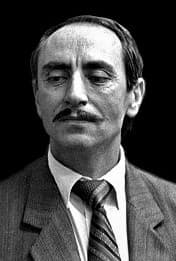
Dzhokhar Dudayev
General · Modern
52.0Total
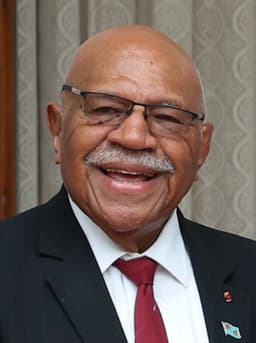
Sitiveni Rabuka
General · Modern
51.7Total
Basic Information
Born
1944
1948
Died
—
—
Era
Modern
Modern
Nationality
Chechnya
Fiji
Occupation
General
General
Civilization
Western
Other
Score Comparison
Military (10%)
46.7
10.2
Political (20%)
45.1
60.0
Influence (20%)
57.2
53.3
Legacy (20%)
47.5
46.7
Leadership (15%)
57.6
85.0
Strategy (15%)
57.5
39.6
TOTAL
52.0
51.7
Dzhokhar Dudayev — Complete Timeline
1991 AD
Proclaimed Independence of ChechnyaPolitical Action
Dzhokhar Dudayev declared the independence of the Chechen Republic of Ichkeria from the Soviet Union. He was elected president in a controversial election. This act triggered the First Chechen War with Russia.
ChechnyaIndependenceIchkeria
Impact: regionalconstructive
1994 AD
First Chechen War BeginsWar
Russian forces invaded Chechnya to suppress the independence movement. Dudayev led the Chechen resistance, using guerrilla tactics. The war resulted in heavy casualties and destruction but failed to defeat the Chechen forces.
Chechen WarRussiaInvasion
Impact: regionaltragic
1996 AD
Assassination by Russian MissileWar
Dudayev was killed by a Russian guided missile while using a satellite phone near Grozny. His death was a major blow to the Chechen resistance but did not end the war. He was succeeded by Aslan Maskhadov.
AssassinationChechnyaRussia
Impact: regionaltragic
Sitiveni Rabuka — Complete Timeline
1987 AD
1987 Fijian Coup d'étatPolitical Action
Rabuka, as a colonel in the Fijian military, led a coup overthrowing the elected government of Timoci Bavadra. The coup was motivated by ethnic Fijian opposition to Indo-Fijian political influence. Rabuka declared Fiji a republic.
CoupMilitary InterventionEthnic Tension
Impact: nationaldestructive
1992 AD
1992 Election as Prime MinisterPolitical Action◆ Major
Rabuka transitioned from military leader to civilian politician, winning the 1992 general election as leader of the Fijian Political Party. He became Prime Minister, serving until 1999.
ElectionCivilian GovernmentPolitical Transition
Impact: national
1997 AD
1997 Constitution ReformReform◆ Major
Rabuka's government oversaw the adoption of a new constitution that removed ethnic-based voting and provided for a multi-ethnic government. The constitution aimed to reduce ethnic tensions and promote national unity.
ConstitutionReformEthnic Reconciliation
Impact: nationalconstructive
1999 AD
1999 General Election DefeatPolitical Action◆ Major
Rabuka's government was defeated in the general election by the Labour Party led by Mahendra Chaudhry. Rabuka stepped down as Prime Minister, marking the end of his first period in power.
Election DefeatGovernment ChangeChaudhry
Impact: national
2022 AD
2022 Return as Prime MinisterPolitical Action◆ Major
Rabuka led the People's Alliance to victory in the 2022 general election, forming a coalition government. He became Prime Minister again, 23 years after his previous tenure, promising democratic reforms.
ElectionReturn to PowerCoalition Government
Impact: national
Expert Analysis
Sitiveni Rabuka vs Dzhokhar Dudayev
### The Coup and the Crossroads
On a May morning in 1987, a Fijian colonel in crisp military fatigues strode into Parliament in Suva, ending a month-old government with the quiet efficiency of a man who believed he had no other choice. Half a world away, in the turbulent autumn of 1991, a Soviet air force general stood before a crowd in Grozny, declaring his tiny nation free from an empire that would not let it go. Both men were soldiers who became politicians. Both seized power in moments of national crisis. But they walked opposite paths from that point—one toward reconciliation and a second chance at democracy, the other toward a martyr’s death in a war he could not win. Why did Sitiveni Rabuka become a statesman while Dzhokhar Dudayev became a symbol? The answer lies not only in their choices, but in the worlds that shaped them.
### Origins
Sitiveni Rabuka was born in 1948 on the island of Vanua Levu, into a Fiji still under British colonial rule. He grew up in a society of layered ethnic tensions—indigenous Fijians, Indo-Fijian descendants of indentured laborers, and a British administration that managed the balance with paternalistic care. Rabuka’s education led him to the military, where he rose through the ranks of a small, disciplined army that had never known a coup. He was a product of order, trained to protect a system he was later to break.
Dzhokhar Dudayev was born four years earlier, in 1944, the same year Stalin ordered the deportation of the entire Chechen nation to Central Asia. His family survived exile, and he grew up in a world of collective trauma. The Soviet military offered an escape, and Dudayev excelled—becoming a general, commanding bomber squadrons, and earning decorations in Afghanistan. But he never forgot the injustice done to his people. When the Soviet Union began to crack in 1991, he returned to Chechnya with a reputation for competence and a burning grievance. Where Rabuka had been shaped by order, Dudayev was forged in the fires of displacement and defiance.
### Rise to Power
Rabuka’s path to power was swift and almost reluctant. In 1987, when the first democratically elected government led by Timoci Bavadra took office—a coalition dominated by Indo-Fijians—fears of ethnic subjugation rippled through the indigenous population. Rabuka, then a colonel, acted. On May 14, he walked into Parliament, arrested the cabinet, and declared martial law. It was a coup driven not by personal ambition but by a sense of ethnic duty. He later said, “I did it for the indigenous people. I did not want to be prime minister.” Yet within five years, he was exactly that—winning the 1992 election as a civilian politician.
Dudayev’s rise was more theatrical. In October 1991, he stood before a crowd in Grozny and proclaimed the Chechen Republic of Ichkeria independent from the collapsing Soviet Union. He was elected president with overwhelming support, but his mandate was fragile. Moscow refused to recognize the breakaway state, and internal opposition simmered. Unlike Rabuka, who inherited a functioning government, Dudayev inherited a vacuum—no army, no treasury, and a hostile neighbor with nuclear weapons. His power rested on charisma and the memory of Chechen suffering, not on institutions.
### Leadership & Governance
As prime minister, Rabuka faced a paradox: he had overthrown a democracy, yet he now had to build one. His greatest achievement came in 1997, when he oversaw the adoption of a new constitution that removed ethnic-based voting and guaranteed equal rights for all Fijians. It was a remarkable act of political maturity—a coup leader voluntarily dismantling the system he had imposed. His military score of 19.9 reflects his limited strategic ambition; he was not a conqueror but a fixer. His political score of 72.0 captures his ability to navigate the treacherous waters of ethnic politics, even if he ultimately lost the 1999 election to Mahendra Chaudhry.
Dudayev’s governance was a desperate improvisation. He had no time for reform; he had to fight. When Russian forces invaded in December 1994, he led a guerrilla resistance that turned Grozny into a graveyard for the Russian army. His military score of 56.3 and strategy of 57.1 reflect a commander who knew how to inspire but lacked the resources to win. He was a symbol more than a strategist. His political score of 64.3 shows that he understood the power of nationalism, but he could not build a state. His Chechnya was a dream, not a functioning country.
### Triumph & Tragedy
Rabuka’s triumph was his return. In 2022, after more than two decades out of power, he led the People’s Alliance to victory and became prime minister again. He had been defeated, humbled, and then redeemed. His tragedy was the 2000 coup that followed his own—a violent takeover by George Speight that proved that Rabuka’s earlier example had opened a door that could not be closed. He had created a precedent he later regretted.
Dudayev’s tragedy was his death. On April 21, 1996, a Russian missile locked onto his satellite phone and killed him outside Grozny. He died fighting for a cause that was not yet lost—but that would soon drown in blood. His triumph was the First Chechen War itself: he forced Russia to negotiate, proving that a small nation could wound a giant. But he did not live to see the peace.
### Character & Destiny
Rabuka was a pragmatist. He could admit error, compromise, and change. His leadership score of 77.4 reflects a man who learned that power must be shared. Dudayev was a romantic. He believed in the purity of the cause, and he died for it. His leadership score of 73.2 is close, but the difference is in flexibility. Rabuka bent; Dudayev broke.
Their destinies were shaped by their eras. Rabuka’s Fiji was a small island nation with a British legal tradition and a culture of negotiation. Dudayev’s Chechnya was a cauldron of imperial rage, where no compromise was possible. One man could become a statesman because his country allowed it. The other became a martyr because his country demanded it.
### Legacy
Today, Rabuka is remembered as a flawed but essential figure—the man who tore down one system and helped build another. His legacy score of 61.2 reflects a mixed record, but his 2022 return shows that history is not finished with him. Dudayev is a legend in Chechnya, a symbol of resistance and sacrifice. His legacy score of 65.3 is higher, but it is the legacy of a ghost, not a builder.
### Conclusion
Standing on the same stage—a general turned politician—Rabuka and Dudayev faced the same question: how do you lead a divided people? Rabuka chose the long road of elections and constitutions, stumbling but returning. Dudayev chose the short road of war and defiance, burning bright and then vanishing. One learned to live with his enemies; the other chose to die facing them. In the end, the difference was not in their courage, but in the worlds that gave them their reasons.
Rankings
🥇
Dzhokhar DudayevLeader
Mil: 46.7Pol: 45.1Inf: 57.2
52.0
🥈
Sitiveni Rabuka
Mil: 10.2Pol: 60.0Inf: 53.3
51.7
+0.3 behind
How This Comparison Works
Algorithm
Each figure is scored on 6 dimensions (0—100 scale) based on structured historical data: Military (10%), Political (20%), Influence (20%), Legacy (20%), Leadership (15%), Strategy (15%). The weighted total produces the final ranking.
Data Sources
Scores are computed from structured sub-indicators in the database. Scale factors adjust for era (Ancient ×0.85, Modern ×1.0) and civilization size (Eastern ×1.05, Other ×0.80) to account for differences in population and military scale.
Maximum 3 Figures
Comparisons are limited to 2—3 figures to ensure readability and statistical meaningfulness.
Error Margins
±5 points per dimension — Sub-scores are derived from historical records with inherent uncertainty. Two figures within 5 points on a dimension should be considered roughly equivalent in that area.
Total Score Accuracy
±3 points overall — The weighted combination of 6 dimensions produces a total score with approximately ±3 points of uncertainty. Differences of less than 3 points are not statistically significant— the figures are effectively tied.
Known Limitations
- Historical records are incomplete and uneven across civilizations
- Figures from oral-tradition societies may be underrepresented
- Occupation labels can misclassify multi-role figures
- Scores measure capability and impact, not moral character
- Quantitative scoring is a comparison tool, not absolute truth
Capability Radar
Military (10%) — Battles & Warfare
Battles
35
5
Win Rate
30
5
Expansion
20
5
Political (20%) — Governance & Reform
Reform
35
50
Diplomacy
30
45
Economy
15
40
Influence (20%) — Cultural & Global Reach
Cultural
40
30
Global
35
20
Legacy (20%) — Historical Impact
Historical
45
40
Longevity
30
30
Leadership (15%) — Power & Stability
Tenure
30
55
Stability
10
35
Strategy (15%) — Tactics & Innovation
Strategy
50
10
Tactics
55
10
Reform
40
5
Similar Comparisons
Comments & Discussion
Chessmaster General6/16/2026
Rabuka pulled off the rarest trick in post-colonial politics: he gave democracy back. After his 1987 coups, he could have been just another tin-pot dictator using ethnic grievance as a shield. Instead, he co-authored Fiji's 1997 constitution and won a clean election in 1999. Dudayev, facing 40,000 Russian troops with 2000 half-trained fighters, never had that option. The difference is less about character and more about whether your opponent comes to negotiate—or to burn your capital.
铁血书生6/16/2026
把两个完全不同历史语境的人强行比较,本身就是一场知识上的殖民。拉布卡掌权时面对的是英式议会制的温柔框架,有对话、有妥协、甚至有下台重来的可能。杜达耶夫面对的是叶利钦的坦克和特种部队,连独立的体面都没人愿意给。把他们放在同一张天平上,是对车臣三十年血泪的基本不尊重。
Classicist Brawler6/16/2026
Putting Rabuka next to Dudayev is like comparing Solon to Spartacus. Rabuka had the luxury of a functioning state, a British-trained bureaucracy, and an opposition he could later reconcile with. Dudayev inherited a quasi-feudal society gutted by Stalin's deportation and Soviet industrialization. Rabuka wrote constitutions; Dudayev had to invent a nation from scratch while being bombed. One played chess; the other fought a man with a flamethrower using a knife.
数据冷眼6/16/2026
我们来点硬数字:斐济2006年人均GDP约4000美元,政变频发但经济仍在运转。车臣1994年人均GDP不足800美元,战争直接摧毁了80%的基础设施。拉布卡的"和解"背后是一个可以谈判的中产阶级框架;杜达耶夫的"反抗"是一个无力可谈的破碎社会。所谓"选择"的差距,九成是GDP的差距。
Two-Edged Loyalist6/16/2026
Both men swore oaths to protect their peoples. Rabuka honored his by stepping back from power twice—first in 1992 to let civilian rule resume, then in 2006 when he backed Bainimarama's coup. That's called institutional instinct. Dudayev honored his by fighting until a Russian missile ended him at 52. One understood the guardrails of democracy; the other understood only the dignity of resistance. Both were loyal. To wildly different definitions of the word.