Loading...
Dzhokhar Dudayev vs Yitzhak Rabin
Yitzhak Rabin leads by 14.4 pts · 2 figures compared
…
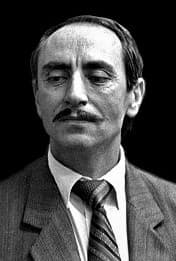
Dzhokhar Dudayev
General · Modern
52.0Total
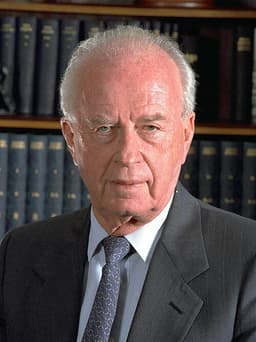
Yitzhak Rabin
General · Modern
66.4Total
Basic Information
Born
1944
1922
Died
—
—
Era
Modern
Modern
Nationality
Chechnya
Israel
Occupation
General
General
Civilization
Western
Middle Eastern
Score Comparison
Military (10%)
46.7
61.7
Political (20%)
45.1
82.0
Influence (20%)
57.2
68.0
Legacy (20%)
47.5
55.0
Leadership (15%)
57.6
78.0
Strategy (15%)
57.5
55.0
TOTAL
52.0
66.4
Dzhokhar Dudayev — Complete Timeline
1991 AD
Proclaimed Independence of ChechnyaPolitical Action
Dzhokhar Dudayev declared the independence of the Chechen Republic of Ichkeria from the Soviet Union. He was elected president in a controversial election. This act triggered the First Chechen War with Russia.
ChechnyaIndependenceIchkeria
Impact: regionalconstructive
1994 AD
First Chechen War BeginsWar
Russian forces invaded Chechnya to suppress the independence movement. Dudayev led the Chechen resistance, using guerrilla tactics. The war resulted in heavy casualties and destruction but failed to defeat the Chechen forces.
Chechen WarRussiaInvasion
Impact: regionaltragic
1996 AD
Assassination by Russian MissileWar
Dudayev was killed by a Russian guided missile while using a satellite phone near Grozny. His death was a major blow to the Chechen resistance but did not end the war. He was succeeded by Aslan Maskhadov.
AssassinationChechnyaRussia
Impact: regionaltragic
Yitzhak Rabin — Complete Timeline
1967 AD
Chief of Staff during the Six-Day WarWar
As Chief of Staff of the Israel Defense Forces, Rabin commanded the Israeli military during the Six-Day War against Egypt, Jordan, and Syria. Israel captured the Sinai Peninsula, Gaza Strip, West Bank, East Jerusalem, and Golan Heights, reshaping the region.
Six-Day WarTerritorial ExpansionMilitary Victory
Impact: global
1993 AD
Signing of the Oslo AccordsPolitical Action
As prime minister, Rabin signed the Oslo Accords with PLO Chairman Yasser Arafat on the White House lawn. The agreement established the Palestinian Authority and set a framework for Palestinian self-governance in the West Bank and Gaza Strip.
Peace ProcessPalestiniansOslo
Impact: globalconstructive
1995 AD
Assassination at Peace RallyPolitical Action
Rabin was assassinated by Israeli extremist Yigal Amir after a peace rally in Tel Aviv. The assassination shocked Israel and the world, derailing the Oslo peace process and leading to a period of political instability.
AssassinationPeace ProcessPolitical Violence
Impact: globaltragic
Expert Analysis
Yitzhak Rabin vs Dzhokhar Dudayev
The General and the Dove: Two Paths to a Bullet
On a balmy November evening in 1995, Yitzhak Rabin stood before a crowd of 100,000 peace supporters in Tel Aviv, singing a song of hope. Moments later, a young Israeli extremist fired two shots into his back. Half a world away and just a year earlier, Dzhokhar Dudayev, the Chechen president, was speaking on a satellite phone near Grozny when a Russian missile homed in on his signal, ending his life in a fireball. Two generals, two assassinations, two peoples yearning for self-determination—yet their journeys could not have been more different. What drove one man to be mourned as a martyr for peace, and the other to be erased as a rebel without a state? The answer lies in the soil of their origins, the crucible of their wars, and the impossible choices they made.
Origins
Yitzhak Rabin was born in 1922 in Jerusalem, then part of British Mandate Palestine, to socialist Zionist parents who had emigrated from Russia. He grew up in a community that believed in building a Jewish state through labor, agriculture, and military self-defense. The Holocaust was a shadow over his youth, and the 1948 Arab-Israeli War was his baptism by fire. Rabin was a product of a nation forged in existential struggle—a nation that, by 1967, had a functioning democracy, a modern army, and a clear political horizon.
Dzhokhar Dudayev, born in 1944 in the Chechen-Ingush ASSR, entered a world of trauma. His family had been among the hundreds of thousands of Chechens deported to Central Asia by Stalin in 1944, accused of collaborating with the Nazis. He grew up in exile, knowing his homeland only as a memory. Dudayev joined the Soviet Air Force, rising to become a major general—a rare achievement for a Chechen. But his loyalty was always to his people, not the empire that had crushed them. When the Soviet Union collapsed in 1991, he saw a window: Chechnya could be free.
Rise to Power
Rabin’s rise was institutional and measured. He became Chief of Staff of the Israel Defense Forces in 1964, and in June 1967, he commanded the Six-Day War—a stunning preemptive strike that captured the Sinai, Gaza, the West Bank, and the Golan Heights. The victory was total, but it also planted seeds of occupation that would haunt him. Rabin later served as ambassador to the United States, then as prime minister in the 1970s, and again in 1992. His path was one of statecraft within a recognized state.
Dudayev’s rise was revolutionary and chaotic. In 1991, as the Soviet Union disintegrated, he led a coup in Grozny, declared Chechnya independent, and was elected president. Moscow refused to recognize the secession. For three years, Dudayev ruled a de facto state, but it was a state without borders, without international recognition, and without a functioning economy. His power rested on charisma, clan loyalty, and a fierce nationalist rhetoric. When Russia finally invaded in December 1994, he had no choice but to fight.
Leadership & Governance
Rabin governed as a pragmatist. As prime minister, he prioritized security but also recognized that Israel could not rule millions of Palestinians forever. In 1993, he signed the Oslo Accords with Yasser Arafat on the White House lawn—a handshake that shocked the world. “We who have fought against you, the Palestinians, say to you today in a loud and clear voice: Enough of blood and tears,” he said. His leadership was about managing contradictions: building settlements while negotiating peace, using force while seeking compromise. His military background gave him credibility to make concessions.
Dudayev governed as a warrior-poet. He wrote poetry, smoked constantly, and spoke of Chechen honor and freedom. But his rule was plagued by infighting, crime, and economic collapse. He could not build institutions; he could only inspire resistance. When war came, he relied on guerrilla tactics—ambushes, snipers, and the brutal urban warfare that turned Grozny into a Stalingrad of the Caucasus. His strategy was to make the war so costly that Russia would withdraw. It nearly worked.
Triumph & Tragedy
Rabin’s greatest triumph was the Oslo Accords—a framework for Palestinian self-rule that earned him the Nobel Peace Prize in 1994. But the tragedy was that peace was not yet born. Israeli settlers, right-wing politicians, and Palestinian militants all opposed the process. Rabin was called a traitor by his own people. On November 4, 1995, after a peace rally in Tel Aviv, a Jewish law student named Yigal Amir shot him dead. The assassin’s bullet did not just kill a man; it shattered a moment.
Dudayev’s greatest triumph was surviving the first year of the Chechen War. Despite overwhelming Russian firepower, his fighters held Grozny and inflicted staggering losses. But his tragedy was isolation. No country recognized Chechnya; no aid arrived. In April 1996, a Russian spy traced his satellite phone call, and a missile ended his life. He died not in battle but by technology—a grim symbol of the asymmetry of power.
Character & Destiny
Rabin was a stoic, a man who kept his emotions hidden. He was not a natural orator; his speeches were awkward, his smile rare. Yet he had the moral courage to change. He had spent his life fighting Arabs, but in his final years, he decided that security could only come through peace. His character was shaped by the burden of command—he made decisions that cost lives, and he knew that peace would cost something too.
Dudayev was a romantic, a man who believed that will could defy power. He was charming, impulsive, and reckless. He refused to compromise, even when compromise might have saved lives. His character was shaped by the trauma of exile and the dream of a free Chechnya—a dream that could not be negotiated.
Legacy
Rabin is remembered as a martyr for peace. His assassination is a national trauma in Israel, a warning about the dangers of extremism. The Oslo process collapsed, but his name remains a symbol of the possibility of reconciliation. His legacy is institutionalized in Israeli memory, in schools, streets, and annual ceremonies.
Dudayev is remembered as a hero of Chechen independence. To Chechens, he is a symbol of resistance against Russian oppression. To Russia, he is a terrorist and a separatist. His legacy is more contested, more fragile. Chechnya today is ruled by a pro-Russian strongman, and Dudayev’s dream is dead. But his name still echoes in the mountains.
Conclusion
Two generals, two bullets, two worlds. Rabin died in the arms of his bodyguard, singing a song of peace. Dudayev died in a field, his body never found. Both were killed by the forces they tried to lead—Rabin by a Jew who hated his vision, Dudayev by Russians who hated his defiance. Their lives remind us that leadership is never just about power; it is about the choices we make when power is ours. Rabin chose peace and was killed for it. Dudayev chose war and was killed by it. History judges both, but perhaps it is not for us to say who was right. Only that they walked their paths to the end, and the world is still walking in their shadows.
Rankings
🥇
Yitzhak RabinLeader
Mil: 61.7Pol: 82.0Inf: 68.0
66.4
🥈
Dzhokhar Dudayev
Mil: 46.7Pol: 45.1Inf: 57.2
52.0
+14.4 behind
How This Comparison Works
Algorithm
Each figure is scored on 6 dimensions (0—100 scale) based on structured historical data: Military (10%), Political (20%), Influence (20%), Legacy (20%), Leadership (15%), Strategy (15%). The weighted total produces the final ranking.
Data Sources
Scores are computed from structured sub-indicators in the database. Scale factors adjust for era (Ancient ×0.85, Modern ×1.0) and civilization size (Eastern ×1.05, Other ×0.80) to account for differences in population and military scale.
Maximum 3 Figures
Comparisons are limited to 2—3 figures to ensure readability and statistical meaningfulness.
Error Margins
±5 points per dimension — Sub-scores are derived from historical records with inherent uncertainty. Two figures within 5 points on a dimension should be considered roughly equivalent in that area.
Total Score Accuracy
±3 points overall — The weighted combination of 6 dimensions produces a total score with approximately ±3 points of uncertainty. Differences of less than 3 points are not statistically significant— the figures are effectively tied.
Known Limitations
- Historical records are incomplete and uneven across civilizations
- Figures from oral-tradition societies may be underrepresented
- Occupation labels can misclassify multi-role figures
- Scores measure capability and impact, not moral character
- Quantitative scoring is a comparison tool, not absolute truth
Capability Radar
Military (10%) — Battles & Warfare
Battles
35
65
Win Rate
30
70
Expansion
20
50
Political (20%) — Governance & Reform
Reform
35
65
Diplomacy
30
85
Economy
15
60
Influence (20%) — Cultural & Global Reach
Cultural
40
55
Global
35
70
Legacy (20%) — Historical Impact
Historical
45
75
Longevity
30
60
Leadership (15%) — Power & Stability
Tenure
30
70
Stability
10
40
Strategy (15%) — Tactics & Innovation
Strategy
50
75
Tactics
55
60
Reform
40
55
Similar Comparisons
Comments & Discussion
数据侦察兵6/16/2026
从数据看,Rabin遇刺前支持率只有40%,而Dudayev在1994年民调中获70%以上支持——但这两个数字都是泡影。Rabin的和平阵线在以色列议会仅靠左翼和阿拉伯党勉强维持;Dudayev的统治更多靠个人魅力而非制度支撑。死后的神话掩盖了生前的困境:一个被本国人视为叛徒,一个被视为幻想家。枪和导弹只是收尾。|Comment based on data: "Rabin's pre-assassination approval was 40%, while Dudayev had over 70% in 1994 polls—both illusions. Rabin's peace coalition barely held in Knesset; Dudayev's rule relied on charisma over institutions. Death myths obscure life struggles: one seen as traitor at home, the other a dreamer. Bullets and missiles were just
乡愁评论家6/16/2026
我是车臣和以色列的共同历史边缘人。Rabin在奥斯陆被看作和平缔造者,但他却将约旦河西岸的定居点扩了一倍,这不是背叛吗?Dudayev则根本是个悲剧喜剧——他宣布独立却连国内温和派都控制不住,1994年被自己的将领反水。两人的死都暴露了同一个讽刺:所谓领袖,往往是被自己人先恨死的。枪口和导弹,都是自家人开的火。|Comment: "As a marginal historian of both Chechnya and Israel. Rabin was seen as a peacemaker at Oslo, but he doubled West Bank settlements—wasn't that betrayal? Dudayev was tragicomedy—declared independence but couldn't control even moderates, betrayed by his own generals in 1994. Both deaths expose
Historian3946/16/2026
Comparing these two generals through a Plutarchan lens, Rabin echoes Cato the Younger—a man of unbending principles who fell to political violence before his project could solidify. Dudayev, however, recalls Jugurtha: a fierce tribal leader who defied an empire but was erased by superior technology. Rabin's assassination in Tel Aviv was a public sacrifice; Dudayev's in a Chechen field was a clinical termination. Different eras, same lesson—ideals alone don't stop bullets.
Chronicler37276/16/2026
As a military historian, I see stark contrast. Rabin led from the front in 1948 and 1967, winning Israel's wars through disciplined strategy—he understood force as a tool for peace later. Dudayev, a Soviet Air Force general, used his expertise to fight a guerrilla war against Russia with minimal resources, but his romantic nationalism ignored Chechnya's internal divisions. Rabin's assassination silenced a pragmatist; Dudayev's, a doomed visionary. Brains and bullets differ in outcome.