Loading...
Dzhokhar Dudayev vs Ramon Castilla
Ramon Castilla leads by 7.7 pts · 2 figures compared
…
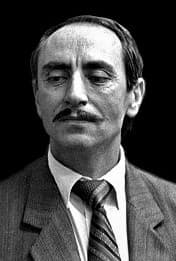
Dzhokhar Dudayev
General · Modern
52.0Total
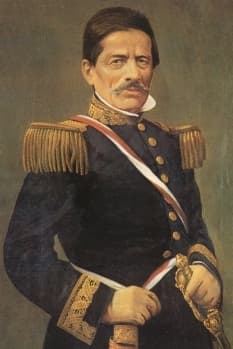
Ramon Castilla
General · Modern
59.7Total
Basic Information
Born
1944
1797
Died
—
1867
Era
Modern
Modern
Nationality
Chechnya
Peru
Occupation
General
General
Civilization
Western
Western
Score Comparison
Military (10%)
46.7
40.0
Political (20%)
45.1
72.0
Influence (20%)
57.2
56.7
Legacy (20%)
47.5
52.0
Leadership (15%)
57.6
78.0
Strategy (15%)
57.5
60.0
TOTAL
52.0
59.7
Dzhokhar Dudayev — Complete Timeline
1991 AD
Proclaimed Independence of ChechnyaPolitical Action
Dzhokhar Dudayev declared the independence of the Chechen Republic of Ichkeria from the Soviet Union. He was elected president in a controversial election. This act triggered the First Chechen War with Russia.
ChechnyaIndependenceIchkeria
Impact: regionalconstructive
1994 AD
First Chechen War BeginsWar
Russian forces invaded Chechnya to suppress the independence movement. Dudayev led the Chechen resistance, using guerrilla tactics. The war resulted in heavy casualties and destruction but failed to defeat the Chechen forces.
Chechen WarRussiaInvasion
Impact: regionaltragic
1996 AD
Assassination by Russian MissileWar
Dudayev was killed by a Russian guided missile while using a satellite phone near Grozny. His death was a major blow to the Chechen resistance but did not end the war. He was succeeded by Aslan Maskhadov.
AssassinationChechnyaRussia
Impact: regionaltragic
Ramon Castilla — Complete Timeline
1824 AD
Battle of AyacuchoWar
Castilla fought as a junior officer in the decisive Battle of Ayacucho, which ended Spanish rule in Peru. This victory secured Peruvian independence and marked the end of the Spanish Empire in South America, shaping Castilla's nationalist views.
Peruvian War of IndependenceBattleLiberation
Impact: regional
1845 AD
First Presidency of PeruPolitical Action◆ Major
Castilla was elected President of Peru in 1845, serving until 1851. His first term focused on economic development, including the guano boom, and infrastructure projects such as railroads and ports, modernizing the Peruvian state.
PresidencyEconomic DevelopmentGuano
Impact: nationalconstructive
1854 AD
Abolition of Slavery in PeruReform◆ Major
During his second presidency, Castilla issued a decree abolishing slavery in Peru on December 3, 1854. This reform freed approximately 25,000 slaves and was part of a broader liberal agenda, though it faced opposition from slave-owning elites.
AbolitionSlaveryHuman Rights
Impact: nationalprogressive
Abolition of Indigenous TributeReform◆ Major
Castilla also abolished the indigenous tribute tax in 1854, which had been a burden on native communities since colonial times. This measure aimed to integrate indigenous peoples into the Peruvian state as equal citizens, though its implementation was uneven.
Indigenous RightsTax ReformCitizenship
Impact: nationalprogressive
1855 AD
Second Presidency and Guano BoomPolitical Action◆ Major
Castilla served a second term from 1855 to 1862, during the peak of the guano export boom. He used guano revenues to fund public works, pay off foreign debt, and modernize the military, but also faced criticism for corruption and over-reliance on a single resource.
PresidencyGuanoModernization
Impact: nationalconstructive
1860 AD
Constitutional Reform of 1860Reform◆ Major
Castilla oversaw the adoption of a new constitution in 1860, which established a centralized republic with a strong executive. The constitution remained in effect until 1920 and shaped Peru's political structure, though it limited regional autonomy.
ConstitutionPolitical ReformCentralization
Impact: nationalconstructive
Expert Analysis
Ramon Castilla vs Dzhokhar Dudayev
# The Liberator and the Rebel: Two Generals Who Shaped Their Nations
In the crisp December air of 1854, Ramon Castilla stood before a crowd in Lima and signed the decree that would free thousands of enslaved people across Peru. Four decades later, on a cold February morning in 1996, Dzhokhar Dudayev spoke into a satellite phone near Grozny, unaware that Russian radar had locked onto his signal. Moments later, a missile turned the Chechen leader into a martyr. These two generals, born a century and a half apart, both rose from military backgrounds to lead their peoples through times of upheaval. Yet one built a nation while the other saw his dream consumed by fire.
Origins
Ramon Castilla entered the world in 1797, in the twilight of Spanish colonial rule. Born in Tarapacá, a desert province of Peru, he grew up in a society where the color of one's skin determined one's station. As a young man, he joined the royalist army, but like many Creole officers, he eventually switched sides. The Battle of Ayacucho in 1824, where he fought as a junior officer, was his baptism by fire—a victory that shattered Spanish power in South America and left a generation of military men to govern the ruins.
Dzhokhar Dudayev was born in 1944, the year Stalin ordered the entire Chechen people deported to Central Asia. His family was among the hundreds of thousands loaded onto cattle cars, their homeland erased from maps. This trauma shaped him. He joined the Soviet Air Force, rising to become the first and only Chechen to reach the rank of general in the Soviet military. Unlike Castilla, who fought to end colonial rule, Dudayev learned to master the machinery of empire—only to turn it against its masters.
Rise to Power
Castilla's path to leadership was gradual, built on competence. After Ayacucho, he served in various administrative posts, gaining a reputation for honesty in a corrupt age. When he was elected president in 1845, Peru was a fragile republic, its economy dependent on nitrates and guano. Castilla understood that stability required more than bayonets; it required institutions.
Dudayev's rise was sudden and explosive. In 1991, as the Soviet Union crumbled, he returned to Grozny and declared Chechnya independent. His military credentials gave him authority, and his charisma drew crowds. Within months, he was president of an unrecognized state, his legitimacy resting not on law but on the will of a people desperate for freedom. Where Castilla inherited a nation, Dudayev invented one.
Leadership & Governance
Castilla governed as a pragmatist. During his first term, he used guano revenues to pay off foreign debt, build railroads, and modernize the army. But his greatest act came in 1854, when he abolished slavery and the indigenous tribute tax in a single stroke. These reforms were not merely moral; they were strategic. By freeing slaves and ending colonial taxes, Castilla created a larger pool of free labor and loyal citizens. His 1860 constitution centralized power in the presidency, but it also guaranteed civil rights. He was a reformer who believed that order and liberty could coexist.
Dudayev faced a different reality. He inherited a Chechnya devastated by Soviet neglect, with no functioning economy and a population armed from abandoned military depots. His leadership was less about governance than survival. He tried to build a state, printing currency and forming a parliament, but the Russian blockade strangled his efforts. When war came in 1994, he proved a skilled guerrilla commander, using Chechnya's mountains and urban rubble to bleed the Russian army. Yet he could not transform military resistance into political victory.
Triumph & Tragedy
Castilla's triumph was the abolition of slavery, a moment that echoes in Peruvian history. He also oversaw the guano boom, which funded schools, hospitals, and infrastructure. His tragedy was that the boom created dependency; when the guano ran out, Peru collapsed into debt and war. Still, he died in 1867, respected and remembered.
Dudayev's triumph was symbolic: he made Chechnya's independence a global cause, humiliating Russia's military. His tragedy was total. He was assassinated in 1996, leaving his movement leaderless. The war ended in a fragile peace, but the second war that followed turned Grozny into the most destroyed city on earth.
Character & Destiny
Castilla was a builder. He saw power as a tool for creating order, not for personal glory. His military background gave him discipline, but his political instincts made him flexible. He compromised when needed, and he understood that reform, not revolution, was the path to progress.
Dudayev was a breaker of chains. He saw power as liberation, and he could not imagine a middle ground between freedom and submission. His courage was immense, but his vision was rigid. He could lead a rebellion but not a government. In the end, his character reflected his people's trauma: proud, defiant, and unwilling to bend.
Legacy
Castilla is remembered as Peru's great reformer, the man who ended slavery and modernized the state. Statues of him stand across the country, and his name graces streets and schools. His legacy is a nation that, despite its flaws, remains stable and democratic.
Dudayev is a ghost. In Chechnya, he is a hero, his image on posters and his name in songs. But his dream of an independent Ichkeria died with him. Today, Chechnya is ruled by a Kremlin-backed strongman, its cities rebuilt but its spirit subdued. Dudayev's legacy is a warning: that the fight for freedom can consume the fighter.
Conclusion
Castilla and Dudayev were both generals who became presidents, both men who wielded military power for political ends. But their worlds were different. Castilla lived in an age of nation-building, when leaders could forge states from the wreckage of empire. Dudayev lived in an age of nationalism, when empires fought to hold their fragments together. One succeeded because he knew when to stop fighting; the other failed because he could not stop. Their stories remind us that history rewards not just courage, but timing—and that the line between liberation and tragedy is often drawn by the choices we make when no one is watching.
Rankings
🥇
Ramon CastillaLeader
Mil: 40.0Pol: 72.0Inf: 56.7
59.7
🥈
Dzhokhar Dudayev
Mil: 46.7Pol: 45.1Inf: 57.2
52.0
+7.7 behind
How This Comparison Works
Algorithm
Each figure is scored on 6 dimensions (0—100 scale) based on structured historical data: Military (10%), Political (20%), Influence (20%), Legacy (20%), Leadership (15%), Strategy (15%). The weighted total produces the final ranking.
Data Sources
Scores are computed from structured sub-indicators in the database. Scale factors adjust for era (Ancient ×0.85, Modern ×1.0) and civilization size (Eastern ×1.05, Other ×0.80) to account for differences in population and military scale.
Maximum 3 Figures
Comparisons are limited to 2—3 figures to ensure readability and statistical meaningfulness.
Error Margins
±5 points per dimension — Sub-scores are derived from historical records with inherent uncertainty. Two figures within 5 points on a dimension should be considered roughly equivalent in that area.
Total Score Accuracy
±3 points overall — The weighted combination of 6 dimensions produces a total score with approximately ±3 points of uncertainty. Differences of less than 3 points are not statistically significant— the figures are effectively tied.
Known Limitations
- Historical records are incomplete and uneven across civilizations
- Figures from oral-tradition societies may be underrepresented
- Occupation labels can misclassify multi-role figures
- Scores measure capability and impact, not moral character
- Quantitative scoring is a comparison tool, not absolute truth
Capability Radar
Military (10%) — Battles & Warfare
Battles
35
45
Win Rate
30
50
Expansion
20
30
Political (20%) — Governance & Reform
Reform
35
85
Diplomacy
30
70
Economy
15
75
Influence (20%) — Cultural & Global Reach
Cultural
40
55
Global
35
50
Legacy (20%) — Historical Impact
Historical
45
65
Longevity
30
60
Leadership (15%) — Power & Stability
Tenure
30
65
Stability
10
60
Strategy (15%) — Tactics & Innovation
Strategy
50
45
Tactics
55
40
Reform
40
55
Similar Comparisons
Comments & Discussion
Tatavivor6/16/2026
Castilla was a state-builder, Dudayev was a pyromaniac with a microphone. Castilla ended slavery in 1854, then balanced Peru’s budget for a decade—that’s real leadership. Dudayev, by contrast, wasted Chechnya’s post-Soviet chance on romantic warlordism and got his people crushed by Russian armor. One freed his country; the other got his obliterated. I don’t care about martyr narratives: one legacy built hospitals, the other built rubble. Period.
核弹看客6/16/2026
把卡斯蒂利亚和杜达耶夫放一起比?前者1854年废除奴隶制时国会还在吵,他直接签字开干;后者1991年独立后居然让车臣变伊斯兰法加黑市天堂,连电力都没稳住。一个修铁路挖硝石,一个喊口号丢导弹。军事背景一样?别骗自己—卡斯蒂利亚打完独立战争后治国35年,杜达耶夫从苏联空军退役后只活了5年就死在电话线上,这不是对比,这是碾压。
Aqueduct General6/16/2026
Let’s talk logistics. Castilla abolished slavery in 1854 not out of pure morality but because Peru’s guano boom needed wage labor for the mines—smart economic pivot. He also modernized the army after the 1839 War with Bolivia, building actual channels of power. Dudayev’s “army” in 1994 was a militia with no supply lines, no air defense, and a leader who couldn’t even secure his own cell signal. One general understood logistics wins wars; the other was a PR stunt waiting for a missile.
炼钢史官6/16/2026
比较要看背景:卡斯蒂利亚1845-1862年执政时,秘鲁正吃鸟粪红利,他能搞废除奴隶制、修铁路,是因为手里有钱有秩序;杜达耶夫1991年接班时车臣是烂摊子,苏联垮了、经济崩了,他连联合国都不让进,只能靠民族主义点火。结果?卡斯蒂利亚留下国家机构和宪法,杜达耶夫留下废墟和两次战争。不是他不够狠,是时代连机会都没给他—但他也浪费了那点机会。
HyphenGuy6/16/2026
Objectively, both are military men who leveraged war to political ends, but the comparison fails on scale. Castilla governed a nation for 15 years, ended a modern institution of slavery, and charted Peru’s course for decades—his legacy is institutional. Dudayev lasted 5 years in power, never controlled his own borders, and his “independence” died with him. One was a statesman who commanded armies; the other was a colonel who played president until a missile wrote the real history. I’ll take the