Loading...
Dzhokhar Dudayev vs Plutarco Elias Calles
Plutarco Elias Calles leads by 6.5 pts · 2 figures compared
…
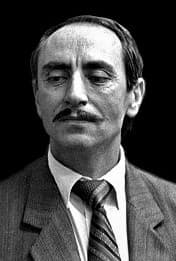
Dzhokhar Dudayev
General · Modern
52.0Total
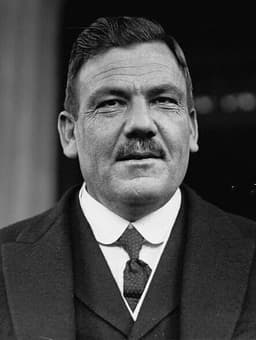
Plutarco Elias Calles
General · Modern
58.5Total
Basic Information
Born
1944
1877
Died
—
1945
Era
Modern
Modern
Nationality
Chechnya
Mexico
Occupation
General
General
Civilization
Western
Western
Score Comparison
Military (10%)
46.7
40.0
Political (20%)
45.1
70.3
Influence (20%)
57.2
68.0
Legacy (20%)
47.5
40.0
Leadership (15%)
57.6
78.0
Strategy (15%)
57.5
52.5
TOTAL
52.0
58.5
Dzhokhar Dudayev — Complete Timeline
1991 AD
Proclaimed Independence of ChechnyaPolitical Action
Dzhokhar Dudayev declared the independence of the Chechen Republic of Ichkeria from the Soviet Union. He was elected president in a controversial election. This act triggered the First Chechen War with Russia.
ChechnyaIndependenceIchkeria
Impact: regionalconstructive
1994 AD
First Chechen War BeginsWar
Russian forces invaded Chechnya to suppress the independence movement. Dudayev led the Chechen resistance, using guerrilla tactics. The war resulted in heavy casualties and destruction but failed to defeat the Chechen forces.
Chechen WarRussiaInvasion
Impact: regionaltragic
1996 AD
Assassination by Russian MissileWar
Dudayev was killed by a Russian guided missile while using a satellite phone near Grozny. His death was a major blow to the Chechen resistance but did not end the war. He was succeeded by Aslan Maskhadov.
AssassinationChechnyaRussia
Impact: regionaltragic
Plutarco Elias Calles — Complete Timeline
1915 AD
Governorship of SonoraPolitical Action
Calles served as Governor of Sonora from 1915 to 1919, implementing radical reforms including land redistribution, anti-clerical laws, and labor rights. His governorship established him as a key figure in the Sonoran dynasty and a proponent of revolutionary change.
GovernorshipSonoraReforms
Impact: regionalconstructive
1924 AD
Presidency of MexicoPolitical Action◆ Major
Calles was elected President of Mexico in 1924, serving until 1928. His administration continued revolutionary reforms, including land reform, labor rights, and secularization, but also faced opposition from the Catholic Church and conservative groups.
PresidencyMexican RevolutionReforms
Impact: nationalconstructive
1926 AD
Cristero WarWar◆ Major
Calles enforced anti-clerical laws, including the Calles Law, which restricted the Catholic Church's role in society. This sparked the Cristero War (1926-1929), a violent rebellion by Catholic peasants against the state, resulting in tens of thousands of deaths.
Cristero WarAnti-clericalismReligious Conflict
Impact: nationaldestructive
1928 AD
MaximatoPolitical Action◆ Major
After his presidency, Calles remained the de facto ruler of Mexico during the Maximato (1928-1934), controlling puppet presidents. He continued to influence policy, but his power waned as President L
MaximatoPolitical ControlCárdenas
Impact: national
1929 AD
Founding of the National Revolutionary Party (PNR)Political Action
Calles founded the National Revolutionary Party (PNR) in 1929, which later became the Institutional Revolutionary Party (PRI). This party dominated Mexican politics for over 70 years, institutionalizing the revolution's legacy and centralizing power.
Political PartyPRIInstitutionalization
Impact: nationalconstructive
Expert Analysis
Plutarco Elias Calles vs Dzhokhar Dudayev
### The Strongman and the Warlord: How Two Generals Shaped Their Nations' Souls
In the winter of 1926, Plutarco Elías Calles, the President of Mexico, signed a law that would turn churches into state property and ban foreign priests. Across the Atlantic, seventy years later, another general, Dzhokhar Dudayev, stood on a balcony in Grozny and declared his small Caucasus nation independent from a collapsing Soviet empire. Both men were generals. Both believed they were forging a new nation. But one built a political machine that would rule for seven decades, while the other led his people into a war that ended with his assassination and the destruction of his capital. Their stories reveal how two very different men, facing very different worlds, pursued the same dream—and why one created a dynasty while the other left only ashes.
### Origins
Calles was born in 1877 in the state of Sonora, a son of a schoolteacher and a poor farmer. He grew up in a Mexico ruled by Porfirio Díaz—a stable, autocratic regime that modernized the economy but crushed dissent. Calles started as a teacher, then a hotel owner, then a revolutionary. He was a self-made man of the Mexican Revolution, a conflict that tore the country apart from 1910 to 1920. His generation believed the old order—the Church, the landed aristocracy, the foreign investors—had to be destroyed to create a modern, secular state.
Dudayev was born in 1944, in a remote Chechen village, just as Stalin was deporting the entire Chechen nation to Central Asia for alleged collaboration with the Nazis. His family was among the 500,000 Chechens dumped into cattle cars and sent to Kazakhstan. Dudayev grew up in exile, returned home only in 1957 after Khrushchev allowed the survivors back, and joined the Soviet Air Force. He became a decorated pilot, a general, and the commander of a strategic bomber base in Estonia. He was a product of the Soviet system—educated, loyal, and ambitious. But he never forgot the genocide of his people.
The difference in their origins was profound. Calles came from a revolution that succeeded, a nation that had fought for its independence a century earlier. Dudayev came from a people who had been crushed, exiled, and erased from maps. Calles had a country to build; Dudayev had a nation to resurrect.
### Rise to Power
Calles rose through the ranks of the Mexican Revolution. He served as Governor of Sonora from 1915 to 1919, where he implemented radical reforms—land redistribution, anti-clerical laws, and the destruction of the old hacienda system. He was a capable administrator and a ruthless politician. In 1924, he was elected President of Mexico. His path was conventional: he built a coalition of revolutionary generals, labor unions, and peasant organizations. He did not seize power; he inherited it through a system that was brutal but had rules.
Dudayev’s rise was a rupture. In 1991, as the Soviet Union disintegrated, he returned to Chechnya. The local Communist leadership was paralyzed. Dudayev, with his military uniform and his command of a bomber base, was seen as a man who could stand up to Moscow. He led a coup against the local government, seized the parliament building, and declared Chechnya independent. He was elected president with over 90 percent of the vote. But his power was personal, not institutional. He had no party, no bureaucracy, no economic base. He had only his charisma, his military background, and the desperate hope of his people.
Calles built a machine; Dudayev built a cult.
### Leadership & Governance
Calles was a master of political architecture. After his presidency ended in 1928, he did not leave. Instead, he created the Maximato—a shadow rule where he controlled a series of puppet presidents from behind the scenes. In 1929, he founded the National Revolutionary Party (PNR), which later became the Institutional Revolutionary Party (PRI). This was his genius: he turned the chaos of the Mexican Revolution into a one-party state that could manage elections, co-opt rivals, and maintain stability for seventy-one years. He secularized the state, built schools, and expanded the government’s reach into the countryside. But he also crushed the Cristero War (1926–1929), a Catholic peasant uprising against his anti-clerical laws, killing tens of thousands. Calles was a builder, but he built with blood.
Dudayev had no such luxury. He inherited a Chechnya that was poor, destroyed by decades of Soviet neglect, and surrounded by a hostile Russia. He tried to build a state—a currency, a flag, a constitution—but he had no time. In 1994, Russian forces invaded. Dudayev’s leadership was that of a guerrilla commander, not a statesman. He used Chechnya’s mountainous terrain and the population’s fierce loyalty to wage a war of attrition. His strategy was to inflict enough casualties to force Russia to negotiate. But he was not a great military strategist; his score of 57.1 in strategy reflects this. He relied on morale, not logistics. He was a symbol, not a general.
Calles fought a war to consolidate power; Dudayev fought a war to survive.
### Triumph & Tragedy
Calles’s greatest triumph was the creation of the PRI. It gave Mexico stability for decades, allowed for economic growth, and created a middle class. His greatest tragedy was the Cristero War, a brutal conflict that pitted the state against the Church and killed over 90,000 people. He won, but the scars remain.
Dudayev’s greatest triumph was the First Chechen War itself. For two years, his ragtag fighters humiliated the Russian army, which had expected a quick victory. In 1996, after his death, the Russians withdrew, and Chechnya remained independent for a few years. His greatest tragedy was his assassination in 1996, killed by a Russian missile while using a satellite phone. He died before he could see his dream realized, and his successors were unable to hold the state together. Within a decade, Chechnya was back under Russian control, Grozny was rubble, and his people had suffered a second genocide.
### Character & Destiny
Calles was cold, calculating, and institutional. He believed in the state, not in himself. He was willing to compromise, to wait, to let others take the credit. His personality was that of a machine politician. He died in 1945, in exile, but his party ruled on.
Dudayev was romantic, impulsive, and tragic. He believed in the nation, not the state. He was willing to die for his cause, and he did. His personality was that of a prophet. He died a martyr, but his nation died with him.
### Legacy
Calles’s legacy is the PRI, which ruled Mexico until 2000. It is a mixed legacy: stability and corruption, modernization and authoritarianism. He is remembered as the father of modern Mexico, but also as the man who started the Cristero War. His scores—Political 79.8, Leadership 75.5—reflect a man who was effective but not beloved.
Dudayev’s legacy is the memory of Chechen independence. He is a hero to his people, a symbol of resistance. But his scores—Influence 73.2, Leadership 73.2—are high because he inspired, not because he built. He left no institutions, only a story.
### Conclusion
Calles and Dudayev both dreamed of a nation. Calles built a machine that outlived him. Dudayev lit a fire that burned out. One created a state; the other created a legend. In the end, the difference was not in their courage or their vision, but in their world. Calles had a revolution that had already won; Dudayev had a people that had already lost. One man built a house; the other built a pyre. Both were consumed by what they made.
Rankings
🥇
Plutarco Elias CallesLeader
Mil: 40.0Pol: 70.3Inf: 68.0
58.5
🥈
Dzhokhar Dudayev
Mil: 46.7Pol: 45.1Inf: 57.2
52.0
+6.5 behind
How This Comparison Works
Algorithm
Each figure is scored on 6 dimensions (0—100 scale) based on structured historical data: Military (10%), Political (20%), Influence (20%), Legacy (20%), Leadership (15%), Strategy (15%). The weighted total produces the final ranking.
Data Sources
Scores are computed from structured sub-indicators in the database. Scale factors adjust for era (Ancient ×0.85, Modern ×1.0) and civilization size (Eastern ×1.05, Other ×0.80) to account for differences in population and military scale.
Maximum 3 Figures
Comparisons are limited to 2—3 figures to ensure readability and statistical meaningfulness.
Error Margins
±5 points per dimension — Sub-scores are derived from historical records with inherent uncertainty. Two figures within 5 points on a dimension should be considered roughly equivalent in that area.
Total Score Accuracy
±3 points overall — The weighted combination of 6 dimensions produces a total score with approximately ±3 points of uncertainty. Differences of less than 3 points are not statistically significant— the figures are effectively tied.
Known Limitations
- Historical records are incomplete and uneven across civilizations
- Figures from oral-tradition societies may be underrepresented
- Occupation labels can misclassify multi-role figures
- Scores measure capability and impact, not moral character
- Quantitative scoring is a comparison tool, not absolute truth
Capability Radar
Military (10%) — Battles & Warfare
Battles
35
45
Win Rate
30
50
Expansion
20
30
Political (20%) — Governance & Reform
Reform
35
85
Diplomacy
30
65
Economy
15
60
Influence (20%) — Cultural & Global Reach
Cultural
40
70
Global
35
60
Legacy (20%) — Historical Impact
Historical
45
75
Longevity
30
70
Leadership (15%) — Power & Stability
Tenure
30
70
Stability
10
55
Strategy (15%) — Tactics & Innovation
Strategy
50
55
Tactics
55
40
Reform
40
60
Similar Comparisons
Comments & Discussion
GENERAL_GHOST6/16/2026
Calles was a builder of institutions, Dudayev a destroyer of cities. Calles created the PRI, which ruled Mexico for 71 years through a system of co-optation and control. Dudayev couldn't even unite Chechnya's clans, let alone build a state. His "independence" declaration was a suicide note backed by romantic rhetoric and no real economy. Calles may have been ruthless—killing Cristeros by the thousands—but his brutality was calculating, not chaotic. One left a legacy; the other left a graveyard.
WAR_SCHOOL_DROPOUT6/16/2026
The comparison is absurd. Dudayev had zero military logistics, barely a regiment of loyal fighters, and his "air force" consisted of a few rusting trainers. Calles commanded actual federal armies against the Cristero rebels and defeated them with superior strategy and supplies. Dudayev's Chechnya was blockaded, bombed, and starved within months. If Calles had faced Yeltsin's tanks in 1926, he'd have surrendered before breakfast. This is a clash between a general who knew power and a pilot who ju
诗圣吐槽6/16/2026
拿卡列斯跟杜达耶夫比,跟拿铁轨比火车头一样可笑。卡列斯是革命制度党的奠基人,一手建立了墨西哥现代官僚机器,全国从教师到税务员都听他的。杜达耶夫?他连格罗兹尼的垃圾回收都管不明白,宣称独立后最常干的事就是喊话和放烟花式的导弹袭击。卡列斯用七年控制了一个国家,杜达耶夫用四年炸掉了自己首都的最后一栋楼。这不是历史比较,这是对制度建设者的侮辱。
冷眼史册6/16/2026
说两人都是“强人”简直是对强这个词的亵渎。卡列斯打赢了基督战争,把教会卡到咽气,连总统奥夫雷贡死了他都能继续遥控政权。杜达耶夫呢?自己军队里派系林立,几个车臣军阀见他就绕道走。他死的时候很多人不是哀悼,而是松了口气。车臣到今天还在废墟里挣扎,不是因为俄罗斯太强,是因为他在位时什么都没建起来。英雄?他只是个披着将军外套的诗人罢了。
CLASSICS_TABULA6/16/2026
Compare them if you must, but remember: Calles read Machiavelli, Dudayev read only his own legend. Calles understood that a state needs institutions—even brutal ones—to survive. He dismantled the Church not out of spite but to centralize power, and it worked. Dudayev thought liberation was a feeling, not a framework. He declared independence without securing borders, allies, or a real budget. Chechnya's tragedy was not that he fought Russia