Loading...
Dzhokhar Dudayev vs Julius Caesar
Julius Caesar leads by 30.8 pts · 2 figures compared
…
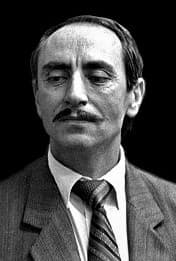
Dzhokhar Dudayev
General · Modern
52.0Total

Julius Caesar
General · Ancient
82.8Total
Basic Information
Born
1944
-100
Died
—
-44
Era
Modern
Ancient
Nationality
Chechnya
Roman Republic
Occupation
General
General
Civilization
Western
Western
Score Comparison
Military (10%)
46.7
88.0
Political (20%)
45.1
78.0
Influence (20%)
57.2
85.0
Legacy (20%)
47.5
82.0
Leadership (15%)
57.6
80.0
Strategy (15%)
57.5
85.0
TOTAL
52.0
82.8
Dzhokhar Dudayev — Complete Timeline
1991 AD
Proclaimed Independence of ChechnyaPolitical Action
Dzhokhar Dudayev declared the independence of the Chechen Republic of Ichkeria from the Soviet Union. He was elected president in a controversial election. This act triggered the First Chechen War with Russia.
ChechnyaIndependenceIchkeria
Impact: regionalconstructive
1994 AD
First Chechen War BeginsWar
Russian forces invaded Chechnya to suppress the independence movement. Dudayev led the Chechen resistance, using guerrilla tactics. The war resulted in heavy casualties and destruction but failed to defeat the Chechen forces.
Chechen WarRussiaInvasion
Impact: regionaltragic
1996 AD
Assassination by Russian MissileWar
Dudayev was killed by a Russian guided missile while using a satellite phone near Grozny. His death was a major blow to the Chechen resistance but did not end the war. He was succeeded by Aslan Maskhadov.
AssassinationChechnyaRussia
Impact: regionaltragic
Julius Caesar — Complete Timeline
58 BC
Gallic WarsWar◆ Major
Caesar, as proconsul of Gaul, launched a series of campaigns that conquered all of Gaul (modern France, Belgium, and parts of Switzerland). He fought numerous battles, including against the Helvetii, the Belgae, and the Gallic chieftain Vercingetorix. The wars brought immense wealth and a loyal army to Caesar.
Gallic WarsConquestRoman Expansion
Impact: regional
49 BC
Crossing the RubiconPolitical Action◆ Major
Caesar led Legio XIII across the Rubicon River into Italy, defying the Roman Senate's order to disband his army. This act triggered a civil war against Pompey and the Optimates, ultimately leading to Caesar's dictatorship and the end of the Roman Republic.
Roman Civil WarEnd of RepublicPower Struggle
Impact: global
48 BC
Battle of PharsalusWar◆ Major
Caesar's outnumbered army defeated the larger forces of Pompey the Great at Pharsalus in Greece. Caesar's tactical use of a reserve line to counter Pompey's cavalry charge proved decisive. Pompey fled to Egypt, where he was assassinated, leaving Caesar as the undisputed master of the Roman world.
Roman Civil WarBattleDecisive Victory
Impact: regional
44 BC
Appointment as Dictator for LifePolitical Action◆ Major
The Roman Senate appointed Caesar dictator perpetuo (dictator for life), granting him unprecedented personal power. This move concentrated military, legislative, and judicial authority in one person, effectively ending the Roman Republic's traditional system of checks and balances and alarming many senators.
DictatorshipEnd of RepublicPower Consolidation
Impact: regionaldestructive
Assassination on the Ides of MarchPolitical Action◆ Major
A group of Roman senators, led by Marcus Junius Brutus and Gaius Cassius Longinus, stabbed Caesar to death at a meeting of the Senate in the Theatre of Pompey. The assassination was intended to restore the Republic, but instead triggered another civil war that led to the rise of the Roman Empire.
AssassinationRoman PoliticsEnd of Republic
Impact: globaldestructive
Expert Analysis
Origins
Dzhokhar Dudayev was born in 1944 in Yalkhori, Chechnya, into a family that had been forcibly deported to Kazakhstan during Stalin's ethnic cleansing. He grew up in exile, returning to Chechnya only in the 1960s. Dudayev entered the Soviet military, graduating from the Tambov Higher Military Aviation School and later the Gagarin Air Force Academy. He served in the Soviet Air Force, rising to the rank of Major General and commanding a strategic bomber division. His background was entirely within the Soviet system, yet he retained a strong Chechen identity.
Julius Caesar was born in 100 BCE in Rome into the patrician Julian clan, which claimed descent from the goddess Venus. His family was politically connected but not wealthy. Caesar received a traditional Roman education in rhetoric, philosophy, and law. His early life was marked by the Social War and the civil wars of Marius and Sulla. He served in the military in Asia and Cilicia, and his capture by pirates (whom he later crucified) showed his early audacity.
Both men came from backgrounds that shaped their ambitions: Dudayev from a persecuted minority seeking independence, Caesar from a noble family seeking glory in a competitive republic.
Rise to Power
Dudayev's rise began after the Soviet collapse. In 1990, he was elected head of the Chechen National Congress, an opposition group. In October 1991, following the August coup attempt in Moscow, Dudayev proclaimed the independence of the Chechen Republic of Ichkeria. He won a controversial presidential election in November 1991 with over 85% of the vote, though the election was criticized as illegitimate by Russian authorities. He then dissolved the local parliament and seized power, establishing a de facto independent state. His military background gave him credibility, but his political base was narrow, relying on clan loyalties and anti-Russian sentiment.
Caesar's rise was more gradual and institutional. He held a series of political offices: quaestor in 69 BCE, aedile in 65 BCE, praetor in 62 BCE. He formed the First Triumvirate with Pompey and Crassus in 60 BCE, securing the consulship for 59 BCE. As consul, he passed land reforms and obtained the governorship of Gaul. His military campaigns in Gaul (58-50 BCE) made him immensely popular with his legions and wealthy from plunder. The conquest of Gaul added a vast territory to Rome and gave Caesar a loyal army. His crossing of the Rubicon in 49 BCE triggered a civil war that ended with his victory over Pompey at Pharsalus in 48 BCE.
Dudayev's rise was a sudden seizure of power in a chaotic post-Soviet environment; Caesar's was a calculated climb through Roman political and military institutions.
Leadership & Governance
Dudayev's leadership was charismatic but chaotic. He established a presidential system with himself as head of state, but his government had limited control beyond Grozny. He failed to create effective state institutions, and his rule was marked by economic collapse, crime, and internal dissent. He pursued a policy of Chechen independence, rejecting any compromise with Russia. His military strategy relied on guerrilla warfare and the mobilization of clan militias. He scored 57.6 in leadership and 57.5 in strategy, reflecting his ability to inspire resistance but his weakness in governance.
Caesar's governance was transformative. As dictator, he implemented reforms: the Julian calendar, land redistribution for veterans, debt relief, and the expansion of Roman citizenship to provincial elites. He centralized power in his own hands, reducing the Senate's authority. His leadership style was decisive and often ruthless, but he also showed clemency to former enemies. He scored 80.0 in leadership and 85.0 in strategy, indicating his mastery of both military and political command.
Dudayev's governance was a failure in practical terms, while Caesar's reforms had lasting impact. However, Dudayev operated under far more constrained circumstances—a small, impoverished region facing a nuclear superpower.
Triumph & Tragedy
Dudayev's greatest triumph was declaring Chechen independence and leading the resistance during the First Chechen War (1994-1996). Despite Russia's massive military advantage, Chechen fighters inflicted heavy casualties and forced a Russian withdrawal in 1996. Dudayev's guerrilla tactics and propaganda kept the independence movement alive. His tragedy was his assassination in 1996 by a Russian missile, just months before the war ended. He died without seeing Chechnya's de facto independence, which lasted until the Second Chechen War (1999-2009). His failure to build a stable state or secure international recognition also marked his legacy.
Caesar's triumphs are legendary: the conquest of Gaul, victory in the civil war, and his reforms as dictator. His military campaigns, including the siege of Alesia and the Battle of Pharsalus, are studied in military academies. His tragedy was his assassination in 44 BCE, which plunged Rome into another civil war. Some historians argue that his dictatorship undermined the Republic and set the stage for the Empire. While he succeeded in his ambitions, his methods destroyed the political system he sought to dominate.
Character & Destiny
Dudayev was a committed nationalist who believed in Chechen self-determination. He was stubborn, refusing to negotiate with Russia on terms short of independence. His character combined Soviet military discipline with Chechen clan loyalty. He was a skilled propagandist, using media to rally support. His fate—killed by a missile while on the phone—was a result of his reliance on technology and his inability to evade Russian intelligence.
Caesar was ambitious, calculating, and charismatic. He was known for his clemency, but also for his ruthlessness when crossed. His decision to cross the Rubicon was a gamble that paid off, but it also sealed his fate. He ignored warnings of the conspiracy against him, perhaps overconfident in his popularity. His assassination on the Ides of March was a direct consequence of his concentration of power.
Both men were driven by a sense of destiny, but Caesar's was grander in scale. Dudayev's destiny was tied to a small nation's struggle; Caesar's to the transformation of the Mediterranean world.
Legacy
Dudayev's legacy is mixed. In Chechnya, he is revered as a hero of independence, but his governance failures and the subsequent wars devastated the region. His scores: military 46.7, political 45.1, influence 57.2, legacy 47.5. His impact is largely symbolic and limited to Chechen nationalism. He did not create enduring institutions or broader geopolitical change.
Caesar's legacy is immense. He transformed Rome from a republic into an empire, setting a precedent for authoritarian rule. His name became synonymous with imperial power (Kaiser, Tsar). His writings, like the Commentaries on the Gallic War, are classics. His reforms influenced Western civilization for centuries. His scores: military 88.0, political 78.0, influence 85.0, legacy 82.0.
Conclusion
While both men were significant in their own contexts, Julius Caesar had a far greater impact on world history. His total score of 82.8 dwarfs Dudayev's 52.0, a gap of 30.8 points. Caesar's military innovations, political reforms, and role in the transition from Republic to Empire shaped the course of Western civilization. Dudayev's struggle, though heroic, was ultimately a footnote in the collapse of the Soviet Union. Caesar's legacy is global and enduring; Dudayev's is regional and fading. The comparison highlights the difference between a leader who changed the world and one who fought to preserve a small nation's identity.
Rankings
🥇
Julius CaesarLeader
Mil: 88.0Pol: 78.0Inf: 85.0
82.8
🥈
Dzhokhar Dudayev
Mil: 46.7Pol: 45.1Inf: 57.2
52.0
+30.8 behind
How This Comparison Works
Algorithm
Each figure is scored on 6 dimensions (0—100 scale) based on structured historical data: Military (10%), Political (20%), Influence (20%), Legacy (20%), Leadership (15%), Strategy (15%). The weighted total produces the final ranking.
Data Sources
Scores are computed from structured sub-indicators in the database. Scale factors adjust for era (Ancient ×0.85, Modern ×1.0) and civilization size (Eastern ×1.05, Other ×0.80) to account for differences in population and military scale.
Maximum 3 Figures
Comparisons are limited to 2—3 figures to ensure readability and statistical meaningfulness.
Error Margins
±5 points per dimension — Sub-scores are derived from historical records with inherent uncertainty. Two figures within 5 points on a dimension should be considered roughly equivalent in that area.
Total Score Accuracy
±3 points overall — The weighted combination of 6 dimensions produces a total score with approximately ±3 points of uncertainty. Differences of less than 3 points are not statistically significant— the figures are effectively tied.
Known Limitations
- Historical records are incomplete and uneven across civilizations
- Figures from oral-tradition societies may be underrepresented
- Occupation labels can misclassify multi-role figures
- Scores measure capability and impact, not moral character
- Quantitative scoring is a comparison tool, not absolute truth
Capability Radar
Military (10%) — Battles & Warfare
Battles
35
95
Win Rate
30
92
Expansion
20
97
Political (20%) — Governance & Reform
Reform
35
90
Diplomacy
30
85
Economy
15
82
Influence (20%) — Cultural & Global Reach
Cultural
40
88
Global
35
94
Legacy (20%) — Historical Impact
Historical
45
95
Longevity
30
96
Leadership (15%) — Power & Stability
Tenure
30
75
Stability
10
60
Strategy (15%) — Tactics & Innovation
Strategy
50
94
Tactics
55
96
Reform
40
88
Similar Comparisons
Comments & Discussion
No comments yet. Be the first to share your thoughts!