Loading...
Afonso de Albuquerque vs Dzhokhar Dudayev
Afonso de Albuquerque leads by 27.6 pts · 2 figures compared
…
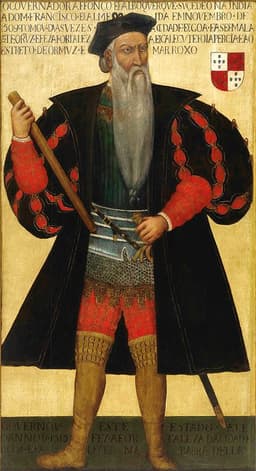
Afonso de Albuquerque
General · Medieval
79.6Total
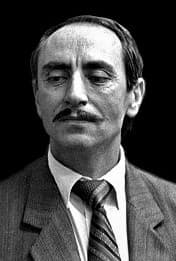
Dzhokhar Dudayev
General · Modern
52.0Total
Basic Information
Born
1453
1944
Died
1515
—
Era
Medieval
Modern
Nationality
Portugal
Chechnya
Occupation
General
General
Civilization
Western
Western
Score Comparison
Military (10%)
77.5
46.7
Political (20%)
88.0
45.1
Influence (20%)
80.0
57.2
Legacy (20%)
75.0
47.5
Leadership (15%)
78.0
57.6
Strategy (15%)
82.0
57.5
TOTAL
79.6
52.0
Afonso de Albuquerque — Complete Timeline
1503 AD
First voyage to IndiaWar◆ Major
Afonso de Albuquerque led a fleet to India, establishing the first Portuguese fort at Cochin. This voyage laid the foundation for Portuguese control of the Indian Ocean trade.
ExplorationColonialismIndia
Impact: global
1510 AD
Conquest of GoaWar◆ Major
Albuquerque captured Goa from the Sultan of Bijapur. He made Goa the capital of Portuguese India, a position it held for over 400 years.
ConquestColonialismIndia
Impact: regional
1511 AD
Conquest of MalaccaWar◆ Major
Albuquerque led a Portuguese fleet to capture the strategic port of Malacca. This gave Portugal control of the spice trade route between the Indian Ocean and the Pacific.
ConquestSpice TradeSoutheast Asia
Impact: global
1513 AD
Siege of AdenWar
Albuquerque attempted to capture Aden in Yemen but failed. This failure prevented Portugal from controlling the entrance to the Red Sea and limited their influence in the region.
SiegeFailureRed Sea
Impact: regional
1515 AD
Death at seaOther◆ Major
Afonso de Albuquerque died at sea off the coast of Goa, possibly from illness or poison. His death left the Portuguese Empire in the Indian Ocean without its most capable leader.
DeathLeadershipEmpire
Impact: regionaltragic
Dzhokhar Dudayev — Complete Timeline
1991 AD
Proclaimed Independence of ChechnyaPolitical Action
Dzhokhar Dudayev declared the independence of the Chechen Republic of Ichkeria from the Soviet Union. He was elected president in a controversial election. This act triggered the First Chechen War with Russia.
ChechnyaIndependenceIchkeria
Impact: regionalconstructive
1994 AD
First Chechen War BeginsWar
Russian forces invaded Chechnya to suppress the independence movement. Dudayev led the Chechen resistance, using guerrilla tactics. The war resulted in heavy casualties and destruction but failed to defeat the Chechen forces.
Chechen WarRussiaInvasion
Impact: regionaltragic
1996 AD
Assassination by Russian MissileWar
Dudayev was killed by a Russian guided missile while using a satellite phone near Grozny. His death was a major blow to the Chechen resistance but did not end the war. He was succeeded by Aslan Maskhadov.
AssassinationChechnyaRussia
Impact: regionaltragic
Expert Analysis
Afonso de Albuquerque vs Dzhokhar Dudayev
# The Admiral and the Rebel: Two Visions of Empire
On a sweltering December morning in 1510, a Portuguese fleet sailed into the Mandovi River estuary, its cannons trained on the walls of Goa. Afonso de Albuquerque, a man of fifty-seven with a white beard and burning eyes, watched from the quarterdeck as his gunners reduced the Sultan of Bijapur’s fortress to rubble. Four centuries later, on a cold February night in 1996, a different kind of commander—Dzhokhar Dudayev, a former Soviet Air Force general turned Chechen president—huddled in a farmhouse outside Grozny, speaking into a satellite phone. A Russian missile, guided by the signal, silenced him forever. One man built an empire; the other died trying to tear one apart. What drove these two generals to such opposite fates?
Origins
Albuquerque was born in 1453, the year Constantinople fell to the Ottomans—a coincidence that shaped his world. Portugal, a small kingdom on Europe’s Atlantic edge, was already reaching outward, driven by a crusading zeal and a hunger for spice. Albuquerque came from noble stock, his father a courtier to King Afonso V. He grew up in a world where the sea was a highway to glory, where a man could serve God and gold in equal measure. His education was that of a Renaissance soldier: mathematics, navigation, and the art of war.
Dudayev, born in 1944, entered a world of fire. The Soviet Union was bleeding Germany dry in World War II, and Chechnya—a mountainous region in the Caucasus—had been deported en masse by Stalin just months earlier, accused of collaboration. Dudayev’s family survived the exile, but the trauma never left. He joined the Soviet Air Force, rising to become a bomber pilot and eventually a major general—a Chechen in a Russian institution, a man of two worlds. Where Albuquerque saw the sea as a path to conquest, Dudayev saw the sky.
Rise to Power
Albuquerque’s first voyage to India in 1503 was a proving ground. He led a fleet to the Malabar Coast, where he established the first Portuguese fort at Cochin, a toehold in a land of vast kingdoms. This was not a land grab by a mighty empire; it was a gamble by a tiny nation. Albuquerque succeeded because he understood that power in Asia meant controlling choke points—ports, straits, and trade routes. He returned to Portugal, then came back to India in 1509 as governor, armed with a king’s trust and a simple strategy: seize, fortify, and hold.
Dudayev’s rise was more tumultuous. When the Soviet Union collapsed in 1991, he was a retired general living in Grozny, the Chechen capital. He saw an opportunity. On October 27, 1991, he proclaimed Chechnya’s independence, and was elected president in a landslide. Moscow refused to recognize him, but for a few years, Dudayev ruled a de facto state—a tiny republic with a fierce population, no economy, and a mountain of grievances. His power came not from fleets or forts, but from the will of a people who had been crushed for centuries.
Leadership & Governance
Albuquerque ruled with a mix of iron and silk. After capturing Goa in 1510, he made it the capital of Portuguese India, a city that would remain Portuguese for 451 years. He encouraged intermarriage between Portuguese men and Indian women, granted land to loyalists, and tolerated local religions—a pragmatic approach that his contemporaries often found shocking. When he took Malacca in 1511, he seized the spice trade’s heart, controlling nutmeg, cloves, and pepper that flowed to Europe. His military brilliance lay in logistics: he knew that a few well-placed fortresses could command oceans.
Dudayev’s governance was a desperate improvisation. Chechnya had no army, no treasury, and no international recognition. When Russia invaded in December 1994, Dudayev turned to guerrilla warfare. He knew the mountains and the cities; his fighters melted into the rubble of Grozny, ambushing Russian columns with RPGs and sniper fire. His leadership was charismatic but chaotic—a president who often argued with his own commanders. Where Albuquerque built an administrative machine, Dudayev led a rebellion that survived on rage and faith.
Triumph & Tragedy
Albuquerque’s greatest moment was the conquest of Malacca in 1511. He sailed into the strait with 18 ships and 1,200 men, facing a sultan who commanded thousands. Through a combination of deception, artillery, and sheer audacity, he took the city. The spice route was his. But his tragedy came in 1513, when he failed to capture Aden, the gateway to the Red Sea. Without it, he could not block the Ottoman spice trade—a failure that haunted him. He died at sea in 1515, possibly poisoned, off the coast of Goa. His last words, according to legend, were: “Even the king’s enemies love him.”
Dudayev’s triumph was survival itself. For two years, his ragged forces held off the Russian army, inflicting humiliating losses. The First Chechen War became a symbol of resistance for Muslims worldwide. But his tragedy was personal and absolute. On April 21, 1996, a Russian Su-25 pilot locked onto his satellite phone signal. The missile struck the farmhouse, killing Dudayev instantly. He never saw the peace deal that ended the war later that year—a deal that gave Chechnya de facto independence for a brief, bloody moment.
Character & Destiny
Albuquerque was a man of the Renaissance: ambitious, calculating, and ruthless when necessary. He believed in empire as a divine mission, writing to King Manuel I that “the more lands you conquer, the more you will be lord of all.” His personality drove him to take risks—like burning his own ships at Malacca to prevent retreat—but also to plan meticulously. He died knowing he had built something that would outlast him.
Dudayev was a man of the late twentieth century: a nationalist forged in Soviet discipline, yet a romantic who believed in self-determination. He once said, “The Chechen people have been tested by fire, and they will survive.” His personality was mercurial—he could charm diplomats and then denounce them. His decisions, like refusing to negotiate seriously with Moscow, may have doomed his cause. But he left a legacy of defiance that still echoes in the Caucasus today.
Legacy
Albuquerque is remembered as the founder of the Portuguese Empire in Asia. His name adorns streets in Lisbon and a class of frigates in the Portuguese Navy. But his legacy is complex: he brought Christianity and commerce, but also violence and slavery. Today, historians debate whether he was a visionary or a conqueror in the old mold.
Dudayev is a martyr to Chechens, a symbol of resistance to Russian domination. His face appears on posters in Grozny, and his name is given to streets and squares. But his legacy is also contested—some see him as a hero, others as a reckless leader who brought war to his people. The missile that killed him left a wound that has not healed.
Conclusion
Two men, separated by five centuries, yet bound by a common thread: they both tried to carve a new world from the old. Albuquerque built an empire that lasted four hundred years, but his conquests eventually faded. Dudayev fought for a nation that exists today only in memory and law—a ghost republic. Their differences are not just of time and place, but of vision. Albuquerque believed in order imposed from above; Dudayev believed in freedom wrested from below. One succeeded, one failed, but both remind us that history is written by those who dare to act—and that the sea and the mountains have always demanded their price.
Rankings
🥇
Afonso de AlbuquerqueLeader
Mil: 77.5Pol: 88.0Inf: 80.0
79.6
🥈
Dzhokhar Dudayev
Mil: 46.7Pol: 45.1Inf: 57.2
52.0
+27.6 behind
How This Comparison Works
Algorithm
Each figure is scored on 6 dimensions (0—100 scale) based on structured historical data: Military (10%), Political (20%), Influence (20%), Legacy (20%), Leadership (15%), Strategy (15%). The weighted total produces the final ranking.
Data Sources
Scores are computed from structured sub-indicators in the database. Scale factors adjust for era (Ancient ×0.85, Modern ×1.0) and civilization size (Eastern ×1.05, Other ×0.80) to account for differences in population and military scale.
Maximum 3 Figures
Comparisons are limited to 2—3 figures to ensure readability and statistical meaningfulness.
Error Margins
±5 points per dimension — Sub-scores are derived from historical records with inherent uncertainty. Two figures within 5 points on a dimension should be considered roughly equivalent in that area.
Total Score Accuracy
±3 points overall — The weighted combination of 6 dimensions produces a total score with approximately ±3 points of uncertainty. Differences of less than 3 points are not statistically significant— the figures are effectively tied.
Known Limitations
- Historical records are incomplete and uneven across civilizations
- Figures from oral-tradition societies may be underrepresented
- Occupation labels can misclassify multi-role figures
- Scores measure capability and impact, not moral character
- Quantitative scoring is a comparison tool, not absolute truth
Capability Radar
Military (10%) — Battles & Warfare
Battles
85
35
Win Rate
80
30
Expansion
95
20
Political (20%) — Governance & Reform
Reform
80
35
Diplomacy
85
30
Economy
80
15
Influence (20%) — Cultural & Global Reach
Cultural
70
40
Global
85
35
Legacy (20%) — Historical Impact
Historical
85
45
Longevity
80
30
Leadership (15%) — Power & Stability
Tenure
70
30
Stability
65
10
Strategy (15%) — Tactics & Innovation
Strategy
95
50
Tactics
90
55
Reform
75
40
Similar Comparisons
Comments & Discussion
蒸汽朋克逃兵6/16/2026
说阿尔布开克是战略天才?别逗了。他烧了马拉巴尔的舰队,然后呢?葡萄牙在印度洋的统治不到百年就烂了。杜达耶夫呢?用手机指挥游击队,愣是把俄军拖进泥潭四年。一个靠火药屠城,一个靠卫星信号造反。历史书把杀人狂写成英雄,把起义者写成恐怖分子。醒醒吧,帝国从不怕天才,帝国怕的是疯子。
Doric Column6/16/2026
The comparison ignores foundational contexts. Albuquerque was a product of the *Reconquista* ethos—mixing Iberian crusade with Renaissance statecraft. His *Ordenações* for Goa actually preserved local Hindu laws under Portuguese protection, a pragmatic move often whitewashed. Dudayev, by contrast, was a Soviet product: his 1991 election was the first Chechen popular vote in history, yet he quickly devolved into authoritarianism. Two military dictators, but one built an administrative legacy; the
放羊的核弹头6/16/2026
比什么比?阿尔布开克在1510年用剑和十字架,杜达耶夫在1996年用电话和叛变。两个都是赌徒,一个赌的是印度洋香料航线,一个赌的是车臣独立的幻梦。但阿尔布开克赢了——他让葡萄牙成了微型帝国。杜达耶夫连个像样的政府都没建起来,就死在俄军的导弹下。历史只纪念赢家,输家连名字都容易被拼错,比如我懒得查他那长串车臣名。
Lactantius the Cynic6/16/2026
Every analysis of Albuquerque sanitizes his "empire" as strategic genius. He burned Malacca's spice market to monopolize trade—essentially a price-fixing kingpin with a fleet. Dudayev at least attempted to forge a secular Chechen identity post-Soviet collapse, however flawed. The difference is one fed the coffers of Lisbon, the other fed the mouths of a besieged people. A spice lord and a rebel: one's crimes are called "policy," the other's, "terrorism." History's a merchant, too.
Historian7076/16/2026
Albuquerque's Goa campaign was a masterclass in brutality—he ordered the massacre of 6,000 Muslims after capturing the city. That's not "empire-building," that's genocide with a crusader complex. Dudayev at least fought for a nation, not for pepper prices. Albuquerque was a butcher who used God as a PR tool. I'd take the Soviet pilot who dared to dream of Chechen freedom over the Portuguese fanatic any day. Empire is just theft with a flag.