Loading...
Dzhokhar Dudayev vs J. B. M. Hertzog
J. B. M. Hertzog leads by 4.1 pts · 2 figures compared
…
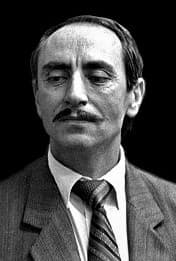
Dzhokhar Dudayev
General · Modern
52.0Total
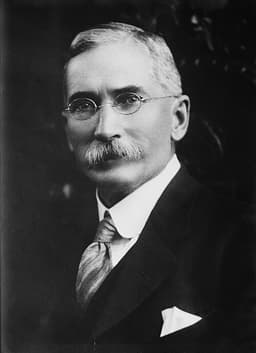
J. B. M. Hertzog
General · Modern
56.1Total
Basic Information
Born
1944
1866
Died
—
1942
Era
Modern
Modern
Nationality
Chechnya
South Africa
Occupation
General
General
Civilization
Western
Other
Score Comparison
Military (10%)
46.7
25.0
Political (20%)
45.1
60.0
Influence (20%)
57.2
56.7
Legacy (20%)
47.5
50.0
Leadership (15%)
57.6
79.8
Strategy (15%)
57.5
60.0
TOTAL
52.0
56.1
Dzhokhar Dudayev — Complete Timeline
1991 AD
Proclaimed Independence of ChechnyaPolitical Action
Dzhokhar Dudayev declared the independence of the Chechen Republic of Ichkeria from the Soviet Union. He was elected president in a controversial election. This act triggered the First Chechen War with Russia.
ChechnyaIndependenceIchkeria
Impact: regionalconstructive
1994 AD
First Chechen War BeginsWar
Russian forces invaded Chechnya to suppress the independence movement. Dudayev led the Chechen resistance, using guerrilla tactics. The war resulted in heavy casualties and destruction but failed to defeat the Chechen forces.
Chechen WarRussiaInvasion
Impact: regionaltragic
1996 AD
Assassination by Russian MissileWar
Dudayev was killed by a Russian guided missile while using a satellite phone near Grozny. His death was a major blow to the Chechen resistance but did not end the war. He was succeeded by Aslan Maskhadov.
AssassinationChechnyaRussia
Impact: regionaltragic
J. B. M. Hertzog — Complete Timeline
1899 AD
Boer War GeneralWar◆ Major
Hertzog served as a Boer general in the Second Boer War, commanding forces in the Orange Free State. He participated in several battles and became a prominent Afrikaner military leader.
Second Boer WarGeneralMilitary
Impact: regional
1914 AD
Founded the National PartyPolitical Action
Hertzog broke away from the South African Party and founded the National Party, which championed Afrikaner nationalism and opposed British imperial influence. The party would later implement apartheid.
National PartyAfrikaner NationalismFounding
Impact: nationalconstructive
1924 AD
Prime Minister of South AfricaPolitical Action◆ Major
Hertzog became Prime Minister after his National Party won the general election in coalition with the Labour Party. His government implemented policies to protect white workers and promote Afrikaner interests, including the 'civilized labour' policy.
Prime MinisterAfrikaner RightsLabour Policy
Impact: national
1934 AD
Merged with Smuts to Form United PartyPolitical Action◆ Major
Hertzog merged his National Party with Jan Smuts' South African Party to form the United Party. The coalition aimed to address the economic crisis of the Great Depression and promote national unity, but it alienated hardline Afrikaner nationalists.
United PartyCoalitionNational Unity
Impact: nationalconstructive
1936 AD
Passed the Representation of Natives ActReform◆ Major
Hertzog's government passed the Representation of Natives Act, which removed Black voters from the common voters' roll in the Cape Province and allowed them to elect white representatives instead. This further entrenched racial segregation.
SegregationDisenfranchisementLegislation
Impact: nationaldestructive
1939 AD
Resigned Over Neutrality in WWIIPolitical Action◆ Major
Hertzog advocated for South African neutrality in World War II, but his cabinet voted to enter the war on the Allied side. He resigned as Prime Minister and was succeeded by Jan Smuts, splitting the United Party.
World War IINeutralityResignation
Impact: national
Expert Analysis
J. B. M. Hertzog vs Dzhokhar Dudayev
### The General and the Separatist: Two Paths to Power, Two Tragedies of State
In the winter of 1939, a frail, white-haired man stood before his cabinet in Cape Town. J. B. M. Hertzog, the Prime Minister of South Africa, argued for neutrality. His country, he insisted, must not bleed for the British Empire again. Half a century and a world away, in the rubble-strewn streets of Grozny, a man with a dark beard and a pilot’s bearing spoke into a satellite phone, coordinating the defense of a tiny, unrecognized nation. Dzhokhar Dudayev would be dead within the hour, a victim of the very technology he used to fight. Both were generals. Both led breakaway movements. But one died in his bed, his political legacy dismantled by his own allies; the other died in a flash of Russian fire, his dream of independence buried with him. Why did one man’s rebellion become a political career, and the other’s a suicide mission? The answer lies not in their courage, but in the soil of the nations they tried to build.
### Origins
James Barry Munnik Hertzog was born in 1866 on a farm in the Cape Colony, a child of the Boer frontier. His world was one of sturdy Calvinism, veld, and a deep, simmering grievance against British rule. He studied law in Amsterdam, absorbing European nationalism, but his soul belonged to the *volk*—the Afrikaner people. When the Second Boer War erupted in 1899, Hertzog, then 33, became a general. He was not a brilliant tactician (his military score of 48.1 reflects a middling command), but he was a stubborn, principled fighter. The war ended in British victory and the scorched-earth devastation of Boer farms. For Hertzog, this was not a defeat; it was a wound that would define his politics.
Dzhokhar Dudayev was born in 1944 in the Chechen-Ingush ASSR, a region the Soviet Union had just finished ethnically cleansing. His family had been deported to Kazakhstan for alleged collaboration with the Nazis. Unlike Hertzog, Dudayev was a child of the Soviet system. He rose through the ranks of the Red Army Air Force, becoming a general and a decorated bomber pilot. He commanded nuclear-capable bombers, wore a Soviet uniform, and believed in the empire—until the empire began to rot. When the USSR collapsed in 1991, Dudayev, like many Soviet officers with a non-Russian surname, did something Hertzog never could: he tore off his uniform and went home. His nationalism was not inherited from a lost war; it was forged in the vacuum of a failed empire.
### Rise to Power
Hertzog’s path was parliamentary. After the Boer War, he entered politics, and in 1914, he founded the National Party. His platform was simple: protect Afrikaner language, culture, and economic interests from British domination. He was a master of coalition-building. In 1924, he became Prime Minister, a position he held for fifteen years. His rise was slow, legal, and entirely within the framework of South Africa’s white-minority democracy. He did not storm the gates; he walked through them.
Dudayev’s rise was revolutionary. In 1991, as the Soviet Union dissolved, he led a coup in Grozny, overthrowing the local communist government. He then proclaimed the independence of the Chechen Republic of Ichkeria and was elected president. Russia, under Boris Yeltsin, initially ignored him. But when Moscow tried to reassert control, Dudayev refused to negotiate. He had no parliament, no civil service, no economy. He had only his personal authority, a small force of loyal fighters, and the memory of a century of Russian oppression. His power was charismatic, fragile, and absolute.
### Leadership & Governance
Hertzog governed. He passed laws, built infrastructure, and managed a complex racial and linguistic hierarchy. His greatest achievement was the 1934 merger with Jan Smuts to form the United Party, a grand coalition meant to stabilize white South Africa. But his governance had a dark core. In 1936, his government passed the Representation of Natives Act, which removed Black voters from the common roll in the Cape Province. It was a legal, bureaucratic step toward apartheid. Hertzog was not a fanatic; he was a pragmatist who believed that Afrikaner survival required the political subordination of Black Africans. He built a state on a foundation of racial exclusion.
Dudayev could not govern. Chechnya had no functioning economy, no tax base, no rule of law. His “government” was a collection of warlords and clan leaders. He tried to build a secular, democratic state, but his military score of 56.3 and strategy score of 57.1 suggest a man better at inspiring resistance than commanding a war. His leadership was a desperate holding action. He was a symbol, not a statesman.
### Triumph & Tragedy
Hertzog’s triumph was his longevity. He led a nation, shaped its laws, and died in 1942 at age 75, still a respected figure among Afrikaners. His tragedy was the 1939 neutrality crisis. When World War II began, he argued for staying out, fearing a repeat of the Boer War’s devastation. But his cabinet voted to join the Allies. Hertzog resigned, his political career ending in rejection by his own party. He had spent his life fighting British dominance, only to be overthrown by Afrikaners who chose the British side.
Dudayev’s triumph was the First Chechen War. From 1994 to 1996, his outgunned guerrillas humiliated the Russian army. He turned Grozny into a Stalingrad of the Caucasus. His tragedy was his death. On April 21, 1996, a Russian missile homed in on his satellite phone signal and killed him. He died fighting, but his cause did not die with him. The war continued, and Chechnya became a graveyard.
### Character & Destiny
Hertzog was cautious, legalistic, and stubborn. He believed in institutions, even unjust ones. His personality drove him to build a state that would outlast him. Dudayev was romantic, reckless, and charismatic. He believed in liberation, not governance. His personality drove him to die for a state that could not survive him.
### Legacy
Hertzog’s legacy is the National Party and the architecture of apartheid. He is remembered as a father of Afrikaner nationalism, but also as a man who set the stage for decades of racial oppression. His total score of 68.1 reflects a leader who was effective but morally compromised.
Dudayev’s legacy is the Chechen resistance. He is a martyr to his people, a symbol of defiance against Russian imperialism. His total score of 65.7 reflects a leader who inspired more than he achieved.
### Conclusion
One built a state that lasted. The other lit a fire that burned. Both were men of their time, fighting for a people they loved. But Hertzog’s people had a country, a parliament, and a future. Dudayev’s people had only a memory of loss and a hope for revenge. In the end, the difference between a prime minister and a separatist is not courage or vision. It is the difference between a nation that can absorb a rebellion and one that cannot.
Rankings
🥇
J. B. M. HertzogLeader
Mil: 25.0Pol: 60.0Inf: 56.7
56.1
🥈
Dzhokhar Dudayev
Mil: 46.7Pol: 45.1Inf: 57.2
52.0
+4.1 behind
How This Comparison Works
Algorithm
Each figure is scored on 6 dimensions (0—100 scale) based on structured historical data: Military (10%), Political (20%), Influence (20%), Legacy (20%), Leadership (15%), Strategy (15%). The weighted total produces the final ranking.
Data Sources
Scores are computed from structured sub-indicators in the database. Scale factors adjust for era (Ancient ×0.85, Modern ×1.0) and civilization size (Eastern ×1.05, Other ×0.80) to account for differences in population and military scale.
Maximum 3 Figures
Comparisons are limited to 2—3 figures to ensure readability and statistical meaningfulness.
Error Margins
±5 points per dimension — Sub-scores are derived from historical records with inherent uncertainty. Two figures within 5 points on a dimension should be considered roughly equivalent in that area.
Total Score Accuracy
±3 points overall — The weighted combination of 6 dimensions produces a total score with approximately ±3 points of uncertainty. Differences of less than 3 points are not statistically significant— the figures are effectively tied.
Known Limitations
- Historical records are incomplete and uneven across civilizations
- Figures from oral-tradition societies may be underrepresented
- Occupation labels can misclassify multi-role figures
- Scores measure capability and impact, not moral character
- Quantitative scoring is a comparison tool, not absolute truth
Capability Radar
Military (10%) — Battles & Warfare
Battles
35
45
Win Rate
30
40
Expansion
20
20
Political (20%) — Governance & Reform
Reform
35
60
Diplomacy
30
55
Economy
15
50
Influence (20%) — Cultural & Global Reach
Cultural
40
50
Global
35
45
Legacy (20%) — Historical Impact
Historical
45
55
Longevity
30
40
Leadership (15%) — Power & Stability
Tenure
30
65
Stability
10
45
Strategy (15%) — Tactics & Innovation
Strategy
50
50
Tactics
55
45
Reform
40
30
Similar Comparisons
Comments & Discussion
Batty Boerbuster6/16/2026
Calling Hertzog a "general" in the same breath as Dudayev is like comparing a chess grandmaster to a street brawler. The Boer War score of 48.1 is generous—Hertzog's real genius was in losing battles while winning political sympathy. His WWII neutrality stance wasn't principle; it was a desperate play to keep Afrikaner Nazis from openly revolting. He died in bed because he sold out his own people's future for momentary comfort.
毛熊拆弹员6/16/2026
杜达耶夫明明是空战英雄,却被你们和个农场总理相提并论?赫佐格那套布尔民族主义,说白了就是给种族隔离铺路。苏联空军将军转行当车臣总统,人家是真刀真枪跟俄军干了两年。导弹炸死他,是因为克里姆林宫怕他活着。赫佐格死于1939年政治算计,杜达耶夫死于1996年真实战争。这对比就是个笑话。
Cape Crusader6/16/2026
Classics scholar here. Let's talk about political theology. Hertzog's "neutrality" was a direct echo of Cincinnatus—the general who returns to save the state, then withdraws. Except he forgot the withdrawal part. Dudayev channeled ancient Chechen warrior codes mixed with Soviet modernism; he was Prometheus stealing fire from Russia. Both failed, but only one understood that state-building requires mythic legitimation, not just parliamentary tricks. Hertzog had the Dutch Reformed Church; Dudayev
反叛病理学家6/16/2026
军事角度最露馅。赫佐格在布尔战争就是个二流指挥官,阵地战被英军碾压才学游击。杜达耶夫是苏联空军少将,指挥过战略轰炸机师!但两人都犯了同样错误:把军权当政权根基。赫佐格被斯穆茨架空时才发现军队只听英王,杜达耶夫被俄军收买车臣军阀时才发现将士只认卢布。将军搞建国?历史上全栽在同一个坑里——战功不等于治术。