Loading...
Dzhokhar Dudayev vs Francisco Morazan
Francisco Morazan leads by 6.0 pts · 2 figures compared
…
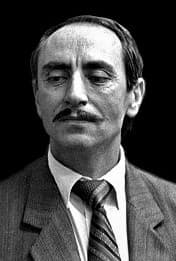
Dzhokhar Dudayev
General · Modern
52.0Total
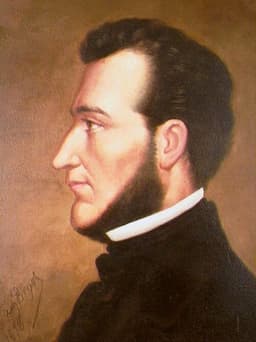
Francisco Morazan
General · Modern
58.0Total
Basic Information
Born
1944
1792
Died
—
1842
Era
Modern
Modern
Nationality
Chechnya
Honduras
Occupation
General
General
Civilization
Western
Western
Score Comparison
Military (10%)
46.7
52.5
Political (20%)
45.1
60.0
Influence (20%)
57.2
62.0
Legacy (20%)
47.5
50.0
Leadership (15%)
57.6
68.0
Strategy (15%)
57.5
55.0
TOTAL
52.0
58.0
Dzhokhar Dudayev — Complete Timeline
1991 AD
Proclaimed Independence of ChechnyaPolitical Action
Dzhokhar Dudayev declared the independence of the Chechen Republic of Ichkeria from the Soviet Union. He was elected president in a controversial election. This act triggered the First Chechen War with Russia.
ChechnyaIndependenceIchkeria
Impact: regionalconstructive
1994 AD
First Chechen War BeginsWar
Russian forces invaded Chechnya to suppress the independence movement. Dudayev led the Chechen resistance, using guerrilla tactics. The war resulted in heavy casualties and destruction but failed to defeat the Chechen forces.
Chechen WarRussiaInvasion
Impact: regionaltragic
1996 AD
Assassination by Russian MissileWar
Dudayev was killed by a Russian guided missile while using a satellite phone near Grozny. His death was a major blow to the Chechen resistance but did not end the war. He was succeeded by Aslan Maskhadov.
AssassinationChechnyaRussia
Impact: regionaltragic
Francisco Morazan — Complete Timeline
1824 AD
Abolition of slavery in Central AmericaReform◆ Major
As a key leader in the liberal movement, Moraz
AbolitionSlaveryLiberal Reform
Impact: regionalprogressive
1827 AD
Battle of La TrinidadWar◆ Major
Morazán led a liberal army to victory against conservative forces at La Trinidad, Honduras. This battle was a key turning point in the Central American civil war, allowing Morazán to consolidate power and eventually become president of the federation.
BattleLiberal VictoryCivil War
Impact: regional
1830 AD
Presidency of the Federal Republic of Central AmericaPolitical Action
Morazán was elected president of the Federal Republic of Central America, a union of Guatemala, El Salvador, Honduras, Nicaragua, and Costa Rica. He pursued liberal reforms including separation of church and state, free trade, and land reform, facing opposition from conservatives.
Federal RepublicLiberal ReformsCentral America
Impact: regionalconstructive
1842 AD
Execution by firing squadPolitical Action
After a failed attempt to restore the Federal Republic, Moraz
ExecutionEnd of FederationLiberal Defeat
Impact: regionaltragic
Expert Analysis
Francisco Morazan vs Dzhokhar Dudayev
# The Dreamers Who Died for a Nation That Never Was
On a spring night in 1996, Dzhokhar Dudayev placed a satellite phone call near the village of Gekhi-Chu, deep in the Chechen countryside. Russian reconnaissance aircraft had been tracking the signal for days. The missile struck within minutes. For the Chechen independence movement, the explosion was not just the death of a leader—it was the end of a dream that had burned bright for barely five years. Half a world away and a century and a half earlier, Francisco Morazán faced a similar end. On September 15, 1842, he stood before a firing squad in San José, Costa Rica, having failed in his last desperate attempt to reunite the shattered Central American federation he had once led. Two men, two centuries, two continents—yet their stories echo each other with haunting precision: both were generals who became presidents of fragile republics, both fought to create nations where none had existed before, and both were destroyed by the very forces they sought to overcome.
Origins
Dzhokhar Dudayev was born in 1944, the year Stalin ordered the wholesale deportation of the Chechen people to Central Asia. His family was among the hundreds of thousands loaded onto cattle cars and sent into exile. He grew up in Kazakhstan, a child of a displaced nation, learning early that survival meant mastering the systems that oppressed you. When the Chechens were allowed to return in 1957, Dudayev chose a path of integration: he joined the Soviet Air Force, rose to the rank of major general, and commanded bomber divisions in Estonia and Ukraine. He was, by all accounts, a model Soviet officer—until the Soviet Union itself collapsed.
Francisco Morazán was born in 1792 in Tegucigalpa, Honduras, into a creole family of modest means. The Spanish Empire was still intact, but its foundations were cracking. Morazán grew up reading the works of Rousseau and Voltaire, absorbing the liberal ideas that would define his life. Unlike Dudayev, he did not serve the old empire; he fought to tear it down. By his twenties, he was already a committed republican, believing that Central America's only hope lay in unity, democracy, and the end of colonial-era privileges.
Rise to Power
Dudayev's path to power was sudden and seismic. In 1991, as the Soviet Union dissolved into its constituent republics, he returned to Chechnya and declared its independence. The timing was everything: Moscow was paralyzed, Boris Yeltsin was fighting his own battles, and for a few dizzying months, it seemed possible that Chechnya might slip away. Dudayev was elected president with overwhelming support, his military uniform and Soviet credentials lending him an aura of authority. He had not fought a long war to reach power; he had simply stepped into a vacuum.
Morazán's rise was harder and bloodier. In 1827, he led a small liberal army to victory at the Battle of La Trinidad in Honduras, a turning point that catapulted him onto the Central American stage. Over the next three years, he fought his way into power, defeating conservative forces in El Salvador and Guatemala. In 1830, he was elected president of the Federal Republic of Central America—a union of five states that had been created after independence from Spain. Unlike Dudayev, Morazán did not inherit a collapsing empire; he inherited a fragile experiment in nation-building that was already fraying at the seams.
Leadership & Governance
Dudayev's rule was a paradox. He was a Soviet-trained general who preached democracy, a Muslim leader who was secular in practice, a nationalist who spoke Russian as fluently as Chechen. His government was chaotic, plagued by infighting and a lack of institutional capacity. He never truly governed Chechnya—he presided over it during a period of de facto independence that lasted barely three years before the Russian invasion of 1994. His military strategy was guerrilla warfare, using the mountains and the urban terrain of Grozny to bleed the Russian army. He was a symbol more than a ruler, a flag rather than a government.
Morazán, by contrast, was a reformer with a program. He abolished slavery in 1824, ended clerical privileges, promoted public education, and sought to create a secular, centralized state modeled on the United States. He was a liberal in the nineteenth-century sense: he believed in progress, reason, and the power of institutions to reshape society. But his reforms alienated the Catholic Church, the landed elite, and the rural poor who saw their traditional ways of life under attack. Where Dudayev's enemies were external—Russia—Morazán's were internal: the very people he sought to liberate often resisted him.
Triumph & Tragedy
Dudayev's greatest moment was also his most fleeting. In 1994, when Russian forces invaded Chechnya, they expected a quick victory. Instead, they met ferocious resistance. Dudayev's fighters, outnumbered and outgunned, turned Grozny into a killing ground. For a year, the Chechens held their ground, and in the summer of 1996, just months after Dudayev's death, they would retake Grozny and force a Russian withdrawal. But Dudayev did not live to see it. His assassination was the tragedy that defined his career: he was killed not on the battlefield, but by technology—a missile guided by the very satellite phone that was meant to command his forces.
Morazán's triumph was the Federal Republic itself. For a decade, he held together a union that had seemed impossible, defeating conservative revolts and foreign interventions. But the tragedy came in 1839, when the republic finally dissolved into civil war. Morazán went into exile, but he could not let go. In 1842, he returned to Costa Rica with a small force, hoping to reignite the federalist cause. He was captured, tried, and executed. His last words, according to legend, were: "I die with the conviction that I have served my country."
Character & Destiny
Dudayev was a man of contradictions: a general who hated war, a dictator who believed in democracy, a secularist who led a Muslim nation. His personality was magnetic, his speeches fiery, but he lacked the patience for administration. He was a revolutionary, not a statesman. His destiny was to be a martyr—a symbol of Chechen resistance that would outlive him.
Morazán was the opposite: disciplined, intellectual, and stubbornly principled. He believed so deeply in the idea of a united Central America that he could not accept its failure. His character was his destiny: his refusal to compromise, his unwillingness to accept the limits of his era, ultimately led him to the firing squad.
Legacy
Dudayev is remembered as the father of Chechen independence, a figure of near-mythic status among his people. His portrait still hangs in homes across Chechnya. But his legacy is ambiguous: the independence he fought for never came, and the wars that followed his death devastated his nation. He is a hero of a lost cause.
Morazán is revered in Honduras and El Salvador as a champion of Central American unity, but the union he died for remains a dream. His face adorns currency and statues, but the region he wanted to unite is more divided than ever. He is a hero of an unfinished cause.
Conclusion
Both men died for nations that existed only in their imaginations—Dudayev's Chechnya, Morazán's Central America. They were dreamers who became generals, reformers who became martyrs. Their stories remind us that history is not kind to those who arrive too early or stay too long. Dudayev's Chechnya was born in the chaos of Soviet collapse, but it could not survive the weight of Russian power. Morazán's federation was born in the optimism of independence, but it could not survive the centrifugal forces of local identity and elite self-interest. In the end, what they share is not victory, but the tragic nobility of having tried—and the terrible cost of having failed.
Rankings
🥇
Francisco MorazanLeader
Mil: 52.5Pol: 60.0Inf: 62.0
58.0
🥈
Dzhokhar Dudayev
Mil: 46.7Pol: 45.1Inf: 57.2
52.0
+6.0 behind
How This Comparison Works
Algorithm
Each figure is scored on 6 dimensions (0—100 scale) based on structured historical data: Military (10%), Political (20%), Influence (20%), Legacy (20%), Leadership (15%), Strategy (15%). The weighted total produces the final ranking.
Data Sources
Scores are computed from structured sub-indicators in the database. Scale factors adjust for era (Ancient ×0.85, Modern ×1.0) and civilization size (Eastern ×1.05, Other ×0.80) to account for differences in population and military scale.
Maximum 3 Figures
Comparisons are limited to 2—3 figures to ensure readability and statistical meaningfulness.
Error Margins
±5 points per dimension — Sub-scores are derived from historical records with inherent uncertainty. Two figures within 5 points on a dimension should be considered roughly equivalent in that area.
Total Score Accuracy
±3 points overall — The weighted combination of 6 dimensions produces a total score with approximately ±3 points of uncertainty. Differences of less than 3 points are not statistically significant— the figures are effectively tied.
Known Limitations
- Historical records are incomplete and uneven across civilizations
- Figures from oral-tradition societies may be underrepresented
- Occupation labels can misclassify multi-role figures
- Scores measure capability and impact, not moral character
- Quantitative scoring is a comparison tool, not absolute truth
Capability Radar
Military (10%) — Battles & Warfare
Battles
35
55
Win Rate
30
60
Expansion
20
40
Political (20%) — Governance & Reform
Reform
35
70
Diplomacy
30
45
Economy
15
50
Influence (20%) — Cultural & Global Reach
Cultural
40
45
Global
35
35
Legacy (20%) — Historical Impact
Historical
45
50
Longevity
30
40
Leadership (15%) — Power & Stability
Tenure
30
55
Stability
10
30
Strategy (15%) — Tactics & Innovation
Strategy
50
55
Tactics
55
50
Reform
40
45
Similar Comparisons
Comments & Discussion
中亚屠夫6/16/2026
把莫拉桑和杜达耶夫并列是对历史真实性的侮辱。一个是在1840年代用马拉火炮拼凑联邦的自由派,另一个是1990年代用肩扛导弹割据高加索的分离分子。前者至少统治过五国首都,后者从没真正控制过格罗兹尼以外的公路。不过是两个被浪漫化的失败者,别往他们脸上贴民族英雄的金粉了。
南美门神6/16/2026
我从历史地理角度不同情他们。莫拉桑要重建的联邦地形上就不可能——洪都拉斯和哥斯达黎加之间隔了几座活火山和丛林。杜达耶夫更是笑话,他那个“独立”的车臣既不靠海也没有工业,唯一的出口是石油走私和绑架勒索。理想主义者总是忘记一个真理:没有经济基础的国家,跟沙漠里的城堡一样站不住脚。
TerracottaTruth6/16/2026
The parallel collapses when you dig into the numbers. Morazán’s Federal Republic of Central America had 3 million people and functioned for a decade before fracturing. Dudayev’s Chechen Ichkeria? Maybe 1.1 million at peak, with zero real governance—no tax base, no postal service, just warlords and satellite phones. One was a failed state-builder, the other a guerrilla chief who never moved past tribal authority.
CannonSmokeHistorian6/16/2026
Classicist take: both men were tragic figures in the mold of Sertorius—exiles fighting for a homeland that existed only in their minds. Morazán’s United Provinces had the ghost of colonial administration, at least. Dudayev’s Chechnya was a blank map drawn on Soviet ruins. Yet both died by betrayal via technology: for the Roman, it was a siege tower; for the Chechen, a satellite signal. Progress just gives you better tools to kill dreams.