Loading...
Dzhokhar Dudayev vs Huang Xing
Huang Xing leads by 5.5 pts · 2 figures compared
…
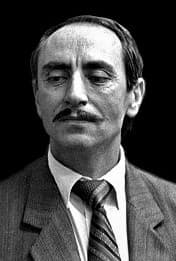
Dzhokhar Dudayev
General · Modern
52.0Total
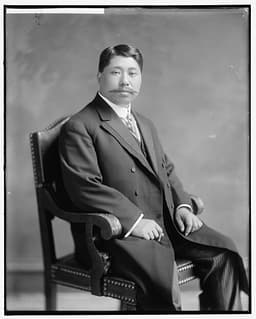
Huang Xing
General · Modern
57.5Total
Basic Information
Born
1944
1874
Died
—
1916
Era
Modern
Modern
Nationality
Chechnya
China
Occupation
General
General
Civilization
Western
Eastern
Score Comparison
Military (10%)
46.7
46.7
Political (20%)
45.1
53.8
Influence (20%)
57.2
62.0
Legacy (20%)
47.5
56.0
Leadership (15%)
57.6
62.0
Strategy (15%)
57.5
60.0
TOTAL
52.0
57.5
Dzhokhar Dudayev — Complete Timeline
1991 AD
Proclaimed Independence of ChechnyaPolitical Action
Dzhokhar Dudayev declared the independence of the Chechen Republic of Ichkeria from the Soviet Union. He was elected president in a controversial election. This act triggered the First Chechen War with Russia.
ChechnyaIndependenceIchkeria
Impact: regionalconstructive
1994 AD
First Chechen War BeginsWar
Russian forces invaded Chechnya to suppress the independence movement. Dudayev led the Chechen resistance, using guerrilla tactics. The war resulted in heavy casualties and destruction but failed to defeat the Chechen forces.
Chechen WarRussiaInvasion
Impact: regionaltragic
1996 AD
Assassination by Russian MissileWar
Dudayev was killed by a Russian guided missile while using a satellite phone near Grozny. His death was a major blow to the Chechen resistance but did not end the war. He was succeeded by Aslan Maskhadov.
AssassinationChechnyaRussia
Impact: regionaltragic
Huang Xing — Complete Timeline
1905 AD
Co-founded the TongmenghuiPolitical Action◆ Major
Huang Xing co-founded the Tongmenghui (Revolutionary Alliance) in Tokyo with Sun Yat-sen. He became its military leader, organizing armed uprisings against the Qing dynasty.
TongmenghuiRevolutionMilitary
Impact: nationalconstructive
1911 AD
Led the Wuchang UprisingWar
Huang Xing led the Wuchang Uprising, which sparked the Xinhai Revolution. He commanded revolutionary forces against Qing troops, securing initial victories that led to the dynasty's collapse.
Xinhai RevolutionUprisingMilitary
Impact: nationalconstructive
1912 AD
Served as Minister of War in the RepublicPolitical Action◆ Major
Huang Xing served as Minister of War in the provisional government of the Republic of China. He worked to organize a national army and defend the republic against counter-revolutionary forces.
GovernmentMilitaryRepublic
Impact: nationalconstructive
1913 AD
Led the Second Revolution Against Yuan ShikaiWar◆ Major
Huang Xing led the Second Revolution, an armed uprising against President Yuan Shikai's authoritarian rule. The rebellion failed due to lack of coordination and military inferiority, forcing Huang into exile.
Second RevolutionYuan ShikaiExile
Impact: nationaltragic
1916 AD
Died in Exile in ShanghaiPolitical Action
Huang Xing died in Shanghai after returning from exile in Japan and the United States. His death marked the loss of a key military leader of the Chinese revolution, though his legacy endured.
DeathExileRevolution
Impact: nationaltragic
Expert Analysis
Huang Xing vs Dzhokhar Dudayev
# The General and the Revolutionary
On a spring evening in 1996, Dzhokhar Dudayev stepped outside a farmhouse near Grozny, clutching a satellite phone. A Russian jet streaked overhead, and a missile locked onto his signal. Seconds later, the Chechen leader was gone. Half a world away and eighty years earlier, Huang Xing lay in a Shanghai hospital bed in 1916, his body ravaged by illness and exile, his dream of a stable Chinese republic crumbling around him. One died by fire from the sky; the other by the slow erosion of hope. Both were generals who sought to forge nations from chaos. Why did one become a martyr for a lost cause, the other a forgotten founder?
Origins
Dzhokhar Dudayev was born in 1944, the year Stalin deported the entire Chechen nation to Central Asia. His family survived the frozen boxcars and barren camps, returning to a homeland that was still a scar. Raised in a culture of defiance, Dudayev absorbed the Chechen tradition of resistance against Russian domination. He joined the Soviet Air Force, rising to become the first Chechen to reach the rank of major general—a testament to his ambition and adaptability. But the Soviet Union was a cage, and when it began to crack in 1991, Dudayev saw his moment.
Huang Xing was born in 1874, in the twilight of the Qing Dynasty, a world of Confucian examinations and foreign humiliation. A scholar turned soldier, he studied in Japan and absorbed the revolutionary fervor sweeping through East Asia. Where Dudayev’s identity was forged in ethnic persecution, Huang’s was shaped by a civilization in collapse. He believed in a republic, not a tribal homeland. His enemy was not a single empire but a thousand years of imperial decay.
Rise to Power
Dudayev’s path was swift and explosive. In 1991, as the Soviet Union dissolved, he stood before a crowd in Grozny and proclaimed the independence of the Chechen Republic of Ichkeria. He was elected president with overwhelming support, a general who had shed his Soviet uniform for a guerrilla’s cloak. His legitimacy came from the barrel of a gun and the roar of a people.
Huang Xing’s rise was slower, built through secret societies and exile. In 1905, he co-founded the Tongmenghui with Sun Yat-sen in Tokyo, becoming its military architect. He was the man who would lead the charge—literally. In 1911, he commanded the Wuchang Uprising, a spark that ignited the Xinhai Revolution and toppled the Qing. While Sun was the philosopher, Huang was the sword.
Leadership & Governance
As president, Dudayev ruled a nation that barely existed. Chechnya was devastated by war, blockaded by Russia, and torn by internal rivalries. His military strategy in the First Chechen War (1994–1996) was brutal and effective: guerrilla warfare, urban ambushes, and a refusal to surrender. He turned Grozny into a killing field for Russian troops. But his governance was chaotic—a warlord’s rule, not a statesman’s. He could inspire men to die, but he could not build a stable state.
Huang Xing served as Minister of War in the provisional Republic of China in 1912, tasked with organizing a national army from provincial warlords. He was a better revolutionary than administrator. When Yuan Shikai seized power and dissolved the parliament, Huang led the Second Revolution in 1913—a desperate, doomed uprising. He had the courage to fight, but not the political cunning to win. His leadership was defined by loyalty to ideals, not pragmatism.
Triumph & Tragedy
Dudayev’s greatest moment was also his last: leading a small, impoverished nation to a stalemate against a nuclear superpower. The Chechens won the First Chechen War in 1996, forcing Russia to withdraw. But Dudayev did not live to see it. His assassination by a Russian missile—a pinpoint strike on a satellite phone call—turned him into a martyr. The tragedy was not his death, but the fact that his victory was hollow. Chechnya would fall again, more bloodily, years later.
Huang Xing’s triumph was the Wuchang Uprising, which ended 2,000 years of imperial rule. His tragedy was the failure of the republic he helped create. He died in 1916, in exile, watching Yuan Shikai dismantle democracy. He was only 41. His body was brought back to Shanghai, but his dream was already buried.
Character & Destiny
Dudayev was a man of fire and fury. He spoke of Chechen independence as a sacred duty, and he burned with the certainty of a prophet. His personality was magnetic, but rigid—he could not compromise, and he could not retreat. That made him a perfect rebel and a doomed leader. His destiny was to be a symbol, not a builder.
Huang Xing was a man of steel and sorrow. He was called the "Father of the Chinese Revolution," but he was overshadowed by Sun Yat-sen’s charisma. He was a general who wept for his fallen soldiers, a revolutionary who doubted his own success. His character was shaped by a deep sense of duty—to China, not to himself. That made him selfless, but also invisible.
Legacy
Dudayev is remembered in Chechnya as a national hero, a name carved into the mountains. His portrait hangs in homes, his words are quoted in songs. But his legacy is complicated: he left behind a ruined country and a cycle of war. He is a martyr for a cause that remains unfinished.
Huang Xing is a footnote in Chinese history, a name known to scholars but not to schoolchildren. Sun Yat-sen took the credit; Chiang Kai-shek took the power. Huang’s legacy is the republic itself—fragile, flawed, but real. Without his sword, Sun’s words would have been wind.
Conclusion
Both men were generals who fought for nations that did not yet exist. Dudayev wanted to carve a homeland from the wreckage of an empire; Huang wanted to build a republic from the ashes of a dynasty. One died in a field, the other in a bed. One is remembered as a martyr, the other as a footnote. But both understood something profound: that history is not made by those who wait, but by those who act—even when the act is futile, even when the end is death. Their stories remind us that the difference between triumph and tragedy is often just a matter of time, and of who is left to tell the tale.
Rankings
🥇
Huang XingLeader
Mil: 46.7Pol: 53.8Inf: 62.0
57.5
🥈
Dzhokhar Dudayev
Mil: 46.7Pol: 45.1Inf: 57.2
52.0
+5.5 behind
How This Comparison Works
Algorithm
Each figure is scored on 6 dimensions (0—100 scale) based on structured historical data: Military (10%), Political (20%), Influence (20%), Legacy (20%), Leadership (15%), Strategy (15%). The weighted total produces the final ranking.
Data Sources
Scores are computed from structured sub-indicators in the database. Scale factors adjust for era (Ancient ×0.85, Modern ×1.0) and civilization size (Eastern ×1.05, Other ×0.80) to account for differences in population and military scale.
Maximum 3 Figures
Comparisons are limited to 2—3 figures to ensure readability and statistical meaningfulness.
Error Margins
±5 points per dimension — Sub-scores are derived from historical records with inherent uncertainty. Two figures within 5 points on a dimension should be considered roughly equivalent in that area.
Total Score Accuracy
±3 points overall — The weighted combination of 6 dimensions produces a total score with approximately ±3 points of uncertainty. Differences of less than 3 points are not statistically significant— the figures are effectively tied.
Known Limitations
- Historical records are incomplete and uneven across civilizations
- Figures from oral-tradition societies may be underrepresented
- Occupation labels can misclassify multi-role figures
- Scores measure capability and impact, not moral character
- Quantitative scoring is a comparison tool, not absolute truth
Capability Radar
Military (10%) — Battles & Warfare
Battles
35
35
Win Rate
30
30
Expansion
20
20
Political (20%) — Governance & Reform
Reform
35
60
Diplomacy
30
55
Economy
15
30
Influence (20%) — Cultural & Global Reach
Cultural
40
40
Global
35
40
Legacy (20%) — Historical Impact
Historical
45
55
Longevity
30
45
Leadership (15%) — Power & Stability
Tenure
30
40
Stability
10
25
Strategy (15%) — Tactics & Innovation
Strategy
50
45
Tactics
55
40
Reform
40
50
Similar Comparisons
Comments & Discussion
Generalissimo Ghost6/16/2026
Comparing Huang Xing to Dudayev is like comparing a samurai to a sniper—both deadly, but worlds apart. Huang Xing was the organizer, the logistical backbone of the 1911 Revolution. Without him, Sun Yat-sen’s big talk stays theoretical. Dudayev? A charismatic warlord who turned Chechnya’s guerrilla spirit into a modern nightmare for Russia. Huang built a republic; Dudayev built a myth. One died in bed, the other by missile. Legacy? Huang’s forgotten because China moved on; Dudayev’s remembered be
卫星殉道者6/16/2026
都是军人出身,但黄兴是“中华民国之父”的实干家,杜达耶夫是车臣的“自由之鹰”。黄兴一辈子搞起义、筹军费,结果被袁世凯逼到流亡,死在病榻上——他的革命梦碎于现实政治。杜达耶夫呢?1991年单方面宣布独立,1994年硬扛俄军,最后被导弹精准点名。黄兴的失败是体制内妥协的失败,杜达耶夫的死亡是游击抗争的符号化。一个被历史课本隐去,一个被诗化。这对比不公平。
Data Dissenter6/16/2026
Let’s talk numbers: Huang Xing led the Wuchang Uprising that triggered the end of 267 years of Qing rule—no small feat. Dudayev commanded maybe 5,000 fighters against a Russian army of 40,000 in the First Chechen War, and still won de facto independence. But scale matters. Huang’s revolution affected 400 million people; Dudayev’s struggle impacted maybe 1 million. Huang’s failure was political vacuum, Dudayev’s was military overstretch. Both lost, but one shaped a continent, the other a footnote
黑马过隙6/16/2026
从策略上看,黄兴是“组织型革命者”——他搞同盟会、练新军、筹款,像是个正剧导演。杜达耶夫是“表演型军阀”——他煽动民族情绪、发动信息化游击战(虽然简陋),像个摇滚明星。黄兴的死亡低调得令人唏嘘,1916年他去世时袁世凯才死半年,革命果实被军阀瓜分。杜达耶夫的死张扬得像个动作片结局——导弹锁定卫星电话,燃烧的尸骨成了车臣独立的图腾。历史需要悲剧,但黄兴的悲剧是被遗忘,杜达耶夫的悲剧是被神话。两者都误判了对手。
Classics Quibbler6/16/2026
Huang Xing was a scholar-gentleman turned military strategist—a classical Confucian revolutionary who believed in virtuous leadership and institutional reform. Dud