Loading...
Dzhokhar Dudayev vs Hideki Tojo
Hideki Tojo leads by 1.9 pts · 2 figures compared
…
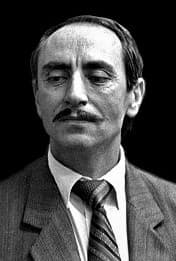
Dzhokhar Dudayev
General · Modern
52.0Total
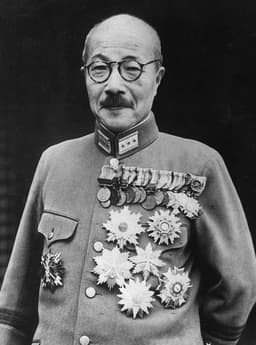
Hideki Tojo
General · Modern
53.9Total
Basic Information
Born
1944
1884
Died
—
1948
Era
Modern
Modern
Nationality
Chechnya
Japan
Occupation
General
General
Civilization
Western
Eastern
Score Comparison
Military (10%)
46.7
70.0
Political (20%)
45.1
48.0
Influence (20%)
57.2
55.0
Legacy (20%)
47.5
50.0
Leadership (15%)
57.6
53.2
Strategy (15%)
57.5
55.0
TOTAL
52.0
53.9
Dzhokhar Dudayev — Complete Timeline
1991 AD
Proclaimed Independence of ChechnyaPolitical Action
Dzhokhar Dudayev declared the independence of the Chechen Republic of Ichkeria from the Soviet Union. He was elected president in a controversial election. This act triggered the First Chechen War with Russia.
ChechnyaIndependenceIchkeria
Impact: regionalconstructive
1994 AD
First Chechen War BeginsWar
Russian forces invaded Chechnya to suppress the independence movement. Dudayev led the Chechen resistance, using guerrilla tactics. The war resulted in heavy casualties and destruction but failed to defeat the Chechen forces.
Chechen WarRussiaInvasion
Impact: regionaltragic
1996 AD
Assassination by Russian MissileWar
Dudayev was killed by a Russian guided missile while using a satellite phone near Grozny. His death was a major blow to the Chechen resistance but did not end the war. He was succeeded by Aslan Maskhadov.
AssassinationChechnyaRussia
Impact: regionaltragic
Hideki Tojo — Complete Timeline
1941 AD
Attack on Pearl HarborWar
As Prime Minister, Hideki Tojo authorized the attack on the US naval base at Pearl Harbor, Hawaii. The surprise attack brought the United States into World War II. Tojo's decision was based on the belief that war with the US was inevitable due to resource embargoes and diplomatic failures.
World War IIPearl HarborUS-Japan War
Impact: globaldestructive
Appointment as Prime MinisterPolitical Action◆ Major
Hideki Tojo was appointed Prime Minister of Japan, replacing Fumimaro Konoe. He retained his position as Army Minister and later took on other portfolios, consolidating power. His appointment marked the ascendancy of the military faction in the Japanese government and the shift towards total war.
Prime MinisterMilitary GovernmentWorld War II
Impact: national
1942 AD
Fall of SingaporeWar◆ Major
Under Tojo's leadership, Japanese forces captured Singapore from the British in a swift campaign. The fall of Singapore was one of the worst British military defeats in history. It demonstrated Japanese military prowess and led to the occupation of a key strategic location in Southeast Asia.
World War IISingaporeJapanese Victory
Impact: global
1948 AD
Execution by the International Military Tribunal for the Far EastPolitical Action◆ Major
Hideki Tojo was found guilty of war crimes by the International Military Tribunal for the Far East and sentenced to death. He was executed by hanging on December 23, 1948. His trial and execution symbolized the Allied effort to hold Japanese leaders accountable for wartime atrocities.
War CrimesExecutionTokyo Trials
Impact: globaltragic
Expert Analysis
Hideki Tojo vs Dzhokhar Dudayev
# The General Who Chose Empire, and the General Who Chose Independence
On a spring morning in 1948, Hideki Tojo climbed the thirteen steps of the gallows in Sugamo Prison, Tokyo, his eyes fixed ahead, his body still in the uniform of a Japanese general. He had once commanded the most feared military machine in Asia. Now he was a war criminal, hanged by the very powers he had tried to conquer. Eight years later and half a world away, Dzhokhar Dudayev, a Soviet Air Force general turned Chechen rebel, was speaking on a satellite phone in a wooded grove near Grozny when a Russian missile locked onto his signal. The explosion left nothing but a crater and a legend. Two generals, two empires, two ends—but the paths that led them there could not have been more different.
Origins
Tojo was born into the Japanese military aristocracy in 1884, a time when Japan was racing to modernize and militarize after centuries of isolation. His father was a lieutenant general in the Imperial Army, and young Hideki absorbed the samurai code of *bushido*—loyalty, honor, and sacrifice for the emperor. He was a mediocre student but an obsessive one, known for his iron discipline and lack of humor. His world was one of order, hierarchy, and expansion: Japan needed resources, living space, and respect from the West.
Dudayev was born sixty years later in 1944, in the Chechen village of Yalkhori, into a people who had been deported by Stalin just months earlier. His family was among the hundreds of thousands of Chechens exiled to Central Asia, where they faced starvation and disease. Dudayev grew up in the Soviet system, learned Russian, and rose through the ranks of the Soviet Air Force, becoming the first Chechen to reach the rank of major general. Unlike Tojo, he was a man of two worlds: a Soviet officer by training, a Chechen nationalist by blood.
Rise to Power
Tojo’s rise was methodical and institutional. He served as a military attaché in Germany, studied the Nazi war machine, and climbed the ladder of the Imperial Army with relentless efficiency. By 1940, he was Army Minister, and by 1941, when Japan faced a choice between war with the United States and economic strangulation, Tojo was the man who offered a decisive answer. He replaced the more cautious Prime Minister Fumimaro Konoe in October 1941, promising to lead Japan through its "greatest crisis." His power came from the military bureaucracy and the emperor’s trust.
Dudayev’s rise was revolutionary. In 1991, as the Soviet Union crumbled, he returned to Chechnya and led a coup against the local communist government. With charisma and defiance, he declared Chechnya independent on November 1, 1991, and was elected president with overwhelming popular support. His power came not from a system but from a people desperate for self-rule. He had no army, no treasury, no international recognition—only the loyalty of a traumatized nation.
Leadership & Governance
Tojo governed as a military dictator in all but name. He combined the roles of Prime Minister, Army Minister, and later Chief of the General Staff, centralizing power to an unprecedented degree. His leadership was cold, bureaucratic, and brutal. He authorized the attack on Pearl Harbor on December 7, 1941, a strategic gamble that he believed would cripple the U.S. Pacific Fleet and buy Japan time to build its empire. Under his watch, Japanese forces captured Singapore in February 1942, humiliating the British and taking 80,000 prisoners. But Tojo also oversaw the brutal occupation of conquered territories, forced labor, and atrocities like the Bataan Death March. His military score of 68.4 and political score of 65.0 reflect a leader who was competent in war but disastrous in strategy—he never understood that Pearl Harbor would awaken a sleeping giant.
Dudayev led as a guerrilla chieftain. When Russia invaded Chechnya in December 1994, he had no air force, no heavy artillery, and no professional army. His military score of 56.3 and strategy score of 57.1 are modest by conventional standards, but he understood something Tojo never did: that a small nation could bleed a superpower. He turned Grozny into a trap, using the city’s ruins to ambush Russian columns. He inspired his fighters with speeches that mixed Islamic faith, Chechen folklore, and defiance. "We will fight until the last Chechen," he said. His political score of 64.3 reflects a leader who could unite a fractured people but could not build a functioning state.
Triumph & Tragedy
Tojo’s greatest moment was the fall of Singapore, the "Gibraltar of the East," in February 1942. It was the largest British surrender in history, and it made Japan seem invincible. But his greatest failure was the decision to attack Pearl Harbor itself. The attack succeeded tactically but failed strategically: it unified American public opinion, brought the U.S. into World War II, and set Japan on a path to annihilation. By 1944, Tojo was forced to resign as Japan’s cities burned under American firebombs.
Dudayev’s greatest triumph was surviving the Russian assault on Grozny in early 1995, when Chechen fighters held off a vastly superior force. His greatest tragedy was his assassination in 1996, just as the war was turning in Chechnya’s favor. The Russian missile that killed him was guided by his own satellite phone—a modern echo of the betrayal that haunts so many rebel leaders. He died not in a courtroom but in the field, still fighting.
Character & Destiny
Tojo was a man of duty without vision. He believed in order, hierarchy, and the emperor’s divinity, but he lacked the imagination to see beyond the battlefield. He once said, "Sometimes it is necessary to close one’s eyes to the truth." He closed his eyes to the industrial might of America, the resilience of the Chinese, and the horror of his own army’s atrocities. His destiny was shaped by a system that rewarded obedience and punished dissent.
Dudayev was a man of vision without order. He could inspire a nation but could not govern it. He was a Soviet-trained officer who became a nationalist icon, a contradiction that he never fully resolved. His Chechen state was chaotic, plagued by crime and warlords. But he gave his people something they had never had: a flag, a president, and a moment of dignity. His destiny was shaped by history’s cruelty to small nations.
Legacy
Tojo is remembered as a war criminal, one of the few Axis leaders executed by the Allies. His legacy in Japan is deeply controversial: some see him as a scapegoat for a war that many Japanese leaders supported; others see him as a symbol of militarism that led their country to ruin. His total score of 70.2 places him as a figure of moderate historical impact—neither a genius nor a fool, but a man who made catastrophic choices.
Dudayev’s legacy is more ambiguous. In Chechnya, he is a martyr and a founding father, the man who dared to say "no" to Moscow. His face appears on posters, his speeches are quoted, and his grave is a shrine. But his movement descended into extremism after his death, and the Chechen wars left tens of thousands dead. His total score of 65.7 reflects a leader who changed history but could not control it.
Conclusion
One general served an empire that already existed; the other tried to create a nation that never had. Tojo’s Japan was a modern industrial power that overreached; Dudayev’s Chechnya was a tiny, impoverished territory that dared to defy. Both men believed in the power of will over circumstance, and both were destroyed by the forces they unleashed. In the end, the difference between them is not good versus evil—it is the difference between the general who commands a machine and the general who becomes a symbol. Tojo died in a prison, judged by his enemies. Dudayev died in a forest, mourned by his people. History rarely offers a cleaner verdict.
Rankings
🥇
Hideki TojoLeader
Mil: 70.0Pol: 48.0Inf: 55.0
53.9
🥈
Dzhokhar Dudayev
Mil: 46.7Pol: 45.1Inf: 57.2
52.0
+1.9 behind
How This Comparison Works
Algorithm
Each figure is scored on 6 dimensions (0—100 scale) based on structured historical data: Military (10%), Political (20%), Influence (20%), Legacy (20%), Leadership (15%), Strategy (15%). The weighted total produces the final ranking.
Data Sources
Scores are computed from structured sub-indicators in the database. Scale factors adjust for era (Ancient ×0.85, Modern ×1.0) and civilization size (Eastern ×1.05, Other ×0.80) to account for differences in population and military scale.
Maximum 3 Figures
Comparisons are limited to 2—3 figures to ensure readability and statistical meaningfulness.
Error Margins
±5 points per dimension — Sub-scores are derived from historical records with inherent uncertainty. Two figures within 5 points on a dimension should be considered roughly equivalent in that area.
Total Score Accuracy
±3 points overall — The weighted combination of 6 dimensions produces a total score with approximately ±3 points of uncertainty. Differences of less than 3 points are not statistically significant— the figures are effectively tied.
Known Limitations
- Historical records are incomplete and uneven across civilizations
- Figures from oral-tradition societies may be underrepresented
- Occupation labels can misclassify multi-role figures
- Scores measure capability and impact, not moral character
- Quantitative scoring is a comparison tool, not absolute truth
Capability Radar
Military (10%) — Battles & Warfare
Battles
35
65
Win Rate
30
40
Expansion
20
70
Political (20%) — Governance & Reform
Reform
35
30
Diplomacy
30
35
Economy
15
25
Influence (20%) — Cultural & Global Reach
Cultural
40
30
Global
35
55
Legacy (20%) — Historical Impact
Historical
45
55
Longevity
30
40
Leadership (15%) — Power & Stability
Tenure
30
60
Stability
10
20
Strategy (15%) — Tactics & Innovation
Strategy
50
50
Tactics
55
55
Reform
40
45
Similar Comparisons
Comments & Discussion
马背上的学者6/16/2026
从军事史角度看,两人最大的共同点是聪明反被聪明误。东条过分相信日本的精神力量能击败美国物质力量;杜达耶夫以为苏联解体后,西方会支持所有反俄的民族主义运动——两者都严重误判了现实。东条的战略错误导致数百万人死亡,杜达耶夫的误判则让车臣人承受了两次毁灭性战争。真正的悲剧在于:他们都是自己民族救世主幻想的牺牲品,而且把整个民族拖进了火坑。|en|As a military historian, I see the core irony: both men overestimated their leverage against bigger powers. Tojo believed Japan's "spiritual
Historian6336/16/2026
The analysis romanticizes Dudayev while sanitizing Tojo's pure evil. Let's be clear: Tojo personally approved Unit 731's biological experiments and ordered the Bataan Death March—he was a mass murderer, not some misunderstood "empire builder." Dudayev's Chechnya was a gangster state that trafficked weapons and harbored terrorists, including Khattab. Framing this as "empire vs. independence" ignores that one was a genocidal dictator and the other a warlord with a cause. The moral abyss between th
Chronicler71926/16/2026
Tojo was a competent administrator but a catastrophic strategist—his Pearl Harbor gamble worked tactically but doomed Japan strategically by waking a sleeping industrial giant. Dudayev, by contrast, understood asymmetric warfare from the start: he knew he couldn't match Russia's firepower, so he fought for international legitimacy and tribal loyalty instead. One chose imperial overreach; the other chose survival through symbolism. Tojo died in disgrace; Dudayev died a martyr to his people. That