Loading...
Duan Qirui vs Shi Dakai
Shi Dakai leads by 6.5 pts · 2 figures compared
…
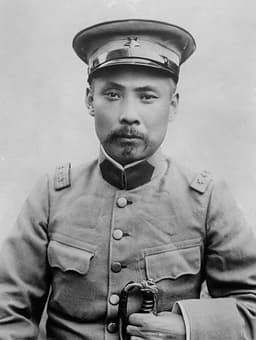
Duan Qirui
General · Modern
53.1Total
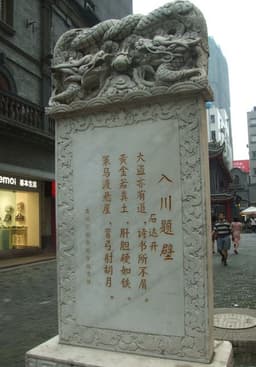
Shi Dakai
General · Modern
59.6Total
Basic Information
Born
1865
1831
Died
1936
1863
Era
Modern
Modern
Nationality
China
China
Occupation
General
General
Civilization
Eastern
Eastern
Score Comparison
Military (10%)
47.5
76.0
Political (20%)
53.8
45.0
Influence (20%)
53.3
56.7
Legacy (20%)
47.5
54.0
Leadership (15%)
62.0
72.0
Strategy (15%)
58.0
68.1
TOTAL
53.1
59.6
Duan Qirui — Complete Timeline
1919 AD
Resignation as Premier after the May Fourth MovementPolitical Action◆ Major
Duan Qirui resigned as Premier of the Republic of China in 1919 following the May Fourth Movement. The movement protested the weak response of the Chinese government to the Treaty of Versailles. Duan's government was blamed for failing to protect Chinese interests, leading to his resignation.
ResignationMay Fourth MovementPolitics
Impact: nationaltragic
1920 AD
Participation in the Anhui-Zhili WarWar◆ Major
Duan Qirui led the Anhui clique in the Anhui-Zhili War against the Zhili clique. The war was a major conflict in the Warlord Era. Duan's forces were defeated, leading to his resignation as Premier and the decline of the Anhui clique's power.
Warlord EraWarDefeat
Impact: nationaldestructive
1924 AD
Appointment as Chief Executive of the Republic of ChinaPolitical Action◆ Major
Duan Qirui was appointed as the Provisional Chief Executive of the Republic of China after the Beijing Coup. He headed a provisional government that attempted to unify the country but faced opposition from various warlords. His tenure was marked by political instability and military conflicts.
Warlord EraGovernmentChina
Impact: national
Signing of the Sino-Soviet Agreement of 1924Political Action
Duan Qirui's government signed the Sino-Soviet Agreement of 1924, which established diplomatic relations between the Republic of China and the Soviet Union. The agreement recognized Outer Mongolia as part of China but allowed Soviet influence. It was controversial and criticized by some Chinese nationalists.
DiplomacySoviet UnionTreaty
Impact: national
Shi Dakai — Complete Timeline
1851 AD
Jintian UprisingWar◆ Major
Shi Dakai joined the Taiping Rebellion at its inception in Jintian, Guangxi. As a core leader, he helped organize the rebel forces and was appointed Wing King, becoming one of the key military commanders of the Taiping Heavenly Kingdom.
Taiping RebellionUprisingMilitary Command
Impact: national
1854 AD
Battle of XiangtanWar◆ Major
Shi Dakai led Taiping forces to a major victory at Xiangtan, Hunan, defeating Qing imperial troops. This battle secured Taiping control over key territories in the Yangtze River valley and demonstrated his military skill.
Taiping RebellionBattleVictory
Impact: regional
1856 AD
Tianjing IncidentPolitical Action
Shi Dakai returned to Tianjing (Nanjing) after the internal purge of the Eastern King Yang Xiuqing and the murder of the Northern King Wei Changhui. He condemned the violence and was forced to flee, leading to a split in Taiping leadership.
Taiping RebellionInternal ConflictPurge
Impact: nationaltragic
1858 AD
Campaign in Zhejiang and FujianWar
Shi Dakai led a separate Taiping army into Zhejiang and Fujian provinces, capturing several cities. This campaign expanded Taiping influence into southeastern China but also isolated his forces from the main Taiping base.
Taiping RebellionCampaignExpansion
Impact: regional
1863 AD
Battle of Baishui RiverWar◆ Major
Shi Dakai's army was trapped and defeated by Qing forces at the Baishui River in Sichuan. He was captured and executed shortly after, marking the end of his military career and a significant loss for the Taiping cause.
Taiping RebellionBattleDefeatDeath
Impact: nationaltragic
Expert Analysis
Shi Dakai vs Duan Qirui
# The Two Paths of Chinese Warlordism: Duan Qirui and Shi Dakai
In the summer of 1863, a thirty-two-year-old rebel general knelt before a Qing executioner on the banks of the Baishui River in Sichuan, his brilliant military career ending in a pool of blood. Seventy-three years later, in 1936, a seventy-one-year-old former chief executive of China died peacefully in Shanghai, having outlived his enemies, his allies, and most of his era. Shi Dakai and Duan Qirui—two Chinese generals who never met, yet whose lives trace the arc of modern China’s violent transformation from empire to republic, and from rebellion to warlordism.
Origins
Shi Dakai was born in 1831 into a Hakka family of modest means in Guangxi province. The Qing Empire was already creaking under the weight of corruption, opium addiction, and foreign humiliation, but for a young man of talent, the old Confucian ladder—the civil examinations—still offered a path to respectability. Shi studied for the exams, but he also absorbed the strange new teachings of Hong Xiuquan, a failed scholar who claimed to be the younger brother of Jesus Christ. When Hong launched the Taiping Rebellion in 1851, Shi Dakai joined him. He was twenty years old, idealistic, and ready to tear down the old world.
Duan Qirui was born thirty-four years later, in 1865, into a scholarly family in Hefei, Anhui. The Taiping Rebellion had been crushed, but the Qing Empire was now a hollow shell, dependent on provincial armies and foreign loans. Duan’s father died when he was young, and he was raised by his grandfather, a retired official who drilled him in Confucian classics. But Duan, like many ambitious young men of his generation, saw that the future lay not in poetry but in guns. He enrolled in the Beiyang Military Academy, where he caught the eye of Yuan Shikai, the most powerful general in China. Duan became Yuan’s protégé, a man who would rise not through rebellion but through the system.
Rise to Power
Shi Dakai’s rise was meteoric and collective. At the Jintian Uprising in 1851, he was named the Wing King, one of the five core leaders of the Taiping Heavenly Kingdom. The rebels swept north, capturing Nanjing in 1853 and declaring it their capital. Shi Dakai proved himself a superb field commander. At the Battle of Xiangtan in 1854, he outmaneuvered Qing forces and secured a major victory, his reputation for tactical brilliance growing with every campaign. But the Taiping leadership was riven by internal strife. In 1856, the Eastern King Yang Xiuqing attempted a coup, and the Heavenly King Hong Xiuquan ordered a bloody purge. Shi Dakai returned to Nanjing to find his family murdered and his allies dead. He narrowly escaped with his life, fleeing the capital in disgust.
Duan Qirui’s rise was slower but steadier. He served under Yuan Shikai during the last years of the Qing, helping to modernize the Beiyang Army. When the 1911 Revolution overthrew the dynasty, Yuan Shikai became president, and Duan became his right-hand man—serving as premier, minister of war, and commander of the most powerful army in China. But Yuan’s attempt to restore the monarchy in 1915 failed, and he died in disgrace the following year. Duan now inherited the Beiyang military machine, but he inherited its divisions too. China splintered into rival warlord cliques, and Duan led the Anhui clique, one of the most powerful.
Leadership & Governance
As a military commander, Shi Dakai was a master of maneuver. His strategy score of 81.6 reflects a general who could read terrain, supply lines, and enemy psychology with rare skill. He led his army on long campaigns through Zhejiang, Fujian, and finally into Sichuan, fighting not just Qing forces but also local militias and the harsh geography of southwestern China. But he was less successful as a political leader. His political score of 64.8 reveals a man who, despite his intelligence, could never navigate the treacherous currents of Taiping court politics. He was loyal to the vision of the Heavenly Kingdom, but he could not save it from its own leaders’ paranoia and incompetence.
Duan Qirui was the opposite. His political score of 65.0 is almost identical to Shi’s, but it reflects a different kind of failure. Duan understood power—he knew how to build coalitions, negotiate with foreign powers, and manipulate the weak republican institutions of Beijing. His military score of 62.4 is lower than Shi’s, but he did not need to be a battlefield genius; he commanded through subordinates and alliances. His leadership score of 80.4 and strategy score of 81.1 suggest a man who thought in terms of systems, not battles. Yet his governance was brittle. He signed the Sino-Soviet Agreement of 1924, recognizing the Soviet Union and accepting the loss of Outer Mongolia—a decision that made him a traitor in the eyes of nationalists. He tried to rule as chief executive after the 1924 Beijing Coup, but he could not unify the country. The warlords would not obey him, and the people did not trust him.
Triumph & Tragedy
Shi Dakai’s greatest moment was also his last. In 1863, after years of wandering, he led his army into Sichuan, hoping to establish a new base. At the Baishui River, Qing forces trapped him. He could have fought to the death, but he chose to surrender, hoping to spare his men. The Qing executed him by slow slicing, a death that became a legend of martyrdom. His tragedy was not defeat—it was that he had believed in a cause that was already rotting from within.
Duan Qirui’s greatest moment was, ironically, his resignation. In 1919, after the May Fourth Movement erupted against the Versailles Treaty’s transfer of German concessions in Shandong to Japan, Duan—then premier—was the target of popular fury. He resigned, accepting blame for a policy he had inherited. It was a rare act of political humility in an era of naked ambition. But his tragedy was that he could not build on that moment. He returned to power in 1924, only to be overthrown by his own allies in 1926. He spent his final decade as a retired Buddhist scholar, watching from the sidelines as Chiang Kai-shek’s Nationalists and Mao Zedong’s Communists tore China apart.
Character & Destiny
Shi Dakai was a romantic—a man of principle in an age of chaos. He believed in the Taiping vision of a new society, free from Manchu rule, opium, and Confucian hierarchy. But his principles made him inflexible. When the Tianjing Incident shattered the Taiping leadership, he could not compromise or scheme; he could only flee. His destiny was to be a tragic hero, a brilliant general doomed by his own integrity.
Duan Qirui was a pragmatist—a man who understood that power was about survival, not ideals. He served Yuan Shikai, then opposed him; he worked with Japan, then broke with them; he led a warlord clique, then tried to transcend warlordism. His flexibility kept him alive, but it also made him seem hollow. His destiny was to be a transitional figure, a placeholder between the empire and the modern state.
Legacy
Shi Dakai is remembered as a folk hero—the Wing King who fought for justice, the general who chose death over betrayal. His legacy score of 65.9 is modest in the historical databases, but in Chinese popular memory, he looms large. Poems and operas celebrate his bravery, his loyalty, and his tragic end. He represents the lost promise of the Taiping Rebellion, a dream of equality that was crushed by Qing firepower and internal betrayal.
Duan Qirui’s legacy is more ambiguous. His score of 66.8 is similar, but it reflects a different kind of memory. He is remembered, if at all, as one of the many warlords who failed China. He did not build a nation; he only held power. Yet there is a case for him: he kept the Beiyang Army intact, he preserved the fiction of a republic, and he stepped aside when the people demanded it. In a era of butchers and bandits, Duan Qirui was a bureaucrat with a gun.
Conclusion
What separates these two generals is not talent—both were brilliant in their own ways—but the eras they inhabited and the choices they made. Shi Dakai lived in the dying days of an empire, when rebellion was the only path for a man of ambition. Duan Qirui lived in the chaotic dawn of a republic, when power was the only path for a man of ambition. Shi Dakai died for a cause; Duan Qirui lived for himself. One became a martyr, the other a survivor. And China, in its long march from empire to nation, needed both—the dreamer who showed what might have been, and the realist who showed what was.
Rankings
🥇
Shi DakaiLeader
Mil: 76.0Pol: 45.0Inf: 56.7
59.6
🥈
Duan Qirui
Mil: 47.5Pol: 53.8Inf: 53.3
53.1
+6.5 behind
How This Comparison Works
Algorithm
Each figure is scored on 6 dimensions (0—100 scale) based on structured historical data: Military (10%), Political (20%), Influence (20%), Legacy (20%), Leadership (15%), Strategy (15%). The weighted total produces the final ranking.
Data Sources
Scores are computed from structured sub-indicators in the database. Scale factors adjust for era (Ancient ×0.85, Modern ×1.0) and civilization size (Eastern ×1.05, Other ×0.80) to account for differences in population and military scale.
Maximum 3 Figures
Comparisons are limited to 2—3 figures to ensure readability and statistical meaningfulness.
Error Margins
±5 points per dimension — Sub-scores are derived from historical records with inherent uncertainty. Two figures within 5 points on a dimension should be considered roughly equivalent in that area.
Total Score Accuracy
±3 points overall — The weighted combination of 6 dimensions produces a total score with approximately ±3 points of uncertainty. Differences of less than 3 points are not statistically significant— the figures are effectively tied.
Known Limitations
- Historical records are incomplete and uneven across civilizations
- Figures from oral-tradition societies may be underrepresented
- Occupation labels can misclassify multi-role figures
- Scores measure capability and impact, not moral character
- Quantitative scoring is a comparison tool, not absolute truth
Capability Radar
Military (10%) — Battles & Warfare
Battles
55
75
Win Rate
50
70
Expansion
40
75
Political (20%) — Governance & Reform
Reform
55
50
Diplomacy
50
45
Economy
40
40
Influence (20%) — Cultural & Global Reach
Cultural
30
55
Global
20
40
Legacy (20%) — Historical Impact
Historical
45
60
Longevity
30
45
Leadership (15%) — Power & Stability
Tenure
60
55
Stability
30
35
Strategy (15%) — Tactics & Innovation
Strategy
65
80
Tactics
60
85
Reform
70
60
Similar Comparisons
Comments & Discussion
北府剑6/16/2026
比较有意思,但拿太平天国的革命领袖跟北洋军阀比,根本是关公战秦琼。段祺瑞再怎么样也是被历史定为"北洋军阀"的,而石达开是太平天国运动的核心人物,是为了推翻腐朽清朝而战的革命者。段祺瑞不过是清朝灭亡后掌权的一介军阀,石达开却是带着信仰去拼命的。这怎么能放一块比?
Iron Duke6/16/2026
The comparison misses the fundamental difference in their relationship with central authority. Duan Qirui's entire career from the Beiyang Army to premiership was about maneuvering within the existing power structures—he was always a creature of the system, even when he dominated it. Shi Dakai was the opposite, leading the most serious rebellion against Qing rule since the Ming collapse. You can't equate a man who fought to overthrow the entire imperial order with one who jockeyed for position w
楚汉遗风6/16/2026
段祺瑞肯定比石达开高明不少。段祺瑞三造共和,至少嘴上喊的是共和,跟孙中山、黎元洪这些人互动频繁。石达开天京事变后带兵出走,最后在大渡河被俘,死了连个全尸都难保。段祺瑞晚年坚持抗日,拒绝日本人的拉拢,保持了民族气节。段祺瑞是乱世中的政治家,石达开不过是个失败的反王。
Skeptical Eye6/16/2026
Let's talk numbers here. Shi Dakai's "brilliant military career" ended with his entire army of maybe 40,000 men annihilated or scattered at the Dadu River. Duan Qirui, by contrast, commanded the Beiyang Army—the most modernized, best-equipped force in China at the time, controlling Beijing and the national treasury. One was a provincial rebel with no supply lines; the other was the actual head of state, for a time. These are utterly different leagues of resources and context.