Loading...
Duan Qirui vs Louis Botha
Louis Botha leads by 8.0 pts · 2 figures compared
…
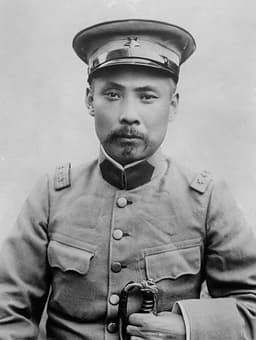
Duan Qirui
General · Modern
53.1Total
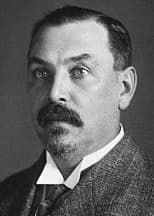
Louis Botha
General · Modern
61.1Total
Basic Information
Born
1865
1862
Died
1936
1919
Era
Modern
Modern
Nationality
China
South Africa
Occupation
General
General
Civilization
Eastern
Other
Score Comparison
Military (10%)
47.5
61.7
Political (20%)
53.8
70.0
Influence (20%)
53.3
56.7
Legacy (20%)
47.5
50.0
Leadership (15%)
62.0
79.8
Strategy (15%)
58.0
58.0
TOTAL
53.1
61.1
Duan Qirui — Complete Timeline
1919 AD
Resignation as Premier after the May Fourth MovementPolitical Action◆ Major
Duan Qirui resigned as Premier of the Republic of China in 1919 following the May Fourth Movement. The movement protested the weak response of the Chinese government to the Treaty of Versailles. Duan's government was blamed for failing to protect Chinese interests, leading to his resignation.
ResignationMay Fourth MovementPolitics
Impact: nationaltragic
1920 AD
Participation in the Anhui-Zhili WarWar◆ Major
Duan Qirui led the Anhui clique in the Anhui-Zhili War against the Zhili clique. The war was a major conflict in the Warlord Era. Duan's forces were defeated, leading to his resignation as Premier and the decline of the Anhui clique's power.
Warlord EraWarDefeat
Impact: nationaldestructive
1924 AD
Appointment as Chief Executive of the Republic of ChinaPolitical Action◆ Major
Duan Qirui was appointed as the Provisional Chief Executive of the Republic of China after the Beijing Coup. He headed a provisional government that attempted to unify the country but faced opposition from various warlords. His tenure was marked by political instability and military conflicts.
Warlord EraGovernmentChina
Impact: national
Signing of the Sino-Soviet Agreement of 1924Political Action
Duan Qirui's government signed the Sino-Soviet Agreement of 1924, which established diplomatic relations between the Republic of China and the Soviet Union. The agreement recognized Outer Mongolia as part of China but allowed Soviet influence. It was controversial and criticized by some Chinese nationalists.
DiplomacySoviet UnionTreaty
Impact: national
Louis Botha — Complete Timeline
1899 AD
Battle of ColensoWar◆ Major
Botha commanded Boer forces at the Battle of Colenso during the Second Boer War. His troops repelled a British attack under General Buller, inflicting heavy casualties and boosting Boer morale.
Second Boer WarBattleVictory
Impact: regional
1900 AD
Boer War Guerrilla CommanderWar◆ Major
After the British captured Pretoria, Botha led Boer guerrilla forces in the Transvaal. He conducted hit-and-run attacks against British columns, prolonging the war and becoming a symbol of Afrikaner resistance.
Second Boer WarGuerrillaResistance
Impact: regional
1902 AD
Signed the Treaty of VereenigingPolitical Action
Botha, as a leading Boer general, signed the Treaty of Vereeniging which ended the Second Boer War. The treaty granted the Boer republics self-government under British sovereignty and promised eventual self-rule.
TreatyPeaceSecond Boer War
Impact: regional
1910 AD
First Prime Minister of the Union of South AfricaPolitical Action
Botha became the first Prime Minister of the newly formed Union of South Africa. He led a coalition government that sought to reconcile Afrikaners and English-speaking whites, while implementing segregationist policies.
Prime MinisterUnion of South AfricaFounding
Impact: nationalconstructive
1914 AD
Suppressed the 1914 RebellionWar◆ Major
Botha personally led government forces to suppress the Maritz Rebellion, an Afrikaner uprising against South Africa's entry into World War I. He defeated the rebels, asserting state authority and maintaining support for the British Empire.
RebellionWorld War ISuppression
Impact: national
1915 AD
Conquered German South West AfricaWar◆ Major
Botha commanded South African forces in the invasion and conquest of German South West Africa. The campaign succeeded, and the territory was later administered by South Africa under a League of Nations mandate.
World War IConquestGerman South West Africa
Impact: regional
Expert Analysis
Louis Botha vs Duan Qirui
# The General Who Became Statesman: Duan Qirui and Louis Botha
On a sweltering summer day in 1919, two men on opposite sides of the world faced their defining moments. In Beijing, Duan Qirui watched helplessly as tens of thousands of students poured into Tiananmen Square, their cries against the Treaty of Versailles echoing off ancient walls. Three thousand miles away in Pretoria, Louis Botha studied maps of German South West Africa, planning a campaign that would extend British imperial reach while healing the wounds of his own people's defeat. Both were generals who became political leaders. Both commanded fractured nations emerging from chaos. But their paths diverged with consequences that still resonate today.
Origins
Duan Qirui was born in 1865 into a China still reeling from the Taiping Rebellion, a world where the Qing dynasty's ancient order was crumbling. His father died when he was young, and young Duan was raised by his grandfather, a retired army officer who drilled into him the Confucian virtues of loyalty and duty. He joined the Beiyang Army, the modernized force that would become the instrument of China's warlord era, and rose through sheer competence.
Louis Botha, born three years earlier in 1862, grew up on the South African veld, a world of ox-wagons and Boer commando traditions. His family were Voortrekkers who had fled British rule, and he learned to ride and shoot before he could properly read. The frontier shaped him: self-reliant, pragmatic, suspicious of distant authority. While Duan studied military manuals and classical texts, Botha studied the land itself.
Rise to Power
Duan's ascent came through the Beiyang military system, where he served under Yuan Shikai, the strongman who briefly restored imperial rule after the 1911 Revolution. When Yuan died in 1916, Duan inherited command of the Anhui clique, one of several warlord factions that carved up China. His power rested on his control of railways, arsenals, and the northern provinces. But it was always contested—the Zhili clique, the Fengtian clique, and the Kuomintang all challenged his authority.
Botha's rise followed a different trajectory. He emerged not from an established hierarchy but from the chaos of the Second Boer War. At the Battle of Colenso in 1899, he commanded Boer forces that inflicted a stunning defeat on the British army, killing over 1,000 soldiers while losing only 40 of his own. When the British captured Pretoria in 1900, Botha became a guerrilla commander, leading hit-and-run attacks that prolonged the war for two more years. His military reputation made him the natural political leader of the Boer people after defeat.
Leadership and Governance
Here the two men's differences become stark. Duan governed through a system of patronage and coercion, his power always fragile. As Premier, he borrowed heavily from Japan to fund his military, mortgaging China's railways and mines. The May Fourth Movement of 1919 exposed his fundamental weakness: when students protested the transfer of German concessions in Shandong to Japan, Duan could neither crush them decisively nor accommodate their demands. He resigned, but returned in 1924 as Chief Executive after the Beijing Coup, signing the Sino-Soviet Agreement that recognized Outer Mongolia's autonomy. His governance was a series of temporary fixes for permanent problems.
Botha, by contrast, proved a master of political reconciliation. As first Prime Minister of the Union of South Africa in 1910, he built a coalition of Boers and British, Afrikaans and English speakers. He suppressed the 1914 Maritz Rebellion—an Afrikaner uprising against South Africa's entry into World War I—not as a conqueror but as a fellow Afrikaner who understood their grievances. Then he personally led troops to conquer German South West Africa in 1915, proving his loyalty to the empire while protecting Boer interests. He governed not through force but through the legitimacy of electoral victory.
Triumph and Tragedy
Duan's greatest moment came early: his role in the 1911 Revolution, when he and other Beiyang generals forced the Qing emperor to abdicate, ending two millennia of imperial rule. But his greatest failure was the May Fourth Movement itself, which revealed him as a symbol of everything the new China rejected: warlordism, foreign subservience, and political corruption. The Anhui-Zhili War of 1920, which he lost, drove him from power and shattered his clique.
Botha's triumph was the Treaty of Vereeniging in 1902, where he accepted British sovereignty but secured self-government for the Transvaal and Orange Free State. His tragedy came later: the 1913 strike of white miners, which he crushed with military force, killing dozens and creating a legacy of state violence that would haunt South Africa. He died in 1919 at 57, having achieved union but not unity.
Character and Destiny
Duan was a man of contradictions: personally honest in a corrupt era, yet willing to sell national assets for military advantage. He believed in constitutional government but never submitted to elections. His Confucian sense of duty made him resist Japanese domination, yet his dependence on Japan made him a puppet in Chinese eyes. He was, in the end, trapped between the old world that shaped him and the new world he could not create.
Botha was more adaptable. He accepted defeat in 1902 and turned it into victory by 1910. He understood that power in South Africa required bridging the Boer-British divide, and he did so with remarkable skill. Yet his pragmatism had limits: he never truly addressed the rights of black South Africans, and his suppression of white labor militancy foreshadowed the apartheid state. He was a builder of nations who built on unequal foundations.
Legacy
Duan Qirui is remembered today, if at all, as a footnote in China's long march to modernity—a warlord who failed to understand that the age of generals was ending. His score of 74.8 in influence and 80.4 in leadership reflects his real abilities, but his legacy of 66.8 shows how little he ultimately achieved. The May Fourth Movement, which he opposed, became the founding myth of modern Chinese nationalism.
Botha's legacy is more complex. His 83.0 political score and 89.6 leadership rating speak to his genuine achievements in state-building. But the Union of South Africa he led became the framework for apartheid. His conquest of German South West Africa planted the seeds of Namibia's later struggle. He is remembered as a founder by some, a collaborator by others.
Conclusion
Both men faced the same fundamental challenge: how to build stable governance in societies fractured by war, colonialism, and rapid change. Duan tried to hold China together through military force and foreign loans, and failed. Botha tried to unite Boer and Briton through political compromise and constitutionalism, and succeeded—for a time. Their different outcomes were not accidents of fate but products of character, circumstance, and the choices they made when history demanded them. One became a footnote; the other, a foundation. Both remind us that the distance between triumph and tragedy is often measured not in years, but in the willingness to see beyond one's own era.
Rankings
🥇
Louis BothaLeader
Mil: 61.7Pol: 70.0Inf: 56.7
61.1
🥈
Duan Qirui
Mil: 47.5Pol: 53.8Inf: 53.3
53.1
+8.0 behind
How This Comparison Works
Algorithm
Each figure is scored on 6 dimensions (0—100 scale) based on structured historical data: Military (10%), Political (20%), Influence (20%), Legacy (20%), Leadership (15%), Strategy (15%). The weighted total produces the final ranking.
Data Sources
Scores are computed from structured sub-indicators in the database. Scale factors adjust for era (Ancient ×0.85, Modern ×1.0) and civilization size (Eastern ×1.05, Other ×0.80) to account for differences in population and military scale.
Maximum 3 Figures
Comparisons are limited to 2—3 figures to ensure readability and statistical meaningfulness.
Error Margins
±5 points per dimension — Sub-scores are derived from historical records with inherent uncertainty. Two figures within 5 points on a dimension should be considered roughly equivalent in that area.
Total Score Accuracy
±3 points overall — The weighted combination of 6 dimensions produces a total score with approximately ±3 points of uncertainty. Differences of less than 3 points are not statistically significant— the figures are effectively tied.
Known Limitations
- Historical records are incomplete and uneven across civilizations
- Figures from oral-tradition societies may be underrepresented
- Occupation labels can misclassify multi-role figures
- Scores measure capability and impact, not moral character
- Quantitative scoring is a comparison tool, not absolute truth
Capability Radar
Military (10%) — Battles & Warfare
Battles
55
65
Win Rate
50
70
Expansion
40
60
Political (20%) — Governance & Reform
Reform
55
65
Diplomacy
50
70
Economy
40
55
Influence (20%) — Cultural & Global Reach
Cultural
30
45
Global
20
50
Legacy (20%) — Historical Impact
Historical
45
55
Longevity
30
40
Leadership (15%) — Power & Stability
Tenure
60
60
Stability
30
50
Strategy (15%) — Tactics & Innovation
Strategy
65
72
Tactics
60
68
Reform
70
55
Similar Comparisons
Comments & Discussion
VeldtWarden6/16/2026
Botha gets romanticized as a unifier, but let’s be real—he was a British imperial collaborator who traded Boer independence for personal power. The 1914 Maritz Rebellion proved his own people saw through it. Duan at least tried to preserve China’s sovereignty against the Twenty-One Demands. Botha’s “statesmanship” was just surrender in a suit.|zh|Botha gets romanticized as a unifier—但说到底他就是个大英帝国合作者,拿布尔人独立换自己权力。1914年马利茨叛变就是明证,自己人都看穿他。段祺瑞至少还想保中国主权,对抗二十一条。Botha的“政治家”头衔不过是穿了西装的投降罢了。