Loading...
Duan Qirui vs Francisco Morazan
Francisco Morazan leads by 4.9 pts · 2 figures compared
…
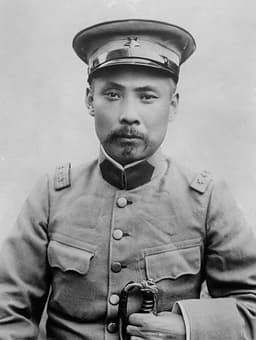
Duan Qirui
General · Modern
53.1Total
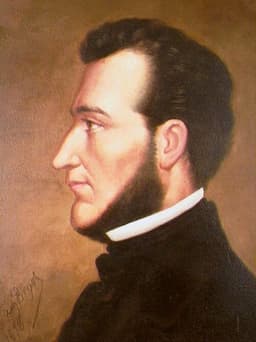
Francisco Morazan
General · Modern
58.0Total
Basic Information
Born
1865
1792
Died
1936
1842
Era
Modern
Modern
Nationality
China
Honduras
Occupation
General
General
Civilization
Eastern
Western
Score Comparison
Military (10%)
47.5
52.5
Political (20%)
53.8
60.0
Influence (20%)
53.3
62.0
Legacy (20%)
47.5
50.0
Leadership (15%)
62.0
68.0
Strategy (15%)
58.0
55.0
TOTAL
53.1
58.0
Duan Qirui — Complete Timeline
1919 AD
Resignation as Premier after the May Fourth MovementPolitical Action◆ Major
Duan Qirui resigned as Premier of the Republic of China in 1919 following the May Fourth Movement. The movement protested the weak response of the Chinese government to the Treaty of Versailles. Duan's government was blamed for failing to protect Chinese interests, leading to his resignation.
ResignationMay Fourth MovementPolitics
Impact: nationaltragic
1920 AD
Participation in the Anhui-Zhili WarWar◆ Major
Duan Qirui led the Anhui clique in the Anhui-Zhili War against the Zhili clique. The war was a major conflict in the Warlord Era. Duan's forces were defeated, leading to his resignation as Premier and the decline of the Anhui clique's power.
Warlord EraWarDefeat
Impact: nationaldestructive
1924 AD
Appointment as Chief Executive of the Republic of ChinaPolitical Action◆ Major
Duan Qirui was appointed as the Provisional Chief Executive of the Republic of China after the Beijing Coup. He headed a provisional government that attempted to unify the country but faced opposition from various warlords. His tenure was marked by political instability and military conflicts.
Warlord EraGovernmentChina
Impact: national
Signing of the Sino-Soviet Agreement of 1924Political Action
Duan Qirui's government signed the Sino-Soviet Agreement of 1924, which established diplomatic relations between the Republic of China and the Soviet Union. The agreement recognized Outer Mongolia as part of China but allowed Soviet influence. It was controversial and criticized by some Chinese nationalists.
DiplomacySoviet UnionTreaty
Impact: national
Francisco Morazan — Complete Timeline
1824 AD
Abolition of slavery in Central AmericaReform◆ Major
As a key leader in the liberal movement, Moraz
AbolitionSlaveryLiberal Reform
Impact: regionalprogressive
1827 AD
Battle of La TrinidadWar◆ Major
Morazán led a liberal army to victory against conservative forces at La Trinidad, Honduras. This battle was a key turning point in the Central American civil war, allowing Morazán to consolidate power and eventually become president of the federation.
BattleLiberal VictoryCivil War
Impact: regional
1830 AD
Presidency of the Federal Republic of Central AmericaPolitical Action
Morazán was elected president of the Federal Republic of Central America, a union of Guatemala, El Salvador, Honduras, Nicaragua, and Costa Rica. He pursued liberal reforms including separation of church and state, free trade, and land reform, facing opposition from conservatives.
Federal RepublicLiberal ReformsCentral America
Impact: regionalconstructive
1842 AD
Execution by firing squadPolitical Action
After a failed attempt to restore the Federal Republic, Moraz
ExecutionEnd of FederationLiberal Defeat
Impact: regionaltragic
Expert Analysis
Francisco Morazan vs Duan Qirui
# The Iron and the Visionary
In the summer of 1919, as student protesters filled the streets of Beijing demanding a new China, Duan Qirui sat in his office and signed his resignation. Half a world away and a century earlier, Francisco Morazán watched his own dreams dissolve into gunpowder smoke on a Costa Rican hillside, moments before the firing squad ended his life. Both men were generals who believed they could reshape nations. Both failed. But their failures could not have been more different—one a slow surrender to chaos, the other a dramatic martyrdom for a lost cause.
Origins
Duan Qirui was born in 1865 into a China reeling from the Taiping Rebellion, a country where the old imperial order was crumbling and the only path to power lay through military force. He studied at the Beiyang Military Academy, absorbing German military doctrine and the Confucian values of loyalty and hierarchy. His world was one of warlords, shifting alliances, and the brutal logic of survival. There was no grand ideology here—only the pragmatic pursuit of power within a system that rewarded cunning over conviction.
Francisco Morazán, born in 1792 in Tegucigalpa, Honduras, came of age during the twilight of Spanish colonial rule. He was a child of the Enlightenment, reading Rousseau and Voltaire in a region where liberal ideas burned like wildfire. His Central America was a patchwork of provinces dreaming of unity, and Morazán absorbed the revolutionary spirit that had swept across the Atlantic. Where Duan saw a chessboard of warlords, Morazán saw a canvas for liberty.
Rise to Power
Duan Qirui rose through the ranks of Yuan Shikai’s Beiyang Army, the most modern military force in China. His path was bureaucratic and incremental: promotions, commands, political appointments. The pivotal moment came in 1916 when Yuan Shikai’s imperial ambitions collapsed, leaving a power vacuum. Duan became Premier, but his authority rested on the loyalty of the Anhui clique—a fragile base that would prove his undoing.
Morazán’s ascent was forged in battle and ideas. In 1827, at the Battle of La Trinidad, he led a ragged liberal army against conservative forces and won. That victory catapulted him onto the national stage. By 1830, he was President of the Federal Republic of Central America—not through inheritance or political maneuvering, but through the force of his vision and the loyalty of men who believed in a unified republic.
Leadership & Governance
Duan Qirui governed like a warlord dressed in statesman’s clothes. He centralized power, suppressed dissent, and relied on military force to maintain order. His signature achievement was the Sino-Soviet Agreement of 1924, which recognized the Soviet Union and secured Chinese control over the Chinese Eastern Railway—a pragmatic deal that bought time but no loyalty. His political wisdom was tactical, not strategic: he could outmaneuver rivals but could not build institutions. His military strategy, reflected in his leadership score of 80.4, was competent but reactive.
Morazán governed as a reformer. He abolished slavery in 1824, promoted public education, separated church and state, and sought to create a modern, liberal nation. His political score of 72.0 reflects genuine achievements, but his strategy score of 55.6 reveals a critical weakness: he could win battles but could not win the long war against regionalism and conservative resistance. He governed through inspiration, not infrastructure.
Triumph & Tragedy
Duan’s greatest moment was also his undoing. The May Fourth Movement of 1919 exposed his government as corrupt, weak, and out of touch with a rising nationalist tide. He resigned, but returned in 1924 as Chief Executive after the Beijing Coup. His tragedy was one of irrelevance: he led the Anhui clique to defeat in the Anhui-Zhili War of 1920, and by the time he died in 1936, he was a footnote in a story already dominated by Chiang Kai-shek and Mao Zedong.
Morazán’s triumph was the Federal Republic itself. For a decade, he held together a union that should have worked. His tragedy came in 1842, when a failed attempt to restore the republic ended with his capture and execution. He died at 49, still believing in the dream, his last words reportedly urging his executioners to aim for his heart.
Character & Destiny
Duan Qirui was cautious, calculating, and ultimately conservative. He was a product of his era—a transitional figure who could not transcend the warlord system he helped create. His personality was suited to survival, not transformation. He adapted, compromised, and outlasted many rivals, but he never inspired the kind of devotion that changes history.
Morazán was a man of conviction, even obsession. He believed so deeply in a unified Central America that he could not see why others did not. His character was his destiny: brave, principled, and blind to the limits of ideology. He died because he could not let go of a dream that had already failed.
Legacy
Duan Qirui’s legacy is ambiguous. He is remembered as a competent but unexceptional warlord, a figure who presided over decline. His total score of 71.8 reflects a life of moderate achievement in a chaotic time. He left no lasting institutions, no enduring ideas.
Morazán’s legacy burns brighter. In Honduras, El Salvador, and Costa Rica, he is a national hero—the man who dreamed of a united Central America. His execution made him a martyr, and his ideas outlived him. The Federal Republic failed, but the dream of Central American unity never died.
Conclusion
One man was iron—strong, useful, but ultimately bent and discarded by history. The other was fire—brilliant, consuming, and unforgettable. Duan Qirui played the game of power and lost slowly. Francisco Morazán fought for an idea and lost spectacularly. Both were generals who shaped their nations, but only one shaped the imagination of posterity. In the end, perhaps the question is not who succeeded, but who gave us something worth remembering.
Rankings
🥇
Francisco MorazanLeader
Mil: 52.5Pol: 60.0Inf: 62.0
58.0
🥈
Duan Qirui
Mil: 47.5Pol: 53.8Inf: 53.3
53.1
+4.9 behind
How This Comparison Works
Algorithm
Each figure is scored on 6 dimensions (0—100 scale) based on structured historical data: Military (10%), Political (20%), Influence (20%), Legacy (20%), Leadership (15%), Strategy (15%). The weighted total produces the final ranking.
Data Sources
Scores are computed from structured sub-indicators in the database. Scale factors adjust for era (Ancient ×0.85, Modern ×1.0) and civilization size (Eastern ×1.05, Other ×0.80) to account for differences in population and military scale.
Maximum 3 Figures
Comparisons are limited to 2—3 figures to ensure readability and statistical meaningfulness.
Error Margins
±5 points per dimension — Sub-scores are derived from historical records with inherent uncertainty. Two figures within 5 points on a dimension should be considered roughly equivalent in that area.
Total Score Accuracy
±3 points overall — The weighted combination of 6 dimensions produces a total score with approximately ±3 points of uncertainty. Differences of less than 3 points are not statistically significant— the figures are effectively tied.
Known Limitations
- Historical records are incomplete and uneven across civilizations
- Figures from oral-tradition societies may be underrepresented
- Occupation labels can misclassify multi-role figures
- Scores measure capability and impact, not moral character
- Quantitative scoring is a comparison tool, not absolute truth
Capability Radar
Military (10%) — Battles & Warfare
Battles
55
55
Win Rate
50
60
Expansion
40
40
Political (20%) — Governance & Reform
Reform
55
70
Diplomacy
50
45
Economy
40
50
Influence (20%) — Cultural & Global Reach
Cultural
30
45
Global
20
35
Legacy (20%) — Historical Impact
Historical
45
50
Longevity
30
40
Leadership (15%) — Power & Stability
Tenure
60
55
Stability
30
30
Strategy (15%) — Tactics & Innovation
Strategy
65
55
Tactics
60
50
Reform
70
45
Similar Comparisons
Comments & Discussion
Iron Historian6/16/2026
Duan Qirui was a master of survival—he resigned when the heat got real in 1919, but he bounced back like a cockroach in warlord politics. Morazán? A glorious fool who stood on principle and got shot for it. Give me the pragmatist any day. The Central American Federation died with Morazán, but Duan’s Beiyang clique kept grinding for years. One fact: Duan’s 1919 resignation was a tactical retreat, not a failure. He knew the game. Morazán knew only a dream.
数据侦探6/16/2026
说Morazán是理想主义者没错,但Duan Qirui的数据更难看。1888年黄河决堤,他当直隶总督时救灾款贪了多少?对比Morazán在1835年废除奴隶制后自掏腰包补偿奴隶主,账本上写得很清楚。一个把私利塞进战略,一个把负债写进理想。我选算得清的失败,不选模糊的屠龙故事。
Republic Dreamer6/16/2026
Morazán died for a United States of Central America—a concept that still haunts the region today. Duan Qirui? He just wanted to prop up a northern government that never loved the people. The May Fourth Movement wasn't just protests; it was China's soul rejecting his kind. Morazán’s last letter talked about federation and freedom. Duan’s legacy? A warlord who banned unions. Give me the martyr with a vision, not the cynic with a battalion.
传统派学者6/16/2026
读《清史稿》就知道,Duan Qirui在1916年护国战争后拒绝南下一战,保全了北洋集团血脉。Morazán在1839年洪都拉斯战役中奔袭千里,结果被盟友背叛。前者守住了一支军队,后者输掉了一个国家。中华传统讲“留得青山在”,Duan做到了。Morazán的勇气可嘉,但谋略不足。别给我讲浪漫牺牲,我要的是能活下来的棋子。
Radical Compare6/16/2026
Both were military strongmen, but let's be real: Morazán’s Central American Federation was a liberal fantasy that ignored indigenous land rights and local power structures. Duan Qirui at least understood that China needed industry and railways, even if he crushed democrats to build them. Morazán’s last moments on the Costa Rican hill were poetic, sure, but Duan’s 1920s saw the first Chinese labor strikes. Which failure leaves more to learn from? The one that tried to modernize, not just idealize