Loading...
Douglas MacArthur vs Sun Tzu
Douglas MacArthur leads by 13.3 pts · 2 figures compared
…
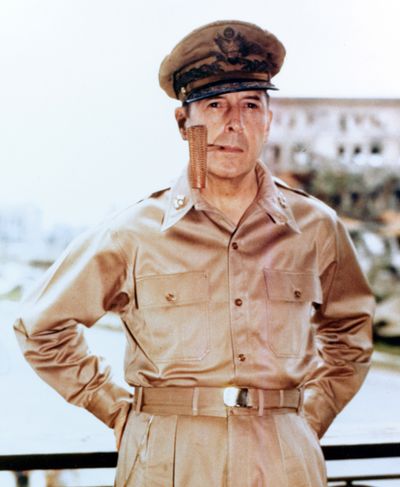
Douglas MacArthur
General · Modern
76.5Total
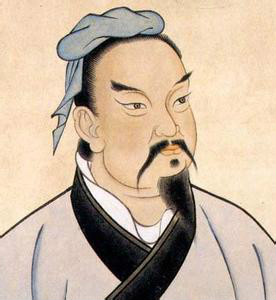
Sun Tzu
General · Ancient
63.2Total
Basic Information
Born
1880
-544
Died
1964
-496
Era
Modern
Ancient
Nationality
United States
China
Occupation
General
General
Civilization
Western
Eastern
Score Comparison
Military (10%)
79.3
70.0
Political (20%)
80.0
26.6
Influence (20%)
78.0
82.0
Legacy (20%)
72.0
91.4
Leadership (15%)
75.5
22.9
Strategy (15%)
75.0
85.0
TOTAL
76.5
63.2
Rankings
🥇
Douglas MacArthurLeader
Mil: 79.3Pol: 80.0Inf: 78.0
76.5
🥈
Sun Tzu
Mil: 70.0Pol: 26.6Inf: 82.0
63.2
+13.3 behind
How This Comparison Works
Algorithm
Each figure is scored on 6 dimensions (0—100 scale) based on structured historical data: Military (10%), Political (20%), Influence (20%), Legacy (20%), Leadership (15%), Strategy (15%). The weighted total produces the final ranking.
Data Sources
Scores are computed from structured sub-indicators in the database. Scale factors adjust for era (Ancient ×0.85, Modern ×1.0) and civilization size (Eastern ×1.05, Other ×0.80) to account for differences in population and military scale.
Maximum 3 Figures
Comparisons are limited to 2—3 figures to ensure readability and statistical meaningfulness.
Error Margins
±5 points per dimension — Sub-scores are derived from historical records with inherent uncertainty. Two figures within 5 points on a dimension should be considered roughly equivalent in that area.
Total Score Accuracy
±3 points overall — The weighted combination of 6 dimensions produces a total score with approximately ±3 points of uncertainty. Differences of less than 3 points are not statistically significant— the figures are effectively tied.
Known Limitations
- Historical records are incomplete and uneven across civilizations
- Figures from oral-tradition societies may be underrepresented
- Occupation labels can misclassify multi-role figures
- Scores measure capability and impact, not moral character
- Quantitative scoring is a comparison tool, not absolute truth
Capability Radar
Military (10%) — Battles & Warfare
Battles
85
30
Win Rate
75
40
Expansion
85
20
Political (20%) — Governance & Reform
Reform
85
10
Diplomacy
75
30
Economy
70
10
Influence (20%) — Cultural & Global Reach
Cultural
70
95
Global
80
95
Legacy (20%) — Historical Impact
Historical
85
98
Longevity
70
99
Leadership (15%) — Power & Stability
Tenure
80
20
Stability
65
10
Strategy (15%) — Tactics & Innovation
Strategy
90
98
Tactics
80
95
Reform
70
85
Expert Analysis
Douglas MacArthur vs Sun Tzu
**The Strategist and the Showman: Sun Tzu and Douglas MacArthur Across the Ages**
In the year 506 BCE, a general whose name would become synonymous with cunning led a small army of Wu against the mighty state of Chu, winning a victory that would echo through Chinese history. Twenty-five centuries later, in 1950, another general, famous for his corncob pipe and theatrical flair, pulled off a breathtaking amphibious assault at Inchon, turning the tide of a war on the Korean Peninsula. Sun Tzu wrote the book on strategy. Douglas MacArthur lived it on a global stage. Yet for all their shared genius for war, their fates could not have been more different. One vanished into legend, his life a whisper of recorded fact; the other burned so brightly that his fall became a cautionary tale for the ages. What drove them, and why did their paths diverge so sharply?
**Origins**
Sun Tzu was born into the chaos of the Spring and Autumn period, a time when China was a patchwork of warring states, each jockeying for supremacy. Little is known of his early life, but the world he inhabited was one of feudal loyalty, ritualized combat, and a desperate search for order. He emerged not from a palace but from the ranks of military thinkers who understood that survival depended on outthinking, not merely out-fighting, one’s enemies. His era demanded discipline and detachment; a general who let emotion rule could lose a kingdom.
Douglas MacArthur, by contrast, was born in 1880 in Little Rock, Arkansas, into a family steeped in American military tradition. His father, Arthur MacArthur, had won the Medal of Honor in the Civil War. From childhood, Douglas was groomed for command. He attended West Point, where he graduated first in his class, and absorbed the swagger of a nation rising to global power. The America of his youth was expansionist, confident, and convinced of its moral purpose. MacArthur inherited that conviction, and it never left him.
**Rise to Power**
Sun Tzu’s ascent is wrapped in parable. According to legend, he impressed King Helü of Wu by drilling 180 concubines into soldiers, executing the king’s two favorite consorts when they laughed at his orders. The lesson was brutal: command demands absolute obedience. The king, recognizing a man who could impose order on chaos, appointed him general. This single story, true or not, encapsulates Sun Tzu’s philosophy—that victory is won before the battle begins, through preparation and psychological control.
MacArthur’s rise was more documented and more dramatic. By World War I, he was a brigadier general, decorated and fearless. In World War II, he became the face of the Pacific theater, a master of island-hopping campaigns. His great turning point came not on a battlefield but in 1942, when he was ordered to leave the Philippines as Japanese forces closed in. His famous promise—“I shall return”—became a talisman. When he did return in 1944, wading ashore at Leyte, it was a carefully staged moment of triumph. MacArthur understood that war was as much about symbols as about soldiers.
**Leadership & Governance**
Sun Tzu’s leadership was cerebral. In *The Art of War*, he wrote, “The supreme art of war is to subdue the enemy without fighting.” He valued intelligence, deception, and knowing when to retreat. His military genius lay in strategy, not in personal bravery; he never commanded a massive army like Napoleon or Alexander. His political wisdom was similarly detached: he advised rulers, but never sought power himself. He was the ultimate technician of war, not its romantic hero.
MacArthur was the opposite. He led from the front, often recklessly. At Inchon in 1950, he overruled his own staff, betting everything on a high-risk landing that succeeded brilliantly. As Supreme Commander for the Allied Powers in Japan, he governed like a proconsul, imposing a new constitution, redistributing land, and reshaping a nation. His political score of 80.0 reflects a man who wielded immense power, but also a man who believed his judgment was infallible. Where Sun Tzu counseled caution, MacArthur courted glory.
**Triumph & Tragedy**
Sun Tzu’s greatest moment was the Battle of Boju in 506 BCE, where Wu forces crushed Chu. Yet his triumph is shadowed by uncertainty: historians debate whether he was even present. His true legacy is a book, not a battle. His tragedy is that he remains a ghost—a name attached to ideas, but a man without a face.
MacArthur’s triumphs were spectacular: the liberation of the Philippines, the surrender of Japan in 1945, the Inchon landing. But his tragedy was equally grand. In 1951, President Harry Truman dismissed him for insubordination after MacArthur publicly demanded an expansion of the Korean War into China. The general who had bested emperors and enemies could not accept that a civilian president had the final say. He returned to the United States to a hero’s welcome, but his career was over. His hubris, not his enemies, had undone him.
**Character & Destiny**
Sun Tzu’s personality is elusive, but his philosophy suggests a man of iron self-control. He wrote, “If you know the enemy and know yourself, you need not fear the result of a hundred battles.” This detachment allowed him to survive and to create a work that outlasted his own era. He was a product of a world that valued harmony and indirectness.
MacArthur was all ego and ambition. He saw himself as a figure of destiny, and for a time, he was. But his character—proud, defiant, convinced of his own righteousness—drove him to challenge the very system he served. In the end, the same traits that made him a great commander made him an impossible subordinate. Sun Tzu would have understood the danger of such pride; MacArthur could not escape it.
**Legacy**
Sun Tzu’s legacy is vast and abstract. *The Art of War* is read by generals, CEOs, and athletes. His influence score of 82.0 and legacy score of 91.4 reflect a man whose ideas transcend time and culture. He is remembered not as a person, but as a principle.
MacArthur’s legacy is more contested. His military score of 79.3 and political score of 80.0 show a man of immense achievement and equally immense controversy. He is remembered for his triumphs, but also for his fall. Statues of him stand in the Philippines and at West Point, but the shadow of his dismissal lingers. He was a great man who could not accept limits.
**Conclusion**
Sun Tzu and MacArthur represent two poles of military genius: the philosopher and the actor, the invisible hand and the spotlight. One wrote the rules; the other broke them. One is remembered for what he taught; the other for what he did and what he became. Standing at the edge of history, we see that true power lies not in commanding armies, but in knowing when to command oneself. Sun Tzu mastered that art. MacArthur, for all his brilliance, never quite did.
Frequently Asked Questions
Who ranks highest among Douglas MacArthur, Sun Tzu?
Our six-dimension data-driven scoring system compares Military, Political, Influence, Legacy, Leadership, and Strategy to determine the ranking among Douglas MacArthur, Sun Tzu. See the full score breakdown on this page.
How accurate is this historical comparison?
Scores are computed from structured historical sub-indicators with era and civilization scale factors. The system has approximately ±3 points of uncertainty per dimension. Differences under 3 points are not statistically significant.
Douglas MacArthur — Complete Timeline
1942 AD
Battle of Bataan and CorregidorWar◆ Major
MacArthur commanded US and Filipino forces defending the Bataan Peninsula and Corregidor Island against Japanese invasion. After months of resistance, he was ordered to evacuate to Australia, leaving his troops who later surrendered and endured the Bataan Death March.
World War IIPacific TheaterDefeat
Impact: regionaltragic
1944 AD
Return to the PhilippinesWar◆ Major
MacArthur led the Allied invasion of Leyte Gulf, fulfilling his promise 'I shall return.' The campaign liberated the Philippines from Japanese occupation, a major strategic victory in the Pacific War.
World War IIPacific TheaterVictory
Impact: regionalconstructive
1945 AD
Surrender of JapanWar
MacArthur, as Supreme Commander for the Allied Powers, accepted Japan's formal surrender aboard USS Missouri in Tokyo Bay. This ended World War II and began the Allied occupation of Japan under his leadership.
World War IIJapanOccupation
Impact: globalconstructive
Occupation of Japan ReformsReform◆ Major
MacArthur oversaw the Allied occupation of Japan, implementing sweeping reforms including a new constitution, land redistribution, women's suffrage, and demilitarization. These changes transformed Japan into a democratic and pacifist state.
JapanPost-WarDemocratization
Impact: globalprogressive
1950 AD
Inchon LandingWar◆ Major
MacArthur planned and executed a bold amphibious assault at Inchon, South Korea, behind North Korean lines. The operation cut North Korean supply lines and recaptured Seoul, turning the tide of the Korean War.
Korean WarAmphibious AssaultVictory
Impact: regionalconstructive
1951 AD
Dismissal by President TrumanPolitical Action◆ Major
President Harry S. Truman relieved MacArthur of command for insubordination after MacArthur publicly advocated for expanding the Korean War into China. The dismissal sparked a political controversy in the US and ended MacArthur's military career.
Korean WarCivil-Military RelationsDismissal
Impact: nationaldestructive
Sun Tzu — Complete Timeline
512 BC
Service as General for King Helü of WuWar◆ Major
Sun Tzu served as a general under King Hel
GeneralWuWar
Impact: regional
506 BC
Battle of BojuWar◆ Major
Sun Tzu is traditionally credited with contributing to the Wu victory at the Battle of Boju, where Wu forces defeated the larger Chu army. The battle demonstrated the application of strategic principles from The Art of War.
BattleWuChu
Impact: regional
500 BC
Composition of The Art of WarCultural
Sun Tzu authored The Art of War, a treatise on military strategy and tactics. The text covers planning, deception, terrain, and leadership, and has been studied for centuries in both military and civilian contexts worldwide.
Military StrategyClassicPhilosophy
Impact: globalconstructive
Similar Comparisons
Comments & Discussion
BambooTactician6/16/2026
Sun Tzu wins on pure efficiency—Inchon was a gamble that worked, but MacArthur's ego inflated every victory. The Art of War teaches that "supreme excellence is breaking resistance without fighting." Sun Tzu would have seen MacArthur's ego-driven push into North Korea and the subsequent Chinese intervention as a catastrophic failure of intelligence and discipline. MacArthur was a showman who won battles; Sun Tzu was a philosopher who won wars. History proves who endures.
旧瓶新酒6/16/2026
别被好莱坞式英雄叙事骗了!麦克阿瑟的仁川登陆与其说是天才,不如说是统计学上的幸运一击。真正研究军事后勤的人都知道,他的补给线拉得太长,最终在清长战役中被志愿军切断。孙子在两千五百年前就警告过“钝兵挫锐”,麦克阿瑟偏偏撞进这个陷阱。一个靠运气成名的演员,也配和写《孙子兵法》的真神比?可笑。
WarlordWatcher6/16/2026
The real distinction is legacy: Sun Tzu's principles govern military academies worldwide, while MacArthur's career ended in disgrace after Truman fired him for insubordination. Sun Tzu understood that "a general who listens to his sovereign's counsel but adapts to conditions is a national treasure." MacArthur ignored both his commander-in-chief and the geopolitical reality of Korea. His Inchon glory was overshadowed by his hubris at the Yalu River. One is studied; the other is studied as a cauti
竹简屠夫6/16/2026
从战术层面看,两人根本不是同一量级。孙子强调“知己知彼”,而麦克阿瑟严重低估了中国介入朝鲜战争的决心和实力。1950年10月,他公然无视情报,声称中国不会出兵,结果让联合国军遭受重大损失。孙子若在世,会嘲笑这位“五星上将”连最基本的敌情分析都没做好。一个靠军神标签包装起来的统帅,怎敢以真正哲学家的标准来度量?