Loading...
Douglas MacArthur vs Mao Zedong
Mao Zedong leads by 13.7 pts · 2 figures compared
…
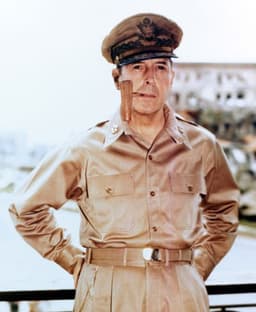
Douglas MacArthur
General · Modern
65.7Total
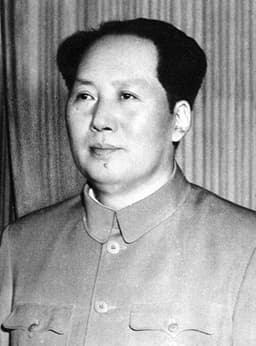
Mao Zedong
Politician · Modern
79.4Total
Basic Information
Born
1880
1893
Died
1964
1976
Era
Modern
Modern
Nationality
United States
China
Occupation
General
Politician
Civilization
Western
Eastern
Score Comparison
Military (10%)
85.0
75.0
Political (20%)
78.0
88.0
Influence (20%)
68.0
85.0
Legacy (20%)
40.0
70.0
Leadership (15%)
78.0
85.0
Strategy (15%)
68.0
72.0
TOTAL
65.7
79.4
Douglas MacArthur — Complete Timeline
1942 AD
Battle of Bataan and CorregidorWar◆ Major
MacArthur commanded US and Filipino forces defending the Bataan Peninsula and Corregidor Island against Japanese invasion. After months of resistance, he was ordered to evacuate to Australia, leaving his troops who later surrendered and endured the Bataan Death March.
World War IIPacific TheaterDefeat
Impact: regionaltragic
1944 AD
Return to the PhilippinesWar◆ Major
MacArthur led the Allied invasion of Leyte Gulf, fulfilling his promise 'I shall return.' The campaign liberated the Philippines from Japanese occupation, a major strategic victory in the Pacific War.
World War IIPacific TheaterVictory
Impact: regionalconstructive
1945 AD
Surrender of JapanWar
MacArthur, as Supreme Commander for the Allied Powers, accepted Japan's formal surrender aboard USS Missouri in Tokyo Bay. This ended World War II and began the Allied occupation of Japan under his leadership.
World War IIJapanOccupation
Impact: globalconstructive
Occupation of Japan ReformsReform◆ Major
MacArthur oversaw the Allied occupation of Japan, implementing sweeping reforms including a new constitution, land redistribution, women's suffrage, and demilitarization. These changes transformed Japan into a democratic and pacifist state.
JapanPost-WarDemocratization
Impact: globalprogressive
1950 AD
Inchon LandingWar◆ Major
MacArthur planned and executed a bold amphibious assault at Inchon, South Korea, behind North Korean lines. The operation cut North Korean supply lines and recaptured Seoul, turning the tide of the Korean War.
Korean WarAmphibious AssaultVictory
Impact: regionalconstructive
1951 AD
Dismissal by President TrumanPolitical Action◆ Major
President Harry S. Truman relieved MacArthur of command for insubordination after MacArthur publicly advocated for expanding the Korean War into China. The dismissal sparked a political controversy in the US and ended MacArthur's military career.
Korean WarCivil-Military RelationsDismissal
Impact: nationaldestructive
Mao Zedong — Complete Timeline
1934 AD
Long MarchWar
Mao Zedong led the Chinese Red Army on a strategic retreat from Nationalist forces, covering approximately 6,000 miles over 370 days. The march solidified Mao's leadership within the Chinese Communist Party and became a foundational myth of the Communist revolution.
Chinese Civil WarCommunist RevolutionRetreat
Impact: national
1949 AD
Proclamation of the People's Republic of ChinaPolitical Action
Mao Zedong declared the founding of the People's Republic of China from Tiananmen Gate in Beijing. This ended the Chinese Civil War and established Communist rule over mainland China, with Mao as Chairman of the Central People's Government.
Founding of PRCCommunist VictoryRevolution
Impact: global
1958 AD
Great Leap ForwardReform◆ Major
Mao launched a campaign to rapidly industrialize China and collectivize agriculture. The policy led to widespread mismanagement, resulting in a famine that caused an estimated 15-45 million deaths between 1959 and 1961.
FamineIndustrializationCollectivization
Impact: nationaldestructive
1960 AD
Sino-Soviet SplitPolitical Action◆ Major
Mao's ideological differences with Soviet leader Nikita Khrushchev led to a breakdown in relations between China and the Soviet Union. The split ended the Sino-Soviet alliance and reshaped global Cold War dynamics, with China pursuing an independent path.
Cold WarIdeological ConflictAlliance Breakdown
Impact: global
1966 AD
Cultural RevolutionPolitical Action
Mao initiated a sociopolitical movement to purge capitalist and traditional elements from Chinese society. The Red Guard youth groups attacked intellectuals and officials, leading to widespread violence, destruction of cultural artifacts, and an estimated 1-2 million deaths.
Political PurgeSocial UpheavalRed Guard
Impact: nationaldestructive
1971 AD
Ping-Pong DiplomacyCultural◆ Major
Mao approved an invitation for the U.S. table tennis team to visit China, initiating a thaw in Sino-American relations. This cultural exchange paved the way for President Nixon's visit to China in 1972 and the eventual normalization of diplomatic ties.
DiplomacyU.S.-China RelationsCultural Exchange
Impact: globalconstructive
Expert Analysis
### The General and the Chairman
On September 15, 1950, Douglas MacArthur watched from the bridge of the USS *Mount McKinley* as his troops stormed the seawall at Inchon, a tidal gamble that would change the course of the Korean War. Half a world away and six years earlier, Mao Zedong had stood in the Yan’an caves, orchestrating a guerrilla war that would eventually bring him to the gates of Beijing. One was a son of the American military aristocracy, the other a peasant librarian turned revolutionary. Their paths never crossed in person, yet their shadows fell across the same century, each man convinced that he alone understood the shape of history.
### Origins
MacArthur was born into the American empire’s frontier. His father, Arthur MacArthur Jr., had won the Medal of Honor at Missionary Ridge during the Civil War, and young Douglas grew up on army posts, breathing the air of command. He entered West Point in 1899, graduating first in his class, a perfectionist who believed that duty, honor, country were not just words but a blood covenant. His world was one of order, hierarchy, and the conviction that American power could reshape the globe.
Mao came from a very different soil. He was born in 1893 in the village of Shaoshan, Hunan Province, the son of a wealthy peasant farmer. His father beat him; his mother prayed to Buddhist gods. Mao escaped into books—Chinese classics, then Western translations of Rousseau and Darwin. He was a rebel from adolescence, and when he arrived at Peking University in 1918, he found not a path to respectability but a world in flames. The old Chinese empire had collapsed; warlords carved up the land; foreign powers dictated terms. Where MacArthur saw an orderly world to be defended, Mao saw a rotten one to be torn down.
### Rise to Power
MacArthur’s rise followed a trajectory of institutional brilliance. He served as aide to President Theodore Roosevelt, helped lead the Rainbow Division in World War I, became the youngest superintendent of West Point, and later, Army Chief of Staff. He was always the star, always the one who could not be ignored. But his true stage arrived in the Pacific during World War II. After the fall of Bataan in 1942, he escaped to Australia, vowing, “I shall return.” That promise became a personal crusade, and when he waded ashore at Leyte in October 1944, he made good on it, camera crews capturing every step.
Mao’s path was far more precarious. He was not the early favorite in the Chinese Communist Party; urban intellectuals dismissed him as a provincial. But the Long March, from 1934 to 1935, transformed him. As the Red Army retreated through mountains and swamps, losing two-thirds of its strength, Mao’s political rivals fell away. By the time the survivors reached Yan’an, he was the undisputed leader. He did not command from a headquarters like MacArthur; he lived among soldiers, wrote poetry about the snow, and argued that China’s future lay not in its cities but in its villages.
### Leadership & Governance
MacArthur governed Japan as a proconsul. From 1945 to 1951, he was the de facto emperor of a defeated nation, and he used that power to impose a constitution, break up zaibatsu conglomerates, and enfranchise women. He was a reformer, but a paternalistic one—he knew what was best, and he did not tolerate dissent. When he faced North Korean forces in 1950, he responded with the Inchon landing, a stroke of audacity that seemed to confirm his own legend.
Mao governed China through revolution, not occupation. He did not write a constitution; he launched campaigns. The Great Leap Forward, beginning in 1958, was an attempt to industrialize China overnight, but it descended into famine, costing tens of millions of lives. The Cultural Revolution, from 1966 onward, shattered the party bureaucracy and turned students against teachers, children against parents. Where MacArthur imposed order, Mao unleashed chaos—and called it liberation.
### Triumph & Tragedy
MacArthur’s greatest moment was also the beginning of his downfall. The Inchon landing was a masterpiece of military daring, but when he crossed the 38th parallel and marched toward the Yalu River, he overreached. Chinese forces poured across the border, driving the UN army back in a freezing rout. MacArthur demanded the right to bomb China, even use nuclear weapons. President Truman, fearing a world war, refused. When MacArthur publicly defied the commander-in-chief, Truman fired him in April 1951. The general returned home to a ticker-tape parade, but his career was over. He had won battles but lost the argument.
Mao’s triumph came in 1949, when he stood on Tiananmen Gate and declared the People’s Republic. But his tragedy was that he could not stop. Having seized power, he could not trust it. He saw enemies everywhere—in the party, in the army, in the minds of ordinary people. His greatest reforms, land redistribution and literacy campaigns, were real achievements. But his later years were consumed by paranoia, and the Cultural Revolution left China’s institutions in ruins. He died in 1976, a revolutionary who had devoured his own children.
### Character & Destiny
MacArthur was theatrical, arrogant, and genuinely brilliant. He believed that history was a stage and he was the lead actor. He wrote his own press releases, designed his own uniforms, and spoke of himself in the third person. That ego made him bold at Inchon but blind on the Yalu. He could not imagine that a peasant army from China could defeat him—and so it did.
Mao was patient, ruthless, and deeply strategic. He could wait years for an opportunity, then strike without mercy. He saw power not as a position but as a process—a constant struggle. He read Chinese history obsessively, learning how dynasties rose and fell. But his very success convinced him that he was infallible, and that conviction led to catastrophe.
### Legacy
MacArthur is remembered as a great general who overstepped. His reforms in Japan endured, but his military reputation is contested. West Point cadets still study Inchon, but they also study the arrogance that followed it. He left no political dynasty, only a name that evokes both admiration and caution.
Mao’s legacy is far larger and more contradictory. He unified China, ended a century of humiliation, and gave his country a sense of purpose. But he also starved it, terrorized it, and closed it off from the world. Today, his portrait still hangs in Tiananmen Square, but the China that has risen since his death—capitalist, globalized, pragmatic—would horrify him. He wanted permanent revolution; he got a stock exchange.
### Conclusion
Two men, two worlds, one century. MacArthur believed that power came from institutions, that order was the highest good. Mao believed that power came from the people, that destruction was the prelude to creation. Both were wrong in their extremes, and both left their marks on a world that neither fully controlled. In the end, they remind us that history is not made by the righteous or the wicked, but by those who act with absolute conviction—and live with the consequences.
Rankings
🥇
Mao ZedongLeader
Mil: 75.0Pol: 88.0Inf: 85.0
79.4
🥈
Douglas MacArthur
Mil: 85.0Pol: 78.0Inf: 68.0
65.7
+13.7 behind
How This Comparison Works
Algorithm
Each figure is scored on 6 dimensions (0—100 scale) based on structured historical data: Military (10%), Political (20%), Influence (20%), Legacy (20%), Leadership (15%), Strategy (15%). The weighted total produces the final ranking.
Data Sources
Scores are computed from structured sub-indicators in the database. Scale factors adjust for era (Ancient ×0.85, Modern ×1.0) and civilization size (Eastern ×1.05, Other ×0.80) to account for differences in population and military scale.
Maximum 3 Figures
Comparisons are limited to 2—3 figures to ensure readability and statistical meaningfulness.
Error Margins
±5 points per dimension — Sub-scores are derived from historical records with inherent uncertainty. Two figures within 5 points on a dimension should be considered roughly equivalent in that area.
Total Score Accuracy
±3 points overall — The weighted combination of 6 dimensions produces a total score with approximately ±3 points of uncertainty. Differences of less than 3 points are not statistically significant— the figures are effectively tied.
Known Limitations
- Historical records are incomplete and uneven across civilizations
- Figures from oral-tradition societies may be underrepresented
- Occupation labels can misclassify multi-role figures
- Scores measure capability and impact, not moral character
- Quantitative scoring is a comparison tool, not absolute truth
Capability Radar
Military (10%) — Battles & Warfare
Battles
85
85
Win Rate
75
80
Expansion
85
85
Political (20%) — Governance & Reform
Reform
85
95
Diplomacy
75
80
Economy
70
70
Influence (20%) — Cultural & Global Reach
Cultural
70
90
Global
80
90
Legacy (20%) — Historical Impact
Historical
85
95
Longevity
70
85
Leadership (15%) — Power & Stability
Tenure
80
95
Stability
65
60
Strategy (15%) — Tactics & Innovation
Strategy
90
85
Tactics
80
75
Reform
70
90
Similar Comparisons
Comments & Discussion
IronWok6/17/2026
Comparing MacArthur's Inchon landing to Mao's Long March is like weighing a surgical strike against a continent-shifting earthquake. Inchon was brilliant, but the scale and endurance of the Long March across 6,000 miles built a revolutionary mythos that still underpins Chinese unity today. MacArthur never created anything that lasted beyond his command.
旗手无言6/17/2026
麦克阿瑟只是美国史上的一个战术天才,而毛泽东是改变世界格局的战略革命家。你把仁川登陆和抗日持久战放在一起?别搞笑了。前者是电影场面,后者是血肉根基。毛把一盘散沙拧成钢筋,麦克阿瑟连朝鲜半岛都没摆平。
QuillAndData6/17/2026
MacArthur's strategic record is overhyped. The Inchon landing was a gamble that worked, but his Philippine campaign after Pearl Harbor was a disaster—he lost 100,000 men and had to flee. Mao's revolutionary base-building in Yan'an and his guerrilla tactics neutralized the Japanese army across a million square miles. Mao's 'people's war' concept outlasted MacArthur's egocentric command style.
金陵夜雨6/17/2026
拿麦帅和主席比,民族立场决定视野。主席是农耕文明面对工业入侵的终极答卷,他的农村包围城市不仅是军事策略,更是人口正义。麦帅的二战辉煌建立在美帝工业后盾上,没了后勤他算啥?主席的游击战可是从零起步。