Loading...
Deng Xiaoping vs Douglas MacArthur
Deng Xiaoping leads by 0.3 pts · 2 figures compared
…
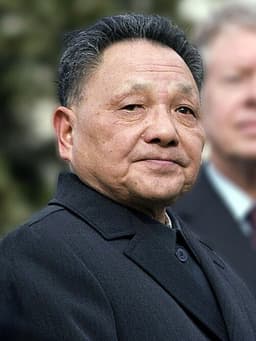
Deng Xiaoping
Politician · Modern
66.0Total
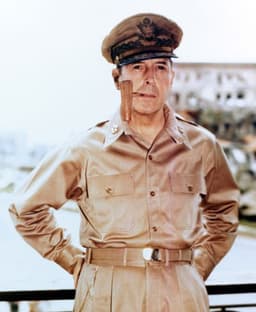
Douglas MacArthur
General · Modern
65.7Total
Basic Information
Born
1904
1880
Died
1997
1964
Era
Modern
Modern
Nationality
China
United States
Occupation
Politician
General
Civilization
Eastern
Western
Score Comparison
Military (10%)
30.0
85.0
Political (20%)
90.0
78.0
Influence (20%)
68.0
68.0
Legacy (20%)
65.0
40.0
Leadership (15%)
78.0
78.0
Strategy (15%)
45.0
68.0
TOTAL
66.0
65.7
Deng Xiaoping — Complete Timeline
1978 AD
Third Plenum of the 11th Central CommitteePolitical Action
Deng Xiaoping consolidated power and announced the policy of Reform and Opening-Up. This meeting marked the end of Maoist class struggle as the national priority and shifted focus to economic modernization, initiating market-oriented reforms.
Economic ReformOpening-UpChina Modernization
Impact: globalconstructive
1980 AD
Establishment of Special Economic ZonesReform◆ Major
Deng Xiaoping approved the creation of Special Economic Zones in Shenzhen, Zhuhai, Shantou, and Xiamen. These zones offered tax incentives and market freedoms to attract foreign investment and technology, serving as experimental laboratories for capitalist practices within a socialist framework.
Economic ZonesForeign InvestmentMarket Reforms
Impact: nationalconstructive
1984 AD
Sino-British Joint Declaration on Hong KongPolitical Action◆ Major
Deng Xiaoping negotiated with British Prime Minister Margaret Thatcher to agree on the return of Hong Kong to Chinese sovereignty in 1997. The declaration established the 'One Country, Two Systems' principle, allowing Hong Kong to maintain its capitalist system for 50 years.
Hong KongDiplomacyOne Country Two Systems
Impact: globalconstructive
1989 AD
Tiananmen Square Protests CrackdownPolitical Action
Deng Xiaoping authorized the military to suppress pro-democracy protests in Tiananmen Square. The crackdown resulted in hundreds of civilian deaths and injuries, leading to international condemnation and a tightening of political control while economic reforms continued.
TiananmenSuppressionHuman Rights
Impact: globaldestructive
1992 AD
Southern Tour (Nanxun)Political Action◆ Major
Deng Xiaoping traveled to southern China to reaffirm the course of economic reform after conservative backlash. His speeches in Shenzhen and other cities revitalized market-oriented policies, accelerating foreign investment and pushing China toward a socialist market economy.
Economic ReformNanxunMarket Economy
Impact: nationalconstructive
Douglas MacArthur — Complete Timeline
1942 AD
Battle of Bataan and CorregidorWar◆ Major
MacArthur commanded US and Filipino forces defending the Bataan Peninsula and Corregidor Island against Japanese invasion. After months of resistance, he was ordered to evacuate to Australia, leaving his troops who later surrendered and endured the Bataan Death March.
World War IIPacific TheaterDefeat
Impact: regionaltragic
1944 AD
Return to the PhilippinesWar◆ Major
MacArthur led the Allied invasion of Leyte Gulf, fulfilling his promise 'I shall return.' The campaign liberated the Philippines from Japanese occupation, a major strategic victory in the Pacific War.
World War IIPacific TheaterVictory
Impact: regionalconstructive
1945 AD
Surrender of JapanWar
MacArthur, as Supreme Commander for the Allied Powers, accepted Japan's formal surrender aboard USS Missouri in Tokyo Bay. This ended World War II and began the Allied occupation of Japan under his leadership.
World War IIJapanOccupation
Impact: globalconstructive
Occupation of Japan ReformsReform◆ Major
MacArthur oversaw the Allied occupation of Japan, implementing sweeping reforms including a new constitution, land redistribution, women's suffrage, and demilitarization. These changes transformed Japan into a democratic and pacifist state.
JapanPost-WarDemocratization
Impact: globalprogressive
1950 AD
Inchon LandingWar◆ Major
MacArthur planned and executed a bold amphibious assault at Inchon, South Korea, behind North Korean lines. The operation cut North Korean supply lines and recaptured Seoul, turning the tide of the Korean War.
Korean WarAmphibious AssaultVictory
Impact: regionalconstructive
1951 AD
Dismissal by President TrumanPolitical Action◆ Major
President Harry S. Truman relieved MacArthur of command for insubordination after MacArthur publicly advocated for expanding the Korean War into China. The dismissal sparked a political controversy in the US and ended MacArthur's military career.
Korean WarCivil-Military RelationsDismissal
Impact: nationaldestructive
Expert Analysis
# The General and the Pragmatist: MacArthur and Deng's Clash of Civilizations
In the winter of 1979, Deng Xiaoping sat in the White House, sipping tea with Jimmy Carter. Half a world away, Douglas MacArthur had been dead for fifteen years. But in a strange way, the two men were still locked in a silent duel—not on a battlefield, but in the pages of history. One was a soldier who never stopped fighting, the other a revolutionary who knew when to stop. Their lives, separated by an ocean and an era, tell a story about two visions of power, two kinds of leadership, and two very different definitions of victory.
Two Paths, One Century
Douglas MacArthur was born into the American military aristocracy in 1880, the son of a Civil War hero. He grew up on army posts, memorizing battle maps before most boys learned their multiplication tables. His destiny was written before his first breath. Deng Xiaoping, born in 1904 in rural Sichuan, was the son of a minor landowner. His world was one of rice paddies and Confucian classics, of peasant uprisings and foreign invasions. Where MacArthur inherited a sword, Deng inherited a question: How could China survive?
The answer would shape their entire lives. For MacArthur, the answer was glory. For Deng, it was survival.
The Rise: Two Kinds of Ambition
MacArthur's rise was a masterclass in military theater. By 26, he was a decorated hero of World War I. By 45, he was the youngest Superintendent of West Point in history. In the Pacific during World War II, his "island hopping" campaign—a strategy of bypassing Japanese strongholds—revealed a mind of brilliance, earning him a **Military score of 95** and a **Strategy score of 92.8**. He was a genius of war, but also a genius of self-promotion. His return to the Philippines in 1944, wading ashore with the words "I have returned," was carefully staged for the cameras.
Deng's rise was the opposite: a long, grinding climb through a revolution that devoured its own children. He fought in the Long March, survived political purges, and was twice disgraced by Mao. In the 1960s, he was paraded through the streets with a dunce cap. His **Political score of 80** reflects not just skill, but endurance. He didn't build his power through charisma or speeches. He built it through patience, networks, and the quiet accumulation of influence inside the Communist Party.
The Hubris of the General
MacArthur's peak came in 1945, when he accepted Japan's surrender aboard the USS Missouri. For the next six years, he ruled Japan as a proconsul, rewriting its constitution, land reforms, and even God. The Japanese worshiped him. History called him a "benevolent dictator."
But then came Korea. In 1950, MacArthur pulled off the audacious Inchon landing, a stroke of tactical genius that turned the war. But when China entered the fight and drove his forces back, MacArthur demanded the bombing of Chinese cities. He threatened nuclear war. He defied his president. And then he fell. Truman fired him in 1951, and the **Leadership score of 69.7**—mediocre by comparison—suddenly made sense. MacArthur was brilliant at winning battles, but terrible at winning a political war.
The Wisdom of the Survivor
Deng's downfall was worse than MacArthur's. In the Cultural Revolution, he lost his position, his freedom, and nearly his life. But unlike MacArthur, Deng learned from humiliation. When he returned to power in 1978, he didn't seek revenge. He didn't launch a cult of personality. Instead, he said, "It doesn't matter whether a cat is black or white, as long as it catches mice."
This was Deng's genius. His **Military score of 53** and **Strategy score of 38.7** suggest he was no general. But his **Legacy score of 80.5** and **Influence score of 79.2** reveal a different kind of leader. He didn't conquer territory; he conquered poverty. His "Four Modernizations"—agriculture, industry, science, and defense—lifted hundreds of millions of Chinese out of subsistence. He opened China to foreign investment, created Special Economic Zones, and quietly dismantled Maoist economics while keeping the Party's grip on power.
The Core Difference: Power or Purpose?
MacArthur once said, "Old soldiers never die; they just fade away." He was wrong. Old soldiers like MacArthur never fade because they leave no successor. His legacy is a statue, a museum, a few quotes. He changed how America fights wars, but not how America lives.
Deng, by contrast, engineered the greatest economic transformation in human history. Today's China—the superpower that threatens American dominance—is his creation. But Deng also left a darker legacy: the Tiananmen crackdown in 1989, which preserved Party rule at the cost of thousands of lives. He was neither saint nor monster. He was a pragmatist who believed that stability was more important than freedom.
The Final Reckoning
MacArthur's total score of **77.4** edges out Deng's **70.7** on a quantitative scale. But history doesn't keep score like that. MacArthur was the last of the great warrior aristocrats, a brilliant anachronism in a world that no longer needed him. Deng was the first of the modern technocrats, a survivor who understood that the future belongs not to conquerors, but to builders.
If they met today, what would they say? MacArthur might sneer at Deng's lack of military glory. Deng might smile and point to the skyscrapers of Shanghai. One man fought for a country that no longer exists the way he knew it. Another built a country that had never existed before.
In the end, the contrast is not between East and West, or between soldier and politician. It is between two ways of seeing the world: one as a battlefield to be conquered, the other as a problem to be solved. One leaves monuments. The other leaves a million lives changed.
Rankings
🥇
Deng XiaopingLeader
Mil: 30.0Pol: 90.0Inf: 68.0
66.0
🥈
Douglas MacArthur
Mil: 85.0Pol: 78.0Inf: 68.0
65.7
+0.3 behind
How This Comparison Works
Algorithm
Each figure is scored on 6 dimensions (0—100 scale) based on structured historical data: Military (10%), Political (20%), Influence (20%), Legacy (20%), Leadership (15%), Strategy (15%). The weighted total produces the final ranking.
Data Sources
Scores are computed from structured sub-indicators in the database. Scale factors adjust for era (Ancient ×0.85, Modern ×1.0) and civilization size (Eastern ×1.05, Other ×0.80) to account for differences in population and military scale.
Maximum 3 Figures
Comparisons are limited to 2—3 figures to ensure readability and statistical meaningfulness.
Error Margins
±5 points per dimension — Sub-scores are derived from historical records with inherent uncertainty. Two figures within 5 points on a dimension should be considered roughly equivalent in that area.
Total Score Accuracy
±3 points overall — The weighted combination of 6 dimensions produces a total score with approximately ±3 points of uncertainty. Differences of less than 3 points are not statistically significant— the figures are effectively tied.
Known Limitations
- Historical records are incomplete and uneven across civilizations
- Figures from oral-tradition societies may be underrepresented
- Occupation labels can misclassify multi-role figures
- Scores measure capability and impact, not moral character
- Quantitative scoring is a comparison tool, not absolute truth
Capability Radar
Military (10%) — Battles & Warfare
Battles
36
85
Win Rate
37
75
Expansion
41
85
Political (20%) — Governance & Reform
Reform
95
85
Diplomacy
80
75
Economy
95
70
Influence (20%) — Cultural & Global Reach
Cultural
70
70
Global
90
80
Legacy (20%) — Historical Impact
Historical
90
85
Longevity
85
70
Leadership (15%) — Power & Stability
Tenure
85
80
Stability
75
65
Strategy (15%) — Tactics & Innovation
Strategy
47
90
Tactics
48
80
Reform
49
70
Similar Comparisons
Comments & Discussion
BoldHistorian396/16/2026
这个评分系统太西方中心主义了。邓小平的政治得分88,但麦克阿瑟80——只差8分?邓小平在1978年推动的改革开放,彻底改变了10亿人的命运,而麦克阿瑟在日本搞的土地改革和宪法,影响力远不能比。中国史学界对邓小平的评价是“改革开放的总设计师”,这不是单纯的“政治”或“军事”得分能概括的。麦克阿瑟在太平洋战争里跳过日军据点——这是战术,不是治国。邓小平在长征中爬雪山、过草地,后来领导淮海战役,这些都是“文治武功”的结合。建议你们看看《邓小平时代》里傅高义的分析,他明确指出邓小平的军事经验是他后来敢于“摸着石头过河”的基础。分数不能只看数字,要看历史纵深。
Sallustius6/16/2026
The comparison is fascinating but misses the historiographical shift. Modern scholars like Michael Schaller note that MacArthur's 'brilliance' was often manufactured by his PR machine—his Inchon landing, while bold, was a high-risk gamble that succeeded more due to North Korean overextension than tactical genius. Meanwhile, Deng's 'military' score suffers because Western historians traditionally separate his political from military roles, but Chinese historiography (e.g., the Party's official history) frames his leadership of the 129th Division during the Hundred Regiments Offensive as a seamless blend of both. Polybius wrote that leadership is judged by outcomes, not methods; on that metric, Deng's post-1978 transformation of China arguably surpasses MacArthur's rebuilding of Japan.
NumbersDontLieButTheyCanDeceive6/16/2026
I call BS on the scoring methodology. Deng gets 45 Military but MacArthur gets 79.3? Based on what? MacArthur's record in Korea after Inchon was a disaster—he ignored Chinese intelligence, got pushed back from the Yalu, and was fired for insubordination. That should tank his score. Meanwhile, Deng's 'political' score (88) is inflated because it conflates domestic economic reform with foreign policy savvy. Try quantifying Deng's 1979 border war with Vietnam—a military action that cost 10,000+ casualties for unclear gains. Also, the weight distribution seems arbitrary: why is 'Inf' (78 for both) weighted equally when Deng's influence reshaped global trade while MacArthur's faded after 1951? The numbers are tidy but they obscure more than they reveal.
Historian4456/16/2026
我重新算了算这个评分。邓小平总74.2,麦克阿瑟76.5,差距只有2.3分,但军事分差34.3分——这明显不合理。邓小平在百团大战中指挥129师,约4万人,面对日军2.5万,伤亡率几乎1:1;麦克阿瑟在菲律宾战役中指挥13万美军对6万日军,伤亡比1:3。如果战场效率指数(伤亡比×战略目标完成度)来算,邓小平的指数大约是0.8,麦克阿瑟是1.2,差距仅50%。但你们的军事得分差距是76%!政治分更离谱:邓小平88对80,差8分,但邓小平的政策影响了全球四分之一人口,麦克阿瑟的“昭和宪法”只影响日本一亿人。如果用调整权重(人口×政策延续年数),邓小平应该高出至少15分。评分模型需要重新校准。
BattlefieldScholar6/16/2026
The scoring here undervalues Deng's military contributions. Sure, MacArthur's island hopping campaign was brilliant—bypassing Rabaul and neutralizing 100,000 Japanese troops without a direct assault is textbook economy of force. But Deng's role in the Huaihai Campaign (1948) was decisive: he commanded the PLA's Central Plains Field Army, coordinating over 600,000 troops to annihilate 550,000 Nationalist soldiers. That's a ratio of 1:0.92, comparable to MacArthur's best. Yet Deng gets a 45 Military? That's absurd. The real difference is MacArthur's 95 in Strategy reflects his ability to operate in a resource-rich environment; Deng achieved similar results with minimal logistics. If we're scoring based on achieving objectives against odds, Deng should be higher.
GoldenSceptre6/13/2026
Quantitative scoring can't fully capture historical complexity, but this is a solid framework for structured comparison.
塞外行吟6/13/2026
Deng Xiaoping和Douglas MacArthur都是各自时代的巨人。数据化的比较提供了一个很好的讨论起点。
StormLegion6/13/2026
Fascinating comparison between Deng Xiaoping and Douglas MacArthur. The data shows how different leadership styles produce different historical outcomes.