Loading...
Dongfang Shuo vs Themistocles
Themistocles leads by 21.8 pts · 2 figures compared
…

Dongfang Shuo
Politician · Ancient
46.6Total
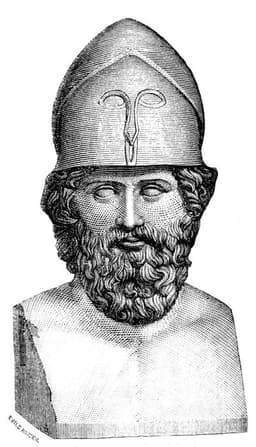
Themistocles
Politician · Ancient
68.4Total
Basic Information
Born
-160
-524
Died
-93
-459
Era
Ancient
Ancient
Nationality
China
Greece
Occupation
Politician
Politician
Civilization
Eastern
Western
Score Comparison
Military (10%)
29.8
80.0
Political (20%)
30.8
72.0
Influence (20%)
56.4
40.0
Legacy (20%)
46.7
80.0
Leadership (15%)
48.4
79.8
Strategy (15%)
60.0
76.0
TOTAL
46.6
68.4
Dongfang Shuo — Complete Timeline
130 BC
Advised Emperor Wu through satireCultural
Dongfang Shuo used humorous stories and riddles to offer political advice to Emperor Wu. His wit allowed him to criticize policies indirectly, influencing decisions on matters like palace construction and military campaigns.
SatireCourt JesterEmperor Wu
Impact: national
Themistocles — Complete Timeline
483 BC
Construction of the Athenian FleetReform◆ Major
Themistocles persuaded the Athenian assembly to use silver from the Laurion mines to build a fleet of 200 triremes. This naval expansion transformed Athens into a major maritime power and was crucial for the victory at Salamis.
AthensNaval PowerReform
Impact: nationalconstructive
480 BC
Battle of SalamisWar
Themistocles commanded the Greek navy against the Persian fleet at Salamis. He lured the Persians into the narrow straits, where the Greek ships destroyed the larger Persian fleet. This victory ended the Persian threat to Greece and preserved Greek independence.
Greco-Persian WarsNaval BattleAthens
Impact: regionalconstructive
472 BC
Ostracism from AthensPolitical Action◆ Major
Themistocles was ostracized by the Athenian assembly, likely due to political rivalries and accusations of arrogance. He went into exile, first to Argos, then to Persia, where he was received by King Artaxerxes I.
AthensExileOstracism
Impact: nationaltragic
465 BC
Service under the Persian KingPolitical Action
After his ostracism, Themistocles fled to Persia and offered his services to King Artaxerxes I. He was granted governorship of Magnesia and other cities in Asia Minor, where he lived until his death. This act was seen as treason by many Athenians.
PersiaExileTreason
Impact: regional
Expert Analysis
Origins
**Dongfang Shuo** (born c. 160 BCE) was a Han dynasty courtier known for his wit and satire. Little is known of his early life, but he rose to prominence at the court of Emperor Wu of Han. He was a polymath, versed in Confucian classics, astronomy, and divination. His background as a scholar-official allowed him to navigate the complex bureaucracy of the Han court.
**Themistocles** (c. 524–459 BCE) was an Athenian politician and general. Born into the Lycomid family, he was not part of the traditional aristocracy. His early life was marked by ambition and a keen understanding of naval strategy. He rose through democratic institutions, becoming archon in 493 BCE. His background in a maritime city-state shaped his focus on naval power.
Rise to Power
Dongfang Shuo gained Emperor Wu's favor through his sharp wit and ability to deliver advice in the form of humorous anecdotes. He became a court jester, but his role was more than entertainment; he used satire to influence policy. For example, he famously criticized the emperor's expensive building projects by telling a story about a foolish man who built a house without foundations. His rise was gradual, relying on his unique style of indirect counsel.
Themistocles rose rapidly by advocating for a strong navy. In 483 BCE, he persuaded the Athenian assembly to use the silver from the Laurion mines to build 200 triremes, a decision that transformed Athens into a naval power. His key turning point was the Battle of Salamis in 480 BCE, where he commanded the Greek navy. By luring the Persian fleet into the narrow straits, he secured a decisive victory. This victory elevated him to the highest echelons of Athenian leadership.
Leadership & Governance
Dongfang Shuo's leadership was indirect. He operated within the constraints of an autocratic system, using humor to point out flaws. His governance style was that of a counselor who could not command but could persuade. He scored 48.4 in leadership, reflecting his limited direct authority. He was known for his eccentric behavior, often pretending to be drunk or mad to make his points. His method was effective in a court where direct criticism was dangerous.
Themistocles was a decisive and visionary leader. He had a clear strategic vision for Athens as a naval empire. His leadership score of 79.8 reflects his ability to mobilize the Athenian populace and command fleets. He was not afraid to challenge established elites, as seen in his naval policy. However, his style was also confrontational, leading to political isolation. He used his influence to push through major reforms, such as fortifying the Piraeus harbor.
Triumph & Tragedy
Dongfang Shuo's greatest triumph was his ability to maintain influence for decades at a court filled with intrigue. He successfully advised Emperor Wu on several policies, though his exact impact is debated. His tragedy was that his indirect methods limited his tangible achievements. He died in obscurity, with no major reforms or lasting political structures attributed to him. His influence score of 56.4 reflects his moderate impact.
Themistocles' triumph was the victory at Salamis, which saved Greece from Persian conquest. He also built the Athenian fleet, which became the foundation of its golden age. His tragedy was his ostracism in 472 BCE, driven by political rivals and his own arrogance. He fled to Persia, where he served the enemy king, a stark fall from grace. He died in exile, possibly by suicide. His legacy score of 80.0 is high, but his personal fate was tragic.
Character & Destiny
Dongfang Shuo was clever, adaptable, and cautious. He understood the limits of his power and used humor as a survival tool. His character allowed him to thrive in a dangerous court, but it also meant he never sought major power. His destiny was to be remembered as a witty courtier, not a transformative leader.
Themistocles was ambitious, strategic, and arrogant. His confidence drove him to achieve great things but also alienated allies. His character led him to overreach, resulting in exile. His destiny was shaped by his inability to compromise. He scored 76.0 in strategy, but his political acumen (72.0) could not save him from his own flaws.
Legacy
Dongfang Shuo's legacy is cultural. He is remembered in Chinese folklore as a symbol of wit and wisdom. His stories are still told, but his political impact was minimal. He did not create institutions or change the course of the Han dynasty. His legacy score of 46.7 reflects this.
Themistocles' legacy is monumental. He transformed Athens into a naval empire and set the stage for the Delian League. His strategy at Salamis is studied in military academies. He is credited with saving Western civilization from Persian domination. His legacy score of 80.0 is well-deserved. His influence on naval warfare and Athenian democracy is enduring.
Conclusion
Themistocles had a greater impact by a clear margin. His total score of 68.4 versus Dongfang Shuo's 46.6 reflects this. Themistocles' actions changed the course of history: without his fleet, Greece might have fallen to Persia. Dongfang Shuo, while clever, operated on a smaller stage and left no lasting political legacy. Themistocles' strategic vision and decisive leadership shaped the ancient world, while Dongfang Shuo's wit merely entertained a single emperor. The data supports Themistocles as the more influential figure.
Rankings
🥇
ThemistoclesLeader
Mil: 80.0Pol: 72.0Inf: 40.0
68.4
🥈
Dongfang Shuo
Mil: 29.8Pol: 30.8Inf: 56.4
46.6
+21.8 behind
How This Comparison Works
Algorithm
Each figure is scored on 6 dimensions (0—100 scale) based on structured historical data: Military (10%), Political (20%), Influence (20%), Legacy (20%), Leadership (15%), Strategy (15%). The weighted total produces the final ranking.
Data Sources
Scores are computed from structured sub-indicators in the database. Scale factors adjust for era (Ancient ×0.85, Modern ×1.0) and civilization size (Eastern ×1.05, Other ×0.80) to account for differences in population and military scale.
Maximum 3 Figures
Comparisons are limited to 2—3 figures to ensure readability and statistical meaningfulness.
Error Margins
±5 points per dimension — Sub-scores are derived from historical records with inherent uncertainty. Two figures within 5 points on a dimension should be considered roughly equivalent in that area.
Total Score Accuracy
±3 points overall — The weighted combination of 6 dimensions produces a total score with approximately ±3 points of uncertainty. Differences of less than 3 points are not statistically significant— the figures are effectively tied.
Known Limitations
- Historical records are incomplete and uneven across civilizations
- Figures from oral-tradition societies may be underrepresented
- Occupation labels can misclassify multi-role figures
- Scores measure capability and impact, not moral character
- Quantitative scoring is a comparison tool, not absolute truth
Capability Radar
Military (10%) — Battles & Warfare
Battles
43
75
Win Rate
46
85
Expansion
44
60
Political (20%) — Governance & Reform
Reform
10
75
Diplomacy
40
85
Economy
10
65
Influence (20%) — Cultural & Global Reach
Cultural
50
70
Global
20
75
Legacy (20%) — Historical Impact
Historical
40
85
Longevity
30
80
Leadership (15%) — Power & Stability
Tenure
30
70
Stability
10
60
Strategy (15%) — Tactics & Innovation
Strategy
51
90
Tactics
53
95
Reform
57
80
Similar Comparisons
Comments & Discussion
No comments yet. Be the first to share your thoughts!