Loading...
Deodoro da Fonseca vs Louis Botha
Louis Botha leads by 12.3 pts · 2 figures compared
…
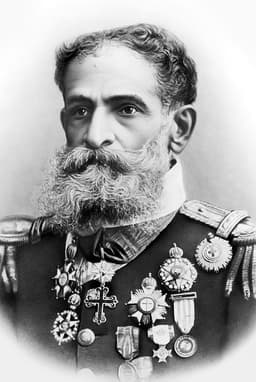
Deodoro da Fonseca
General · Modern
48.8Total
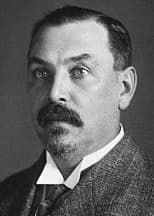
Louis Botha
General · Modern
61.1Total
Basic Information
Born
1827
1862
Died
1892
1919
Era
Modern
Modern
Nationality
Brazil
South Africa
Occupation
General
General
Civilization
Western
Other
Score Comparison
Military (10%)
50.0
61.7
Political (20%)
45.1
70.0
Influence (20%)
54.1
56.7
Legacy (20%)
44.2
50.0
Leadership (15%)
57.6
79.8
Strategy (15%)
38.6
58.0
TOTAL
48.8
61.1
Deodoro da Fonseca — Complete Timeline
1889 AD
Proclamation of the Brazilian RepublicPolitical Action
Deodoro da Fonseca led a military coup that overthrew Emperor Pedro II on November 15, 1889. He proclaimed the Republic of the United States of Brazil, ending 67 years of imperial rule.
CoupRepublic
Impact: globalprogressive
1891 AD
Election as First President of BrazilPolitical Action◆ Major
Deodoro da Fonseca was elected the first President of Brazil by the Constituent Congress on February 25, 1891. He took office under the new republican constitution, but his rule was brief and authoritarian.
ElectionPresidency
Impact: national
Dissolution of the National CongressPolitical Action◆ Major
Facing political opposition, Deodoro da Fonseca dissolved the National Congress on November 3, 1891, and declared a state of siege. This authoritarian act triggered a naval revolt and his eventual resignation.
AuthoritarianismPolitical Crisis
Impact: nationaldestructive
Resignation from the PresidencyPolitical Action◆ Major
Deodoro da Fonseca resigned the presidency on November 23, 1891, after a naval rebellion threatened his government. He handed power to Vice President Floriano Peixoto, ending his 9-month rule.
ResignationPolitical Crisis
Impact: nationaltragic
Louis Botha — Complete Timeline
1899 AD
Battle of ColensoWar◆ Major
Botha commanded Boer forces at the Battle of Colenso during the Second Boer War. His troops repelled a British attack under General Buller, inflicting heavy casualties and boosting Boer morale.
Second Boer WarBattleVictory
Impact: regional
1900 AD
Boer War Guerrilla CommanderWar◆ Major
After the British captured Pretoria, Botha led Boer guerrilla forces in the Transvaal. He conducted hit-and-run attacks against British columns, prolonging the war and becoming a symbol of Afrikaner resistance.
Second Boer WarGuerrillaResistance
Impact: regional
1902 AD
Signed the Treaty of VereenigingPolitical Action
Botha, as a leading Boer general, signed the Treaty of Vereeniging which ended the Second Boer War. The treaty granted the Boer republics self-government under British sovereignty and promised eventual self-rule.
TreatyPeaceSecond Boer War
Impact: regional
1910 AD
First Prime Minister of the Union of South AfricaPolitical Action
Botha became the first Prime Minister of the newly formed Union of South Africa. He led a coalition government that sought to reconcile Afrikaners and English-speaking whites, while implementing segregationist policies.
Prime MinisterUnion of South AfricaFounding
Impact: nationalconstructive
1914 AD
Suppressed the 1914 RebellionWar◆ Major
Botha personally led government forces to suppress the Maritz Rebellion, an Afrikaner uprising against South Africa's entry into World War I. He defeated the rebels, asserting state authority and maintaining support for the British Empire.
RebellionWorld War ISuppression
Impact: national
1915 AD
Conquered German South West AfricaWar◆ Major
Botha commanded South African forces in the invasion and conquest of German South West Africa. The campaign succeeded, and the territory was later administered by South Africa under a League of Nations mandate.
World War IConquestGerman South West Africa
Impact: regional
Expert Analysis
Louis Botha vs Deodoro da Fonseca
# The General Who Became a Nation-Builder, and the General Who Could Not Rule
On a November morning in 1891, two men stood at opposite ends of very different empires. In South Africa, Louis Botha was preparing his Boer commandos for a war that would test the British Empire itself. In Brazil, Deodoro da Fonseca was watching his own presidency crumble, undone not by foreign enemies but by the very republic he had helped create. Both were generals. Both became their nations' first leaders. Yet one died a revered statesman, the other a failed president. What separated them was not talent, but the ability to transform the instincts of war into the arts of peace.
Origins
Louis Botha was born in 1862 on a farm in the Natal colony, the son of Voortrekker pioneers who had fled British rule. The frontier shaped him: self-reliant, laconic, and fiercely independent. He grew up speaking Afrikaans, hunting in the veld, and learning to read the land as a living map. When the British annexed the Transvaal in 1877, Botha was fifteen. The humiliation burned into him. By the time the Boer War erupted in 1899, he was a farmer and a burgher, not a professional soldier—but he had the one quality that mattered most in guerrilla warfare: he knew the ground.
Deodoro da Fonseca was born in 1827 in Alagoas, Brazil, into a military family. His father was a colonel, his uncles were officers, and the army was his inheritance. He studied at the Royal Military Academy in Rio de Janeiro, trained in artillery, and served in the War of the Triple Alliance against Paraguay. Where Botha learned war from the saddle, Fonseca learned it from textbooks and campaigns. He was a man of the institution, not the frontier—and that difference would shape everything.
Rise to Power
Botha’s ascent came through war. At the Battle of Colenso in December 1899, he commanded the Boer forces that shattered a British assault, killing over 1,100 soldiers while losing fewer than 50. It was a stunning victory, but it was defensive. When the British captured Pretoria in 1900, Botha did not surrender. He dispersed his commandos into the veld and waged a guerrilla campaign that frustrated the empire for two more years. His hit-and-run tactics, his ability to melt into the landscape, and his refusal to accept defeat made him the face of Boer resistance.
Fonseca’s rise came through politics. By 1889, Brazil’s monarchy was an anachronism. Emperor Pedro II was old, the abolition of slavery had alienated the planter class, and the army felt humiliated by civilian rule. Fonseca, a respected general with republican sympathies, became the figurehead of a conspiracy. On November 15, 1889, he led a bloodless coup, deposed the emperor, and proclaimed the Republic. He did not conquer power—he inherited it from a collapsing system.
Leadership & Governance
Botha’s genius was his ability to shift from war to politics. In 1902, he signed the Treaty of Vereeniging, ending the Boer War on terms that preserved Afrikaner dignity. He then worked with the British to create the Union of South Africa in 1910, becoming its first prime minister. He governed as a pragmatist, not a revolutionary. He suppressed the Maritz Rebellion in 1914—an Afrikaner uprising against his own government—and personally led the conquest of German South West Africa in 1915, proving that his military skills had not dulled. But he also built a coalition, negotiated with English-speakers, and tried to reconcile Boer and Briton. His political score of 83.0 reflects a man who understood that victory in war meant little if peace could not be sustained.
Fonseca never made that transition. As president, he governed like a general: he expected obedience, not consensus. When the Constituent Congress drafted a constitution he disliked, he bullied them into accepting his version. When opposition mounted, he dissolved Congress on November 3, 1891, and declared a state of siege. It was a military solution to a political problem. Within three weeks, a naval rebellion forced his resignation. He had been president for only nine months. His political score of 77.9 is respectable, but his strategy score of 40.2 tells the real story: he had no plan for governing beyond the use of force.
Triumph & Tragedy
Botha’s greatest moment was the conquest of German South West Africa in 1915. It was a masterful campaign: he led 43,000 men across harsh desert terrain, outflanked the German defenses, and captured Windhoek with minimal casualties. It was also a tragedy. The campaign pulled South Africa deeper into the British orbit, alienated many Afrikaners, and set the stage for the bitter divisions that would later produce apartheid. Botha died in 1919, just as the tensions he had tried to manage were boiling over.
Fonseca’s triumph was the proclamation of the Republic itself. It was a clean, swift, almost bloodless revolution that ended sixty-seven years of monarchy. But his tragedy was that he could not govern it. He resigned in disgrace, retired to private life, and died in 1892, less than a year after leaving office. He had built a republic, but he could not build a government.
Character & Destiny
Botha was patient, pragmatic, and personally brave. He led from the front, whether in battle or in parliament. He understood that leadership meant compromise, not command. Fonseca was proud, impulsive, and authoritarian. He saw opposition as insubordination and dissent as treason. Botha’s destiny was to become a nation-builder; Fonseca’s was to become a warning.
Legacy
Botha is remembered as the father of South Africa—a flawed father, perhaps, who laid the foundations for a union that would later fracture, but a father nonetheless. His face appeared on the old South African currency, and his name is carved into the country’s early history. Fonseca is remembered as a footnote: the first president, the failed president, the general who could not rule. The Brazilian Republic survived him, but it did not remember him fondly.
Conclusion
What separates a founder from a failure? Botha and Fonseca both faced the same challenge: how to turn military authority into political legitimacy. Botha succeeded because he learned that war ends, but governance does not. Fonseca failed because he never stopped giving orders. In the end, the general who commanded guerrillas in the veld understood democracy better than the general who commanded troops in the capital. It is a lesson that transcends nations and centuries: the hardest battle is not the one you win, but the one you build on afterward.
Rankings
🥇
Louis BothaLeader
Mil: 61.7Pol: 70.0Inf: 56.7
61.1
🥈
Deodoro da Fonseca
Mil: 50.0Pol: 45.1Inf: 54.1
48.8
+12.3 behind
How This Comparison Works
Algorithm
Each figure is scored on 6 dimensions (0—100 scale) based on structured historical data: Military (10%), Political (20%), Influence (20%), Legacy (20%), Leadership (15%), Strategy (15%). The weighted total produces the final ranking.
Data Sources
Scores are computed from structured sub-indicators in the database. Scale factors adjust for era (Ancient ×0.85, Modern ×1.0) and civilization size (Eastern ×1.05, Other ×0.80) to account for differences in population and military scale.
Maximum 3 Figures
Comparisons are limited to 2—3 figures to ensure readability and statistical meaningfulness.
Error Margins
±5 points per dimension — Sub-scores are derived from historical records with inherent uncertainty. Two figures within 5 points on a dimension should be considered roughly equivalent in that area.
Total Score Accuracy
±3 points overall — The weighted combination of 6 dimensions produces a total score with approximately ±3 points of uncertainty. Differences of less than 3 points are not statistically significant— the figures are effectively tied.
Known Limitations
- Historical records are incomplete and uneven across civilizations
- Figures from oral-tradition societies may be underrepresented
- Occupation labels can misclassify multi-role figures
- Scores measure capability and impact, not moral character
- Quantitative scoring is a comparison tool, not absolute truth
Capability Radar
Military (10%) — Battles & Warfare
Battles
20
65
Win Rate
25
70
Expansion
10
60
Political (20%) — Governance & Reform
Reform
40
65
Diplomacy
25
70
Economy
15
55
Influence (20%) — Cultural & Global Reach
Cultural
20
45
Global
15
50
Legacy (20%) — Historical Impact
Historical
35
55
Longevity
20
40
Leadership (15%) — Power & Stability
Tenure
30
60
Stability
10
50
Strategy (15%) — Tactics & Innovation
Strategy
25
72
Tactics
20
68
Reform
15
55
Similar Comparisons
Comments & Discussion
Guerra Veld6/16/2026
Louis Botha was the real deal—a guerilla genius who turned the vastness of the veld into his weapon. Fonseca? He couldn't even hold onto a desk. Botha fought the British to a standstill at Colenso and then had the brains to pivot from general to prime minister, building a unified South Africa. Fonseca shut down Congress in a panic and resigned after 9 months. One adapted; the other folded. Easy choice: Botha was a leader with range. Fonseca was a general who never learned a civilian lesson.
数字侦探6/16/2026
咱得扒开数据看真相:Botha领导布尔战争游击阶段足足两年,指挥过上万人的复杂战役,而Fonseca的“军事辉煌”基本体现在19世纪60年代对巴拉圭的边境小冲突。两人当总统的时间更是天壤之别—Botha稳定执政五年并促成联邦,Fonseca九个月就崩盘跑路。这哪是“不同命运”?分明是能力差距赤裸裸的数字化呈现。别拿“早期不稳定”当借口,关键指标一场都没撑住。