Loading...
Denis Sassou-Nguesso vs Shi Dakai
Shi Dakai leads by 10.2 pts · 2 figures compared
…
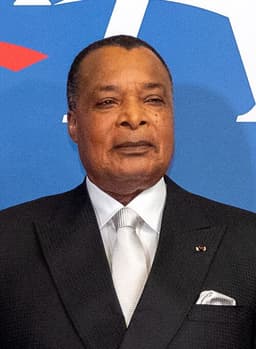
Denis Sassou-Nguesso
General · Modern
49.4Total
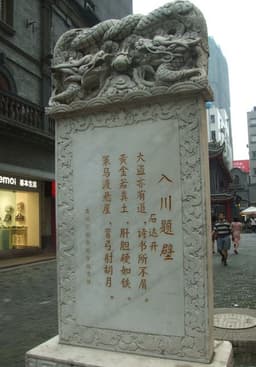
Shi Dakai
General · Modern
59.6Total
Basic Information
Born
1943
1831
Died
—
1863
Era
Modern
Modern
Nationality
Congo Republic
China
Occupation
General
General
Civilization
Other
Eastern
Score Comparison
Military (10%)
10.2
76.0
Political (20%)
68.0
45.0
Influence (20%)
51.8
56.7
Legacy (20%)
46.7
54.0
Leadership (15%)
62.0
72.0
Strategy (15%)
42.3
68.1
TOTAL
49.4
59.6
Denis Sassou-Nguesso — Complete Timeline
1979 AD
Seized Power in CoupPolitical Action
Denis Sassou-Nguesso, a military officer, became President of the People's Republic of the Congo after a coup that ousted President Joachim Yhombi-Opango. He led the Congolese Party of Labour (PCT).
Coup d'étatCongoMilitary Rule
Impact: national
1990 AD
Transition to Multi-Party PoliticsReform◆ Major
Under pressure, Sassou-Nguesso's government introduced multi-party politics, ending the one-party Marxist-Leninist system. A national conference was held in 1991, leading to a transition to civilian rule.
Political ReformDemocracyCongo
Impact: national
1992 AD
Lost Presidential ElectionPolitical Action◆ Major
Sassou-Nguesso lost the 1992 presidential election to Pascal Lissouba. This was the first multi-party election in the country since independence, and Sassou-Nguesso peacefully handed over power.
ElectionDemocracyCongo
Impact: national
1997 AD
Returned to Power via Civil WarWar
Sassou-Nguesso's militia, backed by Angolan troops, captured Brazzaville, overthrowing President Pascal Lissouba. This ended a four-month civil war and returned Sassou-Nguesso to the presidency.
Civil WarCongoPower Struggle
Impact: nationaldestructive
2002 AD
Won Controversial Re-electionsPolitical Action◆ Major
Sassou-Nguesso won the 2002 presidential election with over 89% of the vote. The election was boycotted by major opposition candidates and criticized as neither free nor fair.
ElectionCongoControversy
Impact: national
2015 AD
Constitutional Referendum to Extend TermPolitical Action◆ Major
Sassou-Nguesso's government held a constitutional referendum that removed the age limit and two-term limit for the presidency. The change allowed him to run for re-election in 2016 and potentially remain in power.
Constitutional ReformCongoPower Consolidation
Impact: national
Shi Dakai — Complete Timeline
1851 AD
Jintian UprisingWar◆ Major
Shi Dakai joined the Taiping Rebellion at its inception in Jintian, Guangxi. As a core leader, he helped organize the rebel forces and was appointed Wing King, becoming one of the key military commanders of the Taiping Heavenly Kingdom.
Taiping RebellionUprisingMilitary Command
Impact: national
1854 AD
Battle of XiangtanWar◆ Major
Shi Dakai led Taiping forces to a major victory at Xiangtan, Hunan, defeating Qing imperial troops. This battle secured Taiping control over key territories in the Yangtze River valley and demonstrated his military skill.
Taiping RebellionBattleVictory
Impact: regional
1856 AD
Tianjing IncidentPolitical Action
Shi Dakai returned to Tianjing (Nanjing) after the internal purge of the Eastern King Yang Xiuqing and the murder of the Northern King Wei Changhui. He condemned the violence and was forced to flee, leading to a split in Taiping leadership.
Taiping RebellionInternal ConflictPurge
Impact: nationaltragic
1858 AD
Campaign in Zhejiang and FujianWar
Shi Dakai led a separate Taiping army into Zhejiang and Fujian provinces, capturing several cities. This campaign expanded Taiping influence into southeastern China but also isolated his forces from the main Taiping base.
Taiping RebellionCampaignExpansion
Impact: regional
1863 AD
Battle of Baishui RiverWar◆ Major
Shi Dakai's army was trapped and defeated by Qing forces at the Baishui River in Sichuan. He was captured and executed shortly after, marking the end of his military career and a significant loss for the Taiping cause.
Taiping RebellionBattleDefeatDeath
Impact: nationaltragic
Expert Analysis
Shi Dakai vs Denis Sassou-Nguesso
# The General and the Survivor: Two Paths from the Battlefield to Power
In the summer of 1863, on the banks of the Baishui River in Sichuan, a 32-year-old general knelt in the dust, his hands bound, his army annihilated. Shi Dakai, the Wing King of the Taiping Heavenly Kingdom, had surrendered himself to Qing authorities in a desperate gambit to spare his remaining troops. Within days, he was executed—slowly, by the thousand cuts—his body a testament to the ferocity of a rebellion that had once threatened to topple the Chinese empire.
One hundred and thirty-four years later and half a world away, another general did not kneel. Denis Sassou-Nguesso, then 54, watched from a command post as his militia, reinforced by Angolan tanks, rolled into Brazzaville. Within weeks, he had reclaimed the presidency he had lost five years earlier at the ballot box. He would hold it for decades to come.
Both men were generals. Both seized history by the throat. But their stories diverge like rivers splitting around a mountain—one flowing toward martyrdom, the other toward an endless horizon of power.
Origins
Shi Dakai was born in 1831 into a prosperous Hakka family in Guangxi, southern China. The Qing Dynasty was in its twilight, weakened by opium wars and internal decay. Young Shi was educated in the Confucian classics, but his world was one of famine, corruption, and foreign humiliation. When a failed examination candidate named Hong Xiuquan began preaching a bizarre fusion of Christianity and Chinese millenarianism, Shi found a cause. At twenty, he joined the Jintian Uprising of 1851, committing his life and sword to a movement that promised to establish a "Heavenly Kingdom of Great Peace."
Denis Sassou-Nguesso was born in 1943 in the village of Edou, in what was then French Equatorial Africa. His people were Mbochi, a minority ethnic group from the northern forests. The colonial world was already cracking when he joined the French army as a young man, serving as a paratrooper. He returned to an independent Congo in the 1960s—a country rich in oil but poor in stability, where power changed hands through coups and assassinations. For Sassou-Nguesso, the military was not a calling but a ladder.
Rise to Power
Shi Dakai rose through merit. In the Taiping ranks, he proved himself a commander of astonishing skill. At the Battle of Xiangtan in 1854, he outmaneuvered Qing imperial forces, securing a victory that opened the Yangtze River valley to Taiping expansion. His soldiers called him "the Wing King" for his ability to strike from unexpected directions. But his rise was also a story of survival. When the Taiping capital of Tianjing (Nanjing) descended into fratricidal bloodshed in 1856—the Tianjing Incident—Shi Dakai watched the Eastern King Yang Xiuqing be purged and the brilliant Western King Xiao Chaogui murdered. He alone emerged from the carnage with his reputation intact, a figure of integrity in a movement devouring itself.
Sassou-Nguesso's rise was more direct. In 1979, he led a coup that ousted the existing Marxist regime. At 36, he became president of the People's Republic of the Congo. There was no ideology of heavenly peace, only the cold logic of power. He consolidated control through the single-party system, wrapping himself in the rhetoric of Marxism-Leninism while securing Congo's oil wealth for his inner circle.
Leadership & Governance
As a military commander, Shi Dakai was nearly peerless. His campaign in Zhejiang and Fujian in 1858 demonstrated a strategic vision rare among the Taiping leadership—he could coordinate sieges, manage supply lines, and inspire loyalty in troops who had little reason to hope. But as a political leader, he was outmatched. The Taiping court was a nest of suspicion and intrigue. Hong Xiuquan, increasingly delusional, trusted no one. Shi Dakai chose to leave rather than fight for influence, taking his army on a long march westward—a decision that would ultimately doom him.
Sassou-Nguesso governed differently. He learned early that power in Africa required flexibility. In 1990, when the Soviet Union crumbled and multi-party democracy became the global demand, he did not resist. He introduced political reforms, allowed elections, and even lost the 1992 vote to Pascal Lissouba. But he did not disappear. He retreated, rebuilt his militia, secured Angolan military support, and returned through civil war in 1997. This was not the strategy of a general commanding armies in open battle; it was the strategy of a survivor playing a long game.
Triumph & Tragedy
Shi Dakai's greatest moment came at Xiangtan in 1854, when he defeated a Qing force many times larger than his own. His greatest tragedy was not his execution but the futility of his sacrifice. He surrendered at the Baishui River in 1863 believing the Qing would spare his soldiers. They did not. Thousands were massacred. His death became a parable of misplaced honor.
Sassou-Nguesso's triumph was his return to power in 1997, a feat of political and military calculation. His tragedy is more subtle. He won elections afterward—in 2002 with 89% of the vote, in 2009 and 2016 with similar margins—but each was boycotted by the opposition and condemned by observers. In 2015, he changed the constitution to remove term limits and the age cap. He rules still, a president-for-life in all but name, his country rich in oil but poor in freedom.
Character & Destiny
Shi Dakai was a man of conviction in an age of betrayal. He believed in the Taiping vision—however flawed—and chose death over dishonor. His personality drove him toward the heroic but also the fatal. He could not compromise, could not bend. That is why he is remembered as a tragic hero.
Sassou-Nguesso is a man of pragmatism in an age of ideology. He has no fixed beliefs except in the necessity of holding power. He bends with the wind, changes uniforms, and survives. His personality drives him toward endurance, not greatness. That is why he is still in power.
Legacy
Shi Dakai is remembered in China as a folk hero, a figure of romantic tragedy. Poems and novels celebrate his courage. His military tactics are studied in academies. His legacy is one of failure ennobled by sacrifice.
Sassou-Nguesso's legacy is still being written—by himself, for himself. He has built airports, stadiums, and a new capital city. He has also built a system where no successor is allowed to emerge. When he finally leaves power, whether by death or by force, Congo may find itself as unstable as the day he first seized it.
Conclusion
Two generals. One died young, betrayed by the movement he served, his body broken but his name unsullied. The other grows old in a palace, surrounded by ministers who dare not speak truth, his name on buildings but not in hearts. Shi Dakai lost everything except his honor. Denis Sassou-Nguesso has kept everything except perhaps his soul. History, in its quiet judgment, may decide which was the greater tragedy.
Rankings
🥇
Shi DakaiLeader
Mil: 76.0Pol: 45.0Inf: 56.7
59.6
🥈
Denis Sassou-Nguesso
Mil: 10.2Pol: 68.0Inf: 51.8
49.4
+10.2 behind
How This Comparison Works
Algorithm
Each figure is scored on 6 dimensions (0—100 scale) based on structured historical data: Military (10%), Political (20%), Influence (20%), Legacy (20%), Leadership (15%), Strategy (15%). The weighted total produces the final ranking.
Data Sources
Scores are computed from structured sub-indicators in the database. Scale factors adjust for era (Ancient ×0.85, Modern ×1.0) and civilization size (Eastern ×1.05, Other ×0.80) to account for differences in population and military scale.
Maximum 3 Figures
Comparisons are limited to 2—3 figures to ensure readability and statistical meaningfulness.
Error Margins
±5 points per dimension — Sub-scores are derived from historical records with inherent uncertainty. Two figures within 5 points on a dimension should be considered roughly equivalent in that area.
Total Score Accuracy
±3 points overall — The weighted combination of 6 dimensions produces a total score with approximately ±3 points of uncertainty. Differences of less than 3 points are not statistically significant— the figures are effectively tied.
Known Limitations
- Historical records are incomplete and uneven across civilizations
- Figures from oral-tradition societies may be underrepresented
- Occupation labels can misclassify multi-role figures
- Scores measure capability and impact, not moral character
- Quantitative scoring is a comparison tool, not absolute truth
Capability Radar
Military (10%) — Battles & Warfare
Battles
5
75
Win Rate
5
70
Expansion
5
75
Political (20%) — Governance & Reform
Reform
30
50
Diplomacy
50
45
Economy
30
40
Influence (20%) — Cultural & Global Reach
Cultural
20
55
Global
20
40
Legacy (20%) — Historical Impact
Historical
30
60
Longevity
40
45
Leadership (15%) — Power & Stability
Tenure
70
55
Stability
20
35
Strategy (15%) — Tactics & Innovation
Strategy
5
80
Tactics
5
85
Reform
10
60
Similar Comparisons
Comments & Discussion
TheMartyrMaker6/16/2026
Shi Dakai's surrender is the most overrated act of "nobility" in military history. He wasn't saving his men—he was choosing a dramatic exit over a guerilla campaign that could have actually hurt the Qing. By 1863, the Taiping were doomed anyway, and his thousand cuts execution was just poetic justice for a general who forgot that war isn't about honorable gestures, it's about winning. Compare that to Sassou-Nguesso, who actually understood that power means never kneeling, even if you have to sel
SkepticalSwordsman6/16/2026
数据说萨苏-恩格索执政超40年,但细看经济数据:刚果布的人均GDP从1990年的$1,200涨到2023年的$2,100?通胀和债务把这点增长吃干抹净。石达开死得快,但至少没让百姓饿肚子。这俩货都比不过一个靠谱的统计学家。
EasternSage6/16/2026
What historians miss is that Shi Dakai's Confucian education actually primed him for martyrdom. The whole "sacrifice for loyalty" narrative was baked into his worldview by 1850s Guangxi exam prep. Sassou-Nguesso? He's pure Machiavelli—his coup was textbook: wait for your rivals to fracture, then bring in foreign armor. But here's the twist: in 1997, Sassou used the same tactics the Taiping used—divide and conquer with local militias. Shi's failure wasn't lack of cunning; it was believing the cla
汉学拾荒者6/16/2026
你们都在吹石达开帅,但真实历史里他就是个政治白痴。1861年天京事变后,他带20万人西征,结果被骆秉章用5千人堵在大渡河。为啥?因为他非要等洪水退去再渡河,结果等来清军和李永和叛军夹击。萨苏-恩格索呢?1997年他靠安哥拉坦克翻盘时,我记得很清楚——他提前三个月就贿赂了刚果军队里的排长们。石达开要是会这个,早拿下重庆了。
KidGeneral6/16/2026
Here's the thing nobody admits: Sassou-Nguesso is basically a more successful Shi Dakai. Both started as military commanders in chaotic societies (Taiping vs. Cold War Congo). Both faced existential threats (Qing vs. 1993 election loss). But Sassou learned the key lesson Shi missed: never trust the enemy. Shi surrendered expecting mercy from a dynasty that had just massacred Nian rebels—that's like trusting a cobra. Sassou, meanwhile, kept his own people armed and his international backers paid.