Loading...
Deng Xiaoping vs Yuan Shikai
Deng Xiaoping leads by 6.0 pts · 2 figures compared
…
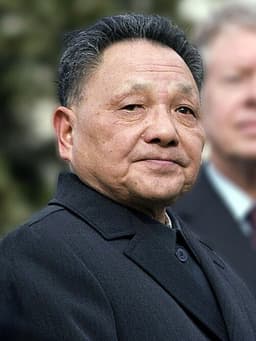
Deng Xiaoping
Politician · Modern
66.0Total
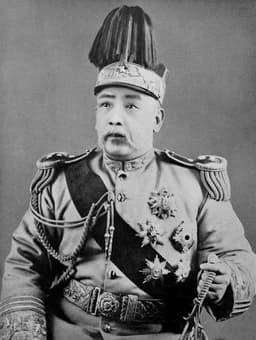
Yuan Shikai
Politician · Modern
60.0Total
Basic Information
Born
1904
1859
Died
1997
1916
Era
Modern
Modern
Nationality
China
China
Occupation
Politician
Politician
Civilization
Eastern
Eastern
Score Comparison
Military (10%)
30.0
45.0
Political (20%)
90.0
72.0
Influence (20%)
68.0
57.2
Legacy (20%)
65.0
54.0
Leadership (15%)
78.0
72.0
Strategy (15%)
45.0
61.2
TOTAL
66.0
60.0
Deng Xiaoping — Complete Timeline
1978 AD
Third Plenum of the 11th Central CommitteePolitical Action
Deng Xiaoping consolidated power and announced the policy of Reform and Opening-Up. This meeting marked the end of Maoist class struggle as the national priority and shifted focus to economic modernization, initiating market-oriented reforms.
Economic ReformOpening-UpChina Modernization
Impact: globalconstructive
1980 AD
Establishment of Special Economic ZonesReform◆ Major
Deng Xiaoping approved the creation of Special Economic Zones in Shenzhen, Zhuhai, Shantou, and Xiamen. These zones offered tax incentives and market freedoms to attract foreign investment and technology, serving as experimental laboratories for capitalist practices within a socialist framework.
Economic ZonesForeign InvestmentMarket Reforms
Impact: nationalconstructive
1984 AD
Sino-British Joint Declaration on Hong KongPolitical Action◆ Major
Deng Xiaoping negotiated with British Prime Minister Margaret Thatcher to agree on the return of Hong Kong to Chinese sovereignty in 1997. The declaration established the 'One Country, Two Systems' principle, allowing Hong Kong to maintain its capitalist system for 50 years.
Hong KongDiplomacyOne Country Two Systems
Impact: globalconstructive
1989 AD
Tiananmen Square Protests CrackdownPolitical Action
Deng Xiaoping authorized the military to suppress pro-democracy protests in Tiananmen Square. The crackdown resulted in hundreds of civilian deaths and injuries, leading to international condemnation and a tightening of political control while economic reforms continued.
TiananmenSuppressionHuman Rights
Impact: globaldestructive
1992 AD
Southern Tour (Nanxun)Political Action◆ Major
Deng Xiaoping traveled to southern China to reaffirm the course of economic reform after conservative backlash. His speeches in Shenzhen and other cities revitalized market-oriented policies, accelerating foreign investment and pushing China toward a socialist market economy.
Economic ReformNanxunMarket Economy
Impact: nationalconstructive
Yuan Shikai — Complete Timeline
1901 AD
Command of the Beiyang ArmyReform◆ Major
Yuan Shikai took command of the Beiyang Army, the most modern military force in late Qing China. He expanded and trained the army, which became the basis for his political power and later dominated Chinese politics.
Military reformBeiyang Army
Impact: national
1912 AD
Appointed First President of the Republic of ChinaPolitical Action
Yuan Shikai became the first president of the Republic of China after negotiating the abdication of the Qing emperor. He used his control of the Beiyang Army to pressure the revolutionary government into accepting his leadership.
PresidencyRepublic of China
Impact: national
1915 AD
Declaration of the Empire of ChinaPolitical Action◆ Major
Yuan Shikai declared himself emperor of the Empire of China, attempting to restore the monarchy. This move sparked widespread opposition from provincial leaders and foreign powers, leading to the collapse of his regime.
Monarchy restorationPolitical crisis
Impact: nationaldestructive
Signing of the Twenty-One DemandsPolitical Action◆ Major
Yuan Shikai accepted most of Japan's Twenty-One Demands, which expanded Japanese influence in China. The agreement granted Japan economic rights in Manchuria and Shandong, and was seen as a national humiliation.
DiplomacyJapanese imperialism
Impact: globaltragic
1916 AD
Death and Collapse of the Beiyang GovernmentPolitical Action◆ Major
Yuan Shikai died of uremia, leaving no clear successor. His death led to the fragmentation of the Beiyang Army into warlord factions, plunging China into a period of civil war and political instability.
Warlord eraPolitical fragmentation
Impact: nationaltragic
Expert Analysis
Yuan Shikai vs Deng Xiaoping
# The Two Founders of Modern China
On a grey September morning in 1915, Yuan Shikai stood before a mirror in the Forbidden City, adjusting the dragon-embroidered robes he had commissioned for his coronation as emperor. Half a continent away, a boy named Deng Xiaoping was learning to read in a village in Sichuan, his world bounded by rice paddies and the distant mountains. Neither could have imagined that their lives would trace the arc of China's modern tragedy—one man reaching for an imperial past, the other building a future that would transform the nation beyond recognition. The question that haunts their parallel stories is this: why did one man's ambition destroy everything he built, while the other's pragmatism created a new China?
Origins
Yuan Shikai was born in 1859 into a world that was already crumbling. The Qing dynasty, ancient and brittle, faced the twin shocks of Western imperialism and internal rebellion. His family were minor gentry in Henan province, and young Yuan grew up watching his father and uncles navigate a system where examination success meant survival. But Yuan was no scholar—he failed the civil service exams twice, a humiliation that would shape his lifelong contempt for traditional literati. Instead, he bought a minor military post, entering the world of soldiers and rifles that would become his true classroom.
Deng Xiaoping, born forty-five years later in 1904, came of age in a China that had already collapsed. The Qing fell when he was seven; warlords carved up the country while he was a teenager. His father, a minor landlord in Sichuan, sent him to France at age sixteen on a work-study program—a decision born of desperation and hope. In Paris, Deng worked in a rubber factory, learned to speak French, and discovered Marxism. Where Yuan learned power from generals and eunuchs, Deng learned it from factory foremen and communist pamphlets.
Rise to Power
Yuan Shikai's ascent was a masterclass in opportunism. In 1901, he took command of the Beiyang Army, the most modern military force in late Qing China. He understood that in an era of gunboats and railways, the man who controlled the guns controlled the state. By 1912, when the Qing emperor was a six-year-old boy, Yuan negotiated the most consequential deal of his life: he would persuade the emperor to abdicate in exchange for becoming president of the new republic. It was a transaction, not a revolution.
Deng Xiaoping's path was slower, more dangerous, and far more ideological. He joined the Communist Party in 1924, survived the Long March, and became a political commissar during the war against Japan. But his rise was repeatedly interrupted—purged during the Cultural Revolution, sent to work in a tractor factory, rehabilitated, purged again. By the time he emerged as paramount leader in 1978, he had learned what Yuan never did: that power in China required patience, not just ambition.
Leadership & Governance
Yuan Shikai governed through the Beiyang Army and a network of personal loyalties. He was a brilliant administrator—his military reforms modernized China's forces, and his economic policies stabilized currency and promoted industry. But his vision was fundamentally backward-looking. When he declared himself emperor in 1915, he was not innovating; he was imitating. The empire he tried to create was a pale copy of the Qing, complete with Confucian rituals and a civil service examination system. His political score of 74.2 reflects genuine ability deployed toward impossible goals.
Deng Xiaoping's leadership was the opposite in every way. He never wanted to be emperor; he wanted to be manager-in-chief. His political score of 88.0 reflects a man who understood that power in modern China meant controlling the economy, not the throne. The Special Economic Zones he established in 1980 were not mere reforms—they were experiments in controlled capitalism, designed to prove that market forces could coexist with party rule. Where Yuan tried to force China into an imperial mold, Deng let China grow into something new.
Triumph & Tragedy
Yuan's greatest moment was also his worst. The Twenty-One Demands of 1915, which granted Japan extensive rights in China, were a pragmatic response to military weakness. But pragmatism without principle is just surrender. The agreement sparked nationwide protests and destroyed his legitimacy. His declaration of empire later that year was a desperate attempt to reclaim authority, but it only unified his enemies. By the time he died of uremia in 1916, the Beiyang Army had already begun to fragment into warlord factions.
Deng's triumphs were economic, not military. His Southern Tour in 1992, when he was eighty-eight years old and semi-retired, reaffirmed reform after a conservative backlash. He visited factories and special zones, talking to workers and managers, demonstrating that power could be exercised through presence rather than proclamation. But his tragedy was Tiananmen Square in 1989. The crackdown he authorized saved the party but stained his legacy. He never apologized, never explained—he simply moved on, building the economy that would make China rich enough to forget.
Character & Destiny
Yuan Shikai was a man of immense talent and profound insecurity. He craved legitimacy but could never earn it, because legitimacy in China required either tradition or revolution, and he offered neither. His personality was that of a warlord who stumbled into statesmanship—brilliant at tactics, hopeless at strategy. He could negotiate a treaty but could not imagine a nation.
Deng Xiaoping was shorter, quieter, and far more dangerous. He famously said, "It doesn't matter whether a cat is black or white, as long as it catches mice." This pragmatism was not philosophy but survival instinct. He had seen ideology destroy China under Mao; he would rebuild it with markets. His character was forged in exile and persecution, teaching him that power must be flexible, not rigid. Where Yuan clung to the past, Deng invented the future.
Legacy
Yuan Shikai is remembered as a traitor and a failed emperor. His name is synonymous with the warlord era that followed his death—a decade of chaos that killed millions. His legacy score of 65.9 reflects a figure who is studied but not honored, analyzed but not admired.
Deng Xiaoping's legacy is the modern Chinese economy—the skyscrapers of Shanghai, the factories of Guangdong, the high-speed trains that cross the country. His legacy score of 75.0 understates his impact, because that impact is still unfolding. He lifted hundreds of millions from poverty, but he also built a system of authoritarian capitalism that remains deeply contested.
Conclusion
The difference between Yuan Shikai and Deng Xiaoping is not talent or ambition—both had those in abundance. It is not even historical context, though that mattered enormously. The difference is vision. Yuan saw power as something to be seized and held; Deng saw it as something to be used and transformed. Yuan wanted to restore a world that was already dead; Deng wanted to build a world that did not yet exist. One man tried to crown himself emperor; the other tried to make China rich enough that no one would want an emperor again. In that choice lies the story of modern China—its failures, its successes, and its unresolved contradictions.
Rankings
🥇
Deng XiaopingLeader
Mil: 30.0Pol: 90.0Inf: 68.0
66.0
🥈
Yuan Shikai
Mil: 45.0Pol: 72.0Inf: 57.2
60.0
+6.0 behind
How This Comparison Works
Algorithm
Each figure is scored on 6 dimensions (0—100 scale) based on structured historical data: Military (10%), Political (20%), Influence (20%), Legacy (20%), Leadership (15%), Strategy (15%). The weighted total produces the final ranking.
Data Sources
Scores are computed from structured sub-indicators in the database. Scale factors adjust for era (Ancient ×0.85, Modern ×1.0) and civilization size (Eastern ×1.05, Other ×0.80) to account for differences in population and military scale.
Maximum 3 Figures
Comparisons are limited to 2—3 figures to ensure readability and statistical meaningfulness.
Error Margins
±5 points per dimension — Sub-scores are derived from historical records with inherent uncertainty. Two figures within 5 points on a dimension should be considered roughly equivalent in that area.
Total Score Accuracy
±3 points overall — The weighted combination of 6 dimensions produces a total score with approximately ±3 points of uncertainty. Differences of less than 3 points are not statistically significant— the figures are effectively tied.
Known Limitations
- Historical records are incomplete and uneven across civilizations
- Figures from oral-tradition societies may be underrepresented
- Occupation labels can misclassify multi-role figures
- Scores measure capability and impact, not moral character
- Quantitative scoring is a comparison tool, not absolute truth
Capability Radar
Military (10%) — Battles & Warfare
Battles
36
45
Win Rate
37
55
Expansion
41
50
Political (20%) — Governance & Reform
Reform
95
55
Diplomacy
80
70
Economy
95
50
Influence (20%) — Cultural & Global Reach
Cultural
70
40
Global
90
35
Legacy (20%) — Historical Impact
Historical
90
65
Longevity
85
40
Leadership (15%) — Power & Stability
Tenure
85
60
Stability
75
30
Strategy (15%) — Tactics & Innovation
Strategy
47
65
Tactics
48
60
Reform
49
80
Similar Comparisons
Comments & Discussion
圆规画史6/16/2026
从数据上看,袁世凯那套君主立宪就是个笑话。他1915年称帝时财政赤字占GDP的3%,而邓公1978年启动改革时直接砍掉三线建设三分之一的预算。袁大头搞洪宪帝制花了6000万银元,邓大人搞特区只用了3000万启动资金。谁更会算账?不是明摆着吗?要把国家当企业管,别当私产造。
Hanzi Handler6/16/2026
Classics scholar here, and I see this as a clash of two Confucian archetypes. Yuan was the corrupt 'sage king'—literati exams he failed, then bought his way into power. Deng was the 'pragmatic minister'—studied abroad in France, worked in factories, understood that Ming dynasty trade policies (tax the coast, starve the interior) were killing China. Yuan quoted the Analects to justify monarchy; Deng quoted "it doesn't matter if the cat is black or white." That's the real revolution: replacing rit
民主灯塔6/16/2026
Yuan Shikai was nothing but a Qing dynasty bureaucrat in Republican drag. He crushed the 1911 revolutionaries, dissolved parliament in 1914, and took foreign loans from Japan (the infamous Twenty-One Demands) to buy himself a crown. Deng, whatever his faults with Tiananmen, at least modernized the economy without selling China's sovereignty. One man's ambition killed democracy; the other's pragmatism killed poverty. Which death do you mourn more?
老支书6/16/2026
咱村老百姓讲实在话:袁世凯修过哪怕一条铁路吗?没有。他只会给士兵发双饷收买人心。邓公搞分田到户,头一年安徽小岗村粮食就增产六倍。什么称帝复辟、什么激进革命,老百姓要的是锅里能见着白米饭。袁大头坟头草都三尺高了,邓公的南方谈话现在还管用呢。谁是真打基础?问问地里庄稼茬子就知道了。
Chronicler65926/16/2026
Military historian here. Yuan Shikai's Beiyang Army was a paper tiger—loyal to silver, not nation. He spent millions modernizing his forces but never built institutional loyalty. Deng inherited a PLA shattered by the Cultural Revolution and did the opposite: cut the military budget 25% in 1980 to fund economic reforms. One man bought cannons; the other bought factories. That's why Deng's legacy stands while Yuan's empire crumbled in 83 days. Leaders who prioritize personal power over systems don