Loading...
Deng Xiaoping vs Nelson Mandela
Deng Xiaoping leads by 9.0 pts · 2 figures compared
…
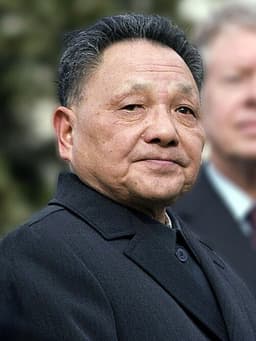
Deng Xiaoping
Politician · Modern
66.0Total
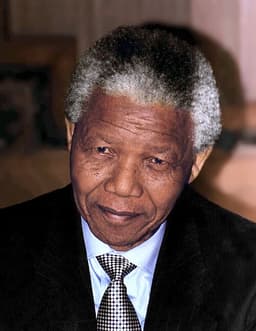
Nelson Mandela
Politician · Modern
57.0Total
Basic Information
Born
1904
1918
Died
1997
2013
Era
Modern
Modern
Nationality
China
South Africa
Occupation
Politician
Politician
Civilization
Eastern
Other
Score Comparison
Military (10%)
30.0
10.0
Political (20%)
90.0
78.0
Influence (20%)
68.0
40.0
Legacy (20%)
65.0
68.0
Leadership (15%)
78.0
82.0
Strategy (15%)
45.0
50.0
TOTAL
66.0
57.0
Deng Xiaoping — Complete Timeline
1978 AD
Third Plenum of the 11th Central CommitteePolitical Action
Deng Xiaoping consolidated power and announced the policy of Reform and Opening-Up. This meeting marked the end of Maoist class struggle as the national priority and shifted focus to economic modernization, initiating market-oriented reforms.
Economic ReformOpening-UpChina Modernization
Impact: globalconstructive
1980 AD
Establishment of Special Economic ZonesReform◆ Major
Deng Xiaoping approved the creation of Special Economic Zones in Shenzhen, Zhuhai, Shantou, and Xiamen. These zones offered tax incentives and market freedoms to attract foreign investment and technology, serving as experimental laboratories for capitalist practices within a socialist framework.
Economic ZonesForeign InvestmentMarket Reforms
Impact: nationalconstructive
1984 AD
Sino-British Joint Declaration on Hong KongPolitical Action◆ Major
Deng Xiaoping negotiated with British Prime Minister Margaret Thatcher to agree on the return of Hong Kong to Chinese sovereignty in 1997. The declaration established the 'One Country, Two Systems' principle, allowing Hong Kong to maintain its capitalist system for 50 years.
Hong KongDiplomacyOne Country Two Systems
Impact: globalconstructive
1989 AD
Tiananmen Square Protests CrackdownPolitical Action
Deng Xiaoping authorized the military to suppress pro-democracy protests in Tiananmen Square. The crackdown resulted in hundreds of civilian deaths and injuries, leading to international condemnation and a tightening of political control while economic reforms continued.
TiananmenSuppressionHuman Rights
Impact: globaldestructive
1992 AD
Southern Tour (Nanxun)Political Action◆ Major
Deng Xiaoping traveled to southern China to reaffirm the course of economic reform after conservative backlash. His speeches in Shenzhen and other cities revitalized market-oriented policies, accelerating foreign investment and pushing China toward a socialist market economy.
Economic ReformNanxunMarket Economy
Impact: nationalconstructive
Nelson Mandela — Complete Timeline
1964 AD
Rivonia TrialPolitical Action
Nelson Mandela and other anti-apartheid leaders were tried for sabotage and conspiracy. Mandela was sentenced to life imprisonment, delivering a speech from the dock that became a rallying cry against apartheid. The trial drew international attention to the anti-apartheid struggle.
Impact: global
1990 AD
Release from PrisonPolitical Action
After 27 years of imprisonment, Mandela was released from Victor Verster Prison by President F.W. de Klerk. His release was a pivotal moment in South Africa's transition from apartheid to multiracial democracy, leading to negotiations for a new constitution.
Impact: globalprogressive
1993 AD
Awarding of the Nobel Peace PrizeCultural◆ Major
Mandela and F.W. de Klerk were jointly awarded the Nobel Peace Prize for their roles in ending apartheid and laying the foundations for a democratic South Africa. The award recognized their peaceful transition and commitment to reconciliation.
Impact: globalprogressive
1994 AD
Inauguration as President of South AfricaPolitical Action
Mandela was inaugurated as South Africa's first Black president after the country's first fully democratic elections. His presidency focused on national reconciliation, establishing the Truth and Reconciliation Commission, and dismantling the legacy of apartheid.
Impact: globalprogressive
Expert Analysis
Nelson Mandela vs Deng Xiaoping
The Prisoner and the Pragmatist
In 1990, as Nelson Mandela walked free from Victor Verster Prison after twenty-seven years, the world held its breath. Half a world away, Deng Xiaoping, then eighty-five, was watching China’s experiment with capitalism unfold from behind the walls of Beijing’s leadership compound. One man had spent nearly three decades in a cell; the other had spent nearly three decades in power. Both would reshape their nations. But they began from radically different places—and ended in radically different ways.
Origins
Mandela was born in 1918 into the Thembu royal family of South Africa’s Eastern Cape. He was raised in a world of cattle and custom, where elders settled disputes under acacia trees. But colonial law had already shattered that world. Mandela studied law, joined the African National Congress, and became a voice for those the system had rendered invisible. His era was one of apartheid’s hardening: the 1948 election brought the National Party to power, and racial segregation became a brutal, codified machine.
Deng Xiaoping was born in 1904 in Sichuan province, China, during the dying days of the Qing dynasty. His father was a minor landlord, but the world around him was collapsing into warlord chaos and foreign humiliation. Deng went to France as a teenage worker-student, where he met Chinese communists and learned the mechanics of revolution. His era was one of war, famine, and ideological extremes: the Long March, the Japanese invasion, and Mao’s catastrophic Great Leap Forward.
Mandela came of age in a system that excluded him by race. Deng came of age in a system that consumed him by ideology. One sought to tear down a wall; the other, to rebuild a house.
Rise to Power
Mandela entered history through the courtroom. In 1964, at the Rivonia Trial, he stood accused of sabotage and conspiracy. His speech from the dock—declaring himself “prepared to die” for a democratic South Africa—turned a trial into a manifesto. He was sentenced to life imprisonment. For twenty-seven years, he became a symbol precisely because he was silenced. His rise was not a climb but a waiting.
Deng rose through the ranks of the Chinese Communist Party, surviving purges that destroyed his comrades. He was purged twice during the Cultural Revolution, sent to work in a tractor factory in Jiangxi. But unlike Mandela, Deng was never imprisoned in a conventional sense—he was sidelined, humiliated, and then recalled. When Mao died in 1976 and the Gang of Four fell, Deng outmaneuvered his rivals. By 1978, at the Third Plenum of the 11th Central Committee, he consolidated power and announced Reform and Opening-Up.
Mandela’s path was moral witness. Deng’s was bureaucratic survival. One could afford to be patient because he had no other choice. The other seized the moment because he knew time was short.
Leadership & Governance
Mandela governed with a philosophy of reconciliation. As president from 1994 to 1999, he invited his former jailers to his inauguration, wore the Springbok rugby jersey of the white Afrikaner team, and created the Truth and Reconciliation Commission. His military score is 10—not because he was a warrior, but because he understood that peace required the defeat of no one. His leadership score of 85 reflects a man who led by forgiving.
Deng governed with a philosophy of results. He did not seek reconciliation with the ghosts of Maoism; he sought to bury them under concrete and steel. In 1980, he established Special Economic Zones in Shenzhen and other coastal cities, inviting foreign capital into a country that had once denounced it as imperialist. His strategy score of 65 reflects a pragmatist who tested reforms before scaling them. He famously said, “It doesn’t matter if a cat is black or white, as long as it catches mice.”
Both were reformers, but Mandela reformed hearts while Deng reformed markets. Mandela’s revolution was legal and public; Deng’s was economic and quiet. One sought to heal a wounded nation; the other sought to awaken a sleeping giant.
Triumph & Tragedy
Mandela’s greatest triumph was the 1994 election, when South Africans of all colors voted for the first time. His greatest tragedy was that the apartheid system had left behind a legacy of inequality that no single presidency could fix. He stepped down after one term, a rare voluntary exit in African politics.
Deng’s greatest triumph was the economic transformation of China. By the time of his Southern Tour in 1992, when he traveled to Guangdong and Shenzhen to reaffirm reform after conservative backlash, hundreds of millions of Chinese had been lifted from poverty. His greatest tragedy was the 1989 Tiananmen Square crackdown, which he authorized. It saved the regime but shattered the hope of political liberalization. Deng chose stability over freedom, and China has lived with that choice ever since.
Mandela’s tragedy was incomplete justice. Deng’s tragedy was the price of order.
Character & Destiny
Mandela was a man of enormous personal dignity. He forgave his captors not because he was saintly but because he understood that bitterness would destroy the future. He was strategic in his magnanimity. Deng was a man of icy realism. He had seen too many idealists die to trust ideology. He once said, “Practice is the sole criterion for truth.” Both were shaped by their suffering: Mandela’s prison taught him patience; Deng’s purges taught him caution.
But their destinies diverged because their nations’ needs diverged. South Africa needed a healer. China needed a builder. Mandela gave the world a moral lesson. Deng gave China a material one.
Legacy
Mandela is remembered as a global icon of forgiveness and human rights. His legacy score of 78 reflects a man whose name has become synonymous with the struggle for justice, though his domestic achievements remain contested by those who feel economic apartheid never truly ended.
Deng is remembered as the architect of modern China. His legacy score of 75 reflects a man who transformed a poor, isolated nation into an economic superpower—but at the cost of political repression. His reforms endure, but the Tiananmen crackdown remains a wound that will not heal.
One man’s legacy is a moral beacon. The other’s is a material miracle with a shadow.
Conclusion
Standing at the edge of history, it is tempting to ask who was greater. But the question misses the point. Mandela and Deng were not rivals; they were answers to different questions. Mandela asked: How do you heal a broken society? Deng asked: How do you lift a billion people out of poverty? Both succeeded. Both failed. Both left behind nations that are still wrestling with the consequences of their choices.
What remains is the lesson that leadership is not a formula but a response to circumstance. Mandela’s prison became his pulpit. Deng’s factory became his laboratory. And the world is still learning from both.
Rankings
🥇
Deng XiaopingLeader
Mil: 30.0Pol: 90.0Inf: 68.0
66.0
🥈
Nelson Mandela
Mil: 10.0Pol: 78.0Inf: 40.0
57.0
+9.0 behind
How This Comparison Works
Algorithm
Each figure is scored on 6 dimensions (0—100 scale) based on structured historical data: Military (10%), Political (20%), Influence (20%), Legacy (20%), Leadership (15%), Strategy (15%). The weighted total produces the final ranking.
Data Sources
Scores are computed from structured sub-indicators in the database. Scale factors adjust for era (Ancient ×0.85, Modern ×1.0) and civilization size (Eastern ×1.05, Other ×0.80) to account for differences in population and military scale.
Maximum 3 Figures
Comparisons are limited to 2—3 figures to ensure readability and statistical meaningfulness.
Error Margins
±5 points per dimension — Sub-scores are derived from historical records with inherent uncertainty. Two figures within 5 points on a dimension should be considered roughly equivalent in that area.
Total Score Accuracy
±3 points overall — The weighted combination of 6 dimensions produces a total score with approximately ±3 points of uncertainty. Differences of less than 3 points are not statistically significant— the figures are effectively tied.
Known Limitations
- Historical records are incomplete and uneven across civilizations
- Figures from oral-tradition societies may be underrepresented
- Occupation labels can misclassify multi-role figures
- Scores measure capability and impact, not moral character
- Quantitative scoring is a comparison tool, not absolute truth
Capability Radar
Military (10%) — Battles & Warfare
Battles
36
0
Win Rate
37
7
Expansion
41
9
Political (20%) — Governance & Reform
Reform
95
95
Diplomacy
80
95
Economy
95
60
Influence (20%) — Cultural & Global Reach
Cultural
70
85
Global
90
90
Legacy (20%) — Historical Impact
Historical
90
90
Longevity
85
80
Leadership (15%) — Power & Stability
Tenure
85
60
Stability
75
80
Strategy (15%) — Tactics & Innovation
Strategy
47
8
Tactics
48
12
Reform
49
17
Similar Comparisons
Comments & Discussion
革命老农6/16/2026
论解放生产力,小平同志的“黑猫白猫”理论比曼德拉的真相与和解委员会实在多了。曼德拉把南非从种族隔离拉出来,可三十年后经济还是被工会和国有资本拖垮。邓公1978年搞家庭联产承包,农民立马吃饱饭;1980年设特区,深圳从渔村变都市。一个去殖民化,一个去意识形态化——后者更能摆脱贫穷。
TruthTeller_SA6/16/2026
Stop romanticizing Mandela as a saint. He cosigned the arms deal with China in 1991 that armed the PLA during Tiananmen's aftermath. Deng's pragmatism wasn't moral—it was brutal efficiency. Mandela's ANC let corruption fester while he smiled for Nobel photos. Deng at least admitted "practice is the sole criterion for truth," not "let's form another commission." Give me the man who built Shenzhen over the one who built monuments to himself.
数据捕手6/16/2026
别拿“领袖光环”糊弄人。曼德拉1994年上任时,南非GDP增速是1.4%,失业率23%;2013年他去世时,增速2.2%,失业率25%——跟没变差不多。邓公1978年接手时中国GDP是1500亿美元,1992年南方谈话后直接冲到4800亿,平均增速9.5%。数字不会撒谎,邓的市场经济打了曼德拉的和解牌十条街。
ClassicsChad6/16/2026
Comparing Mandela to Deng is like comparing Socrates to Machiavelli. Mandela was the moral philosopher—his prison letters (published as *Conversations with Myself*) show a man wrestling with universal justice, not just African oppression. Deng was the cold strategist, quoting Liu Shaoqi in one hand while purging him with the other. Mandela gave South Africa a constitution; Deng gave China a GDP. Which legacy lasts longer? Ask the Uyghurs in Xinjiang.
历史辩证人6/16/2026
说实话,这俩根本不是同量级。曼德拉在狱中写《漫长自由路》时,邓公已经用“一国两制”吞下香港,用对越自卫反击战打肿苏联的嘴脸。曼德拉的解放靠国际制裁和舆论,邓的改革开放靠的是自己摸石头过河——包括1989年那场血。一个是道德领袖的剧本,一个是权力棋手的残局。别强行并列了。