Loading...
Deng Xiaoping vs Franklin D. Roosevelt
Franklin D. Roosevelt leads by 5.0 pts · 2 figures compared
…
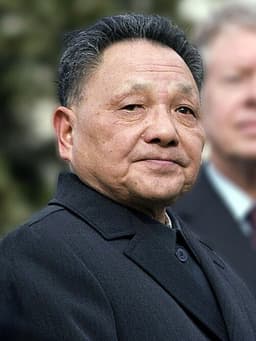
Deng Xiaoping
Politician · Modern
66.0Total
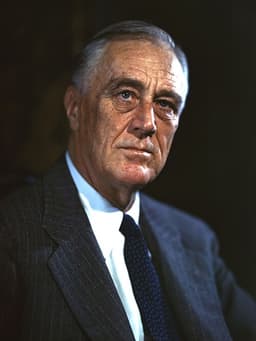
Franklin D. Roosevelt
Politician · Modern
71.0Total
Basic Information
Born
1904
1882
Died
1997
1945
Era
Modern
Modern
Nationality
China
United States
Occupation
Politician
Politician
Civilization
Eastern
Western
Score Comparison
Military (10%)
30.0
45.0
Political (20%)
90.0
85.0
Influence (20%)
68.0
75.0
Legacy (20%)
65.0
65.0
Leadership (15%)
78.0
85.0
Strategy (15%)
45.0
60.0
TOTAL
66.0
71.0
Deng Xiaoping — Complete Timeline
1978 AD
Third Plenum of the 11th Central CommitteePolitical Action
Deng Xiaoping consolidated power and announced the policy of Reform and Opening-Up. This meeting marked the end of Maoist class struggle as the national priority and shifted focus to economic modernization, initiating market-oriented reforms.
Economic ReformOpening-UpChina Modernization
Impact: globalconstructive
1980 AD
Establishment of Special Economic ZonesReform◆ Major
Deng Xiaoping approved the creation of Special Economic Zones in Shenzhen, Zhuhai, Shantou, and Xiamen. These zones offered tax incentives and market freedoms to attract foreign investment and technology, serving as experimental laboratories for capitalist practices within a socialist framework.
Economic ZonesForeign InvestmentMarket Reforms
Impact: nationalconstructive
1984 AD
Sino-British Joint Declaration on Hong KongPolitical Action◆ Major
Deng Xiaoping negotiated with British Prime Minister Margaret Thatcher to agree on the return of Hong Kong to Chinese sovereignty in 1997. The declaration established the 'One Country, Two Systems' principle, allowing Hong Kong to maintain its capitalist system for 50 years.
Hong KongDiplomacyOne Country Two Systems
Impact: globalconstructive
1989 AD
Tiananmen Square Protests CrackdownPolitical Action
Deng Xiaoping authorized the military to suppress pro-democracy protests in Tiananmen Square. The crackdown resulted in hundreds of civilian deaths and injuries, leading to international condemnation and a tightening of political control while economic reforms continued.
TiananmenSuppressionHuman Rights
Impact: globaldestructive
1992 AD
Southern Tour (Nanxun)Political Action◆ Major
Deng Xiaoping traveled to southern China to reaffirm the course of economic reform after conservative backlash. His speeches in Shenzhen and other cities revitalized market-oriented policies, accelerating foreign investment and pushing China toward a socialist market economy.
Economic ReformNanxunMarket Economy
Impact: nationalconstructive
Franklin D. Roosevelt — Complete Timeline
1933 AD
Inaugurated as 32nd PresidentOther◆ Major
Franklin D. Roosevelt was inaugurated as President of the United States on March 4, 1933, during the Great Depression. His inaugural address declared 'the only thing we have to fear is fear itself,' and he immediately called Congress into special session to address the banking crisis.
Great DepressionPresidencyInauguration
Impact: national
Enacted the New DealOther◆ Major
Roosevelt launched the New Deal in 1933, a series of federal programs including the Civilian Conservation Corps, the Agricultural Adjustment Act, and the Tennessee Valley Authority. These measures aimed to provide relief, recovery, and reform during the Great Depression, fundamentally expanding the role of the federal government.
Great DepressionEconomic PolicySocial Reform
Impact: nationalconstructive
1935 AD
Signed the Social Security ActOther◆ Major
Roosevelt signed the Social Security Act into law on August 14, 1935, establishing a federal system of old-age pensions, unemployment insurance, and aid for dependent children. This created the modern American welfare state and provided a safety net for millions of citizens.
Social WelfareLegislationNew Deal
Impact: nationalconstructive
1941 AD
Lend-Lease ActOther◆ Major
Roosevelt signed the Lend-Lease Act on March 11, 1941, authorizing the transfer of military equipment and supplies to Allied nations, particularly Britain and the Soviet Union. This program provided critical material support to countries fighting the Axis powers before U.S. entry into World War II.
World War IIForeign PolicyMilitary Aid
Impact: globalconstructive
Declaration of War on JapanPolitical Action◆ Major
Following the Japanese attack on Pearl Harbor on December 7, 1941, Roosevelt delivered his 'Day of Infamy' speech to Congress the next day, requesting a declaration of war. Congress approved the declaration, bringing the United States into World War II.
World War IIPearl HarborDeclaration of War
Impact: globaldestructive
1942 AD
Executive Order 9066Other◆ Major
Roosevelt signed Executive Order 9066 on February 19, 1942, authorizing the forced relocation and internment of Japanese Americans living on the West Coast. Over 110,000 people, mostly U.S. citizens, were incarcerated in camps for the duration of the war, a decision later widely condemned as a violation of civil rights.
World War IICivil RightsInternment
Impact: nationaldestructive
1944 AD
Elected to Fourth TermOther◆ Major
Roosevelt was elected to an unprecedented fourth term as president in November 1944, defeating Republican Thomas E. Dewey. This election occurred during the final stages of World War II, and Roosevelt's continued leadership ensured stability in the war effort and post-war planning.
PresidencyElectionWorld War II
Impact: national
1945 AD
Yalta ConferenceOther◆ Major
Roosevelt met with Winston Churchill and Joseph Stalin at the Yalta Conference in February 1945 to discuss post-war Europe. Agreements included the division of Germany, Soviet entry into the war against Japan, and the creation of the United Nations, shaping the post-war world order.
World War IIDiplomacyPost-War Planning
Impact: global
Expert Analysis
Franklin D. Roosevelt vs Deng Xiaoping
# The Pragmatist and the Patrician
In the winter of 1933, as Franklin Delano Roosevelt took the oath of office on a chilly March day in Washington, one in four Americans was out of work, banks were shuttered from coast to coast, and the very idea of democracy seemed to be unraveling. Half a world away and four decades later, in the autumn of 1978, Deng Xiaoping stood before the Third Plenum of the 11th Central Committee in Beijing, a nation still reeling from the Cultural Revolution, its economy in ruins, its people hungry. Two men, two crises, two civilizations. Yet both would reshape not only their nations but the entire trajectory of the twentieth century. What drove them, and why did their paths diverge so dramatically?
Origins
Franklin Delano Roosevelt was born into the American aristocracy in 1882, the only child of a wealthy Hudson Valley family. His upbringing was one of privilege—private tutors, summers in Europe, a Harvard education. He was a patrician who never knew want, yet he possessed a peculiar empathy for the suffering of others, perhaps forged in the crucible of his own later struggle with polio. The Great Depression, which began in 1929, was not merely an economic calamity; it was a crisis of faith in capitalism itself. Roosevelt inherited a nation where breadlines stretched for blocks and farmers burned crops they could not sell.
Deng Xiaoping, born in 1904 in Guang'an, Sichuan, came from a modest landowning family, but his world was one of chaos—the collapse of the Qing dynasty, warlord violence, foreign humiliation. He left for France at sixteen as part of a work-study program, where he labored in factories and discovered Marxism. His was a life shaped by revolution, war, and the brutal discipline of Mao Zedong's China. By the time he emerged as paramount leader in the late 1970s, Deng had been purged twice, his son permanently disabled by Red Guards during the Cultural Revolution. He understood suffering not from observation but from bone-deep experience.
Rise to Power
Roosevelt's ascent was almost predestined. He served as Assistant Secretary of the Navy under Woodrow Wilson, then ran for Vice President in 1920. Stricken by polio in 1921, he spent years fighting to regain the use of his legs—a battle that forged an iron will beneath his genial smile. He won the governorship of New York in 1928, and by 1932, as the Depression deepened, the nation turned to him. His rise was a matter of timing and charisma; he offered a "New Deal" when the old deal had failed.
Deng's rise was far more treacherous. A veteran of the Long March and a key figure in the Communist victory, he fell from favor during the Cultural Revolution, denounced as a "capitalist roader." He was sent to work in a tractor factory in Jiangxi. His return to power after Mao's death in 1976 was a masterclass in political survival. By 1978, at the Third Plenum, Deng outmaneuvered Mao's chosen successor, Hua Guofeng, and declared that "practice is the sole criterion for truth." He did not seek to destroy the party; he sought to redirect it.
Leadership & Governance
Roosevelt governed through what he called "bold, persistent experimentation." His New Deal was not a single ideology but a patchwork of programs—the Works Progress Administration, Social Security, the Tennessee Valley Authority—designed to put people to work and restore faith. He was a master of rhetoric, his "fireside chats" calming a terrified nation. His political score of 85 reflects his genius for coalition-building, even as his military score of 60 reveals that World War II was a conflict he managed rather than commanded. His strategy score of 70 suggests a man who improvised brilliantly but lacked a grand blueprint.
Deng governed through pragmatic ruthlessness. He dismantled Mao's communes, opened China to foreign investment, and created Special Economic Zones in 1980—Shenzhen, Zhuhai, Shantou, and Xiamen—where capitalism could be tested in controlled laboratories. "It doesn't matter whether a cat is black or white, as long as it catches mice," he famously said. His political score of 88 is higher than Roosevelt's, but it came at a cost. The 1989 Tiananmen Square crackdown, which Deng authorized, revealed the iron fist inside the velvet glove of reform. He was a man who could lift hundreds of millions from poverty while crushing dissent without hesitation.
Triumph & Tragedy
Roosevelt's greatest triumph was the defeat of Nazi Germany and Imperial Japan, a victory that cemented American global dominance. His greatest tragedy was perhaps his own health—he died in April 1945, just weeks before victory in Europe, never seeing the peace he had helped build. The New Deal, meanwhile, transformed American society, but the Depression only truly ended with wartime production.
Deng's triumph was the economic transformation of China. By the time of his Southern Tour in 1992, when he traveled to Shenzhen and other coastal cities to reassert reform after conservative backlash, China's GDP was soaring. Hundreds of millions escaped subsistence poverty. His tragedy was the Tiananmen Square crackdown in 1989, a moment that stained his legacy and revealed the limits of his liberalization. He opened China's economy but never its politics.
Character & Destiny
Roosevelt was a man of charm and calculation, a patrician who loved power but wielded it with a light touch. He was buoyant, even in crisis. His polio made him empathetic but also secretive; he rarely revealed his true intentions. He believed in democracy as a living thing, malleable and resilient.
Deng was short, blunt, and chain-smoked. He had no time for ideology; he wanted results. He had seen Mao's utopianism lead to famine and chaos. His pragmatism was a reaction to catastrophe. "To get rich is glorious," he declared. He was a revolutionary who became a builder, but he never doubted that the party must rule—even if it meant bloodshed.
Legacy
Roosevelt's legacy is the modern American state: Social Security, labor rights, the United Nations, and the notion that government can be a force for good. He is remembered as a savior of democracy, though his internment of Japanese Americans remains a dark stain.
Deng's legacy is modern China: the world's second-largest economy, a nation lifted from poverty, but also a one-party state that has grown more authoritarian in recent years. He is revered in China as the architect of reform, but outside, his legacy is contested. Both men remade their worlds, but Roosevelt's was a story of democratic renewal, while Deng's was a story of authoritarian modernization.
Conclusion
Standing at the edge of the twenty-first century, we see their shadows everywhere. Roosevelt's America, for all its flaws, still believes in the possibility of collective action. Deng's China, for all its success, still struggles with the tension between economic freedom and political control. Both men faced the abyss and blinked last. But the abyss they stared into was different: Roosevelt looked into the failure of capitalism; Deng looked into the failure of communism. Their answers were shaped by their eras, their nations, and their own irreducible characters. In the end, the difference between them is not just a matter of scores or policies—it is the difference between a man who sought to save a system and a man who sought to replace one. History, as always, is still writing the final verdict.
Rankings
🥇
Franklin D. RooseveltLeader
Mil: 45.0Pol: 85.0Inf: 75.0
71.0
🥈
Deng Xiaoping
Mil: 30.0Pol: 90.0Inf: 68.0
66.0
+5.0 behind
How This Comparison Works
Algorithm
Each figure is scored on 6 dimensions (0—100 scale) based on structured historical data: Military (10%), Political (20%), Influence (20%), Legacy (20%), Leadership (15%), Strategy (15%). The weighted total produces the final ranking.
Data Sources
Scores are computed from structured sub-indicators in the database. Scale factors adjust for era (Ancient ×0.85, Modern ×1.0) and civilization size (Eastern ×1.05, Other ×0.80) to account for differences in population and military scale.
Maximum 3 Figures
Comparisons are limited to 2—3 figures to ensure readability and statistical meaningfulness.
Error Margins
±5 points per dimension — Sub-scores are derived from historical records with inherent uncertainty. Two figures within 5 points on a dimension should be considered roughly equivalent in that area.
Total Score Accuracy
±3 points overall — The weighted combination of 6 dimensions produces a total score with approximately ±3 points of uncertainty. Differences of less than 3 points are not statistically significant— the figures are effectively tied.
Known Limitations
- Historical records are incomplete and uneven across civilizations
- Figures from oral-tradition societies may be underrepresented
- Occupation labels can misclassify multi-role figures
- Scores measure capability and impact, not moral character
- Quantitative scoring is a comparison tool, not absolute truth
Capability Radar
Military (10%) — Battles & Warfare
Battles
36
10
Win Rate
37
10
Expansion
41
10
Political (20%) — Governance & Reform
Reform
95
95
Diplomacy
80
90
Economy
95
95
Influence (20%) — Cultural & Global Reach
Cultural
70
80
Global
90
90
Legacy (20%) — Historical Impact
Historical
90
90
Longevity
85
85
Leadership (15%) — Power & Stability
Tenure
85
90
Stability
75
75
Strategy (15%) — Tactics & Innovation
Strategy
47
65
Tactics
48
10
Reform
49
70
Similar Comparisons
Comments & Discussion
HistoryBuff@large6/16/2026
FDR bailed out capitalism; Deng reinvented it. That’s the real comparison. Roosevelt’s New Deal saved the American system by giving workers crumbs while stock markets recovered. Deng’s reforms didn’t just patch communism—they turned China into the workshop of the world. FDR kept people alive during the Depression, but Deng lifted 800 million out of poverty. One preserved the status quo; the other exploded it. I’ll take the revolutionary over the aristocrat any day.
数据老K6/16/2026
别跟我扯什么“伟大领袖”叙事,看数字就行。1978年中国GDP大约是1500亿美元,美国当时是2.3万亿。到2000年,中国涨到1.2万亿,美国10.2万亿。邓的增长率年均9.5%,罗斯福新政期间美国GDP恢复才年均5%左右。关键不是谁更仁慈,是谁搞活了经济。数据会说话——邓的效率碾压FDR,不服拿Excel来战。
PraetorianPundit6/16/2026
From a military lens, both were strategic commanders, but on different battlefields. FDR fought a war against economic collapse and then WWII, mobilizing the U.S. like a global armada—Lend-Lease, Arsenal of Democracy. Deng fought a cold war of survival, slashing the People’s Liberation Army by 1 million men in 1985 to fund modernization. Roosevelt built ships; Deng dismantled armies. One projected power outward; the other consolidated inward. Deng’s pragmatism spared China a pointless arms race.
古典学者老马6/16/2026
比较他俩像比孔子和苏格拉底——都是救世者,但处境迥异。罗斯福面对的是资本主义的老年危机,邓面对的是社会主义的童年风暴。罗斯福用凯恩斯主义给美帝输血,邓用“摸石头过河”给中国续命。前者是贵族改革,后者是农民突围。我特别欣赏邓那句“不管黑猫白猫”——这是实用主义的巅峰,比罗斯福的四大自由更接地气。历史会记住谁更懂底层。
RedFlagCritic6/16/2026
Let’s not whitewash this. FDR interned 120,000 Japanese Americans and broke strikes; Deng crushed Tiananmen in 1989. Both had blood on their hands, but the cults of personality conveniently forget. The comparison should force honesty: they were authoritarians in democratic and communist drag. Roosevelt’s fireside chats didn’t save civil liberties; Deng’s “reform and opening” didn’t mean political freedom. I respect the economic legacies, but let’s call it what it was—strongman pragmatism, not he