Loading...
Deng Xiaoping vs Mahatma Gandhi
Mahatma Gandhi leads by 2.7 pts · 2 figures compared
…
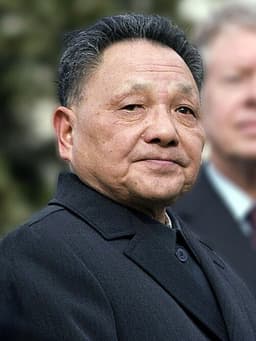
Deng Xiaoping
Politician · Modern
66.0Total
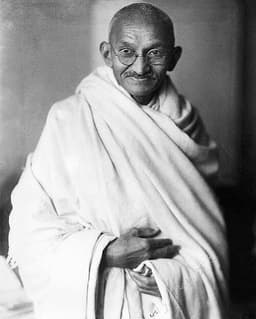
Mahatma Gandhi
Politician · Modern
68.7Total
Basic Information
Born
1904
1869
Died
1997
1948
Era
Modern
Modern
Nationality
China
India
Occupation
Politician
Politician
Civilization
Eastern
Indian
Score Comparison
Military (10%)
30.0
42.3
Political (20%)
90.0
65.0
Influence (20%)
68.0
80.0
Legacy (20%)
65.0
75.0
Leadership (15%)
78.0
70.0
Strategy (15%)
45.0
55.0
TOTAL
66.0
68.7
Deng Xiaoping — Complete Timeline
1978 AD
Third Plenum of the 11th Central CommitteePolitical Action
Deng Xiaoping consolidated power and announced the policy of Reform and Opening-Up. This meeting marked the end of Maoist class struggle as the national priority and shifted focus to economic modernization, initiating market-oriented reforms.
Economic ReformOpening-UpChina Modernization
Impact: globalconstructive
1980 AD
Establishment of Special Economic ZonesReform◆ Major
Deng Xiaoping approved the creation of Special Economic Zones in Shenzhen, Zhuhai, Shantou, and Xiamen. These zones offered tax incentives and market freedoms to attract foreign investment and technology, serving as experimental laboratories for capitalist practices within a socialist framework.
Economic ZonesForeign InvestmentMarket Reforms
Impact: nationalconstructive
1984 AD
Sino-British Joint Declaration on Hong KongPolitical Action◆ Major
Deng Xiaoping negotiated with British Prime Minister Margaret Thatcher to agree on the return of Hong Kong to Chinese sovereignty in 1997. The declaration established the 'One Country, Two Systems' principle, allowing Hong Kong to maintain its capitalist system for 50 years.
Hong KongDiplomacyOne Country Two Systems
Impact: globalconstructive
1989 AD
Tiananmen Square Protests CrackdownPolitical Action
Deng Xiaoping authorized the military to suppress pro-democracy protests in Tiananmen Square. The crackdown resulted in hundreds of civilian deaths and injuries, leading to international condemnation and a tightening of political control while economic reforms continued.
TiananmenSuppressionHuman Rights
Impact: globaldestructive
1992 AD
Southern Tour (Nanxun)Political Action◆ Major
Deng Xiaoping traveled to southern China to reaffirm the course of economic reform after conservative backlash. His speeches in Shenzhen and other cities revitalized market-oriented policies, accelerating foreign investment and pushing China toward a socialist market economy.
Economic ReformNanxunMarket Economy
Impact: nationalconstructive
Mahatma Gandhi — Complete Timeline
1917 AD
Champaran SatyagrahaPolitical Action
Gandhi led his first nonviolent protest in India, supporting indigo farmers in Champaran, Bihar, against exploitative British planters. He organized a campaign of civil disobedience and negotiations, resulting in the abolition of the oppressive tinkathia system.
Civil disobedienceFarmers' rightsBritish Raj
Impact: nationalprogressive
1919 AD
Jallianwala Bagh massacre aftermathPolitical Action◆ Major
After British troops killed hundreds of unarmed civilians in Amritsar, Gandhi organized a nationwide hartal (strike) and nonviolent protests. He returned his medals and launched the Rowlatt Satyagraha, marking a shift from cooperation to non-cooperation with British rule.
ProtestBritish RajMassacre
Impact: nationaltragic
1930 AD
Salt MarchPolitical Action
Gandhi led a 240-mile march from Sabarmati to Dandi, Gujarat, to defy the British salt monopoly. Thousands joined him, making salt from seawater. This act of civil disobedience sparked mass protests across India and drew global attention to the independence movement.
Civil disobedienceSalt taxIndependence movement
Impact: globalprogressive
1942 AD
Quit India Movement launchPolitical Action◆ Major
Gandhi launched the Quit India Movement, calling for an end to British rule with the slogan 'Do or Die'. The British arrested him and other leaders, but the movement led to widespread protests and repression, accelerating the end of colonial rule.
IndependenceCivil disobedienceBritish Raj
Impact: nationalprogressive
1948 AD
AssassinationPolitical Action
Gandhi was shot and killed by Nathuram Godse, a Hindu nationalist, during a prayer meeting in New Delhi. His assassination shocked the world and led to a wave of grief and violence, but also reinforced his legacy as a martyr for nonviolence.
AssassinationMartyrdomNonviolence
Impact: globaltragic
Expert Analysis
Mahatma Gandhi vs Deng Xiaoping
# The Saint and the Pragmatist
On a sweltering March morning in 1930, a frail, bare-chested man with a staff in hand began walking toward the sea. Behind him, a growing multitude of Indians followed, their footsteps rhythmic with hope. Half a century later and thousands of miles away, an elderly Chinese leader stepped off a train in Shenzhen, a fishing village transformed into a construction site, and declared that a new world was possible. Gandhi walked to challenge an empire; Deng rode a train to resurrect a nation. Both were revolutionaries of a sort, yet nothing about their paths—or their outcomes—could have been more different.
Origins
Mohandas Karamchand Gandhi was born in 1869 into a devout Hindu family in coastal Gujarat, India. His father was a chief minister of a small princely state, his mother deeply religious. Young Gandhi was shy, mediocre in school, and terrified of ghosts. When he sailed to London at nineteen to study law, he was a colonial subject trying to dress like an English gentleman. The humiliation he faced there—being thrown off a train in South Africa for refusing to leave a first-class compartment—crystallized something in him. He would spend twenty-one years in South Africa, forging the weapon of nonviolent resistance through defeats and small victories.
Deng Xiaoping was born in 1904 in Sichuan province, China, to a moderately wealthy landowning family. His father sent him to study in France at sixteen, expecting him to become a scholar. Instead, Deng worked in factories, learned about Marxism, and met Chinese revolutionaries. Unlike Gandhi, who recoiled from industrial modernity, Deng embraced it. He was short, pragmatic, and famously laconic. When asked later what he did in France, he said simply: "I worked." Where Gandhi was a mystic who experimented with truth, Deng was an engineer who experimented with systems.
Rise to Power
Gandhi's entry onto the Indian political stage came almost by accident. In 1917, he was called to Champaran, Bihar, to help indigo farmers suffering under exploitative British planters. He did not arrive as a leader; he arrived as a lawyer. But his method—patient investigation, refusal to obey unjust orders, willingness to go to jail—proved magnetic. The Jallianwala Bagh massacre of 1919, when British troops killed hundreds of unarmed civilians, turned Gandhi from a reformer into a national icon. He organized a nationwide strike, and India had found its voice.
Deng's rise was more brutal and circuitous. A veteran of the Long March, he served Mao Zedong loyally for decades, only to be purged twice—first during the Cultural Revolution, when he was paraded through Beijing in a dunce cap, and again in 1976. Each time, he survived by keeping silent, writing self-criticisms, and waiting. When Mao died and the Gang of Four fell, Deng was the last man standing. By 1978, at the Third Plenum of the 11th Central Committee, he consolidated power and announced a new era. He was seventy-four years old, and his greatest work lay ahead.
Leadership & Governance
Gandhi governed not through office but through moral authority. He had no army, no treasury, no territory. His weapon was Satyagraha—truth-force—a philosophy that insisted oppression could be defeated by suffering willingly accepted. The Salt March of 1930 was a masterpiece of political theater: a 240-mile walk to the sea to make salt in defiance of British law. Thousands joined, and though Gandhi was arrested, the British monopoly was broken in spirit if not in fact. In 1942, he launched the Quit India Movement with the slogan "Do or Die," and the British finally understood that their empire was finished.
Deng governed through institutions and incentives. He dismantled Mao's communes, allowed peasants to sell surplus grain, and opened China to foreign investment. The Special Economic Zones, established in 1980, were experiments in capitalism under Communist supervision. Deng's genius was to let results speak: when Shenzhen boomed, conservatives had no argument. He negotiated the return of Hong Kong with Margaret Thatcher in 1984, a diplomatic feat that required him to be simultaneously firm and flexible. Where Gandhi inspired through sacrifice, Deng persuaded through success.
Triumph & Tragedy
Gandhi's triumph was India's independence in 1947. But the triumph was shadowed by partition—the bloody division of India and Pakistan that left a million dead. Gandhi had opposed partition with all his being; he saw it as a vivisection of his soul. His tragedy was that he could not prevent it, and that his beloved India descended into communal violence. He spent his last months walking through riot-torn villages, fasting for peace. In January 1948, a Hindu nationalist named Nathuram Godse shot him dead during a prayer meeting. Gandhi died as he had lived: unarmed, forgiving, but ultimately powerless to stop the hatred he had spent his life fighting.
Deng's triumph was economic transformation. Between 1978 and 1997, China's GDP per capita quadrupled, lifting hundreds of millions out of poverty. His tragedy was the Tiananmen Square crackdown of 1989. Facing pro-democracy protests that threatened party control, Deng authorized military force. The tanks rolled in, the students died, and China's path to political liberalization was closed. Deng never apologized; he believed stability was the precondition for prosperity. The world remembers both his rice paddies and his bloodstains.
Character & Destiny
Gandhi was a man of radical transparency. He wrote openly about his sexual experiments, his dietary obsessions, his failures as a father. He believed that truth required vulnerability. This made him both saintly and impossible—he demanded that his followers live as ascetics, and he broke those who could not. His destiny was to become a symbol, a face on currency and a statue in town squares, but also a standard that no living politician could meet.
Deng was a man of strategic opacity. He rarely gave speeches, avoided interviews, and let others take credit. His famous saying—"It doesn't matter whether a cat is black or white, as long as it catches mice"—was a philosophy of pure pragmatism. He had no interest in being loved; he wanted to be effective. His destiny was to be the hidden architect of China's rise, remembered not for his words but for the skyscrapers and highways that bore silent witness to his vision.
Legacy
Gandhi's legacy is global and moral. Martin Luther King Jr. carried his methods to the American civil rights movement. Nelson Mandela cited him as an inspiration. The idea that nonviolence could topple empires became a force in world history. But Gandhi's India has largely abandoned his economic vision of village self-sufficiency, chasing the very industrialization he distrusted. His legacy lives in the conscience of movements, not in the policy of states.
Deng's legacy is national and material. China today is his creation—a country that has not liberalized politically but has transformed economically. His reforms were so successful that they became irreversible. But the contradictions he left unresolved—between state control and market freedom, between prosperity and democracy—remain. The Chinese Communist Party still rules, but it rules over a society Deng would barely recognize.
Conclusion
Gandhi and Deng faced the same question: how to lift a vast, impoverished people out of colonial or feudal darkness. Gandhi answered with the soul; Deng answered with the stomach. One believed that freedom was the path to prosperity; the other believed that prosperity was the path to freedom. Both were right, and both were wrong. Perhaps the deepest lesson is that history does not reward purity or pragmatism alone. It rewards those who understand their moment. Gandhi's moment was the struggle; Deng's was the construction. Each seized his moment, and the world was remade.
Rankings
🥇
Mahatma GandhiLeader
Mil: 42.3Pol: 65.0Inf: 80.0
68.7
🥈
Deng Xiaoping
Mil: 30.0Pol: 90.0Inf: 68.0
66.0
+2.7 behind
How This Comparison Works
Algorithm
Each figure is scored on 6 dimensions (0—100 scale) based on structured historical data: Military (10%), Political (20%), Influence (20%), Legacy (20%), Leadership (15%), Strategy (15%). The weighted total produces the final ranking.
Data Sources
Scores are computed from structured sub-indicators in the database. Scale factors adjust for era (Ancient ×0.85, Modern ×1.0) and civilization size (Eastern ×1.05, Other ×0.80) to account for differences in population and military scale.
Maximum 3 Figures
Comparisons are limited to 2—3 figures to ensure readability and statistical meaningfulness.
Error Margins
±5 points per dimension — Sub-scores are derived from historical records with inherent uncertainty. Two figures within 5 points on a dimension should be considered roughly equivalent in that area.
Total Score Accuracy
±3 points overall — The weighted combination of 6 dimensions produces a total score with approximately ±3 points of uncertainty. Differences of less than 3 points are not statistically significant— the figures are effectively tied.
Known Limitations
- Historical records are incomplete and uneven across civilizations
- Figures from oral-tradition societies may be underrepresented
- Occupation labels can misclassify multi-role figures
- Scores measure capability and impact, not moral character
- Quantitative scoring is a comparison tool, not absolute truth
Capability Radar
Military (10%) — Battles & Warfare
Battles
36
45
Win Rate
37
46
Expansion
41
51
Political (20%) — Governance & Reform
Reform
95
85
Diplomacy
80
80
Economy
95
40
Influence (20%) — Cultural & Global Reach
Cultural
70
85
Global
90
90
Legacy (20%) — Historical Impact
Historical
90
90
Longevity
85
85
Leadership (15%) — Power & Stability
Tenure
85
60
Stability
75
55
Strategy (15%) — Tactics & Innovation
Strategy
47
52
Tactics
48
56
Reform
49
55
Similar Comparisons
Comments & Discussion
GANDHI THE GAMBLER6/16/2026
Gandhi’s salt march was a brilliant theater piece, but let’s not pretend nonviolence defeated the British Empire alone. WWII bankrupted Britain and the Royal Navy mutiny in 1946 forced their hand. Gandhi gave moral cover, but Deng actually rebuilt a shattered economy—lifting hundreds of millions from poverty with market reforms. Moral symbolism is cheap; doubling GDP per capita in a decade? That’s real revolution.
历史效率官6/16/2026
比较甘地和邓,压根是鸡同鸭讲。甘地死前,印度人均寿命才32岁,文盲率85%7,连基本工业都没有。邓接手时,中国刚从文革废墟爬出来,却用十五年产粮翻倍、吸引外资建特区。甘地给了精神,邓给了饭碗。我自己家里老一辈说:没有邓开放,我们还在啃红薯。饭比口号实在。
THE SAINT AND THE SURVIVOR6/16/2026
Gandhi stripped himself to a loincloth to represent the poorest peasant; Deng wore a sharp suit to shake hands with capitalist CEOs. Both were strategic, but Gandhi’s asceticism often backfired—his celibacy experiments alienated allies, his support for caste hierarchy (until late life) hurt Dalits. Deng didn’t pretend to be holy. He just said, “It doesn’t matter if the cat is black or white, as long as it catches mice.” Give me the cat that works.
改革批判者6/16/2026
别一味吹邓是“改革开放之父”。他1978年启动包产到户没错,但1989年天安门镇压和1990年代国企改制下岗潮,让无数工人农民买单。甘地再不济,也没用坦克对付自己人。甘地推动印度独立,虽然留下印巴分治的血腥,但至少没搞出大型政治迫害。邓的经济增长牺牲了社会公正,两个巨人都有阴影,别只挑一边的光环。
CLASSICS CROSSROADS6/16/2026
Gandhi’s core—ahimsa (nonviolence) and swaraj (self-rule)—drew from Bhagavad Gita and Tolstoy; Deng’s “socialism with Chinese characteristics” cribbed from Adam Smith and Mao’s pragmatism. One sought spiritual liberation through suffering; the other measured success in kilotons of steel and foreign investment. If Gandhi were alive today, he’d probably march against Shenzhen’s factories. Deng? He’d call Gandhi a romantic fool. Both were right in their centuries.