Loading...
Deng Xiaoping vs Joseph Stalin
Joseph Stalin leads by 2.8 pts · 2 figures compared
…
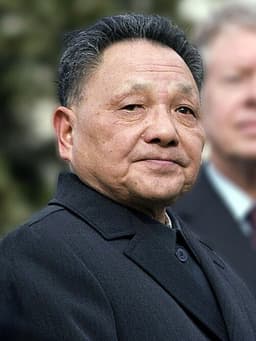
Deng Xiaoping
Politician · Modern
66.0Total
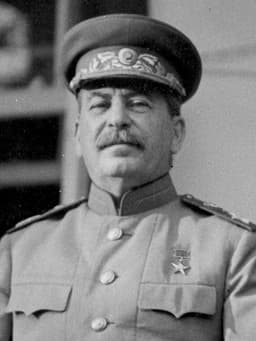
Joseph Stalin
Politician · Modern
68.8Total
Basic Information
Born
1904
1878
Died
1997
1953
Era
Modern
Modern
Nationality
China
Russia
Occupation
Politician
Politician
Civilization
Eastern
Western
Score Comparison
Military (10%)
30.0
75.0
Political (20%)
90.0
70.0
Influence (20%)
68.0
72.0
Legacy (20%)
65.0
55.0
Leadership (15%)
78.0
80.0
Strategy (15%)
45.0
70.0
TOTAL
66.0
68.8
Deng Xiaoping — Complete Timeline
1978 AD
Third Plenum of the 11th Central CommitteePolitical Action
Deng Xiaoping consolidated power and announced the policy of Reform and Opening-Up. This meeting marked the end of Maoist class struggle as the national priority and shifted focus to economic modernization, initiating market-oriented reforms.
Economic ReformOpening-UpChina Modernization
Impact: globalconstructive
1980 AD
Establishment of Special Economic ZonesReform◆ Major
Deng Xiaoping approved the creation of Special Economic Zones in Shenzhen, Zhuhai, Shantou, and Xiamen. These zones offered tax incentives and market freedoms to attract foreign investment and technology, serving as experimental laboratories for capitalist practices within a socialist framework.
Economic ZonesForeign InvestmentMarket Reforms
Impact: nationalconstructive
1984 AD
Sino-British Joint Declaration on Hong KongPolitical Action◆ Major
Deng Xiaoping negotiated with British Prime Minister Margaret Thatcher to agree on the return of Hong Kong to Chinese sovereignty in 1997. The declaration established the 'One Country, Two Systems' principle, allowing Hong Kong to maintain its capitalist system for 50 years.
Hong KongDiplomacyOne Country Two Systems
Impact: globalconstructive
1989 AD
Tiananmen Square Protests CrackdownPolitical Action
Deng Xiaoping authorized the military to suppress pro-democracy protests in Tiananmen Square. The crackdown resulted in hundreds of civilian deaths and injuries, leading to international condemnation and a tightening of political control while economic reforms continued.
TiananmenSuppressionHuman Rights
Impact: globaldestructive
1992 AD
Southern Tour (Nanxun)Political Action◆ Major
Deng Xiaoping traveled to southern China to reaffirm the course of economic reform after conservative backlash. His speeches in Shenzhen and other cities revitalized market-oriented policies, accelerating foreign investment and pushing China toward a socialist market economy.
Economic ReformNanxunMarket Economy
Impact: nationalconstructive
Joseph Stalin — Complete Timeline
1928 AD
Launched the First Five-Year PlanReform
Stalin initiated a series of centralized economic plans aimed at rapid industrialization and collectivization of agriculture. The First Five-Year Plan set ambitious targets for heavy industry, leading to significant growth but also severe shortages and human cost.
Impact: global
1929 AD
Implemented forced collectivization of agricultureReform
Stalin ordered the consolidation of individual peasant farms into collective farms (kolkhozy). This was met with resistance, leading to the liquidation of kulaks (wealthy peasants) as a class. The policy caused a catastrophic famine, particularly in Ukraine (Holodomor), resulting in millions of deaths.
Impact: nationaldestructive
1937 AD
Conducted the Great Purge (Great Terror)Political Action
Stalin orchestrated a campaign of political repression against alleged enemies of the state. Millions were arrested, executed, or sent to the Gulag labor camps. The purges targeted the Communist Party, military leadership, intellectuals, and ordinary citizens, consolidating Stalin's absolute power.
Impact: nationaldestructive
1945 AD
Led the Soviet Union to victory in World War IIWar
Stalin served as Supreme Commander of the Soviet armed forces. The Soviet Union bore the brunt of the war against Nazi Germany, suffering immense casualties. The Red Army's victory at Stalingrad and the capture of Berlin were key turning points. The war ended with Soviet domination of Eastern Europe.
Impact: global
Established the Eastern Bloc and the Iron CurtainPolitical Action◆ Major
After WWII, Stalin imposed communist governments in Eastern European countries occupied by the Red Army, creating a buffer zone against the West. This division of Europe into Soviet and Western spheres of influence marked the beginning of the Cold War.
Impact: globaldestructive
Expert Analysis
Joseph Stalin vs Deng Xiaoping
# The Architect and the Engineer: Stalin and Deng's Divergent Paths to Modernity
In the winter of 1978, as Deng Xiaoping stood before the Third Plenum of the 11th Central Committee in Beijing, he was about to launch a revolution that would lift hundreds of millions from poverty. Half a century earlier, in 1928, Joseph Stalin had stood before a similar gathering in Moscow, announcing the First Five-Year Plan that would turn a peasant nation into an industrial superpower—at a cost that would haunt history. Both men sought to modernize vast, backward empires. One chose terror as his tool; the other, patience. Why did they choose so differently, and what drove their radically different outcomes?
Origins
Stalin was born in 1878 in the Georgian town of Gori, the son of a violent, alcoholic cobbler and a devout mother who wanted him to become a priest. He grew up in poverty and humiliation, a childhood marked by smallpox scars and a withered arm. The Russian Empire of his youth was a crumbling autocracy, where revolutionary violence seemed the only path to change. Stalin absorbed this world's brutal logic: power came from ruthlessness, and sentiment was weakness.
Deng Xiaoping was born in 1904 in Sichuan province, into a moderately prosperous landowning family. His father sent him to study in France at age sixteen, where he worked in factories and encountered Western ideas firsthand. Unlike Stalin's world of conspiracy and underground cells, Deng's early years were shaped by exposure to a wider world—and by the realization that China's weakness stemmed from its isolation. Where Stalin saw enemies everywhere, Deng saw opportunities for learning.
Rise to Power
Stalin rose through the Bolshevik apparatus not as a charismatic orator but as a master of backroom maneuvering. After Lenin's death in 1924, he positioned himself as the guardian of orthodoxy while systematically eliminating rivals. By 1929, when he launched forced collectivization of agriculture, he had already consolidated absolute control. His path was one of elimination: remove anyone who might challenge you.
Deng's rise was more precarious. He was purged twice under Mao Zedong—once during the Cultural Revolution, when he was paraded through the streets in disgrace. He survived by bending rather than breaking, by retreating and waiting. When Mao died in 1976, Deng emerged as the pragmatic survivor, not the ideological zealot. His path taught him a different lesson: power that crushes all opposition also crushes the possibility of correction.
Leadership & Governance
Stalin governed through fear. The Great Purge of 1937 saw millions arrested, executed, or sent to the Gulag—party officials, military officers, intellectuals, ordinary peasants. He personally edited lists of those to be shot. His industrialization was real: by 1945, the Soviet Union produced more steel than Germany. But it was built on starvation during the Holodomor of 1932-33, on forced labor, on a system where any failure was treason.
Deng governed through incentives. His Special Economic Zones, established in 1980, invited foreign investment and allowed market mechanisms to operate within a communist framework. He famously said, "It doesn't matter whether a cat is black or white, as long as it catches mice." Where Stalin demanded sacrifice for a distant utopia, Deng offered immediate improvement: let farmers sell their surplus, let entrepreneurs keep their profits. His 1992 Southern Tour reaffirmed this pragmatism after conservative backlash threatened to reverse reforms.
Triumph & Tragedy
Stalin's greatest triumph was leading the Soviet Union to victory in World War II in 1945. He was Supreme Commander during the brutal siege of Leningrad, the turning point at Stalingrad, the final push into Berlin. But the cost was staggering: 27 million Soviet dead. And the victory brought a new tragedy—the imposition of the Iron Curtain across Eastern Europe, trading one tyranny for another.
Deng's triumph was subtler but more durable. The Sino-British Joint Declaration of 1984 secured Hong Kong's return to China while preserving its capitalist system—a stroke of diplomatic genius that proved "one country, two systems" could work. His tragedy came in 1989, when he authorized the military crackdown on Tiananmen Square protesters. It was a decision that contradicted everything his reforms stood for, a reminder that even pragmatists could turn brutal when they felt their power threatened.
Character & Destiny
Stalin was paranoid, vindictive, and deeply suspicious. He trusted no one, not even his closest allies. This personality shaped Soviet governance into a machine of surveillance and terror. His cruelty was not just strategic but personal—he took pleasure in humiliating subordinates, in playing with lives.
Deng was pragmatic, patient, and fundamentally optimistic about human nature. He believed that if you gave people the chance to improve their lives, they would work hard and society would prosper. His personality shaped China's reforms into a gradual, experimental process—try something in one province, see if it works, then expand. He was ruthless when cornered, but he preferred persuasion to force.
Legacy
Stalin's legacy is deeply contested. He industrialized Russia and defeated Hitler, but at a cost that still scars the Russian psyche. His score of 55.0 in legacy reflects this ambivalence: a builder who was also a destroyer. Today, Russians are divided—some see him as a strong leader, others as a monster. The Soviet Union he built collapsed thirty-eight years after his death, unable to reform itself.
Deng's legacy is more uniformly positive. His score of 75.0 in legacy reflects the tangible transformation he achieved: China's economy grew at double-digit rates for decades, lifting 800 million people out of poverty. The system he created—authoritarian politics with capitalist economics—still endures. His successors have continued his reforms, if not always his spirit.
Conclusion
Stalin and Deng both faced the same fundamental challenge: how to modernize a backward, agrarian society in a hostile world. Stalin chose the path of maximum force—break the old society, crush resistance, build through terror. Deng chose the path of minimum resistance—work with human nature, offer incentives, let change happen gradually. The difference was not just in their methods but in their fundamental understanding of power. Stalin believed power meant the ability to destroy; Deng believed power meant the ability to persuade. History, with its usual ambiguity, suggests that both were right—and both were wrong.
Rankings
🥇
Joseph StalinLeader
Mil: 75.0Pol: 70.0Inf: 72.0
68.8
🥈
Deng Xiaoping
Mil: 30.0Pol: 90.0Inf: 68.0
66.0
+2.8 behind
How This Comparison Works
Algorithm
Each figure is scored on 6 dimensions (0—100 scale) based on structured historical data: Military (10%), Political (20%), Influence (20%), Legacy (20%), Leadership (15%), Strategy (15%). The weighted total produces the final ranking.
Data Sources
Scores are computed from structured sub-indicators in the database. Scale factors adjust for era (Ancient ×0.85, Modern ×1.0) and civilization size (Eastern ×1.05, Other ×0.80) to account for differences in population and military scale.
Maximum 3 Figures
Comparisons are limited to 2—3 figures to ensure readability and statistical meaningfulness.
Error Margins
±5 points per dimension — Sub-scores are derived from historical records with inherent uncertainty. Two figures within 5 points on a dimension should be considered roughly equivalent in that area.
Total Score Accuracy
±3 points overall — The weighted combination of 6 dimensions produces a total score with approximately ±3 points of uncertainty. Differences of less than 3 points are not statistically significant— the figures are effectively tied.
Known Limitations
- Historical records are incomplete and uneven across civilizations
- Figures from oral-tradition societies may be underrepresented
- Occupation labels can misclassify multi-role figures
- Scores measure capability and impact, not moral character
- Quantitative scoring is a comparison tool, not absolute truth
Capability Radar
Military (10%) — Battles & Warfare
Battles
36
85
Win Rate
37
80
Expansion
41
85
Political (20%) — Governance & Reform
Reform
95
90
Diplomacy
80
70
Economy
95
85
Influence (20%) — Cultural & Global Reach
Cultural
70
70
Global
90
95
Legacy (20%) — Historical Impact
Historical
90
95
Longevity
85
80
Leadership (15%) — Power & Stability
Tenure
85
95
Stability
75
60
Strategy (15%) — Tactics & Innovation
Strategy
47
85
Tactics
48
60
Reform
49
90
Similar Comparisons
Comments & Discussion
BareFactsComrade6/16/2026
Comparing their body counts is playing moral arithmetic: Stalin’s collectivization killed ~6 million in famine alone, while Deng’s reforms cut poverty from 88% to 46% in a decade. One weaponized starvation, the other weaponized markets. You can’t equalize that with “similar modernization.” That’s like comparing a chainsaw to a scalpel.
铁算盘6/16/2026
历史不是比谁更聪明,是比谁更敢算账。斯大林搞五年计划,1932年工业产值翻倍,但农业崩了,饿死几百万人。邓小平搞家庭联产承包,1978-1984年粮食产量从3亿吨涨到4亿,农民吃饱了才支持改革开放。一个算政治账,一个算经济账,结果天差地别。
VelvetGloveCritic6/16/2026
Revisionists love to paint Stalin as a madman and Deng as a saint, but both were brutal pragmatists. Deng’s 1989 Tiananmen crackdown killed thousands; Stalin’s purges killed millions. Difference is scale, not principle. The real story is that Deng learned from Stalin’s mistakes—he centralized power without the mass paranoia, using economic carrots instead of ideological sticks.
工业遗民6/16/2026
斯大林用高炉和拖拉机把苏联砸进现代,但代价是古拉格和集体农庄的尸骨。邓小平不用砸——他拆墙,让农村自己试包产到户,让沿海学香港。结果是苏联1985年工业产值世界第二,但老百姓排队买面包;中国1990年人均GDP才300美元,但商店里东西多了。方法不同,命不同。
ClassicsPolPhil6/16/2026
The key isn’t body count—it’s legitimacy. Deng kept the Party’s monopoly but replaced class warfare with performance legitimacy: “It doesn’t matter if the cat is black or white, as long as it catches mice.” Stalin’s USSR relied on terror and central planning, which collapsed when the truth came out. Deng’s China survived 1989 because economic growth bought loyalty. Stalin built a fortress on sand; Deng built a skyscraper on concrete boots.