Loading...
Dantidurga vs Emperor Jito
Dantidurga leads by 9.9 pts · 2 figures compared
…
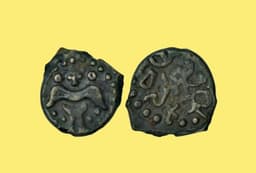
Dantidurga
Emperor · Medieval
58.7Total
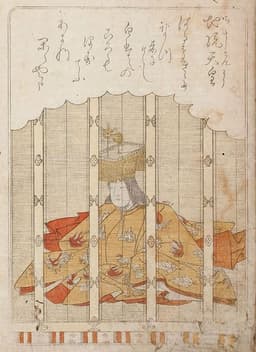
Emperor Jito
Emperor · Medieval
48.8Total
Basic Information
Born
735
645
Died
756
703
Era
Medieval
Medieval
Nationality
India
Japan
Occupation
Emperor
Emperor
Civilization
Indian
Eastern
Score Comparison
Military (10%)
67.5
54.3
Political (20%)
68.0
46.6
Influence (20%)
56.4
51.8
Legacy (20%)
50.0
48.3
Leadership (15%)
65.7
42.2
Strategy (15%)
52.5
50.0
TOTAL
58.7
48.8
Dantidurga — Complete Timeline
753 AD
Founding of the Rashtrakuta DynastyPolitical Action
Dantidurga overthrew his overlord, the Chalukya king Kirtivarman II, in a coup. He established the Rashtrakuta dynasty as the dominant power in the Deccan, with Manyakheta as his capital. This marked the beginning of a new imperial era.
Impact: regionalconstructive
754 AD
Performance of the Hiranyagarbha RitualCultural
Dantidurga performed the Hiranyagarbha (golden womb) ritual, a Vedic ceremony that symbolically rebirthed him as a Kshatriya. This legitimized his rule by claiming a higher caste status, as the Rashtrakutas were originally of humble origin.
Impact: nationalconstructive
755 AD
Conquest of MalwaWar◆ Major
Dantidurga led a military campaign into Malwa, defeating the Gurjara-Pratihara ruler Nagabhata I. He annexed the region, expanding Rashtrakuta territory northward. This victory established Rashtrakuta influence in central India.
Impact: regionaldestructive
Emperor Jito — Complete Timeline
694 AD
Establishment of the Fujiwara CapitalPolitical Action◆ Major
Empress Jito moved the imperial capital to Fujiwara-kyo in Yamato Province. This was Japan's first capital built on a Chinese grid pattern. The move symbolized the centralization of power and the adoption of Chinese-style governance.
CapitalFujiwara-kyoUrban Planning
Impact: nationalconstructive
697 AD
Abdication in Favor of Emperor MonmuPolitical Action
Empress Jito abdicated the throne in favor of her grandson, Emperor Monmu. She continued to wield influence as a retired emperor (daijo tenno). This set a precedent for retired emperors to maintain power behind the scenes.
AbdicationSuccessionMonmu
Impact: national
701 AD
Completion of the Taiho CodeReform◆ Major
Empress Jito oversaw the completion and promulgation of the Taiho Code, a comprehensive legal code that systematized the ritsuryo system. It defined administrative structure, penal laws, and court ranks. The code remained the basis of Japanese law for centuries.
Taiho CodeLegal SystemRitsuryo
Impact: nationalconstructive
Expert Analysis
Origins
Dantidurga (r. c. 753–756 CE) emerged from the Deccan region of India, likely of humble origins. His early life is obscure, but he was a feudatory of the Chalukya dynasty, serving as a vassal ruler in the area around modern Karnataka. His birth year is unknown, but he rose to prominence in the mid-8th century. The Rashtrakuta family had been subordinate to the Chalukyas for generations, and Dantidurga's upbringing would have involved military training and administration under Chalukya suzerainty.
Empress Jito (645–703 CE) was born into the Japanese imperial family, the daughter of Emperor Tenji. She married her nephew, Emperor Temmu, and after his death she ascended the throne in 690 CE. Her education was typical for a noblewoman of the period, including Chinese classics and court rituals. Her early life was shaped by the power struggles of the Yamato court, including the Jinshin War (672 CE) that brought her husband to power.
Rise to Power
Dantidurga's rise came through military action. Around 753 CE, he defeated his overlord, the Chalukya king Kirtivarman II, in a coup, declaring independence. He then expanded Rashtrakuta territory by conquering Malwa from the Gurjara-Pratihara ruler Nagabhata I. These victories established him as a major power in central and western India. His performance of the Hiranyagarbha ritual in 753 CE symbolically rebirthed him as a Kshatriya, legitimizing his rule and enhancing his status among Hindu kings.
Empress Jito's rise was more gradual. After her husband Emperor Temmu's death in 686 CE, she initially acted as regent for their son, Prince Kusakabe, but when he died in 689 CE, she ascended the throne herself in 690 CE. Her reign was marked by continuity with Temmu's policies. She oversaw the completion of the Taiho Code in 701 CE, which systematized the ritsuryo legal and administrative system. Her move of the capital to Fujiwara-kyo in 694 CE demonstrated her commitment to centralizing authority.
Leadership & Governance
Dantidurga's leadership was military-focused, with a Military score of 67.5 and Strategy of 52.5. He expanded his realm through conquest, but his governance relied on traditional Hindu rituals to legitimize his dynasty. He did not introduce major administrative reforms, instead adopting the existing Chalukya structures. His total score of 58.7 reflects a capable but not transformative ruler.
Empress Jito, with a Political score of 46.6 and Leadership of 42.2, was less militarily inclined but focused on legal and administrative consolidation. The Taiho Code established a centralized bureaucracy, land allocation system, and penal laws based on Chinese models. Her move to Fujiwara-kyo, Japan's first grid-pattern capital, symbolized order and control. However, her leadership was constrained by court factions, and she abdicated in 697 CE to allow her grandson Monmu to rule, though she remained influential as a retired emperor.
Triumph & Tragedy
Dantidurga's greatest success was founding the Rashtrakuta dynasty, which would rule for over two centuries and become a major power in India. His conquest of Malwa added significant territory. However, his reign was short (c. 753–756 CE), and he died before fully consolidating his gains. His successors, particularly his uncle Krishna I, would continue expansion, but Dantidurga's early death limited his direct impact.
Empress Jito's triumph was the completion of the Taiho Code, which provided a legal framework that lasted for centuries. The Fujiwara capital was a model of Chinese-style planning. However, her reign saw limited military success; her score of 54.3 in Military reflects Japan's relative peace. Her abdication was a strategic move to ensure dynastic continuity, but it also showed the limits of her power as a female ruler in a patriarchal society.
Character & Destiny
Dantidurga's character was ambitious and decisive, as shown by his coup against the Chalukyas. His performance of the Hiranyagarbha ritual indicates a shrewd understanding of legitimacy. His early death prevented him from reaching his full potential, but his actions set the stage for the Rashtrakuta golden age.
Empress Jito was cautious and legalistic, focusing on institutional stability. Her abdication demonstrated a willingness to step aside for the greater good. However, her low Political and Leadership scores suggest she was not a dominant figure, but rather a caretaker who completed her husband's projects. Her legacy is tied to the code, not to personal charisma.
Legacy
Dantidurga's legacy is the Rashtrakuta dynasty, which under rulers like Amoghavarsha became a major force in Indian history. Their patronage of Jainism and literature, such as the Kavirajamarga, left a cultural mark. However, the dynasty declined by the 10th century. His Influence score of 56.4 and Legacy of 50.0 reflect a founder's impact but not a lasting global footprint.
Empress Jito's Taiho Code influenced Japanese governance for centuries, forming the basis of the ritsuryo system until the samurai era. The Fujiwara capital was a prototype for later capitals like Heian-kyo. Her Legacy score of 48.3 is modest, but the code's longevity is significant. She is remembered as a stabilizing force.
Conclusion
Dantidurga had a greater impact in terms of founding a dynasty that shaped Indian history for 200 years, with a total score of 58.7 vs Jito's 48.8. While Jito's legal code was important, Dantidurga's military conquests and establishment of a new ruling house had more immediate and far-reaching consequences in the Deccan. His higher scores in Military (67.5 to 54.3), Political (68.0 to 46.6), and Leadership (65.7 to 42.2) reflect a more dynamic and transformative rule. Therefore, Dantidurga's impact outweighs Jito's.
Rankings
🥇
DantidurgaLeader
Mil: 67.5Pol: 68.0Inf: 56.4
58.7
🥈
Emperor Jito
Mil: 54.3Pol: 46.6Inf: 51.8
48.8
+9.9 behind
How This Comparison Works
Algorithm
Each figure is scored on 6 dimensions (0—100 scale) based on structured historical data: Military (10%), Political (20%), Influence (20%), Legacy (20%), Leadership (15%), Strategy (15%). The weighted total produces the final ranking.
Data Sources
Scores are computed from structured sub-indicators in the database. Scale factors adjust for era (Ancient ×0.85, Modern ×1.0) and civilization size (Eastern ×1.05, Other ×0.80) to account for differences in population and military scale.
Maximum 3 Figures
Comparisons are limited to 2—3 figures to ensure readability and statistical meaningfulness.
Error Margins
±5 points per dimension — Sub-scores are derived from historical records with inherent uncertainty. Two figures within 5 points on a dimension should be considered roughly equivalent in that area.
Total Score Accuracy
±3 points overall — The weighted combination of 6 dimensions produces a total score with approximately ±3 points of uncertainty. Differences of less than 3 points are not statistically significant— the figures are effectively tied.
Known Limitations
- Historical records are incomplete and uneven across civilizations
- Figures from oral-tradition societies may be underrepresented
- Occupation labels can misclassify multi-role figures
- Scores measure capability and impact, not moral character
- Quantitative scoring is a comparison tool, not absolute truth
Capability Radar
Military (10%) — Battles & Warfare
Battles
60
45
Win Rate
65
50
Expansion
65
50
Political (20%) — Governance & Reform
Reform
45
70
Diplomacy
55
30
Economy
50
30
Influence (20%) — Cultural & Global Reach
Cultural
40
30
Global
30
20
Legacy (20%) — Historical Impact
Historical
55
50
Longevity
50
40
Leadership (15%) — Power & Stability
Tenure
40
11
Stability
45
40
Strategy (15%) — Tactics & Innovation
Strategy
60
52
Tactics
55
57
Reform
40
60
Similar Comparisons
Comments & Discussion
No comments yet. Be the first to share your thoughts!