Loading...
Dantidurga vs Kublai Khan
Kublai Khan leads by 15.6 pts · 2 figures compared
…
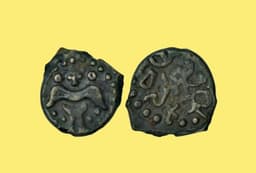
Dantidurga
Emperor · Medieval
58.7Total
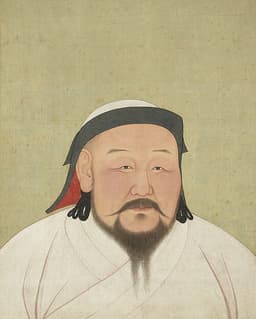
Kublai Khan
Emperor · Medieval
74.3Total
Basic Information
Born
735
1215
Died
756
1294
Era
Medieval
Medieval
Nationality
India
Mongolia
Occupation
Emperor
Emperor
Civilization
Indian
Eastern
Score Comparison
Military (10%)
67.5
77.5
Political (20%)
68.0
79.2
Influence (20%)
56.4
75.0
Legacy (20%)
50.0
70.0
Leadership (15%)
65.7
72.0
Strategy (15%)
52.5
76.0
TOTAL
58.7
74.3
Dantidurga — Complete Timeline
753 AD
Founding of the Rashtrakuta DynastyPolitical Action
Dantidurga overthrew his overlord, the Chalukya king Kirtivarman II, in a coup. He established the Rashtrakuta dynasty as the dominant power in the Deccan, with Manyakheta as his capital. This marked the beginning of a new imperial era.
Impact: regionalconstructive
754 AD
Performance of the Hiranyagarbha RitualCultural
Dantidurga performed the Hiranyagarbha (golden womb) ritual, a Vedic ceremony that symbolically rebirthed him as a Kshatriya. This legitimized his rule by claiming a higher caste status, as the Rashtrakutas were originally of humble origin.
Impact: nationalconstructive
755 AD
Conquest of MalwaWar◆ Major
Dantidurga led a military campaign into Malwa, defeating the Gurjara-Pratihara ruler Nagabhata I. He annexed the region, expanding Rashtrakuta territory northward. This victory established Rashtrakuta influence in central India.
Impact: regionaldestructive
Kublai Khan — Complete Timeline
1260 AD
Adoption of Tibetan Buddhism as State ReligionCultural◆ Major
Kublai Khan appointed the Tibetan lama Drog
Tibetan BuddhismReligionMongol-Tibet Relations
Impact: regional
1271 AD
Proclamation of the Yuan DynastyPolitical Action◆ Major
Kublai Khan officially proclaimed the Yuan dynasty, adopting a Chinese-style dynastic name. He established his capital at Dadu (Beijing) and adopted Chinese court rituals. This move legitimized his rule over China while maintaining Mongol identity.
Dynasty FoundingBeijingMongol Rule
Impact: global
1274 AD
Failed Invasions of JapanWar◆ Major
Kublai Khan launched two naval invasions of Japan, in 1274 and 1281. Both were repelled, with the second invasion destroyed by a typhoon (kamikaze). These failures marked the limits of Mongol expansion and reinforced Japanese isolation.
Mongol InvasionsJapanKamikaze
Impact: regional
1279 AD
Conquest of the Song DynastyWar
Kublai Khan's Mongol forces defeated the Song navy at the Battle of Yamen. The last Song emperor drowned, ending the Song dynasty. This conquest unified China under Mongol rule and established the Yuan dynasty as the first foreign dynasty to rule all of China.
Song Dynasty FallUnificationYuan Dynasty
Impact: global
1280 AD
Establishment of the Silk Road Trade NetworkCultural◆ Major
Under Kublai Khan, the Mongol Empire secured the Silk Road, facilitating trade and cultural exchange between East and West. Marco Polo visited his court. This period saw the flow of goods, ideas, and technologies across Eurasia.
Silk RoadTradeCultural Exchange
Impact: globalconstructive
Expert Analysis
Kublai Khan vs Dantidurga
# The Emperor and the Upstart: Kublai Khan and Dantidurga
Picture two thrones. One sits in a sprawling palace at Shangdu, where a Mongol emperor in silken robes receives envoys from Persia, Korea, and Venice. The other is a ritual seat of gold, briefly occupied by a Deccan chieftain performing a Vedic ceremony to claim a caste he was not born into. Kublai Khan ruled an empire that stretched from the Pacific to the Danube; Dantidurga carved out a kingdom in the hills of central India. One is a name that echoes through world history; the other is known mainly to specialists. Yet both founded dynasties, both broke the power of established rulers, and both understood that legitimacy is a weapon as sharp as any sword. The question is not simply who was greater, but why their paths diverged so dramatically.
Origins
Kublai Khan was born in 1215 into the Mongol ruling family, grandson of the legendary Genghis Khan. His world was one of horsemen, felt tents, and the constant expansion of a nomadic empire. He grew up in the shadow of his grandfather’s conquests, inheriting a military machine that had already crushed much of Asia. But Kublai was also exposed to Chinese civilization from an early age, learning to read, to appreciate art, and to understand the complexities of settled rule. His era was one of opportunity: the Mongol Empire was still young, and the prize of China lay waiting.
Dantidurga, by contrast, emerged from obscurity in 735. He was a Rashtrakuta chieftain, a clan of uncertain origin—some scholars believe they were originally pastoralists or warriors from the Deccan plateau who had served as feudatories under the Chalukya dynasty of Badami. His world was fragmented: the Chalukyas were declining, the Pallavas were rising in the south, and the Gurjara-Pratiharas and Palas were contending for the north. Dantidurga had no vast inheritance, no legendary grandfather, no established army. He had only ambition and a region ripe for upheaval.
Rise to Power
Kublai Khan’s rise was a family affair, but it was not easy. After Genghis’s death, the empire was divided among his sons and grandsons. Kublai’s brother Möngke became Great Khan in 1251, and Kublai was given command of the campaign against the Song Dynasty in southern China. He proved himself a capable general and administrator, but when Möngke died in 1259, Kublai had to fight his own brother, Ariq Böke, for the title of Great Khan. The civil war lasted four years, ending only in 1264. Kublai emerged victorious, but the empire was fractured—the Golden Horde in Russia, the Ilkhanate in Persia, and the Chagatai Khanate in Central Asia all went their own ways. Kublai was left as the ruler of Mongolia and China, a vast but diminished realm.
Dantidurga’s path was simpler and more audacious. In 753, he turned on his overlord, the Chalukya king Kirtivarman II. It was not a full-scale war but a coup, likely aided by internal Chalukya weaknesses and Dantidurga’s own alliances with local chiefs. He overthrew Kirtivarman and declared himself independent. The following year, he performed the Hiranyagarbha ritual—a Vedic ceremony where he was symbolically reborn from a golden womb, thereby claiming the status of a Kshatriya warrior. This was not mere theater; in medieval India, caste and ritual legitimacy were crucial for ruling. Dantidurga, probably of non-Kshatriya origin, was buying his way into the elite.
Leadership & Governance
Kublai Khan’s leadership was a study in synthesis. He adopted Chinese bureaucratic methods, established a capital at Dadu (modern Beijing), and proclaimed the Yuan Dynasty in 1271, giving his rule a Chinese name and legitimacy. He appointed Tibetan lama Drogön Chögyal Phagpa as his imperial preceptor in 1260, making Tibetan Buddhism the state religion—a move that tied his empire to a powerful religious network. But Kublai also kept Mongol customs, maintaining a nomadic court and relying on foreign administrators like Marco Polo. His rule was pragmatic, not ideological: he taxed merchants, protected the Silk Road, and tolerated multiple religions. His military strategy was equally ambitious: in 1279, he conquered the Song Dynasty after decades of war, using siege engines, naval power, and sheer persistence.
Dantidurga ruled for only about three years after his coup, and his governance is poorly recorded. What we know suggests he was a warrior-chieftain rather than an administrator. His conquest of Malwa in 755 against the Gurjara-Pratihara ruler Nagabhata I shows he could lead campaigns, but there is no evidence of institutional reforms, tax systems, or cultural patronage. His leadership score—42.4—reflects this brevity and lack of depth. He was a founder, not a builder.
Triumph & Tragedy
Kublai Khan’s greatest triumph was the conquest of the Song Dynasty in 1279. At the Battle of Yamen, his forces destroyed the Song navy, and the last Song emperor drowned. China was unified under Mongol rule for the first time in centuries. The Silk Road flourished, and Marco Polo would later write of the wonders of Kublai’s court. But Kublai’s tragedy was his failed invasions of Japan in 1274 and 1281. The second invasion was destroyed by a typhoon—the *kamikaze*, or “divine wind”—that sank hundreds of ships and killed tens of thousands of men. The disaster drained resources, damaged morale, and exposed the limits of Mongol power.
Dantidurga’s triumph was the founding of the Rashtrakuta dynasty itself. Within a few years of his death in 756, his successors—particularly his uncle Krishna I—expanded the kingdom into an empire that would rival the Pallavas and Pratiharas. But Dantidurga’s tragedy was his early death. He did not live to see his dynasty’s greatest achievements, nor did he leave a stable succession. His reign was a spark, not a flame.
Character & Destiny
Kublai Khan was a man of contradictions. He was ruthless in war but curious about other cultures; he crushed the Song but employed Chinese scholars; he was a Mongol who built a Chinese palace. His personality was shaped by the tension between his nomadic heritage and his settled ambitions. He was patient, strategic, and willing to learn—qualities that made him a great conqueror but also a lonely one. His destiny was to rule an empire too vast for any one man to control, and to watch it fracture after his death.
Dantidurga was a gambler. He risked everything on a coup and a ritual, and he won—temporarily. His character is harder to discern, but his actions suggest a man who understood that power is as much about perception as about force. The Hiranyagarbha ritual was a brilliant piece of political theater, but it also reveals a deep insecurity about his own legitimacy. He was an upstart who knew he was an upstart.
Legacy
Kublai Khan’s legacy is immense. The Yuan Dynasty lasted until 1368, and its rule reshaped China—introducing paper money, expanding trade, and integrating Tibet and Mongolia into Chinese statecraft. The Silk Road under Kublai connected East and West as never before. But his legacy is also contested: Chinese historians often view the Yuan as a foreign occupation, while Mongolians celebrate him as a great khan. His total score of 79.6 reflects this ambivalence.
Dantidurga’s legacy is smaller but more straightforward. The Rashtrakuta dynasty ruled the Deccan for over two centuries, building the Kailasa temple at Ellora and patronizing Jain and Hindu culture. Dantidurga is remembered as the founder—a title that, in Indian history, carries great weight. His score of 57.2 is modest, but it understates his importance: without his coup, there would be no Rashtrakuta empire, no Ellora caves, no Deccan power that could challenge the north.
Conclusion
Kublai Khan and Dantidurga are separated by centuries, continents, and scale. One commanded armies of hundreds of thousands; the other led a few thousand. One left a dynasty that changed the world; the other left a dynasty that changed a region. Yet both understood the same truth: that power must be seized, and then it must be justified. Kublai justified his rule through conquest, bureaucracy, and religion; Dantidurga justified his through ritual, caste, and war. Their differences are not just of degree but of kind—Kublai was a world-historical figure, Dantidurga a regional one. But in their own contexts, both were founders. And in the end, that is what history remembers: not the size of the empire, but the courage to build it from nothing.
Rankings
🥇
Kublai KhanLeader
Mil: 77.5Pol: 79.2Inf: 75.0
74.3
🥈
Dantidurga
Mil: 67.5Pol: 68.0Inf: 56.4
58.7
+15.6 behind
How This Comparison Works
Algorithm
Each figure is scored on 6 dimensions (0—100 scale) based on structured historical data: Military (10%), Political (20%), Influence (20%), Legacy (20%), Leadership (15%), Strategy (15%). The weighted total produces the final ranking.
Data Sources
Scores are computed from structured sub-indicators in the database. Scale factors adjust for era (Ancient ×0.85, Modern ×1.0) and civilization size (Eastern ×1.05, Other ×0.80) to account for differences in population and military scale.
Maximum 3 Figures
Comparisons are limited to 2—3 figures to ensure readability and statistical meaningfulness.
Error Margins
±5 points per dimension — Sub-scores are derived from historical records with inherent uncertainty. Two figures within 5 points on a dimension should be considered roughly equivalent in that area.
Total Score Accuracy
±3 points overall — The weighted combination of 6 dimensions produces a total score with approximately ±3 points of uncertainty. Differences of less than 3 points are not statistically significant— the figures are effectively tied.
Known Limitations
- Historical records are incomplete and uneven across civilizations
- Figures from oral-tradition societies may be underrepresented
- Occupation labels can misclassify multi-role figures
- Scores measure capability and impact, not moral character
- Quantitative scoring is a comparison tool, not absolute truth
Capability Radar
Military (10%) — Battles & Warfare
Battles
60
95
Win Rate
65
90
Expansion
65
95
Political (20%) — Governance & Reform
Reform
45
88
Diplomacy
55
85
Economy
50
90
Influence (20%) — Cultural & Global Reach
Cultural
40
85
Global
30
85
Legacy (20%) — Historical Impact
Historical
55
90
Longevity
50
80
Leadership (15%) — Power & Stability
Tenure
40
90
Stability
45
80
Strategy (15%) — Tactics & Innovation
Strategy
60
92
Tactics
55
85
Reform
40
88
Similar Comparisons
Comments & Discussion
KhanCrusher886/16/2026
Kublai Khan wasn’t some brilliant strategist; he inherited the best cavalry in history and bought Chinese bureaucrats to do the real work. Dantidurga actually built an empire from scratch, pulling off a Vedic horse sacrifice ritual in 753 like a guerrilla deity. That’s guts, not nepotism. Kublai had Marco Polo as a PR agent; Dantidurga had rocks and inscriptions. Give me the underdog who earned his crown over a golden-boy grandson any day.
史海钩沉6/16/2026
忽必烈靠的是祖父的遗产和蒙古铁骑,丹蒂杜尔加才是真传奇。这位拉什特拉库塔头领在公元753年搞了一场“阿什瓦梅达”马祭,硬生生从遮娄其王朝嘴里抢下德干高原。一个游牧贵族会骑马不算本事,一个印度山大王能用吠陀仪式武装夺权,这才是逆袭教科书。历史课本吹捧忽必烈是因为他沾了蒙古帝国的光,别忘了谁才是真正的草根创业者。
NumenSkeptic6/16/2026
Stop fetishizing scale. Kublai’s empire looks impressive on a map, but it was a patchwork of tribute states and paper mandates. Dantidurga’s Rashtrakuta kingdom actually integrated local power structures—he defeated the Chalukyas at their own game. The Ellora cave inscriptions prove he redistributed land to Brahmins to lock in legitimacy. That’s smart statecraft, not just bigger armies. Size without synergy is just a big mess with silk robes.
铁骑算账6/16/2026
别被元朝的地图骗了。忽必烈治下人口不过一亿出头,蒙古人征税全靠色目商人和纸币滥发,通货膨胀烂到骨子里。丹蒂杜尔加在753年打垮遮娄其帝国时,靠的是德干高原的农业税和部落联盟的精确管控。他那个“金座仪式”本质是一场低成本高回报的政治秀,比忽必烈拿丝绸贿赂藩王高明得多。论治理效率,这局我站南印硬汉。