Loading...
Dantidurga vs Pachacuti
Pachacuti leads by 10.7 pts · 2 figures compared
…
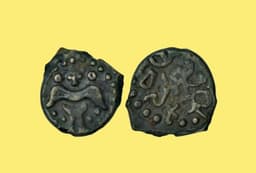
Dantidurga
Emperor · Medieval
58.7Total
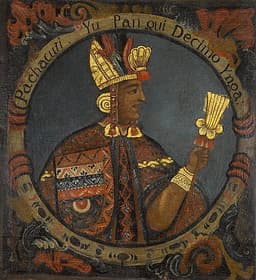
Pachacuti
Emperor · Medieval
69.4Total
Basic Information
Born
735
1418
Died
756
1472
Era
Medieval
Medieval
Nationality
India
Inca Empire
Occupation
Emperor
Emperor
Civilization
Indian
Other
Score Comparison
Military (10%)
67.5
78.5
Political (20%)
68.0
58.1
Influence (20%)
56.4
65.0
Legacy (20%)
50.0
72.0
Leadership (15%)
65.7
78.0
Strategy (15%)
52.5
69.2
TOTAL
58.7
69.4
Dantidurga — Complete Timeline
753 AD
Founding of the Rashtrakuta DynastyPolitical Action
Dantidurga overthrew his overlord, the Chalukya king Kirtivarman II, in a coup. He established the Rashtrakuta dynasty as the dominant power in the Deccan, with Manyakheta as his capital. This marked the beginning of a new imperial era.
Impact: regionalconstructive
754 AD
Performance of the Hiranyagarbha RitualCultural
Dantidurga performed the Hiranyagarbha (golden womb) ritual, a Vedic ceremony that symbolically rebirthed him as a Kshatriya. This legitimized his rule by claiming a higher caste status, as the Rashtrakutas were originally of humble origin.
Impact: nationalconstructive
755 AD
Conquest of MalwaWar◆ Major
Dantidurga led a military campaign into Malwa, defeating the Gurjara-Pratihara ruler Nagabhata I. He annexed the region, expanding Rashtrakuta territory northward. This victory established Rashtrakuta influence in central India.
Impact: regionaldestructive
Pachacuti — Complete Timeline
1438 AD
Conquest of the Chanka KingdomWar
Pachacuti led the Inca army to defeat the Chanka, a powerful rival, in a decisive battle near Cusco. This victory secured his position as Sapa Inca and initiated a period of rapid expansion, transforming the Inca from a small kingdom into a vast empire.
ConquestInca ExpansionChanka
Impact: regional
1440 AD
Reconstruction of CuscoCultural◆ Major
Pachacuti rebuilt Cusco as the imperial capital, designing it in the shape of a puma and constructing massive stone structures like Sacsayhuam
Urban PlanningArchitectureInca Empire
Impact: regionalconstructive
1450 AD
Initiation of Machu Picchu's ConstructionCultural◆ Major
Pachacuti ordered the construction of Machu Picchu, a royal estate and ceremonial site high in the Andes. The complex featured sophisticated dry-stone masonry and terraced agriculture, serving as a symbol of Inca engineering and a retreat for the emperor.
ArchitectureRoyal EstateInca Engineering
Impact: regionalconstructive
Expert Analysis
Pachacuti vs Dantidurga
# The Stone and the Sword
In the high Andes, a man who would be called "Earth-Shaker" ordered his masons to carve a mountain into a city. In the Deccan plateau of India, another man, whose name means "bound by the sun," performed a ritual that would rebirthing him as a warrior-king. One built an empire that stretched two thousand miles, the other a dynasty that would dominate a subcontinent for two centuries. Both were medieval empire-builders, but their paths diverged as sharply as the granite peaks of Peru differ from the basalt plains of Karnataka. What drove Pachacuti and Dantidurga to such different fates?
Origins
Pachacuti was born in 1418 into the Inca royal family of Cusco, a modest kingdom among many in the Andean highlands. His father, Viracocha Inca, ruled a realm that was powerful but not yet dominant. The young prince, originally named Cusi Yupanqui, grew up in a world of constant warfare between rival ethnic groups—the Chancas, the Quechuas, the Aymaras—each fighting for control of fertile valleys and trade routes. The Inca were still one among many, their future uncertain.
Dantidurga, born in 735, emerged from a different world entirely. The Deccan had been ruled for centuries by the Chalukya dynasty, a sophisticated empire with a written history, stone temples, and a complex bureaucracy. Dantidurga was a feudatory chief—a vassal who owed allegiance to his Chalukya overlord, Kirtivarman II. His people, the Rashtrakutas, were not invaders but insiders, part of the intricate web of Deccan politics. Where Pachacuti faced a world of chaos and opportunity, Dantidurga confronted a world of established order and suffocating hierarchy.
Rise to Power
The turning point for Pachacuti came in 1438, when the Chanka kingdom launched a massive assault on Cusco. His father and the designated heir fled in panic, leaving the city defenseless. But the young prince refused to run. Gathering a desperate army, he met the Chancas in battle outside Cusco and, against all odds, annihilated them. The victory was so complete that the earth itself seemed to shake—hence his new name, Pachacuti, "He Who Overturns Space and Time."
Dantidurga's rise was quieter but no less decisive. In 753, he overthrew his Chalukya overlord, Kirtivarman II, in a palace coup. But this was not a battlefield triumph; it was a calculated political maneuver. Dantidurga did not destroy the Chalukya system—he replaced its leaders. The following year, in 754, he performed the Hiranyagarbha ritual, a Vedic ceremony where he was symbolically reborn from a golden womb as a Kshatriya, a warrior of pure lineage. This was statecraft as theater: he could not claim birthright, so he created one.
Leadership & Governance
Pachacuti ruled as a visionary builder. After securing his throne, he embarked on the reconstruction of Cusco in 1440, designing it in the shape of a puma—a sacred animal. His architects fitted massive stones with such precision that a knife blade could not slip between them. In 1450, he ordered the construction of Machu Picchu, a royal estate perched between two peaks, a monument to his power and his gods. He also created the *mitma* system, resettling conquered peoples to break resistance, and built a network of roads that bound his empire together.
Dantidurga ruled as a pragmatist. His conquest of Malwa in 755 was a military campaign, but his real genius lay in political adaptation. He kept the Chalukya administrative structures intact, simply placing Rashtrakuta loyalists in key positions. He patronized Jainism alongside Hinduism, balancing religious factions. Where Pachacuti imposed Inca culture on conquered peoples, Dantidurga allowed local traditions to flourish—as long as taxes were paid.
Triumph & Tragedy
Pachacuti's greatest triumph was transforming a small kingdom into the largest empire in pre-Columbian America. His tragedy was that he knew his system would not outlast him. He spent his final years grooming successors, but the Inca Empire would collapse within a century of his death, shattered by civil war and Spanish conquest.
Dantidurga's triumph was founding a dynasty that would produce some of India's most remarkable rulers, including his grandson Govinda III, who would expand the empire to its greatest extent. His tragedy was that he died young, in 756, just three years after his coup. He never saw the full flowering of his creation.
Character & Destiny
Pachacuti was a man of absolute vision. He believed he was chosen by the sun god Inti, and this certainty drove him to reshape the world around him. He was ruthless—he executed his own brother for plotting against him—but also visionary, seeing in stone and road and ritual the architecture of eternity.
Dantidurga was a man of cunning and adaptation. He understood that power was not about divine right but about perception. His ritual rebirth was a masterstroke of political theater. He was less a conqueror than a consolidator, less a revolutionary than a reformer.
Legacy
Today, Pachacuti is remembered as the "Napoleon of the Andes." Machu Picchu draws millions of visitors, a testament to his ambition. His administrative systems—the roads, the storehouses, the census—were so effective that the Spanish adopted them.
Dantidurga is less known outside India, but his legacy is profound. The Rashtrakuta dynasty he founded would sponsor the Ellora Caves, patronize scholars, and create a golden age of Deccan culture. His bloodline would produce rulers who fought the Arabs in Sindh and the Palas in Bengal, shaping the medieval Indian balance of power.
Conclusion
Pachacuti and Dantidurga faced the same fundamental question: how to build an empire in a hostile world. One answered with stone and blood, the other with ritual and negotiation. The Inca emperor reshaped the earth itself; the Rashtrakuta founder reshaped the political order. Both succeeded, both left lasting marks, and both remind us that empire-building is not a single art but many—and that the shape of a legacy depends as much on the hand that holds the chisel as on the stone that receives it.
Rankings
🥇
PachacutiLeader
Mil: 78.5Pol: 58.1Inf: 65.0
69.4
🥈
Dantidurga
Mil: 67.5Pol: 68.0Inf: 56.4
58.7
+10.7 behind
How This Comparison Works
Algorithm
Each figure is scored on 6 dimensions (0—100 scale) based on structured historical data: Military (10%), Political (20%), Influence (20%), Legacy (20%), Leadership (15%), Strategy (15%). The weighted total produces the final ranking.
Data Sources
Scores are computed from structured sub-indicators in the database. Scale factors adjust for era (Ancient ×0.85, Modern ×1.0) and civilization size (Eastern ×1.05, Other ×0.80) to account for differences in population and military scale.
Maximum 3 Figures
Comparisons are limited to 2—3 figures to ensure readability and statistical meaningfulness.
Error Margins
±5 points per dimension — Sub-scores are derived from historical records with inherent uncertainty. Two figures within 5 points on a dimension should be considered roughly equivalent in that area.
Total Score Accuracy
±3 points overall — The weighted combination of 6 dimensions produces a total score with approximately ±3 points of uncertainty. Differences of less than 3 points are not statistically significant— the figures are effectively tied.
Known Limitations
- Historical records are incomplete and uneven across civilizations
- Figures from oral-tradition societies may be underrepresented
- Occupation labels can misclassify multi-role figures
- Scores measure capability and impact, not moral character
- Quantitative scoring is a comparison tool, not absolute truth
Capability Radar
Military (10%) — Battles & Warfare
Battles
60
85
Win Rate
65
90
Expansion
65
90
Political (20%) — Governance & Reform
Reform
45
92
Diplomacy
55
75
Economy
50
80
Influence (20%) — Cultural & Global Reach
Cultural
40
85
Global
30
65
Legacy (20%) — Historical Impact
Historical
55
80
Longevity
50
70
Leadership (15%) — Power & Stability
Tenure
40
85
Stability
45
82
Strategy (15%) — Tactics & Innovation
Strategy
60
88
Tactics
55
80
Reform
40
85
Similar Comparisons
Comments & Discussion
StoneRebel6/16/2026
Facts-first: Pachacuti’s “Earth-Shaker” title came after he actually saved Cusco from the Chanca invasion—he wasn’t born a legend. Dantidurga, meanwhile, was already a vassal when he performed the Hiranyagarbha ritual, buying legitimacy with gold. One earned his name in battle, the other bought his with spectacle. I’ll take the warrior who bled for his crown over the one who paid for it any day.
MachuMason6/16/2026
印加修路狂魔碾压一切——帕查库提用二十年铺了两万公里驿道,驮羊都能传讯;丹蒂杜尔伽的寺庙再精美,也无法代替后勤的血管。没有道路的帝国只是沙堡,河水一冲就垮。谁能把领土织进石径,谁才是真霸主。
DataDon6/16/2026
Plain numbers: Pachacuti’s empire covered ~2 million sq km; Dantidurga’s Rashtrakuta realm peaked at ~1 million. Yet the Inca lacked writing or wheel—pure grit and human memory. The Rashtrakutas had records, money, and Persian trade. Which is more impressive? Building with no blueprint, or running a ready-made machine? I vote for the man who engineered an empire from scratch, not inherited one.
史海钩沉6/16/2026
别只盯着征服——文化厚度才是关键。丹蒂杜尔伽赞助了埃洛拉石窟的凯拉萨神庙,整个山体开凿,精密度令现代工程师咋舌;帕查库提的萨克塞瓦曼巨石阵也宏伟,但那是靠人力堆砌。一个用石头写诗,一个用石头砌墙,灵魂层次根本不在同一维度。我要投给那个把信仰凿进山脊的人。