Loading...
Alexios I Komnenos vs Dantidurga
Alexios I Komnenos leads by 19.7 pts · 2 figures compared
…
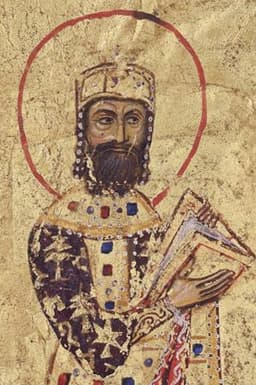
Alexios I Komnenos
Emperor · Medieval
78.4Total
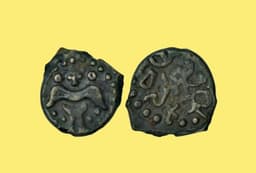
Dantidurga
Emperor · Medieval
58.7Total
Basic Information
Born
1048
735
Died
1118
756
Era
Medieval
Medieval
Nationality
Byzantine Empire
India
Occupation
Emperor
Emperor
Civilization
Western
Indian
Score Comparison
Military (10%)
61.7
67.5
Political (20%)
78.0
68.0
Influence (20%)
88.0
56.4
Legacy (20%)
80.0
50.0
Leadership (15%)
78.0
65.7
Strategy (15%)
68.0
52.5
TOTAL
78.4
58.7
Alexios I Komnenos — Complete Timeline
1081 AD
Battle of DyrrhachiumWar◆ Major
Alexios I Komnenos was defeated by the Norman army under Robert Guiscard at Dyrrhachium. The Byzantine forces were routed, and Alexios barely escaped. This loss allowed the Normans to occupy much of the western Balkans, though Alexios later recovered some territory.
Norman InvasionDefeatBalkans
Impact: regionaltragic
1090 AD
Reforms of the Byzantine Military and EconomyReform◆ Major
Alexios I implemented a series of reforms to restore Byzantine power. He reorganized the army by relying more on foreign mercenaries, reformed the currency (the hyperpyron), and granted tax exemptions to the Church. These measures stabilized the empire after decades of decline.
Military ReformEconomic ReformKomnenian Restoration
Impact: nationalconstructive
1095 AD
Appeal to the West: Council of PiacenzaPolitical Action
Alexios I sent envoys to Pope Urban II at the Council of Piacenza, requesting military aid against the Seljuk Turks. This appeal contributed to Urban's call for the First Crusade at the Council of Clermont later that year, initiating the Crusader movement.
First CrusadePope Urban IISeljuk Turks
Impact: global
1097 AD
First Crusade: Siege of NicaeaWar◆ Major
Alexios I cooperated with the Crusader army to besiege and capture Nicaea from the Seljuk Turks. The city was surrendered to Byzantine control, and Alexios used the Crusaders to recover key territories in Anatolia, though tensions later arose over land claims.
First CrusadeNicaeaByzantine-Crusader Relations
Impact: regionalconstructive
Dantidurga — Complete Timeline
753 AD
Founding of the Rashtrakuta DynastyPolitical Action
Dantidurga overthrew his overlord, the Chalukya king Kirtivarman II, in a coup. He established the Rashtrakuta dynasty as the dominant power in the Deccan, with Manyakheta as his capital. This marked the beginning of a new imperial era.
Impact: regionalconstructive
754 AD
Performance of the Hiranyagarbha RitualCultural
Dantidurga performed the Hiranyagarbha (golden womb) ritual, a Vedic ceremony that symbolically rebirthed him as a Kshatriya. This legitimized his rule by claiming a higher caste status, as the Rashtrakutas were originally of humble origin.
Impact: nationalconstructive
755 AD
Conquest of MalwaWar◆ Major
Dantidurga led a military campaign into Malwa, defeating the Gurjara-Pratihara ruler Nagabhata I. He annexed the region, expanding Rashtrakuta territory northward. This victory established Rashtrakuta influence in central India.
Impact: regionaldestructive
Expert Analysis
Alexios I Komnenos vs Dantidurga
# The Emperor and the Warlord: Two Paths to Power in a Medieval World
In the autumn of 1081, a desperate Byzantine emperor watched his army scatter across the Albanian plain. Alexios I Komnenos had gambled everything on a single battle against the Norman warlord Robert Guiscard, and he had lost. The imperial standard lay trampled in the mud, the Varangian Guard was shattered, and the road to Constantinople lay open. Yet three decades later, Alexios would die in his bed, having restored the empire’s fortunes and set in motion events that would reshape the entire medieval world. Half a world away, another man had faced a similar moment of destiny. In 753, Dantidurga, a minor chieftain in the Deccan plateau, overthrew his overlord in a palace coup and declared himself emperor. Within three years, he had conquered Malwa and performed the ancient Hiranyagarbha ritual, claiming rebirth as a Kshatriya warrior. He too died in power, but his empire would crumble within a generation. What drove these two men—both founders of dynasties, both products of their age—to such different outcomes?
Origins
Alexios Komnenos was born into the Byzantine military aristocracy in 1048, a time when the empire was bleeding from every frontier. The Seljuk Turks had shattered the imperial army at Manzikert in 1071, and Norman adventurers were carving out kingdoms in southern Italy. Alexios grew up in a world of sieges, betrayals, and shifting alliances. His family had produced emperors before, and he learned early that survival required not just courage but cunning. The Byzantine court was a snake pit of intrigue, and Alexios mastered its poisonous arts as naturally as he learned to command troops.
Dantidurga emerged from a very different world. The Indian subcontinent in the eighth century was a mosaic of warring kingdoms, where regional lords paid nominal allegiance to distant overlords while building their own power bases. Dantidurga was a Rashtrakuta chieftain, a member of a clan that had served the Chalukya dynasty of Badami for generations. Unlike Alexios, he came not from a great military family but from the margins of power. The Chalukyas had ruled the Deccan for two centuries, but their grip was weakening. Dantidurga saw an opportunity where others saw only tradition.
Rise to Power
Alexios rose through a series of military commands, proving himself a capable general against both internal rebels and external enemies. His moment came in 1081, when he led a coup against the unpopular Emperor Nikephoros III. But unlike many Byzantine usurpers, Alexios understood that seizing power was only the beginning. His first test came immediately: the Norman invasion. The defeat at Dyrrhachium was a disaster, but Alexios refused to let it define him. He retreated, regrouped, and began the slow work of rebuilding.
Dantidurga’s path was more direct. In 753, he simply overthrew his Chalukya overlord, Kirtivarman II, in a coup that seems to have been bloodless. Then, in 754, he performed the Hiranyagarbha ritual—a Vedic ceremony in which he was symbolically reborn from a golden womb, emerging as a Kshatriya warrior-king. This was political theater of the highest order, designed to legitimize his rule in the eyes of a society that valued ritual purity. The following year, he marched into Malwa and defeated the Gurjara-Pratihara ruler Nagabhata I, annexing the region. Within three years, Dantidurga had gone from a regional chieftain to the master of the Deccan.
Leadership & Governance
The difference between the two men becomes stark when we examine how they governed. Alexios was a reformer in the truest sense. After the defeat at Dyrrhachium, he understood that the old Byzantine military system was broken. In 1090, he implemented sweeping reforms: he reorganized the army, relying more on foreign mercenaries and granting land in exchange for military service—a system that would evolve into the pronoia, the Byzantine equivalent of feudalism. He reformed the currency, stabilized the economy, and rebuilt the navy. These were not flashy achievements, but they were the foundation of the Komnenian restoration.
Dantidurga’s governance is harder to assess. We know he performed the Hiranyagarbha ritual, which suggests he understood the importance of religious legitimacy. He conquered Malwa, which indicates military competence. But the historical record is silent on any broader reforms. The Rashtrakuta dynasty would go on to produce great builders and patrons of the arts—the Kailasa temple at Ellora was carved under their rule—but that was the work of his successors. Dantidurga himself left no lasting administrative or economic legacy. He was a conqueror, not a builder.
Triumph & Tragedy
Alexios’s greatest triumph was also his most ambiguous legacy. In 1095, he sent envoys to Pope Urban II at the Council of Piacenza, requesting mercenary aid against the Seljuk Turks. The pope instead launched the First Crusade—a massive armed pilgrimage that Alexios had neither expected nor fully controlled. In 1097, Alexios cooperated with the crusaders to capture Nicaea from the Turks, a genuine victory. But the crusaders soon revealed their own ambitions, carving out kingdoms in Antioch and Jerusalem that owed nothing to Constantinople. Alexios spent the rest of his reign trying to manage these unruly allies, with mixed success.
Dantidurga’s tragedy is the opposite: he achieved everything he set out to do, but his empire did not outlast his dynasty. The Rashtrakutas would rule for two centuries, but their founder’s conquests proved fragile. The Gurjara-Pratiharas and the Palas of Bengal would push back, and the Deccan would return to a cycle of warring kingdoms. Dantidurga had founded a dynasty, but he had not built a state.
Character & Destiny
Alexios was a survivor. He was cautious, calculating, and willing to compromise. He bribed enemies, married his daughters to foreign princes, and played the game of Byzantine politics with masterful skill. His greatest weakness was perhaps his success: by relying on foreign mercenaries and crusader armies, he set a precedent that would weaken the empire in the long run. But for his own time, his pragmatism was exactly what the empire needed.
Dantidurga was bolder, more direct. He seized power, legitimized it through ritual, and conquered through war. But his character seems to have been that of a warrior-chieftain, not a statesman. He built no lasting institutions, reformed no systems, and left no administrative legacy. His destiny was to be a founder, not a builder.
Legacy
Alexios I Komnenos is remembered as the founder of the Komnenian dynasty, which restored Byzantine power for a century. His appeal to the West set in motion the Crusades, a force that would reshape the medieval world. He is not a saint or a hero, but a complex figure who saved his empire through a combination of military skill, political cunning, and sheer endurance.
Dantidurga is remembered as the founder of the Rashtrakuta dynasty, which produced some of India’s greatest art and architecture. But his own legacy is overshadowed by his successors. He is a figure of historical importance, but not of the same transformative significance as Alexios.
Conclusion
What separates these two founders is not their ambition or their courage, but their understanding of power. Alexios knew that power was not just about winning battles; it was about building institutions, managing allies, and surviving long enough to see your reforms take root. Dantidurga knew how to seize power, but not how to sustain it. In the end, the emperor who lost his first great battle left a deeper mark on history than the conqueror who never lost at all. The lesson is as old as history itself: the hardest part of power is not getting it, but keeping it.
Rankings
🥇
Alexios I KomnenosLeader
Mil: 61.7Pol: 78.0Inf: 88.0
78.4
🥈
Dantidurga
Mil: 67.5Pol: 68.0Inf: 56.4
58.7
+19.7 behind
How This Comparison Works
Algorithm
Each figure is scored on 6 dimensions (0—100 scale) based on structured historical data: Military (10%), Political (20%), Influence (20%), Legacy (20%), Leadership (15%), Strategy (15%). The weighted total produces the final ranking.
Data Sources
Scores are computed from structured sub-indicators in the database. Scale factors adjust for era (Ancient ×0.85, Modern ×1.0) and civilization size (Eastern ×1.05, Other ×0.80) to account for differences in population and military scale.
Maximum 3 Figures
Comparisons are limited to 2—3 figures to ensure readability and statistical meaningfulness.
Error Margins
±5 points per dimension — Sub-scores are derived from historical records with inherent uncertainty. Two figures within 5 points on a dimension should be considered roughly equivalent in that area.
Total Score Accuracy
±3 points overall — The weighted combination of 6 dimensions produces a total score with approximately ±3 points of uncertainty. Differences of less than 3 points are not statistically significant— the figures are effectively tied.
Known Limitations
- Historical records are incomplete and uneven across civilizations
- Figures from oral-tradition societies may be underrepresented
- Occupation labels can misclassify multi-role figures
- Scores measure capability and impact, not moral character
- Quantitative scoring is a comparison tool, not absolute truth
Capability Radar
Military (10%) — Battles & Warfare
Battles
75
60
Win Rate
70
65
Expansion
60
65
Political (20%) — Governance & Reform
Reform
85
45
Diplomacy
90
55
Economy
70
50
Influence (20%) — Cultural & Global Reach
Cultural
70
40
Global
75
30
Legacy (20%) — Historical Impact
Historical
85
55
Longevity
80
50
Leadership (15%) — Power & Stability
Tenure
80
40
Stability
75
45
Strategy (15%) — Tactics & Innovation
Strategy
85
60
Tactics
80
55
Reform
75
40
Similar Comparisons
Comments & Discussion
数据屠夫6/16/2026
数据不会撒谎:拜占庭在阿莱克修斯登基前丢掉了小亚细亚70%的税基,而他死时帝国疆域反扩大了15%。丹蒂杜尔迦的所谓"帝国"在753年达到顶峰后,12年内就失去控制权。没有常备军、没有官僚体系、没有银币储备——这算哪门子统治者?史书用梵语诗篇包装的军事冒险罢了。
修正主义毒舌6/16/2026
阿莱克修斯篡位时承诺削税,结果每三年加征一次防空税(prosmonion)。丹蒂杜尔迦虽然也靠政变上位,至少他颁布了土地改革令,把维贾亚纳加尔的村庄自治权下放了。拜占庭派系斗争用刺杀和断脊刑伺候,德干高原的起义起码还能混个流放。更关键的是:丹蒂杜尔迦的"孔雀王朝再兴"失败了,但为后来遮娄其王朝提供了制度蓝本——阿莱克修斯留下的科穆宁体制呢?第四次十字军直接把它碾成渣。
Historian3296/16/2026
Dantidurga just got lucky with terrain. Alexios held off multiple crusader armies with diplomacy and sheer tactical grit. Dantidurga’s empire collapsed because he couldn't build institutions—just a tribal kingdom with a fancy Hindu ritual. Alexios reorganized the Byzantine military into a professional force that lasted centuries. 500 years of Komnenoi legacy vs. a decade of Rashtrakuta flash. Easy choice.
Historian5096/16/2026
You’re all missing the real point. Alexios faced the Norman invasion with actual Western European heavy cavalry tactics—something no Byzantine commander had successfully countered before. Dantidurga performed the Hiranyagarbha ritual, which is literally a ritual rebirth into a higher caste. That’s not statecraft; that’s magic. One man adapted to a new military reality; the other relied on Vedic cosmology. Who do you think was the pragmatist?
Chronicler55596/16/2026
Battle of Dyrrhachium, 1081. Alexios lost 5,000 Varangians in one afternoon because he put them in the front line without proper cavalry support. Meanwhile Dantidurga defeated the Chalukyan army of Kirtivarman II using a pincer formation with elephants—against a force three times his size. That’s not "lucky terrain," that’s tactical genius. Alexios spent years bribing Normans and Turks; Dantidurga took Malwa in three months. Give me the warlord who actually fought his battles.