Loading...
Charles de Gaulle vs Dantidurga
Charles de Gaulle leads by 9.5 pts · 2 figures compared
…
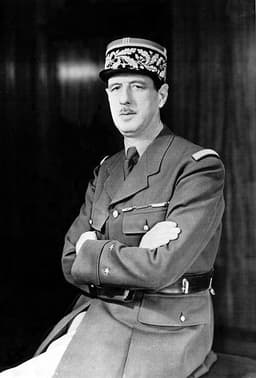
Charles de Gaulle
Politician · Modern
68.2Total
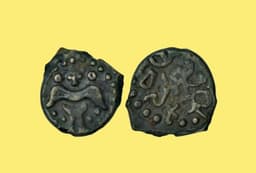
Dantidurga
Emperor · Medieval
58.7Total
Basic Information
Born
1890
735
Died
1970
756
Era
Modern
Medieval
Nationality
France
India
Occupation
Politician
Emperor
Civilization
Western
Indian
Score Comparison
Military (10%)
55.0
67.5
Political (20%)
75.0
68.0
Influence (20%)
65.0
56.4
Legacy (20%)
68.0
50.0
Leadership (15%)
78.0
65.7
Strategy (15%)
65.0
52.5
TOTAL
68.2
58.7
Charles de Gaulle — Complete Timeline
1940 AD
Appeal of 18 June 1940Political Action
From London, de Gaulle broadcast a radio appeal urging French resistance against Nazi occupation. He called on French soldiers and citizens to continue the fight, founding the Free French Forces and becoming the symbol of French defiance.
World War IIResistanceLeadership
Impact: nationalconstructive
1958 AD
Founding of the Fifth RepublicPolitical Action
De Gaulle returned to power during the Algerian crisis and oversaw the drafting of a new constitution. The Fifth Republic established a strong executive presidency, replacing the unstable parliamentary system of the Fourth Republic.
ConstitutionGovernment ReformPolitical System
Impact: nationalconstructive
1962 AD
End of the Algerian WarPolitical Action◆ Major
De Gaulle negotiated the
DecolonizationPeace TreatyAlgeria
Impact: regionalconstructive
1968 AD
May 1968 CrisisPolitical Action◆ Major
Mass student protests and general strikes paralyzed France, challenging de Gaulle's government. De Gaulle briefly fled to Germany, then returned to dissolve the National Assembly and call elections, which his party won, but his authority was weakened.
ProtestPolitical CrisisSocial Unrest
Impact: nationaldestructive
1969 AD
Resignation as PresidentPolitical Action
De Gaulle resigned after losing a referendum on regional reform and Senate restructuring. The defeat marked the end of his political career, as he withdrew from public life and died the following year.
ResignationPolitical DefeatReferendum
Impact: nationaltragic
Dantidurga — Complete Timeline
753 AD
Founding of the Rashtrakuta DynastyPolitical Action
Dantidurga overthrew his overlord, the Chalukya king Kirtivarman II, in a coup. He established the Rashtrakuta dynasty as the dominant power in the Deccan, with Manyakheta as his capital. This marked the beginning of a new imperial era.
Impact: regionalconstructive
754 AD
Performance of the Hiranyagarbha RitualCultural
Dantidurga performed the Hiranyagarbha (golden womb) ritual, a Vedic ceremony that symbolically rebirthed him as a Kshatriya. This legitimized his rule by claiming a higher caste status, as the Rashtrakutas were originally of humble origin.
Impact: nationalconstructive
755 AD
Conquest of MalwaWar◆ Major
Dantidurga led a military campaign into Malwa, defeating the Gurjara-Pratihara ruler Nagabhata I. He annexed the region, expanding Rashtrakuta territory northward. This victory established Rashtrakuta influence in central India.
Impact: regionaldestructive
Expert Analysis
Charles de Gaulle vs Dantidurga
# The General and the Emperor: Two Paths to Founding a Dynasty
In the summer of 1940, a tall, awkward French general stood before a BBC microphone in London and spoke words that would echo through history. France had fallen, its government had surrendered, but Charles de Gaulle refused to accept defeat. Nearly twelve centuries earlier, in the Deccan plateau of India, another rebel raised his sword against his overlord—a Chalukya king who had no idea that his vassal, Dantidurga, was about to shatter an empire and build a new one from its ruins. Both men were founders. Both defied the established order. Yet their paths could not have been more different. What drives a man to remake his world, and why do some succeed where others merely survive?
Origins
Charles de Gaulle was born into a devoutly Catholic, patriotic family in Lille, France, in 1890. His father taught philosophy and history, instilling in young Charles a sense of national destiny and a belief that France was meant for greatness. The shadow of the Franco-Prussian War hung over his childhood—France had been humiliated, and de Gaulle grew up determined to restore its honor. He entered the military academy of Saint-Cyr, where his intellectual arrogance and towering height (six feet five inches) set him apart. He was a man who read philosophy alongside battle tactics, who believed that character mattered more than circumstance.
Dantidurga emerged from a very different world. Born around 735 in the Deccan, he was a chieftain of the Rashtrakuta clan, a feudatory family serving the mighty Chalukya dynasty. The Deccan was a land of shifting alliances and constant warfare, where loyalty was a tool and ambition a necessity. Unlike de Gaulle, Dantidurga left no diaries, no philosophical treatises. His motivations must be read in his actions: the ambition of a vassal who saw weakness in his master and decided to strike. Where de Gaulle was shaped by defeat and a vision of resurrection, Dantidurga was shaped by opportunity and the raw logic of power.
Rise to Power
De Gaulle’s rise was a long, painful ascent. In the 1930s, he wrote books arguing for mechanized warfare, but French military orthodoxy ignored him. When World War II erupted, he was a mere colonel. Then came the catastrophe of 1940. As France collapsed, Prime Minister Paul Reynaud promoted him to undersecretary of defense, but it was too late. Rather than accept armistice, de Gaulle fled to London. On June 18, 1940, he made his famous appeal: "France has lost a battle, but France has not lost the war." He had no army, no territory, no legitimacy—only his voice and his conviction.
Dantidurga’s rise was swifter and more brutal. In 753, he turned on his overlord, King Kirtivarman II of the Chalukyas, in a coup that overthrew centuries of established rule. The exact details remain murky, but the result was clear: Dantidurga founded the Rashtrakuta dynasty. To legitimize his power, he performed the Hiranyagarbha ritual in 754—a Vedic ceremony where he was symbolically reborn from a golden womb as a Kshatriya, a warrior of royal status. It was a masterstroke of political theater. Where de Gaulle appealed to reason and national honor, Dantidurga appealed to tradition and divine sanction.
Leadership & Governance
De Gaulle governed with a vision of a strong, independent France. When he returned to power in 1958 during the Algerian crisis, he drafted a new constitution for the Fifth Republic, concentrating executive power in the presidency. He was a master of political symbolism—his famous press conferences, his deliberate aloofness, his use of the referendum to bypass parliament. Yet his leadership style was autocratic. He once remarked, "The only thing that matters in politics is to be the strongest." He ended the Algerian War in 1962 through the Évian Accords, a decision that sparked assassination attempts but ultimately saved France from a colonial quagmire.
Dantidurga’s governance is harder to assess, as records are sparse. He conquered Malwa in 755, defeating the Gurjara-Pratihara ruler Nagabhata I and annexing the region. His strategy was expansion through military might, but he also understood the importance of ritual legitimacy. By performing Vedic ceremonies, he aligned himself with the Brahmanical order, winning the support of priests and local elites. Where de Gaulle built institutions—a constitution, a republic—Dantidurga built a dynasty through conquest and cultural assimilation.
Triumph & Tragedy
De Gaulle’s greatest triumph was the founding of the Fifth Republic and the peaceful decolonization of Algeria. His greatest tragedy came in May 1968, when student protests and a general strike paralyzed France. He briefly fled to Germany, consulting with French generals, before returning to dissolve the National Assembly and call elections. He won, but the magic was broken. A year later, he lost a referendum on regional reform and resigned. The man who had saved France twice—from Nazi occupation and from civil war—was brought down by a student uprising.
Dantidurga’s triumph was the founding of the Rashtrakuta dynasty, which would rule the Deccan for over two centuries. His tragedy was his early death in 756, just three years after his coup. He never saw the empire he built reach its peak under his successor, Krishna I. Like a meteor, he blazed across the stage and vanished, leaving others to complete his work.
Character & Destiny
De Gaulle’s character was defined by a towering self-confidence that bordered on arrogance. He believed he was France—"I am France," he once said—and this conviction gave him the strength to defy the Nazis, the French establishment, and even his own people. But it also made him inflexible. He could not adapt to the changing social currents of the 1960s, and his rigidity cost him his presidency.
Dantidurga’s character is harder to read, but his actions suggest a pragmatic ambition. He knew when to strike, when to perform rituals, and when to conquer. He was not a philosopher-king like de Gaulle but a warrior-chieftain who understood that power flows from both the sword and the altar.
Legacy
De Gaulle left behind the Fifth Republic, a political system that endures to this day. He is remembered as the savior of French honor, the father of modern France. His name adorns airports, aircraft carriers, and squares. Yet his legacy is contested—some see him as a visionary, others as a authoritarian.
Dantidurga left behind a dynasty. The Rashtrakutas would become one of India’s great medieval empires, patrons of art, literature, and architecture, including the famous Kailasa temple at Ellora. But Dantidurga himself is little known outside scholarly circles. His legacy is not a constitution but a lineage, not a nation but a family.
Conclusion
Two founders, two worlds. De Gaulle built with words and institutions; Dantidurga built with swords and rituals. One sought to restore a nation’s honor; the other sought to establish a family’s power. One left a republic; the other left a dynasty. Their differences remind us that leadership is not a universal formula but a response to specific circumstances—the weight of history, the shape of society, the tools available. De Gaulle could not have founded a dynasty in modern France; Dantidurga could not have founded a republic in medieval India. Each was a product of his time, and each reshaped it in his image. In the end, what unites them is not their methods but their audacity: the courage to defy the given order and build something new.
Rankings
🥇
Charles de GaulleLeader
Mil: 55.0Pol: 75.0Inf: 65.0
68.2
🥈
Dantidurga
Mil: 67.5Pol: 68.0Inf: 56.4
58.7
+9.5 behind
How This Comparison Works
Algorithm
Each figure is scored on 6 dimensions (0—100 scale) based on structured historical data: Military (10%), Political (20%), Influence (20%), Legacy (20%), Leadership (15%), Strategy (15%). The weighted total produces the final ranking.
Data Sources
Scores are computed from structured sub-indicators in the database. Scale factors adjust for era (Ancient ×0.85, Modern ×1.0) and civilization size (Eastern ×1.05, Other ×0.80) to account for differences in population and military scale.
Maximum 3 Figures
Comparisons are limited to 2—3 figures to ensure readability and statistical meaningfulness.
Error Margins
±5 points per dimension — Sub-scores are derived from historical records with inherent uncertainty. Two figures within 5 points on a dimension should be considered roughly equivalent in that area.
Total Score Accuracy
±3 points overall — The weighted combination of 6 dimensions produces a total score with approximately ±3 points of uncertainty. Differences of less than 3 points are not statistically significant— the figures are effectively tied.
Known Limitations
- Historical records are incomplete and uneven across civilizations
- Figures from oral-tradition societies may be underrepresented
- Occupation labels can misclassify multi-role figures
- Scores measure capability and impact, not moral character
- Quantitative scoring is a comparison tool, not absolute truth
Capability Radar
Military (10%) — Battles & Warfare
Battles
60
60
Win Rate
55
65
Expansion
20
65
Political (20%) — Governance & Reform
Reform
95
45
Diplomacy
90
55
Economy
70
50
Influence (20%) — Cultural & Global Reach
Cultural
70
40
Global
80
30
Legacy (20%) — Historical Impact
Historical
85
55
Longevity
75
50
Leadership (15%) — Power & Stability
Tenure
85
40
Stability
75
45
Strategy (15%) — Tactics & Innovation
Strategy
85
60
Tactics
70
55
Reform
80
40
Similar Comparisons
Comments & Discussion
DAUNTLESS GAULLE6/16/2026
De Gaulle won through sheer force of will and a radio transmitter. Dantidurga hacked his way to power with a sword against a crumbling empire. One used words to rally a fallen nation, the other used war to build a new one. Give me the French general any day—his defiance of 1940 proves that audacity beats brute force when the world’s watching. Dantidurga is just another footnote in the endless Indian dynastic shuffle.
DATA BREAKER6/16/2026
Except the comparison fails because the contexts are incomparable. De Gaulle’s “rebellion” occurred in a modern nation-state with global allies, media, and a legal government-in-exile. Dantidurga operated in a medieval feudal system where overthrow was a local power game. You’re mixing apples and orbital rockets. De Gaulle didn’t “found” anything—he restored a pre-existing Republic. Dantidurga actually did found a new dynasty. Different centuries, different rules, different achievements.
雷声大语点小6/16/2026
别老吹戴高乐了。他在1940年不过是个流亡将军,靠BBC刷存在感。真正能打的法国元帅贝当呢?被你们骂成叛徒。看看丹蒂杜尔加:人家是真刀真枪从查鲁克亚帝国手里抢地盘,建立拉什特拉库塔王朝。戴高乐连个巴黎都没守住,就跑伦敦当“自由法国”的影子领袖。这也能比?历史上的硬汉不是在麦克风后面长出来的。
REVISIONIST RAZOR6/16/2026
Let’s be real: both are overhyped founders whose legacies are sanitized. De Gaulle’s authoritarian streak and colonial brutality in Algeria? Conveniently forgotten. Dantidurga’s reign likely involved similar bloodshed and oppression of local rivals, but Indian history whitewashes it as “epic founding.” Both men were power-hungry opportunists who used crisis to seize control. The romanticized “father of the nation” trope obscures the pragmatic violence underneath. I’d take neither as a role model
青铜与铁6/16/2026
丹蒂杜尔加才是真开国者——他在8世纪打破了查鲁克亚帝国数百年的统治,靠军事天才和外交手腕建立了拉什特拉库塔王朝。戴高乐呢?不过是个二战时被赶出本土的将军,战后靠宪法和政治手腕上位。一个在石板上刻铭文,一个在收音机里念稿子。历史会记住谁?丹蒂杜尔加的王朝统治了印度中西部两个世纪;戴高乐的第五共和国才存在多久?根基不同,分量天差地别。