Loading...
Daniel Ortega vs Li Zicheng
Daniel Ortega leads by 4.6 pts · 2 figures compared
…
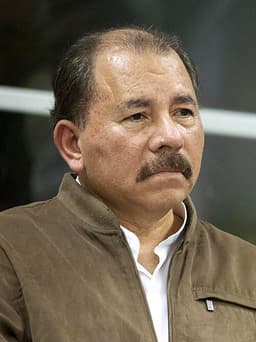
Daniel Ortega
Revolutionary · Modern
48.1Total
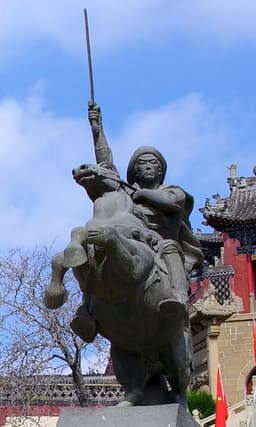
Li Zicheng
Revolutionary · Modern
43.5Total
Basic Information
Born
1945
1606
Died
—
1645
Era
Modern
Modern
Nationality
Nicaragua
China
Occupation
Revolutionary
Revolutionary
Civilization
Western
Eastern
Score Comparison
Military (10%)
45.0
50.0
Political (20%)
42.3
27.9
Influence (20%)
51.0
52.5
Legacy (20%)
42.5
44.2
Leadership (15%)
67.0
39.0
Strategy (15%)
38.6
43.3
TOTAL
48.1
43.5
Daniel Ortega — Complete Timeline
1979 AD
Sandinista RevolutionWar
Ortega was a key commander in the Sandinista National Liberation Front (FSLN) that overthrew the Somoza dictatorship. The revolution ended decades of authoritarian rule and established a socialist-oriented government, with Ortega becoming a member of the ruling junta.
RevolutionSandinistaSomoza
Impact: nationalconstructive
1984 AD
Election as President of NicaraguaPolitical Action◆ Major
Ortega was elected president in Nicaragua's first democratic election after the revolution, winning 67% of the vote. His government faced a US-backed Contra war and implemented land reform, literacy campaigns, and social programs.
ElectionSandinistaSocial Reform
Impact: nationalconstructive
1990 AD
Electoral defeat and transition of powerPolitical Action◆ Major
Ortega lost the presidential election to Violeta Chamorro, marking the first peaceful transfer of power in Nicaragua's history. The defeat ended 11 years of Sandinista rule and was a result of war fatigue and economic crisis.
ElectionDefeatDemocracy
Impact: national
2007 AD
Return to presidencyPolitical Action◆ Major
Ortega was re-elected president after 17 years in opposition, winning 38% of the vote. His return marked a shift toward authoritarianism, as he consolidated power, controlled the judiciary, and suppressed political opposition.
ElectionReturnAuthoritarianism
Impact: national
2018 AD
2018 protests and crackdownPolitical Action◆ Major
Mass protests erupted against Ortega's government over social security reforms, which were later withdrawn. The government responded with a violent crackdown, resulting in hundreds of deaths and thousands of arrests, leading to international condemnation.
ProtestsRepressionHuman Rights
Impact: nationaldestructive
Li Zicheng — Complete Timeline
1644 AD
Captured Beijing and Ended the Ming DynastyWar
Li Zicheng led his rebel army to capture Beijing. The Chongzhen Emperor committed suicide, ending the Ming dynasty. Li Zicheng proclaimed the Shun dynasty and briefly ruled from the Forbidden City before being defeated by Qing forces.
Ming-Qing TransitionRebellionBeijing
Impact: globaldestructive
Defeated at the Battle of Shanhai PassWar◆ Major
Li Zicheng's army was defeated by the combined forces of Wu Sangui and the Manchus at the Battle of Shanhai Pass. The defeat forced him to abandon Beijing and retreat westward, effectively ending his control over northern China.
Ming-Qing TransitionBattleDefeat
Impact: globaltragic
Proclaimed the Shun DynastyPolitical Action◆ Major
After capturing Beijing, Li Zicheng formally proclaimed the establishment of the Shun dynasty in Xi'an. He adopted the title of emperor and began implementing his own administrative policies, though his rule was short-lived.
Shun DynastyProclamationRebellion
Impact: nationalconstructive
1645 AD
Killed in Jiugong MountainWar◆ Major
Li Zicheng was killed by a local militia while fleeing through Jiugong Mountain in Hubei province. His death marked the end of the Shun dynasty and the collapse of his rebellion, though some accounts claim he survived and became a monk.
Shun DynastyDeathRebellion
Impact: nationaltragic
Expert Analysis
Li Zicheng vs Daniel Ortega
# The Revolutionary’s Bargain
In the spring of 1644, Li Zicheng rode through the gates of Beijing at the head of a ragged army of peasants, their tattered banners proclaiming a new dynasty. Three hundred and sixty-three years later, on a January morning in 2007, Daniel Ortega stood before the National Assembly in Managua, raising his hand to take the presidential oath for a second time—seventeen years after voters had cast him out. One man ruled for forty-two days; the other has governed for nearly four decades across two separate eras. Both were revolutionaries who toppled dynasties. Both promised justice to the poor. But their stories diverged in ways that tell us something profound about the nature of power, the weight of history, and the difference between a moment and a lifetime.
Origins
Li Zicheng was born in 1606 to a family of impoverished farmers in Shaanxi province, a region then ravaged by drought, locusts, and famine. The Ming dynasty was crumbling under corruption, tax burdens, and the inability to feed its people. Li worked as a horse herder and later a postal courier—a job that vanished when the government cut services to save money. When he defaulted on a loan and was publicly humiliated, he killed the lender and fled to join a band of rebels. He was not educated in statecraft. He had never read the Confucian classics. What he had was a visceral understanding of suffering and a talent for survival.
Daniel Ortega was born in 1945 in La Libertad, a mining town in Nicaragua, to a family of modest means but political awareness. His father was a teacher who opposed the Somoza dictatorship; his mother was a devout Catholic. Ortega grew up in the shadow of a regime that had turned Nicaragua into a family fiefdom, and he joined the Sandinista movement as a teenager. By his early twenties, he was imprisoned and tortured for his activities. Unlike Li, Ortega came of age in a century of ideology, with Marxist texts, Cuban support, and a global Cold War that gave his struggle meaning beyond Nicaragua’s borders.
Rise to Power
Li Zicheng’s ascent was a story of desperation turned to momentum. In the 1630s, as famine deepened and the Ming military collapsed in the north, rebel armies swelled. Li emerged as a leader by combining military competence with a reputation for generosity—he distributed grain to the hungry and forbade his troops from looting the poor. By 1643, he had captured Xi’an and proclaimed himself king. In April 1644, his army marched on Beijing. The city fell almost without a fight. The Chongzhen Emperor hanged himself on a hill behind the Forbidden City, leaving a note blaming his officials for betraying him.
Ortega’s rise followed a different path. The Sandinista revolution was a decade-long guerrilla war, not a sudden storm. Ortega was not the movement’s sole leader—he was one of nine commanders in a collective leadership, a man of organizational skill rather than battlefield heroism. When Somoza fled in July 1979, the Sandinistas inherited a country in ruins. Ortega became coordinator of the junta, then president after the 1984 election, which he won with 67 percent of the vote. International observers called it fair; the United States called it a sham and funded the Contras to overthrow him.
Leadership & Governance
Here the two men diverge most sharply. Li Zicheng had no time to govern. His regime lasted weeks. He entered Beijing and immediately faced the impossible task of feeding a starving capital while his army, drunk on victory, began looting the homes of Ming officials. He tried to buy loyalty with promises of land reform, but he had no bureaucracy, no tax system, no plan. His greatest error was strategic: he failed to secure the allegiance of Wu Sangui, the Ming general guarding the Great Wall. When Wu defected to the Manchus instead, Li’s fate was sealed.
Ortega, by contrast, governed for five years in his first term and has now ruled for over a decade in his second. His military score of 36 is low, but his political score of 61 and leadership score of 75 reflect a man who learned that survival in power requires more than guns. In the 1980s, he presided over a revolutionary state that redistributed land, expanded literacy, and fought a U.S.-backed insurgency. But he also censored opposition newspapers and conscripted young men into a brutal war. After losing the 1990 election, he spent seventeen years in the political wilderness, watching his successors fail, before returning to power in 2007—this time as a different kind of leader: pragmatic, authoritarian, and willing to cut deals with the same elites he once overthrew.
Triumph & Tragedy
Li Zicheng’s triumph was also his tragedy. He captured Beijing, ended a dynasty, and achieved what millions of peasants had only dreamed of. But he could not hold it. At the Battle of Shanhai Pass in May 1644, his army was crushed by the combined forces of Wu Sangui and the Manchu prince Dorgon. Li fled west, was defeated again, and was killed by a local militia in Jiugong Mountain in 1645. He was thirty-nine. His body was never given a proper burial.
Ortega’s tragedy is of a different kind. His triumph was the 1979 revolution, which toppled a dynasty that had ruled Nicaragua for forty-three years. But his tragedy is that he has become, in the eyes of many, a version of what he fought against. The 2018 protests saw security forces kill hundreds of demonstrators. His government has jailed opponents, suppressed free speech, and turned Nicaragua into a family enterprise run by his wife as vice president. His legacy score of 58 reflects a figure whose early promise has been eroded by later betrayal.
Character & Destiny
Li Zicheng was a man of instinct, not calculation. He trusted his army’s momentum and believed that justice would follow victory. He was generous to the poor but naïve about power. He did not understand that toppling a dynasty is easier than building one.
Ortega is a survivor. He has outlasted the Contras, the U.S. embargo, his own electoral defeat, and the outrage of his former allies. He has no grand ideology left—only the will to remain. His strategy score of 70 and influence of 70 show a man who adapts. But adaptation has a cost. The revolutionary who once promised a new Nicaragua now governs a country that many call a dictatorship.
Legacy
Li Zicheng is remembered as a folk hero in China, a symbol of peasant rebellion who appears in novels, operas, and films. His failure is blamed on bad luck and betrayal, not bad character. He is a tragic figure—a man who reached the summit and could not stay.
Ortega is remembered in two ways: abroad, as a Cold War relic who sold his principles for power; at home, as a father figure to some and a tyrant to others. His story is not yet finished, but the arc is clear. He has traded the romance of revolution for the reality of rule.
Conclusion
What separates these two revolutionaries is not ambition or courage—both had plenty. It is time. Li Zicheng was given weeks to build a world; Ortega has had decades. One died before he could fail; the other has lived long enough to betray his own cause. Perhaps the cruelty of history is not that it denies revolutionaries their victory, but that it sometimes gives them exactly what they asked for—and lets them stay.
Rankings
🥇
Daniel OrtegaLeader
Mil: 45.0Pol: 42.3Inf: 51.0
48.1
🥈
Li Zicheng
Mil: 50.0Pol: 27.9Inf: 52.5
43.5
+4.6 behind
How This Comparison Works
Algorithm
Each figure is scored on 6 dimensions (0—100 scale) based on structured historical data: Military (10%), Political (20%), Influence (20%), Legacy (20%), Leadership (15%), Strategy (15%). The weighted total produces the final ranking.
Data Sources
Scores are computed from structured sub-indicators in the database. Scale factors adjust for era (Ancient ×0.85, Modern ×1.0) and civilization size (Eastern ×1.05, Other ×0.80) to account for differences in population and military scale.
Maximum 3 Figures
Comparisons are limited to 2—3 figures to ensure readability and statistical meaningfulness.
Error Margins
±5 points per dimension — Sub-scores are derived from historical records with inherent uncertainty. Two figures within 5 points on a dimension should be considered roughly equivalent in that area.
Total Score Accuracy
±3 points overall — The weighted combination of 6 dimensions produces a total score with approximately ±3 points of uncertainty. Differences of less than 3 points are not statistically significant— the figures are effectively tied.
Known Limitations
- Historical records are incomplete and uneven across civilizations
- Figures from oral-tradition societies may be underrepresented
- Occupation labels can misclassify multi-role figures
- Scores measure capability and impact, not moral character
- Quantitative scoring is a comparison tool, not absolute truth
Capability Radar
Military (10%) — Battles & Warfare
Battles
35
55
Win Rate
40
60
Expansion
20
65
Political (20%) — Governance & Reform
Reform
40
15
Diplomacy
45
20
Economy
30
10
Influence (20%) — Cultural & Global Reach
Cultural
40
40
Global
35
35
Legacy (20%) — Historical Impact
Historical
45
55
Longevity
40
30
Leadership (15%) — Power & Stability
Tenure
65
20
Stability
25
5
Strategy (15%) — Tactics & Innovation
Strategy
35
55
Tactics
30
50
Reform
25
30
Similar Comparisons
Comments & Discussion
Dragon-Slayer's Dilemma6/16/2026
Li Zicheng’s 42-day rule proves that seizing a throne is easier than feeding a starving empire. His fatal error? Trusting peasant loyalty over hard logistics. He cut grain taxes too fast, alienating Ming officials, then looted Beijing instead of building a supply chain. The result? Wu Sangui’s defection and Qing cavalry at Shanhai Pass. Ortega, by contrast, mastered the long game—surviving defeats by slowly co-opting enemies. One burned bright for a moment; the other learned to dim his flame jus
数据屠夫6/16/2026
拿李自成和奥尔特加比?简直是拿炮仗比蜡烛。李自成进北京43天就玩完,奥尔特加从1979到2025在泥潭里滚了40年都没死透。数据明摆着:李自成没撑过一个税收周期,奥尔特加却用9次选举把反对派耗成空壳。别跟我扯理想—李自成输在不会算账,奥尔特加赢在懂怎么用银行家填饱枪杆子。革命者?都是赌徒,一个押一把跑路,一个下注了四十年还不肯离桌。
Classics Counterpoint6/16/2026
Li Zicheng is the quintessential ‘failed rebel’ in Chinese historiography—a man undone not by enemies but by his own lack of Mandate. Sima Qian would have noted his tragic arc: a peasant who toppled a dynasty yet never learned the Confucian art of ‘rectifying names.’ He called his regime ‘Shun’ (顺, meaning ‘compliance’), but couldn’t even secure Ming officer loyalty. Ortega, by contrast, embodies the Latin American caudillo tradition—more a modern strongman than a classical revolutionary. Li is
历史泥瓦匠6/16/2026
你们这些专家就知道吹毛求疵。李自成和奥尔特加骨子里都是一个模子:穷小子掀桌子。区别在于,李自成在故宫龙椅上屁股还没坐热就反水了军头,奥尔特加却把桑地诺主义做成了家传生意—儿子当顾问,老婆搞媒体。李自成砍了吴三桂全家,奥尔特加把反对派关到没脾气。两人都许诺分田地,但一个饿死了,一个把田变成了选票。历史不判对错,只记谁活到了最后。
Revisionist's Reckoning6/16/2026
The real difference isn’t 42 days versus 40 years—it’s about institutional memory. Li Zicheng’s army was a wildfire, burning bright on peasant grievances but lacking any bureaucratic skeleton. When he took Beijing, he had no tax rolls, no census, no plan for the Qing. Ortega, however, inherited the Sand