Loading...
Cyrus the Great vs Louis XI
Cyrus the Great leads by 16.2 pts · 2 figures compared
…
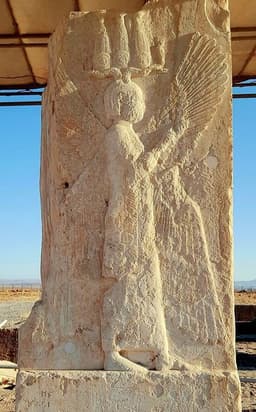
Cyrus the Great
Emperor · Ancient
83.9Total
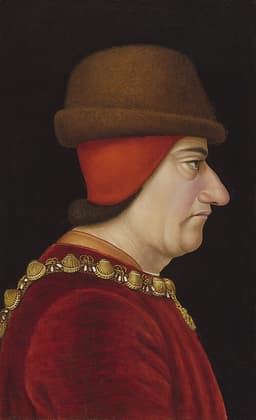
Louis XI
Emperor · Medieval
67.7Total
Basic Information
Born
-600
1423
Died
-530
1483
Era
Ancient
Medieval
Nationality
Persia
France
Occupation
Emperor
Emperor
Civilization
Middle Eastern
Western
Score Comparison
Military (10%)
82.0
45.0
Political (20%)
85.0
78.0
Influence (20%)
85.0
68.0
Legacy (20%)
90.0
65.0
Leadership (15%)
78.0
85.0
Strategy (15%)
75.0
55.0
TOTAL
83.9
67.7
Cyrus the Great — Complete Timeline
550 BC
Founding of the Achaemenid EmpirePolitical Action
Cyrus led a rebellion against the Median Empire, defeating King Astyages and capturing Ecbatana. He then united the Persian and Median tribes, establishing the Achaemenid Empire, which became the largest empire the world had yet seen.
Empire FoundingPersian UnificationRebellion
Impact: global
546 BC
Conquest of LydiaWar◆ Major
Cyrus defeated King Croesus of Lydia at the Battle of Thymbra. The Lydian capital Sardis was captured, and Croesus was taken prisoner. This conquest brought Anatolia under Persian control and secured access to the Aegean coast.
Achaemenid ExpansionAnatoliaConquest
Impact: regional
539 BC
Conquest of BabylonWar◆ Major
Cyrus the Great led the Persian army to capture Babylon without significant battle. The city's gates were opened, and Cyrus entered peacefully. This conquest added Mesopotamia to the Achaemenid Empire and marked the end of the Neo-Babylonian Empire.
Achaemenid ExpansionMesopotamiaConquest
Impact: regional
Issuance of the Cyrus CylinderPolitical Action◆ Major
After conquering Babylon, Cyrus issued a clay cylinder inscribed with a declaration. It described his policy of restoring temples, repatriating displaced peoples, and allowing religious freedom. The cylinder is often cited as an early charter of human rights.
Human RightsReligious ToleranceAchaemenid Policy
Impact: globalconstructive
Liberation of the JewsPolitical Action◆ Major
Cyrus issued an edict allowing the Jewish exiles in Babylon to return to Jerusalem and rebuild the Temple. This event is recorded in the biblical Book of Ezra and is a key moment in Jewish history, ending the Babylonian captivity.
Jewish HistoryReligious FreedomReturn from Exile
Impact: regionalconstructive
Louis XI — Complete Timeline
1464 AD
Established the Postal SystemReform
Louis XI created a royal postal system with relay stations across France, enabling faster communication between the crown and provincial officials. This administrative reform improved governance and intelligence gathering.
AdministrationCommunicationReform
Impact: nationalconstructive
1465 AD
Defeated the League of the Public WealWar◆ Major
Louis XI faced a coalition of powerful nobles, the League of the Public Weal, led by Charles the Bold of Burgundy. Although the Battle of Montlh
Civil WarNoble RebellionBurgundy
Impact: national
1475 AD
Treaty of PicquignyPolitical Action◆ Major
Louis XI negotiated the Treaty of Picquigny with Edward IV of England, ending English military intervention in France. Louis paid a large pension to Edward in exchange for English withdrawal, avoiding a costly war and securing his northern border.
TreatyDiplomacyEngland
Impact: regionalconstructive
1477 AD
Acquired BurgundyPolitical Action
After Charles the Bold's death at the Battle of Nancy, Louis XI seized the Duchy of Burgundy and other Burgundian territories, including Picardy and the Somme towns. This expansion significantly increased royal domain and weakened the Burgundian state.
Territorial ExpansionBurgundyRoyal Domain
Impact: regionalconstructive
1481 AD
Annexed Anjou and MainePolitical Action
Louis XI annexed the counties of Anjou and Maine after the death of Charles of Anjou, incorporating them into the royal domain. This further consolidated French territory and reduced the power of the Angevin nobility.
Territorial ExpansionAnjouMaine
Impact: nationalconstructive
Expert Analysis
Cyrus the Great vs Louis XI
# The Spider and the Shepherd: Two Visions of Empire
In the autumn of 539 BCE, Cyrus the Great walked through the gates of Babylon without a single arrow fired, while more than two thousand years later, in the winter of 1477, Louis XI of France sat in his fortified castle at Plessis-lès-Tours, spinning webs of intrigue that would ensnare the richest duchy in Europe. One liberated captives; the other trapped rivals. Both built empires, but they did so with radically different hands—one open, the other clenched.
Origins
Cyrus was born around 600 BCE into the Persian vassal state of Anshan, a minor kingdom under the shadow of the Median Empire. The Persians were a pastoral people, hardened by the Zagros Mountains, with a culture that valued loyalty and pragmatism over dogma. Young Cyrus grew up hearing tales of nomadic warriors and settled kings, learning that power came not from divine right but from the allegiance of men.
Louis XI entered the world in 1423, the son of Charles VII of France and Marie of Anjou, during the twilight of the Hundred Years' War. France was a patchwork of feudal domains, where dukes like Charles the Bold of Burgundy commanded more wealth and soldiers than the king himself. Louis was sickly, secretive, and suspicious—qualities his father despised. Sent away to the Dauphiné, he learned early that trust was a luxury he could not afford.
The difference in their origins is not merely geographic but psychological. Cyrus grew up in a world where power was earned through alliance and respect; Louis grew up in a world where power was stolen from rivals who would gladly kill him.
Rise to Power
Cyrus's ascent began in 550 BCE when he led a rebellion against his Median overlord, King Astyages. The Persians were outnumbered, but Cyrus had something the Medes lacked: a reputation for fairness. When he captured Ecbatana, he did not slaughter the Median nobility—he incorporated them. This was not mercy born of weakness but strategy born of vision. He understood that an empire built on fear would collapse with the first tremor.
Louis's path was far darker. In 1465, he faced the League of the Public Weal, a coalition of nobles led by Charles the Bold. Louis was defeated at the Battle of Montlhéry, but he did not retreat in disgrace; he retreated in calculation. He signed treaties he never intended to keep, bought off enemies with pensions, and waited. Where Cyrus charged forward, Louis sidestepped. Where Cyrus inspired, Louis insinuated.
Leadership & Governance
Cyrus governed through what modern historians call the Cyrus Cylinder, issued in 539 BCE after the conquest of Babylon. It was not a charter of human rights in the modern sense, but it was revolutionary for its time: he restored local temples, allowed deported peoples to return home, and respected local customs. The Jewish exiles were liberated, and the Temple in Jerusalem was rebuilt. Cyrus ruled a multicultural empire by making conquered peoples want to be part of it.
Louis XI governed through the opposite principle: centralization through surveillance. He established a royal postal system in 1464, with relay stations across France, not to connect people but to monitor them. He promoted merchants and lawyers to weaken the old nobility, and he taxed ruthlessly. Where Cyrus built bridges, Louis built walls. The Treaty of Picquigny in 1475 ended English interference in French affairs, but it was a peace bought with gold, not trust.
Yet Louis was no mere tyrant. He understood that a king's power depended on the kingdom's prosperity, and he encouraged trade, standardized weights and measures, and reformed the chaotic French currency. His cruelty was calculated, not capricious.
Triumph & Tragedy
Cyrus's greatest moment was the conquest of Babylon—a bloodless victory that became a model of imperial tolerance. His tragedy came later, in 530 BCE, when he died fighting on the northeastern frontier, a reminder that even the most enlightened ruler cannot escape the savage edges of empire.
Louis's triumph was the acquisition of Burgundy in 1477 after Charles the Bold's death at Nancy. He seized the duchy, then Anjou and Maine in 1481, nearly doubling the royal domain. His tragedy was personal: he died in 1483, surrounded by astrologers and spies, paranoid and isolated, having alienated everyone who might have mourned him. The "Universal Spider" had woven a web so intricate that he became trapped in it himself.
Character & Destiny
Cyrus was a man of confidence. He believed that generosity disarmed enemies more effectively than cruelty. He was also a man of limits—he knew when to stop, when to forgive, when to trust. His character shaped an empire that lasted two centuries.
Louis was a man of fear. He trusted no one, not even his own daughter. He wore shabby clothes to avoid attention, lived behind iron gates, and surrounded himself with low-born advisors because he could not bear the arrogance of nobles. His character shaped a kingdom that would become the most centralized state in Europe—but at the cost of its soul.
Legacy
Cyrus is remembered as a liberator. The Cyrus Cylinder is often called the first declaration of human rights. The Jews honor him as a messiah-like figure in the Book of Isaiah. His tomb at Pasargadae still stands, a simple monument to a ruler who understood that power is not about how many you conquer, but how many you inspire.
Louis XI is remembered as the spider who wove France into a nation. He laid the foundations for the absolute monarchy of Louis XIV, but he is not loved. He is respected, feared, studied—but never admired.
Conclusion
Two rulers, two worlds. One built an empire by opening gates; the other built a kingdom by closing them. Cyrus the Great believed that people could be won; Louis XI believed that people could only be managed. Their legacies ask a question that history has never fully answered: Is it better to be loved or feared? Cyrus chose love and built an empire that crumbled but inspired. Louis chose fear and built a kingdom that endured but chilled. Perhaps the answer is that both are necessary—but only one leaves behind a name that still rings with hope.
Rankings
🥇
Cyrus the GreatLeader
Mil: 82.0Pol: 85.0Inf: 85.0
83.9
🥈
Louis XI
Mil: 45.0Pol: 78.0Inf: 68.0
67.7
+16.2 behind
How This Comparison Works
Algorithm
Each figure is scored on 6 dimensions (0—100 scale) based on structured historical data: Military (10%), Political (20%), Influence (20%), Legacy (20%), Leadership (15%), Strategy (15%). The weighted total produces the final ranking.
Data Sources
Scores are computed from structured sub-indicators in the database. Scale factors adjust for era (Ancient ×0.85, Modern ×1.0) and civilization size (Eastern ×1.05, Other ×0.80) to account for differences in population and military scale.
Maximum 3 Figures
Comparisons are limited to 2—3 figures to ensure readability and statistical meaningfulness.
Error Margins
±5 points per dimension — Sub-scores are derived from historical records with inherent uncertainty. Two figures within 5 points on a dimension should be considered roughly equivalent in that area.
Total Score Accuracy
±3 points overall — The weighted combination of 6 dimensions produces a total score with approximately ±3 points of uncertainty. Differences of less than 3 points are not statistically significant— the figures are effectively tied.
Known Limitations
- Historical records are incomplete and uneven across civilizations
- Figures from oral-tradition societies may be underrepresented
- Occupation labels can misclassify multi-role figures
- Scores measure capability and impact, not moral character
- Quantitative scoring is a comparison tool, not absolute truth
Capability Radar
Military (10%) — Battles & Warfare
Battles
85
45
Win Rate
90
40
Expansion
92
65
Political (20%) — Governance & Reform
Reform
90
80
Diplomacy
95
95
Economy
80
70
Influence (20%) — Cultural & Global Reach
Cultural
90
55
Global
90
60
Legacy (20%) — Historical Impact
Historical
95
75
Longevity
95
70
Leadership (15%) — Power & Stability
Tenure
70
75
Stability
85
65
Strategy (15%) — Tactics & Innovation
Strategy
88
70
Tactics
80
55
Reform
75
60
Similar Comparisons
Comments & Discussion
WebWeaver936/16/2026
As a military historian, I have to call this out: comparing Cyrus's bloodless conquest of Babylon to Louis XI's sieges is like comparing a chess grandmaster to a tavern brawler. Cyrus used psychological warfare—the Cyrus Cylinder proves he courted local priesthoods—while Louis spent years battering Burgundian fortresses. Show me one time Louis persuaded an entire empire to surrender without a fight. You can't. Cyrus was a strategist; Louis was just a stubborn spider.|zh|作为一个数据怀疑论者,我实在看不下去这种空洞的对比