Loading...
Colin Powell vs Francisco Morazan
Colin Powell leads by 0.5 pts · 2 figures compared
…

Colin Powell
General · Modern
58.5Total
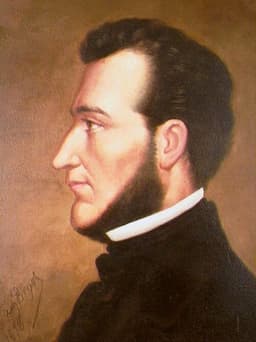
Francisco Morazan
General · Modern
58.0Total
Basic Information
Born
1937
1792
Died
—
1842
Era
Modern
Modern
Nationality
United States
Honduras
Occupation
General
General
Civilization
Western
Western
Score Comparison
Military (10%)
25.0
52.5
Political (20%)
68.0
60.0
Influence (20%)
68.0
62.0
Legacy (20%)
52.0
50.0
Leadership (15%)
72.0
68.0
Strategy (15%)
50.0
55.0
TOTAL
58.5
58.0
Colin Powell — Complete Timeline
1987 AD
Appointed National Security AdvisorPolitical Action◆ Major
Powell was appointed National Security Advisor by President Ronald Reagan in November 1987, serving until January 1989. He coordinated foreign policy and national security matters, including arms control negotiations with the Soviet Union and the Iran-Iraq War, becoming the first African American in this role.
National SecurityReagan AdministrationForeign Policy
Impact: global
1989 AD
Became Chairman of the Joint Chiefs of StaffOther◆ Major
On October 1, 1989, Powell became the 12th Chairman of the Joint Chiefs of Staff, the first African American to hold the position. He oversaw U.S. military operations during the invasion of Panama (1989) and the Gulf War (1990-1991), becoming a highly visible public figure.
Military LeadershipGulf WarFirst African American
Impact: global
1990 AD
Developed the Powell DoctrineOther◆ Major
During the Gulf War planning, Powell articulated the Powell Doctrine, which stated that U.S. military force should only be used as a last resort, with overwhelming force, clear objectives, and an exit strategy. This doctrine influenced U.S. military interventions for the next decade.
Military DoctrineGulf WarStrategic Thinking
Impact: global
2001 AD
Appointed Secretary of StatePolitical Action◆ Major
On January 20, 2001, Powell was confirmed as the 65th U.S. Secretary of State under President George W. Bush, becoming the first African American to hold the office. He advocated for diplomacy and multilateralism, but his influence waned after the September 11 attacks.
DiplomacyBush AdministrationFirst African American
Impact: global
2003 AD
Presented Iraq WMD Case to the UN Security CouncilOther◆ Major
On February 5, 2003, Powell addressed the UN Security Council, presenting evidence that Iraq possessed weapons of mass destruction. The intelligence later proved to be inaccurate, damaging Powell's reputation and becoming a major controversy that he later called a 'blot' on his record.
Iraq WarUN SpeechControversy
Impact: globaldestructive
2004 AD
Resigned as Secretary of StateOther◆ Major
Powell resigned as Secretary of State on November 15, 2004, after President Bush's re-election. His departure was widely seen as a result of policy disagreements with Vice President Cheney and Secretary of Defense Rumsfeld, particularly over the conduct of the Iraq War.
ResignationIraq WarBush Administration
Impact: national
Francisco Morazan — Complete Timeline
1824 AD
Abolition of slavery in Central AmericaReform◆ Major
As a key leader in the liberal movement, Moraz
AbolitionSlaveryLiberal Reform
Impact: regionalprogressive
1827 AD
Battle of La TrinidadWar◆ Major
Morazán led a liberal army to victory against conservative forces at La Trinidad, Honduras. This battle was a key turning point in the Central American civil war, allowing Morazán to consolidate power and eventually become president of the federation.
BattleLiberal VictoryCivil War
Impact: regional
1830 AD
Presidency of the Federal Republic of Central AmericaPolitical Action
Morazán was elected president of the Federal Republic of Central America, a union of Guatemala, El Salvador, Honduras, Nicaragua, and Costa Rica. He pursued liberal reforms including separation of church and state, free trade, and land reform, facing opposition from conservatives.
Federal RepublicLiberal ReformsCentral America
Impact: regionalconstructive
1842 AD
Execution by firing squadPolitical Action
After a failed attempt to restore the Federal Republic, Moraz
ExecutionEnd of FederationLiberal Defeat
Impact: regionaltragic
Expert Analysis
Francisco Morazan vs Colin Powell
### The General and the Reformer: Two Paths to Power, Two Fates in History
On a crisp autumn morning in 1989, Colin Powell, a four-star general of Jamaican descent, stood before the nation’s television cameras to announce the invasion of Panama. He was calm, precise, the embodiment of American military might. A century and a half earlier, on a sweltering September day in 1842, Francisco Morazán faced a firing squad in San José, Costa Rica, his dream of a united Central America shattered. Both men were generals. Both were reformers. But their journeys—and their endings—could not have been more different. What explains the chasm between the man who rose to the pinnacle of American power and the man who died a martyr for a lost cause? The answer lies not just in their choices, but in the worlds they were born into.
**Origins**
Colin Powell was born in 1937 in Harlem, New York, the son of Jamaican immigrants. His childhood was one of modest stability—a tenement apartment, a father who worked as a shipping clerk, a mother who sewed. He grew up in a nation that, despite its deep racial divides, offered a ladder of opportunity to those who could climb. The Cold War was the furnace that forged his generation. The U.S. Army, newly desegregated after the Korean War, became his vehicle. By contrast, Francisco Morazán was born in 1792 in Tegucigalpa, Honduras, into a world of crumbling Spanish empire and simmering colonial resentment. His father was a merchant of French-Corsican descent, his mother a Honduran of Spanish blood. The air he breathed was thick with the ideas of the Enlightenment—liberty, equality, fraternity—but also with the chaos of a region that had never known stable self-rule. Where Powell’s America was a continental superpower, Morazán’s Central America was a fractured collection of provinces, each jealous of its sovereignty. The stage was set: Powell would inherit an established system; Morazán would have to build one from ruins.
**Rise to Power**
Powell’s ascent was a masterclass in institutional navigation. He joined the ROTC at City College of New York, served two tours in Vietnam, and survived a helicopter crash that killed his commanding officer. His breakthrough came in the 1980s, when he became National Security Advisor under President Reagan and later Chairman of the Joint Chiefs under George H.W. Bush. His political score of 72.7 reflects a man who understood that in Washington, power flowed through relationships, not just rank. His defining moment came during the Gulf War—a conflict he helped plan with surgical precision, earning him a leadership score of 79.5.
Morazán’s path was far more precarious. He rose not through an established bureaucracy but through the crucible of civil war. In 1827, at the Battle of La Trinidad, he led a ragged liberal army against conservative forces and won. That victory, a major turning point, catapulted him to the presidency of the Federal Republic of Central America in 1830. His military score of 65.4 is modest compared to Powell’s 17.8—but that number is deceptive. Morazán fought dozens of battles, often outnumbered, and his strategic score of 55.6 reflects a man who had to improvise constantly. Powell’s wars were fought with overwhelming force; Morazán’s were fought for survival.
**Leadership & Governance**
Here the two men diverge most sharply. Powell governed from the Pentagon and the State Department, wielding influence through memos, briefings, and the careful management of bureaucracies. His political score of 72.7 is nearly identical to Morazán’s 72.0, but the contexts could not be more different. Powell’s greatest reform was the “Powell Doctrine”—the idea that the U.S. should only commit military force with overwhelming strength and a clear exit strategy. It was a doctrine of restraint, born from the trauma of Vietnam. He shaped policy from within.
Morazán was a reformer of a different order. As president of the Federal Republic, he abolished slavery in 1824—a radical act in a region where sugar and coffee depended on forced labor. He promoted public education, separated church and state, and tried to create a unified Central American identity. His legacy score of 68.9 shows that his reforms endured, even if his nation did not. But his leadership was also brittle. He governed through military force as much as persuasion, and his strategy score of 55.6 suggests a man who could win battles but not the peace. Powell, by contrast, never had to hold a nation together by sheer will.
**Triumph & Tragedy**
Powell’s greatest triumph was the Gulf War—a 100-hour ground campaign that expelled Iraqi forces from Kuwait with minimal American casualties. His influence score of 78.0 peaked during those years. But his tragedy came later. As Secretary of State in 2003, he stood before the United Nations and made the case for war in Iraq, citing intelligence about weapons of mass destruction that later proved false. It was a stain that would shadow his legacy.
Morazán’s triumph was the abolition of slavery—a moral victory that outlasted his political career. His tragedy was his execution. In 1842, after a failed attempt to restore the Federal Republic, he was captured in Costa Rica and shot. His last words, according to legend, were: “I die with the satisfaction of having served my country.” His total score of 69.8 is nearly identical to Powell’s 69.6, but the numbers hide a brutal truth: one man died a martyr, the other died in his bed.
**Character & Destiny**
Powell was a pragmatist. He once said, “Leadership is solving problems.” He avoided ideology, preferring to work within the system. His 79.5 leadership score reflects a man who inspired loyalty not through charisma but through competence. Morazán was an idealist. He believed in a united Central America, even when the evidence suggested it was impossible. His 76.7 leadership score is just slightly lower, but it was a leadership of fire, not of management. Powell’s caution kept him alive; Morazán’s passion killed him.
**Legacy**
Powell is remembered as a trailblazer—the first Black Chairman of the Joint Chiefs, the first Black Secretary of State. His legacy is one of breaking barriers, but also of caution. The Iraq War tarnished his reputation, yet his influence score of 78.0 endures. Morazán is remembered as the “Simón Bolívar of Central America”—a martyr for unity. His face adorns Honduran currency, and his name is invoked by reformers. But his dream of a united Central America remains unfulfilled. One man left a path; the other left a symbol.
**Conclusion**
What separates Colin Powell from Francisco Morazán is not ability—both were brilliant. It is not even luck, though Powell had more of it. The difference is the soil in which they grew. Powell’s America was a stable, powerful nation that could absorb his ambition and turn it into policy. Morazán’s Central America was a patchwork of warring states that could only consume his life. One general rose to the top of the world’s most powerful institution; the other died trying to build one from scratch. In the end, history judges not just the man, but the world that made him. And in that judgment, both men are remembered—one as a lesson in the limits of power, the other as a testament to the cost of a dream.
Rankings
🥇
Colin PowellLeader
Mil: 25.0Pol: 68.0Inf: 68.0
58.5
🥈
Francisco Morazan
Mil: 52.5Pol: 60.0Inf: 62.0
58.0
+0.5 behind
How This Comparison Works
Algorithm
Each figure is scored on 6 dimensions (0—100 scale) based on structured historical data: Military (10%), Political (20%), Influence (20%), Legacy (20%), Leadership (15%), Strategy (15%). The weighted total produces the final ranking.
Data Sources
Scores are computed from structured sub-indicators in the database. Scale factors adjust for era (Ancient ×0.85, Modern ×1.0) and civilization size (Eastern ×1.05, Other ×0.80) to account for differences in population and military scale.
Maximum 3 Figures
Comparisons are limited to 2—3 figures to ensure readability and statistical meaningfulness.
Error Margins
±5 points per dimension — Sub-scores are derived from historical records with inherent uncertainty. Two figures within 5 points on a dimension should be considered roughly equivalent in that area.
Total Score Accuracy
±3 points overall — The weighted combination of 6 dimensions produces a total score with approximately ±3 points of uncertainty. Differences of less than 3 points are not statistically significant— the figures are effectively tied.
Known Limitations
- Historical records are incomplete and uneven across civilizations
- Figures from oral-tradition societies may be underrepresented
- Occupation labels can misclassify multi-role figures
- Scores measure capability and impact, not moral character
- Quantitative scoring is a comparison tool, not absolute truth
Capability Radar
Military (10%) — Battles & Warfare
Battles
35
55
Win Rate
40
60
Expansion
20
40
Political (20%) — Governance & Reform
Reform
40
70
Diplomacy
70
45
Economy
30
50
Influence (20%) — Cultural & Global Reach
Cultural
55
45
Global
65
35
Legacy (20%) — Historical Impact
Historical
60
50
Longevity
45
40
Leadership (15%) — Power & Stability
Tenure
65
55
Stability
55
30
Strategy (15%) — Tactics & Innovation
Strategy
55
55
Tactics
45
50
Reform
60
45
Similar Comparisons
Comments & Discussion
No comments yet. Be the first to share your thoughts!