Loading...
This comparison has not been analyzed yet.
One-time AI generation (~1 minute). Scores and timeline are already available below.
Cleombrotus I vs Xiang Yu
Xiang Yu leads by 11.4 pts · 2 figures compared
…

Cleombrotus I
General · Ancient
40.9Total
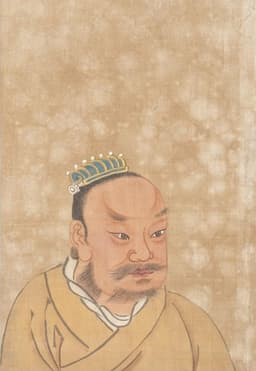
Xiang Yu
General · Ancient
52.3Total
Basic Information
Born
-420
-232
Died
-371
-202
Era
Ancient
Ancient
Nationality
Sparta
China
Occupation
General
General
Civilization
Western
Eastern
Score Comparison
Military (10%)
35.0
77.5
Political (20%)
35.0
35.0
Influence (20%)
46.3
61.0
Legacy (20%)
39.2
52.0
Leadership (15%)
46.3
30.0
Strategy (15%)
38.3
65.4
TOTAL
40.9
52.3
Cleombrotus I — Complete Timeline
371 BC
Battle of LeuctraWar
Cleombrotus I commanded the Spartan army against the Thebans under Epaminondas at Leuctra. He was killed in the battle, and his army was decisively defeated. This ended Spartan military dominance and marked the rise of Thebes as a leading power in Greece.
Theban-Spartan WarBattleDeath
Impact: regionaltragic
Invasion of BoeotiaWar◆ Major
Cleombrotus led a Spartan army into Boeotia to enforce the terms of the Peace of Callias. He was ordered to attack Thebes if they refused to disband their Boeotian League. This invasion directly led to the Battle of Leuctra.
Theban-Spartan WarInvasionCampaign
Impact: regional
Xiang Yu — Complete Timeline
207 BC
Battle of JuluWar◆ Major
Xiang Yu led a rebel army against the Qin dynasty at Julu. After ordering his troops to destroy their cooking vessels and boats, they defeated a larger Qin force, breaking the siege and establishing Xiang Yu as the leading rebel commander.
Qin rebellionBattleTurning point
Impact: regional
206 BC
Feast at Hong GatePolitical Action◆ Major
Xiang Yu hosted a banquet for Liu Bang at Hong Gate. During the feast, Xiang Yu's advisor Fan Zeng attempted to have Liu Bang assassinated, but Xiang Yu hesitated. Liu Bang escaped, and the rivalry between the two leaders intensified.
Political intrigueRivalryChu-Han Contention
Impact: regional
202 BC
Battle of GaixiaWar◆ Major
Liu Bang's Han forces surrounded Xiang Yu's army at Gaixia. After a night of psychological warfare with Han soldiers singing Chu songs, Xiang Yu's troops lost morale. Xiang Yu broke out but was cornered, leading to his suicide.
Chu-Han ContentionBattleDefeat
Impact: regionaltragic
This comparison has not been analyzed yet.
One-time AI generation (~1 minute). Scores and timeline are already available below.
Rankings
🥇
Xiang YuLeader
Mil: 77.5Pol: 35.0Inf: 61.0
52.3
🥈
Cleombrotus I
Mil: 35.0Pol: 35.0Inf: 46.3
40.9
+11.4 behind
How This Comparison Works
Algorithm
Each figure is scored on 6 dimensions (0—100 scale) based on structured historical data: Military (10%), Political (20%), Influence (20%), Legacy (20%), Leadership (15%), Strategy (15%). The weighted total produces the final ranking.
Data Sources
Scores are computed from structured sub-indicators in the database. Scale factors adjust for era (Ancient ×0.85, Modern ×1.0) and civilization size (Eastern ×1.05, Other ×0.80) to account for differences in population and military scale.
Maximum 3 Figures
Comparisons are limited to 2—3 figures to ensure readability and statistical meaningfulness.
Error Margins
±5 points per dimension — Sub-scores are derived from historical records with inherent uncertainty. Two figures within 5 points on a dimension should be considered roughly equivalent in that area.
Total Score Accuracy
±3 points overall — The weighted combination of 6 dimensions produces a total score with approximately ±3 points of uncertainty. Differences of less than 3 points are not statistically significant— the figures are effectively tied.
Known Limitations
- Historical records are incomplete and uneven across civilizations
- Figures from oral-tradition societies may be underrepresented
- Occupation labels can misclassify multi-role figures
- Scores measure capability and impact, not moral character
- Quantitative scoring is a comparison tool, not absolute truth
Capability Radar
Military (10%) — Battles & Warfare
Battles
20
85
Win Rate
10
75
Expansion
10
80
Political (20%) — Governance & Reform
Reform
10
10
Diplomacy
20
30
Economy
15
15
Influence (20%) — Cultural & Global Reach
Cultural
15
70
Global
10
55
Legacy (20%) — Historical Impact
Historical
25
75
Longevity
20
70
Leadership (15%) — Power & Stability
Tenure
30
40
Stability
15
20
Strategy (15%) — Tactics & Innovation
Strategy
15
70
Tactics
15
90
Reform
5
20
Similar Comparisons
Comments & Discussion
No comments yet. Be the first to share your thoughts!