Loading...
Cleisthenes vs Yitzhak Rabin
Cleisthenes leads by 11.9 pts · 2 figures compared
…
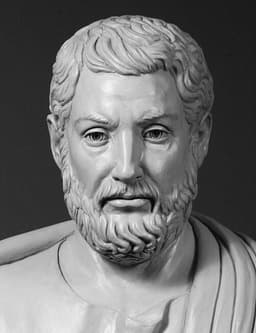
Cleisthenes
Politician · Ancient
78.3Total
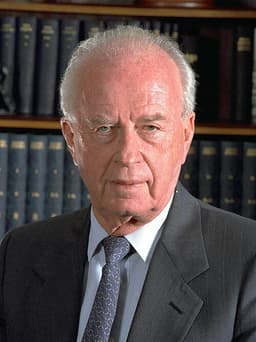
Yitzhak Rabin
General · Modern
66.4Total
Basic Information
Born
-570
1922
Died
-508
—
Era
Ancient
Modern
Nationality
Greece
Israel
Occupation
Politician
General
Civilization
Western
Middle Eastern
Score Comparison
Military (10%)
49.4
61.7
Political (20%)
62.7
82.0
Influence (20%)
92.0
68.0
Legacy (20%)
92.0
55.0
Leadership (15%)
72.0
78.0
Strategy (15%)
71.3
55.0
TOTAL
78.3
66.4
Cleisthenes — Complete Timeline
510 BC
Expulsion of the PeisistratidsPolitical Action◆ Major
Cleisthenes, with the support of the Alcmaeonid family and Spartan assistance, led the overthrow of the tyrant Hippias, son of Peisistratus. This ended the Peisistratid tyranny in Athens and opened the way for democratic reforms.
Tyranny OverthrownAthensSparta
Impact: nationalconstructive
508 BC
Reforms of CleisthenesReform
Cleisthenes reorganized the Athenian citizen body into ten new tribes based on demes, replacing the old four Ionian tribes. He established the Council of 500 (Boule) and introduced ostracism, creating a system of isonomia (equal rights) that is considered the foundation of Athenian democracy.
Athenian DemocracyConstitutional ReformAncient Greece
Impact: globalprogressive
507 BC
Introduction of OstracismReform◆ Major
Cleisthenes instituted ostracism, a procedure allowing Athenian citizens to vote annually to exile a prominent citizen deemed a threat to democracy for ten years. This mechanism aimed to prevent the rise of a new tyrant and stabilize the democratic system.
Athenian DemocracyPolitical MechanismExile
Impact: national
Yitzhak Rabin — Complete Timeline
1967 AD
Chief of Staff during the Six-Day WarWar
As Chief of Staff of the Israel Defense Forces, Rabin commanded the Israeli military during the Six-Day War against Egypt, Jordan, and Syria. Israel captured the Sinai Peninsula, Gaza Strip, West Bank, East Jerusalem, and Golan Heights, reshaping the region.
Six-Day WarTerritorial ExpansionMilitary Victory
Impact: global
1993 AD
Signing of the Oslo AccordsPolitical Action
As prime minister, Rabin signed the Oslo Accords with PLO Chairman Yasser Arafat on the White House lawn. The agreement established the Palestinian Authority and set a framework for Palestinian self-governance in the West Bank and Gaza Strip.
Peace ProcessPalestiniansOslo
Impact: globalconstructive
1995 AD
Assassination at Peace RallyPolitical Action
Rabin was assassinated by Israeli extremist Yigal Amir after a peace rally in Tel Aviv. The assassination shocked Israel and the world, derailing the Oslo peace process and leading to a period of political instability.
AssassinationPeace ProcessPolitical Violence
Impact: globaltragic
Expert Analysis
Cleisthenes vs Yitzhak Rabin
### The General and the Reformer: Two Paths to Democracy
On a balmy November evening in 1995, Yitzhak Rabin, a man who had commanded armies and shaped a nation, folded a sheet of paper into his breast pocket. It was a song lyric about peace. Moments later, three bullets from a fellow Israeli’s gun ended his life. Nearly 2,500 years earlier, in the dusty marketplace of Athens, another man—Cleisthenes—had used no weapon but a new idea. He carved the Athenian citizenry into ten tribes, not by blood, but by neighborhood, and in doing so, planted the fragile seed of democracy. One died for peace; the other lived to birth a system. Both men sought to govern, but their eras, their tools, and their fates could not have been more different. Why did the general fall, while the reformer’s work endured?
### Origins
Yitzhak Rabin was born in Jerusalem in 1922, the son of Jewish immigrants from the Russian Empire. His upbringing was forged in the crucible of a land contested, where survival required a rifle and a resolve of steel. The British Mandate, Arab riots, and the looming Holocaust shaped a generation that saw military strength not as a choice, but as a necessity. Rabin learned to command before he learned to compromise. Cleisthenes, by contrast, was born into the aristocratic Alcmaeonid family of Athens around 570 BCE, a world of olive groves, agora debates, and the constant threat of tyranny. His education was not in war but in politics, in the subtle art of patronage and exile. Where Rabin’s world was a fortress under siege, Cleisthenes’ was a city-state struggling to define citizenship itself.
### Rise to Power
Rabin’s ascent was a ladder of wartime command. As Chief of Staff during the Six-Day War of 1967, he led the Israel Defense Forces to a stunning victory against Egypt, Jordan, and Syria. The capture of Jerusalem’s Old City, the Golan Heights, and the Sinai Peninsula made him a national hero. But his path to the prime minister’s office in 1974 and again in 1992 was not a straight line; it was a political comeback after a failed first term, driven by a pragmatic recognition that military victory could not deliver lasting security. Cleisthenes’ rise was swifter and more audacious. In 510 BCE, he allied with Sparta to overthrow the tyrant Hippias, ending the Peisistratid dynasty. Yet when a rival aristocrat, Isagoras, seized power with Spartan backing, Cleisthenes did not flee into exile quietly. Instead, he turned to the common people—the *demos*—offering them a radical bargain: power in exchange for support. It was a gamble that would rewrite history.
### Leadership & Governance
As a leader, Rabin was a man of contradictions: a hard-eyed general who became a reluctant peacemaker. His military strategy was decisive and disciplined, but his political wisdom lay in knowing when to stop fighting. In 1993, he shook hands with Yasser Arafat on the White House lawn, signing the Oslo Accords that promised Palestinian self-rule. It was a breathtaking act of political courage, but also a fragile one, built on trust that did not exist. Cleisthenes governed not through personal charisma, but through institutional architecture. His reforms of 508 BCE dismantled the old clan-based tribes and replaced them with ten artificial tribes based on local *demes*—neighborhoods. This broke the power of aristocratic families and gave every free male citizen a voice in the Assembly. He also introduced ostracism in 507 BCE, a safety valve that allowed the people to exile a would-be tyrant without bloodshed. Rabin sought to end a conflict; Cleisthenes sought to prevent one from ever starting.
### Triumph & Tragedy
Rabin’s greatest triumph was also his tragedy. The Oslo Accords earned him the 1994 Nobel Peace Prize, but they also earned him enemies. Israeli extremists saw him as a traitor; Palestinian militants saw the accords as insufficient. On November 4, 1995, at a peace rally in Tel Aviv, Rabin sang “The Song of Peace” and then walked to his car. The assassin’s bullets silenced him, but the image of a leader killed by his own people became a haunting symbol of peace’s fragility. Cleisthenes faced no such violent end. His reforms were not universally loved—the old aristocracy resented him—but he died in the natural course of life around 508 BCE. His tragedy was not personal but political: the democracy he founded would eventually be corrupted by demagogues and conquered by Macedon. Yet his triumph was that the idea survived.
### Character & Destiny
Rabin’s character was shaped by a lifelong tension between duty and doubt. He was a soldier who wept at the sight of dead soldiers, a pragmatist who risked everything for an uncertain peace. His destiny was to be a bridge between war and reconciliation, but the bridge was too narrow for the hatreds on either side. Cleisthenes, by contrast, was a politician who understood that power must be diffused to be stable. He did not seek to be a king; he sought to create a system that made kings unnecessary. His character was that of a architect, not a warrior. Where Rabin’s story is a tragedy of one man’s sacrifice, Cleisthenes’ is a comedy of institutional survival—a system that outlived its creator.
### Legacy
Today, Yitzhak Rabin is remembered as a martyr for peace, his name etched into the collective memory of Israel and the world. His assassination is a cautionary tale: that the hardest battles are not fought on battlefields, but in the hearts of men. Cleisthenes is remembered as the “Father of Athenian Democracy,” a title that echoes through every parliament and congress. His legacy is not a single event, but a process—the idea that ordinary people can govern themselves. Rabin’s legacy is urgent, immediate, and unresolved; Cleisthenes’ is foundational, abstract, and enduring.
### Conclusion
Standing in Tel Aviv’s Rabin Square, where thousands gather each year to light candles, one feels the weight of a life cut short. Walking through the ruins of the Athenian Agora, where citizens once scratched names onto pottery shards for ostracism, one feels the weight of a system built to last. The general and the reformer both believed in democracy, but one lived in a time when it required a bullet to defend, and the other in a time when it required a constitution to birth. Their differences are not merely personal; they are the differences between a nation fighting for its existence and a city-state inventing its soul. In the end, both men remind us that democracy is never a finished work—it is always a choice, and sometimes a sacrifice.
Rankings
🥇
CleisthenesLeader
Mil: 49.4Pol: 62.7Inf: 92.0
78.3
🥈
Yitzhak Rabin
Mil: 61.7Pol: 82.0Inf: 68.0
66.4
+11.9 behind
How This Comparison Works
Algorithm
Each figure is scored on 6 dimensions (0—100 scale) based on structured historical data: Military (10%), Political (20%), Influence (20%), Legacy (20%), Leadership (15%), Strategy (15%). The weighted total produces the final ranking.
Data Sources
Scores are computed from structured sub-indicators in the database. Scale factors adjust for era (Ancient ×0.85, Modern ×1.0) and civilization size (Eastern ×1.05, Other ×0.80) to account for differences in population and military scale.
Maximum 3 Figures
Comparisons are limited to 2—3 figures to ensure readability and statistical meaningfulness.
Error Margins
±5 points per dimension — Sub-scores are derived from historical records with inherent uncertainty. Two figures within 5 points on a dimension should be considered roughly equivalent in that area.
Total Score Accuracy
±3 points overall — The weighted combination of 6 dimensions produces a total score with approximately ±3 points of uncertainty. Differences of less than 3 points are not statistically significant— the figures are effectively tied.
Known Limitations
- Historical records are incomplete and uneven across civilizations
- Figures from oral-tradition societies may be underrepresented
- Occupation labels can misclassify multi-role figures
- Scores measure capability and impact, not moral character
- Quantitative scoring is a comparison tool, not absolute truth
Capability Radar
Military (10%) — Battles & Warfare
Battles
58
65
Win Rate
62
70
Expansion
59
50
Political (20%) — Governance & Reform
Reform
95
65
Diplomacy
70
85
Economy
40
60
Influence (20%) — Cultural & Global Reach
Cultural
85
55
Global
85
70
Legacy (20%) — Historical Impact
Historical
90
75
Longevity
95
60
Leadership (15%) — Power & Stability
Tenure
30
70
Stability
60
40
Strategy (15%) — Tactics & Innovation
Strategy
62
75
Tactics
67
60
Reform
72
55
Similar Comparisons
Comments & Discussion
锈蚀档案6/16/2026
数据上作弊:克利斯提尼的改革活在教科书里,拉宾的和平死在现场。前者的十部落制只是换汤不换药,贵族照样把持议会;后者在1993年奥斯陆协议前,以色列谈判人员甚至不敢提“撤军”二字。数据说克利斯提尼发展了民主,但雅典的奴隶和妇女仍被排除在外——拉宾至少推动了真实的政治妥协,哪怕中道崩殂。别吹雅典的“种子”,它没结出完整果实。
Pseudepigrapha Bastard6/16/2026
As a classics scholar, I’d argue Cleisthenes’ reform is more epochal because it targeted kinship—the bedrock of ancient tyranny. By replacing clans with ten artificial phylai, he broke the aristocratic stranglehold on power. Rabin, for all his courage, operated within a preexisting democratic framework; he didn’t invent the Knesset or the ballot. Cleisthenes invented the very concept of “the demos” as a political actor. That’s like comparing the invention of the wheel to a skilled charioteer—bot
黄昏陪审员6/16/2026
修正主义者视角:克利斯提尼的民主是给寡头集团穿新衣。他流放伊萨戈拉斯后,用陶片放逐法清洗异己,自己却从未被放逐——典型的权力把戏。拉宾的妥协更诚实:他明知索要土地会惹怒右翼,仍公开承认巴勒斯坦人的政治权利。前者躲在制度背后,后者站在子弹前面。克利斯提尼的“民主”是贵族内斗的润滑剂,拉宾的死才是民主的真实代价。
Agōra Echo6/16/2026
History buff here—the real divide isn’t reform vs. peace, but mortal vs. legacy. Rabin was assassinated, his Oslo process stalled, his memory weaponized by both sides. Cleisthenes died old in bed, his system lasting 200 years until Macedon crushed it. But Rabin’s death sparked a mourning that temporarily united Israelis; Cleisthenes’ reforms sparked riots from aristocrats. Which legacy endures? Rabin’s fate shows
Chronicler81466/16/2026
As a military historian, I find Rabin’s shift from general to peacemaker more impressive than Cleisthenes’ reforms. Rabin commanded the Six-Day War’s blitzkrieg in 1967—a masterstroke of armored warfare—then used that credibility to shake hands with Arafat. Cleisthenes never faced bullets for his ideas; Rabin absorbed them. The general’s trajectory shows democracy’s paradox: it often takes a warrior’s steel to forge civilian peace. Cleisthenes’ work was cerebral; Rabin’s was visceral, earned in