Loading...
Alcide De Gasperi vs Cleisthenes
Cleisthenes leads by 22.8 pts · 2 figures compared
…
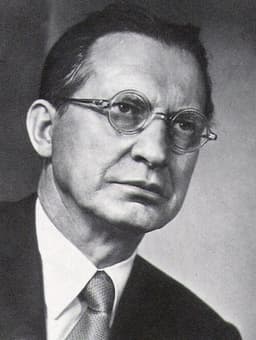
Alcide De Gasperi
Politician · Modern
55.5Total
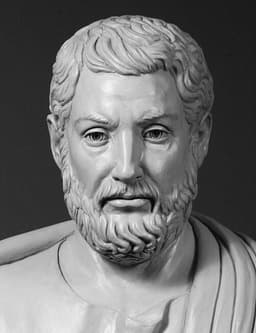
Cleisthenes
Politician · Ancient
78.3Total
Basic Information
Born
1881
-570
Died
1954
-508
Era
Modern
Ancient
Nationality
Italy
Greece
Occupation
Politician
Politician
Civilization
Western
Western
Score Comparison
Military (10%)
12.4
49.4
Political (20%)
85.0
62.7
Influence (20%)
65.0
92.0
Legacy (20%)
40.0
92.0
Leadership (15%)
80.7
72.0
Strategy (15%)
31.5
71.3
TOTAL
55.5
78.3
Alcide De Gasperi — Complete Timeline
1946 AD
First Prime Minister of the Italian RepublicPolitical Action
De Gasperi became the first prime minister of the newly proclaimed Italian Republic in December 1945. He led a coalition government that included Christian Democrats, Socialists, and Communists. His government oversaw the transition from monarchy to republic.
RepublicGovernmentTransition
Impact: nationalconstructive
1947 AD
Peace Treaty of ParisPolitical Action◆ Major
De Gasperi signed the Treaty of Paris, which formally ended World War II for Italy. Italy lost its colonies, ceded territory to Yugoslavia and France, and paid reparations. The treaty was unpopular but allowed Italy to regain sovereignty and join the Western alliance.
TreatyWorld War IIDiplomacy
Impact: global
Expulsion of Communists from GovernmentPolitical Action
De Gasperi expelled the Italian Communist Party and Socialist Party from his coalition government in May 1947. This move aligned Italy with the United States and the Marshall Plan, deepening the Cold War divide. It solidified Christian Democratic dominance for decades.
Cold WarMarshall PlanCoalition
Impact: global
1949 AD
Italian Membership in NATOPolitical Action◆ Major
De Gasperi led Italy into the North Atlantic Treaty Organization (NATO) as a founding member. This decision anchored Italy in the Western bloc during the Cold War and secured U.S. military and economic support. It was opposed by the Communist Party.
NATOCold WarAlliance
Impact: globalconstructive
Cleisthenes — Complete Timeline
510 BC
Expulsion of the PeisistratidsPolitical Action◆ Major
Cleisthenes, with the support of the Alcmaeonid family and Spartan assistance, led the overthrow of the tyrant Hippias, son of Peisistratus. This ended the Peisistratid tyranny in Athens and opened the way for democratic reforms.
Tyranny OverthrownAthensSparta
Impact: nationalconstructive
508 BC
Reforms of CleisthenesReform
Cleisthenes reorganized the Athenian citizen body into ten new tribes based on demes, replacing the old four Ionian tribes. He established the Council of 500 (Boule) and introduced ostracism, creating a system of isonomia (equal rights) that is considered the foundation of Athenian democracy.
Athenian DemocracyConstitutional ReformAncient Greece
Impact: globalprogressive
507 BC
Introduction of OstracismReform◆ Major
Cleisthenes instituted ostracism, a procedure allowing Athenian citizens to vote annually to exile a prominent citizen deemed a threat to democracy for ten years. This mechanism aimed to prevent the rise of a new tyrant and stabilize the democratic system.
Athenian DemocracyPolitical MechanismExile
Impact: national
Expert Analysis
Cleisthenes vs Alcide De Gasperi
# The Architect and the Builder: Cleisthenes and De Gasperi
On a dusty Athenian hill in 508 BCE, a nobleman named Cleisthenes stood before a crowd of citizens and proposed something unprecedented: that the people themselves should govern. Twenty-four centuries later, in the rubble of a devastated Europe, another man—Alcide De Gasperi—sat in a Parisian conference room, signing a treaty that would determine whether Italy would rise again or remain a pariah. Both were founders. Both rebuilt their worlds. But the tools they used, the obstacles they faced, and the legacies they left could not have been more different. Why did one create democracy itself, while the other built a modern nation from its ashes?
Origins
Cleisthenes was born around 570 BCE into the Alcmaeonid family, one of Athens’ most powerful aristocratic clans. His world was defined by clan rivalries, tyranny, and the fragile birth of the polis. The Alcmaeonids had been cursed for a massacre of rebels, and Cleisthenes grew up in the shadow of both privilege and stigma. His era was one of experimentation—the Greeks were inventing citizenship, law, and the very idea that men could rule themselves rather than bow to kings.
Alcide De Gasperi was born in 1881 in the Tyrol, a region then part of the Austro-Hungarian Empire, to a devout Catholic family. His world was one of empires and nationalisms, of rising fascism and collapsing monarchies. He entered politics as a young man in the Italian parliament, only to be silenced by Mussolini’s regime. For nearly two decades, he worked in obscurity in the Vatican library, watching his country descend into dictatorship and war. His era was one of destruction—and the desperate need for reconstruction.
Rise to Power
Cleisthenes rose through the treacherous politics of late-archaic Athens. In 510 BCE, he led the expulsion of the tyrant Hippias, the son of Peisistratus, with the help of Sparta. But power did not fall neatly into his hands. His rival Isagoras, backed by Spartan intervention, seized control. Cleisthenes was exiled, his family’s old curse revived against him. Yet he did not raise an army. Instead, he appealed to the *demos*—the common people. He promised them a voice. When Isagoras tried to dissolve the Council, the people of Athens rose in revolt, forcing the Spartans to withdraw. Cleisthenes returned not as a tyrant, but as a reformer.
De Gasperi’s rise was slower and more painful. After Mussolini’s fall in 1943, he emerged from the shadows to lead the Christian Democracy party. In December 1945, he became the first prime minister of the Italian Republic. His path was not one of popular revolt but of patient coalition-building. He had no army, no ancient city to rally. He had only the fragile trust of a nation shattered by war, occupation, and civil conflict.
Leadership & Governance
Cleisthenes’ genius was structural. In 508 BCE, he reorganized the entire Athenian citizen body into ten new tribes, based not on blood or clan but on local demes—neighborhoods. This broke the power of the old aristocratic families and gave every free Athenian a stake in governance. He then created the Council of 500, chosen by lot, to oversee daily administration. And in 507 BCE, he introduced ostracism: a peaceful way to exile a dangerous politician without violence. His reforms were not a constitution in the modern sense, but a framework for democratic participation. He did not rule—he enabled rule by the people.
De Gasperi’s leadership was diplomatic and strategic. He faced a country with a weak economy, a communist insurgency, and a humiliating peace. In 1947, he signed the Treaty of Paris, accepting the loss of colonies and territories. It was a bitter pill, but it opened the door to reconciliation. That same year, he expelled the Communist and Socialist parties from his coalition government—a risky move that aligned Italy firmly with the West. In 1949, he led Italy into NATO, anchoring it in the Atlantic alliance. He also championed European integration, working with Schuman and Adenauer to lay the foundations of what would become the European Union. His governance was not about restructuring society but about steering a wounded nation toward stability and partnership.
Triumph & Tragedy
Cleisthenes’ triumph was the birth of Athenian democracy. Within a generation, Athens would defeat the Persian Empire at Marathon and Salamis, and its citizens—now empowered—would produce the Golden Age of Pericles, Sophocles, and Socrates. But Cleisthenes himself disappeared from history after his reforms. He may have been ostracized, or he may have simply died. The tragedy is that we know so little of the man who gave us so much. His greatest victory was his own erasure: he made the system greater than any individual.
De Gasperi’s triumph was the reconstruction of Italy. By 1954, when he died, Italy was a NATO member, a founding member of the European Coal and Steel Community, and a stable democracy. His tragedy was the cost of that stability. The expulsion of the left deepened political polarization for decades. The peace treaty left a legacy of unresolved territorial grievances. And his vision of a united Europe was only partially realized in his lifetime. He died in 1954, honored but weary, having given everything to a nation that still struggled to find its footing.
Character & Destiny
Cleisthenes was a pragmatist with a radical vision. He understood that power, once concentrated, corrupts—so he dispersed it. He was willing to lose his own position to secure a system that would outlast him. His character was that of a founder who trusted the people more than himself.
De Gasperi was a patient, devout, and cautious man. He had seen the destruction wrought by extremism—fascist, communist, nationalist. His character was forged in the crucible of exile and survival. He believed in slow, steady progress, in alliances and institutions rather than revolutions. His destiny was to be the bridge between a shattered past and an uncertain future.
Legacy
Cleisthenes is remembered as the “Father of Athenian Democracy.” His reforms influenced the American Founding Fathers, the French Revolution, and every democratic movement since. His legacy is not a monument but a method: the idea that ordinary people can govern themselves.
De Gasperi is remembered as a founding father of the Italian Republic and of European unity. His face once appeared on the 1,000 lire note. His legacy is visible in Italy’s place in Europe, but it is also contested. Some see him as a pragmatist who sold out national interests; others as a visionary who saved his country.
Conclusion
Cleisthenes and De Gasperi built different worlds because they faced different ruins. One dismantled aristocracy and invented democracy; the other rebuilt a nation and anchored it in a continent. Both understood that the deepest power is not in ruling, but in creating systems that outlast rulers. As Cleisthenes might have said, and De Gasperi surely believed: the greatest leader is the one who makes leadership unnecessary.
Rankings
🥇
CleisthenesLeader
Mil: 49.4Pol: 62.7Inf: 92.0
78.3
🥈
Alcide De Gasperi
Mil: 12.4Pol: 85.0Inf: 65.0
55.5
+22.8 behind
How This Comparison Works
Algorithm
Each figure is scored on 6 dimensions (0—100 scale) based on structured historical data: Military (10%), Political (20%), Influence (20%), Legacy (20%), Leadership (15%), Strategy (15%). The weighted total produces the final ranking.
Data Sources
Scores are computed from structured sub-indicators in the database. Scale factors adjust for era (Ancient ×0.85, Modern ×1.0) and civilization size (Eastern ×1.05, Other ×0.80) to account for differences in population and military scale.
Maximum 3 Figures
Comparisons are limited to 2—3 figures to ensure readability and statistical meaningfulness.
Error Margins
±5 points per dimension — Sub-scores are derived from historical records with inherent uncertainty. Two figures within 5 points on a dimension should be considered roughly equivalent in that area.
Total Score Accuracy
±3 points overall — The weighted combination of 6 dimensions produces a total score with approximately ±3 points of uncertainty. Differences of less than 3 points are not statistically significant— the figures are effectively tied.
Known Limitations
- Historical records are incomplete and uneven across civilizations
- Figures from oral-tradition societies may be underrepresented
- Occupation labels can misclassify multi-role figures
- Scores measure capability and impact, not moral character
- Quantitative scoring is a comparison tool, not absolute truth
Capability Radar
Military (10%) — Battles & Warfare
Battles
11
58
Win Rate
15
62
Expansion
17
59
Political (20%) — Governance & Reform
Reform
85
95
Diplomacy
80
70
Economy
70
40
Influence (20%) — Cultural & Global Reach
Cultural
60
85
Global
65
85
Legacy (20%) — Historical Impact
Historical
70
90
Longevity
65
95
Leadership (15%) — Power & Stability
Tenure
75
30
Stability
75
60
Strategy (15%) — Tactics & Innovation
Strategy
21
62
Tactics
23
67
Reform
27
72
Similar Comparisons
Comments & Discussion
**TheAthenianSkeptic**6/16/2026
“To compare Cleisthenes and De Gasperi is to compare apples and oracle bones. Cleisthenes invented democracy from scratch while wrestling with the curse of the Alcmaeonids and actual warring clans. De Gasperi revived a broken Italy by signing the Treaty of Paris—that’s rebuilding, not founding. The real question: why do we keep calling every post-war fix ‘making the world anew’? Cleisthenes gave us the *demos*; De Gasperi gave us a stable checkbook.”|
**逻辑铁锤**6/16/2026
“数据不会撒谎,但比喻会。克利斯提尼的改革是开创性的:他重新划分了10个部落,打破区域势力,而德加斯佩里只是用马歇尔计划修补了烂摊子。说‘同样伟大’是对历史的不尊重。一个是创造游戏规则,另一个是复活破产玩家。别混淆了奠基者和维修工。”|
**Tocqueville'sGhost**6/16/2026
“The real magic trick is ignoring scale. Cleisthenes reshaped Athens’ identity for 30,000 citizens—a city-state, not a nation. De Gasperi integrated 47 million Italians into NATO and the EEC, a continental pivot. One gave us ostracism; the other gave us the Marshall Plan. Cleisthenes’ *isonomia* was radical, but De Gasperi’s pragmatism built a postwar miracle. Both were architects, but one built a villa, the other a skyscraper.”|
**复古叛徒**6/16/2026
“我站克利斯提尼。德加斯佩里?典型的天主教中间派,靠美援和妥协过日子。看看雅典的陶片放逐法:允许公民直接驱逐潜在暴君,这是真正的民主牙齿。而德加斯佩里干了啥?镇压左派,讨好右翼,最后被自己人踹下台。克利斯提尼给了人民武器,德加斯佩里给了钱包。哪个更永久?”|
**RubbleAndVote**6/16/2026
“As a reconstruction historian, I call bull on the ‘both founders’ trope. De Gasperi operated in a world of treaties, loans, and Cold War threats—he *negotiated* Italy’s rebirth. Cleisthenes had to invent the very concept of civic participation while dodging Spartan-backed coups. The Athenian model was fragile, bloody, and inspiring. De Gasperi’s legacy is stable, boring, and bureaucratic. Which would you rather study? I pick the guy who invented ostracism.”|